Solar Kiln for Drying Firewood
A solar kiln for drying firewood should match your split length, hold the stack loosely enough for airflow, and run until the wood reaches about 20% moisture content or lower for cleaner, safer burning. If the kiln is too small or the venting is weak, wet cores stay wet, fires smoke, creosote risk rises, and drying time gets wasted. This guide covers kiln layout, airflow, loading, temperature control, moisture targets, and practical operation for split firewood.
Solar kiln for firewood: what it does


How solar heat, insulation, and airflow work together
A solar kiln uses a south-facing collector, insulated walls and floor, a black interior surface to absorb heat, vents to exhaust humid air, and fans or passive openings to keep air moving through the stack. High temperature alone is not the goal. Steady heat plus moisture removal is the goal.
Firewood behaves differently from lumber. Splits, rounds, and mixed diameters leave more voids and more exposed end grain, so airflow paths matter more than board-foot rules. A good layout pushes warm air through the stack and out the vents instead of around the load.
When a solar kiln beats open-air stacking
A kiln makes sense when you need drying faster than a full outdoor seasoning cycle, when weather stays sunny enough to help the load, or when you want more control over pests and rain exposure. It is less useful in long cloudy periods or where you cannot vent moist air reliably.
📊 That same article says the kiln dries green wood to 8% MC. Source: How to Build a Solar Kiln.
What you’ll need
Gather the shell, collector, and airflow parts before you start. The kiln works best when the frame, insulation, glazing, and venting are planned as one system, not added in pieces after the wood is already stacked.
- Pressure-treated framing or other weather-resistant framing members
- Insulated wall and floor materials
- Greenhouse-rated corrugated polycarbonate for the roof collector
- Black interior paint or another dark absorber surface
- Fans sized by model to move air through the load
- Adjustable vents for exhausting humid air
- Pallets or bunks for off-floor stacking
- Wood stickers or spacers for uniform layer gaps
- Fasteners, sealant, and flashing
- Moisture meter for checking split cores
Keep the tool list simple
A tape measure, square, saw, drill, level, and caulk gun are enough for most builds. Add temperature or humidity monitoring only if you plan to manage venting by conditions rather than by habit.
Build the kiln shell
Build the shell as an insulated, sealed enclosure with a south-facing collector roof, a dark interior, and a floor that stays off wet ground. Virginia Tech’s example kiln uses a roof angled at 45 degrees to the south, and for winter operation it recommends increasing the roof angle by 10 degrees. (VT)
- Choose a south-facing site with clear sun and wind access.
- Lay out the floor so runoff and snowmelt drain away from the kiln.
- Frame insulated walls and seal joints to limit heat loss.
- Install a black interior surface to absorb solar heat.
- Fit greenhouse-rated corrugated polycarbonate on the collector roof.
- Place vents so humid air can leave high in the chamber.
- Add fans if your stack depth or climate needs forced circulation.
Fine Woodworking describes a solar kiln as a south-facing, insulated shed with a passive solar-collecting roof and fans. Virginia Tech’s design can hold 750 to 1,000 board feet of lumber and dry a charge in about one month of moderately sunny weather. That lumber example does not transfer directly to firewood volume, but it does show the effect of sunlight, insulation, and venting.
How do you size a firewood kiln?
Size the kiln around split thickness, stack depth, and the species you burn, not lumber board-foot math. A firewood kiln needs enough collector area and interior volume to move dry air through the stack without overheating the outer splits while the core stays wet.
Choose a collector-to-load ratio that fits the wood volume
Too much collector area for a small load can spike temperature and dry the outside faster than the center. Too little collector area can leave the kiln warm but sluggish. For firewood, start with a modest load size that fills the chamber without tight packing, then scale up only after venting and airflow prove stable.
A common first-timer mistake is building a large glazed roof over a short stack of dense hardwood splits. That can drive surface checking before the center drops much at all.
Match size to split thickness and density
Thicker splits need more time and more air exchange. Dense hardwoods such as oak and hickory usually need more drying time than lighter species such as ash, red maple, or birch. The same source reports a solar kiln drying cherry, walnut, ash, red maple, birch, and oak to 8% moisture content in as few as five weeks in one build, but that is a lumber example under favorable conditions, not a promise for firewood.
| Split thickness | Species density class | Sunny-weather exposure | Starting moisture | Estimated drying time | Venting frequency | Likely risks |
|---|---|---|---|---|---|---|
| 1.5 to 2 inches | Low to medium | Consistent sun | About 25% to 35% | 2 to 4 weeks | Open vents daily during warm, sunny periods | Checking if overheated; under-drying if nights stay damp |
| 2 to 3 inches | Medium | Mixed sun and cloud | About 30% to 45% | 4 to 8 weeks | Adjust vents several times per week | Uneven drying; mildew if humidity stays trapped |
| 3 inches or more | High | Sunny spells only | About 40% to 60% | 6 to 10+ weeks | Vent daily and watch core readings | Wet cores; splitting at the ends; slow finish drying |
Load and stack the firewood
Load the kiln in even layers on pallets or bunks, keep the stack off the floor, and leave room on all sides for moving air. Stickers or spacers help create uniform airflow between layers, which matters more in firewood than in sawn lumber because split faces and irregular edges block channels easily.
- Set the first course on pallets or bunking.
- Keep the stack clear of the walls so air can return through the chamber.
- Lay splits in a level layer with the same general thickness in each row.
- Insert stickers or spacers at regular intervals so layers do not collapse into one mass.
- Leave the bark side and split face arranged to avoid dead pockets where possible.
- Do not pack rounds or mixed sizes so tight that air cannot pass through.
Suppose a load of mixed oak splits is stacked hard against one wall. The outer row may dry, but the center of the pile can stay damp because the air path stops at the first tight face. A few inches of clearance and regular spacers prevent that bottleneck.
Firewood drying guide
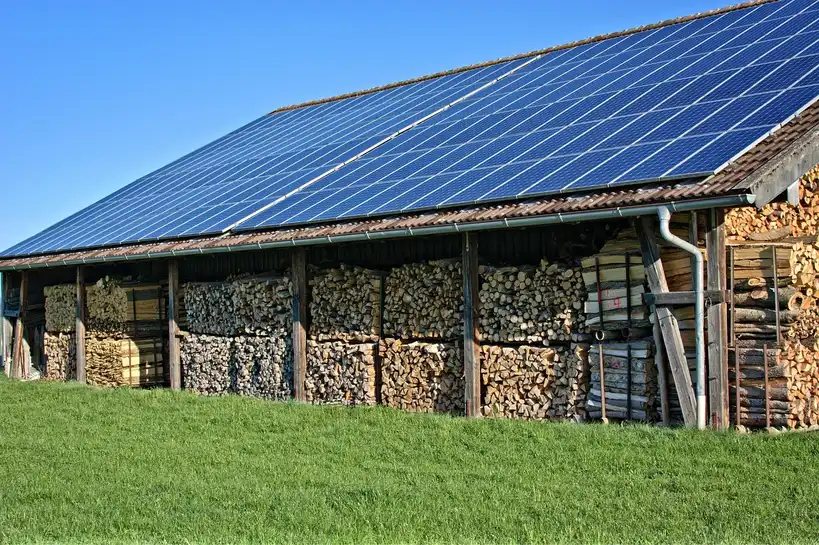
Target moisture below 20% for safe burning. Kiln-dried firewood often ends up below about 15%, but that is not required for every stove or climate. Moisture affects ignition, smoke, and creosote, so the practical goal is dry enough that the split lights readily and the center is not still wet.
| Readout or condition | Meaning | Action |
|---|---|---|
| Above 25% MC | Not ready for clean burning | Keep drying and vent more aggressively |
| 20% to 25% MC | Close, but still marginal for many burners | Continue kiln time and check the core on multiple splits |
| Below 20% MC | Burn-ready for most uses | Remove, cool, and store dry |
| Below 15% MC | Very dry fuel | Good for sale or for users who want easy ignition |
Pass/fail checklist for ready firewood
| Check | Pass | Fail |
|---|---|---|
| Split core moisture | At or below 20% | Above 20% |
| Surface feel | Dry, not cool and damp | Cool or sticky surface |
| Visual condition | Minimal mildew, no fresh wet sheen | Visible mold or trapped humidity |
| Burn test sign | Lights without heavy smoke | Smolders and steams |
Venting schedule and fan use
Open vents more during warm, sunny periods and less when humidity outside is high. Fans are helpful when the stack is deep, the species is dense, or the chamber needs steady circulation through the pile rather than around it. They are not mandatory in every build, but they do make airflow more predictable.
Say a kiln load of 2-inch maple splits reads 22% after a sunny week. Open the vents a bit more, keep the fans running, and check again after several drying days rather than assuming the reading will drop on its own.
Vent adjustment: increase opening area in small increments and recheck the wood after one to two clear days. If the load still holds moisture in the core, keep the vents open longer before changing anything else.
How long does firewood take to dry in a solar kiln?
A solar kiln can shorten seasoning from months to weeks when sun, venting, and stack geometry cooperate. Drying time depends most on split thickness, species density, starting moisture, and weather. Virginia Tech’s example kiln dries a charge in about one month of moderately sunny weather, and Grit reports a firewood kiln prototype expected to dry wood within a month.
What changes drying time the most
Dense hardwood, thick splits, and cloudy weather slow the finish. Loose stacking, warm days, and enough venting speed it up. You cannot assume every load will match a kiln schedule that worked for a different species or season.
How to spot under-drying
Do not rely on a single meter reading from the outer face. Split several pieces and check the core on different parts of the stack. If the core is still cool, damp, or above target, the wood is not ready even if the shell feels dry.
Common mistakes
Most failures come from too much heat, too little venting, or a stack that blocks air movement. Those problems show up as checking on the outside, mildew in the center, uneven readings across the load, or wood that still smokes after it leaves the kiln.
- Overheating: reduce collector exposure or open vents sooner if the outer splits are checking.
- Trapped humidity: keep the vents active and make sure the fans move air through the stack, not just around it.
- Uneven drying: restack loose rows and use more consistent split thickness.
- Under-drying: leave the load in longer and recheck split cores on several pieces.
A common first-timer mistake is pulling the driest-looking top layer and calling the whole batch finished. That leaves the lower rows to smoke and create more creosote in the stove or chimney.
Wood safety and quality improve when the kiln finishes the job instead of rushing it. Better drying reduces smoke, helps limit creosote, and can aid sanitation by drying out insects and larvae in the load. Even so, the kiln is a tool for moisture control first, not a guarantee against every defect.
Frequently asked questions
What moisture content should firewood reach before burning?
For most stoves and fireplaces, aim for below 20% moisture content. That level lights more easily and smokes less than wetter wood. If you want especially easy ignition, many users prefer wood closer to 15%, but the main threshold for safe burning is still the 20% line.
Do I need fans in a solar kiln for firewood?
Fans are useful when the stack is deep, the species is dense, or natural draft is weak. They help move moist air through the pile and out the vents. If your kiln is small and the airflow is strong enough without them, passive operation can still work.
What roof angle works best for a solar kiln?
Use a south-facing roof pitch that matches your latitude for general use. Virginia Tech’s example uses 45 degrees to the south, and it recommends adding 10 degrees for winter operation. The right pitch helps the collector catch sun instead of reflecting it away.
Can a solar kiln over-dry or crack firewood?
Yes. Too much collector area, too little venting, or a very dry sunny stretch can push the outer shell ahead of the core and cause checking. If the surface starts to split, open vents sooner and avoid stacking the load too tightly against the collector side.
What materials work best for a solar kiln roof?
Greenhouse-rated corrugated polycarbonate is a strong choice because it is durable and lets in solar heat. The same source describes a south-facing kiln with a passive solar-collecting roof and fans, and Grit recommends polycarbonate sheeting as a longer-lasting glazing option.
How does kiln drying affect firewood compared with air drying?
Kiln drying is faster and more controlled than air drying, so it can get firewood ready in weeks instead of waiting through a long outdoor season. It also lowers exposure to rain and can reduce pests. Air drying is simpler and cheaper, but it depends more on weather and time.
Sponsored / affiliate links. As an Amazon Associate I earn from qualifying purchases. I may earn additional commission from eligible campaigns.
 FIRElood Wood Burning Tool,Wood Burning kit Pen 25~750℃,Professional Wood Burning kit,with Digital Thermometer Temperature Adjustable Temperature,1 Wood Burning pens, 30 Wood Burning Pen Tips
 FIRElood LH30-1 wood burning tool,wood burning kit pen 25~750℃,professional wood burning kit,with digital thermometer temperature adjustable temperature,1 wood burning pens, 30 pen tips(LH30-1A pen)