How Much Does Hardwood Weigh? Real Weights From 9 to 83 Lbs/Ft3
Hardwood weight isn’t one number. Depending on species, it ranges from about 9 lb/ft3 for balsa up to 79-83 lb/ft3 for lignum vitae — most common furniture hardwoods like oak, maple, walnut, and cherry land between 35 and 47 lb/ft3 air-dried.
That range surprises a lot of people, because “hardwood” gets used as a shorthand for “heavy, dense wood” — and most of the time that’s a fair assumption. But hardwood is actually a botanical classification (broadleaf, seed-bearing trees like oak, maple, and yes, balsa), not a density rating. Softwoods come from cone-bearing trees like pine and fir. Knowing the real weight range for your specific species matters for shipping costs, load capacity on shelves or beams, and how much lumber your truck or trailer can actually haul in one trip.
Why “Hardwood” Doesn’t Automatically Mean Heavy
Balsa is the clearest example of why this myth trips people up. It’s botanically a hardwood — it comes from a broadleaf tree (Ochroma pyramidale) — yet it averages around 9 lb/ft3, making it lighter than nearly every softwood on the market, including cedar and pine. Meanwhile, a hardwood like ipe or lignum vitae can weigh seven to nine times more than balsa per cubic foot. If you’re estimating shipping weight, load capacity, or just how many boards will fit in your vehicle, the species matters far more than whether the wood is technically classified as “hard” or “soft.”
Best Moisture Meter For Checking Lumber Weight
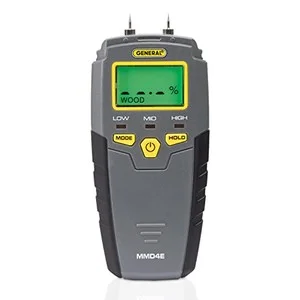 |
General Tools MMD4E Digital Moisture Meter – $39.98 Since moisture content alone can swing a board’s real weight by 30-100%, checking it directly is faster and more accurate than estimating from a density chart alone.
|
That’s also why a moisture meter is worth having on hand before you calculate a load — see the section below on how much moisture content alone can shift a board’s actual weight.
Hardwood Density By Species (Real Numbers)
These figures are air-dried weights at approximately 12% moisture content, based on USDA Forest Products Laboratory Wood Handbook data (the standard reference for wood density in North America). Individual boards will vary somewhat depending on growing conditions and the specific part of the tree, but these averages are reliable for planning purposes.
| Species | Average Weight (lb/ft3) | Notes |
|---|---|---|
| Balsa | ~9 (range ~6-15) | Lightest wood in common use, technically a hardwood |
| Eastern White Pine (softwood, for comparison) | ~26 | Included to show hardwood isn’t always heavier than softwood |
| Black Cherry | ~35 | Common furniture hardwood |
| Black Walnut | ~38 | Common furniture hardwood |
| Red Oak | ~44 | Common furniture and flooring hardwood |
| Hard (Sugar) Maple | ~44 | Common furniture and flooring hardwood |
| White Oak | ~47 | Common furniture and flooring hardwood |
| Shagbark Hickory | ~51 | Dense domestic hardwood, used for tool handles |
| Ipe (Brazilian Walnut) | ~69 | Dense tropical decking hardwood |
| Lignum Vitae | ~79-83 | One of the densest woods in the world, sinks in water |
How Moisture Content Changes The Actual Weight You’ll Lift
The density figures above assume air-dried or kiln-dried lumber at roughly 12% moisture content — the standard reference point most lumber is sold at. But that’s not the whole story, and it’s the part most weight guides skip. Green wood — lumber that’s been freshly cut and hasn’t dried yet — retains a substantial amount of water in its cell structure. That water adds real weight: green lumber can weigh 30 to 100% more than the same board once it’s fully dried, depending on species and how wet it was to start.
This is a genuinely practical distinction if you’re calculating shipping weight for a freight quote, figuring out load capacity for a shelf or beam, or hauling green-cut logs from a felled tree. A wood weight chart based on kiln-dried figures will noticeably underestimate the weight of green stock. If you’re not sure whether your lumber is green or dry, a pin-type moisture meter like the one above gives you a direct reading in seconds, which is far more reliable than guessing from how heavy a board feels.
As a rough guide: kiln-dried lumber sold at a home center is typically already down around 12-15% moisture content, ready to use. Air-dried lumber from a local sawyer can still be sitting anywhere from 15-25% depending on how long it’s been stacked and stickered. Freshly felled, green wood can start out well above 30% moisture content — sometimes over 100% on a dry-weight basis for certain species, since wood moisture content is measured as a percentage of the wood’s own oven-dry weight, not as a simple fraction of total weight. That’s why green log and green lumber weight estimates need their own separate figures rather than borrowing the standard 12%-MC density chart.
Real-World Weight Examples
Density charts are useful, but seeing weight in real-world units helps with actual planning. Here’s how hardwood weight breaks down for common quantities you’ll actually deal with in a shop or on a job site.
| Quantity | Approximate Weight |
|---|---|
| 1 board foot of hardwood lumber (mid-density species) | ~3-4 lbs |
| Full cord of seasoned hardwood (128 ft3 stacked) | 4,700-6,200 lbs |
| Hardwood slab or live-edge slab (varies by size and species) | 45-70 lb/ft3 |
| Green (undried) hardwood vs. the same wood kiln-dried | +30-100% heavier while green |
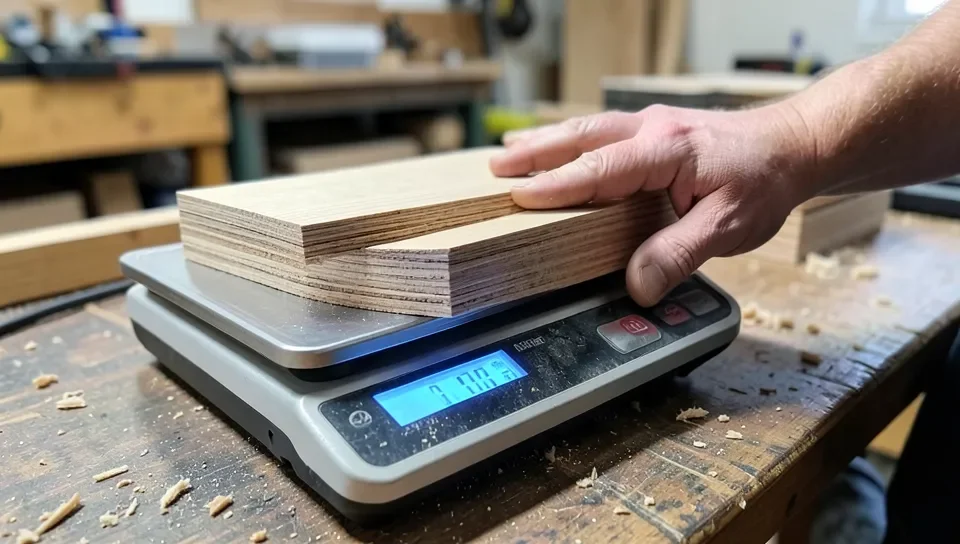
How To Calculate The Weight Of A Specific Piece
The formula is straightforward: weight equals density multiplied by volume. First find the board’s volume in cubic feet (length x width x thickness in inches, divided by 1,728). Then multiply that by the species’ density from the table above. For example, a dry 2x6x8 red oak board (1.5 in x 5.5 in x 96 in) has a volume of about 0.458 cubic feet; at roughly 44 lb/ft3, that board weighs approximately 20 pounds. Our wood density calculator and wood weight calculator automate this if you’d rather skip the manual math, and our beam load capacity guide covers how to apply these weights to structural planning.
Practical Uses For Hardwood Weight Data
Knowing real weight figures matters most when the number actually changes a decision. A few places where it does:
- Shipping and freight quotes. Carriers price by weight (or dimensional weight, whichever is higher). Underestimating a pallet of dense hardwood like hickory or ipe by using a generic “wood weighs about 40 lb/ft3” figure can leave you short on a freight quote or over a vehicle’s rated payload.
- Furniture and shelving load ratings. A bookshelf or workbench built from a dense hardwood adds meaningfully more dead weight to the structure itself before you even load it with books or tools — worth factoring into span and support calculations, not just the load you’re planning to put on top.
- Moving and hauling logistics. A pickup truck’s payload rating is a hard limit. A full cord of dense hardwood at the upper end of the 4,700-6,200 lb range can exceed what many half-ton trucks are rated to carry in a single load, especially if the wood is still green.
- Choosing wood by weight for a specific project. A large tabletop, a cutting board meant to be portable, or a piece of furniture that needs to be carried up stairs all benefit from picking a lighter hardwood (cherry or walnut) over a heavier one (hickory or oak) when strength requirements allow it.
Frequently Asked Questions
How much does hardwood lumber weigh per cubic foot?
It depends heavily on species. Common furniture hardwoods like cherry, walnut, oak, and maple run roughly 35 to 47 pounds per cubic foot air-dried, but the full hardwood category spans a much wider range, from about 9 lb/ft3 for balsa up to 79-83 lb/ft3 for lignum vitae.
What is the lightest hardwood?
Balsa is the lightest wood used in woodworking, averaging around 9 lb/ft3, though individual boards can range from roughly 6 to 15 lb/ft3 depending on the tree and grade. It’s botanically classified as a hardwood (broadleaf tree) despite being lighter than most softwoods like pine.
How much does moisture content affect hardwood weight?
Significantly. Density figures are standardized at about 12% moisture content. Green, freshly cut lumber that hasn’t dried yet can weigh 30 to 100% more than the same board fully dried, since it’s still holding a large amount of water weight.
How much does a full cord of hardwood weigh?
A full cord (128 cubic feet stacked) of seasoned hardwood typically weighs between 4,700 and 6,200 pounds, depending on species density and how much moisture remains in the wood.
Conclusion
Hardwood weight isn’t a single number, and treating it as one is where most weight estimates go wrong. The real range runs from about 9 lb/ft3 for balsa to over 80 lb/ft3 for the densest tropical species, with common furniture hardwoods landing in the 35-47 lb/ft3 band. On top of species, moisture content can shift the actual weight you’re lifting or shipping by 30-100%, so a quick moisture check is worth the few seconds it takes before you commit to a shipping quote or a load calculation.
Sponsored / affiliate links. As an Amazon Associate I earn from qualifying purchases. I may earn additional commission from eligible campaigns.