Pocket Screw Calculator: Choose the Right Length Fast
Use a pocket screw about 1/2 to 5/8 the actual thickness of the workpiece, then choose coarse threads for softwood and fine threads for hardwood; set the jig to the measured board thickness on the chart. Wrong length or thread choice can blow through the face, strip the joint, or leave a weak clamp that creeps under load. This guide explains the thickness-to-length math, thread choices, and jig settings, plus a quick sanity check for any pocket screw calculator.
How is this calculated?
Press Calculate to see the math with your numbers.
How a pocket screw calculator works
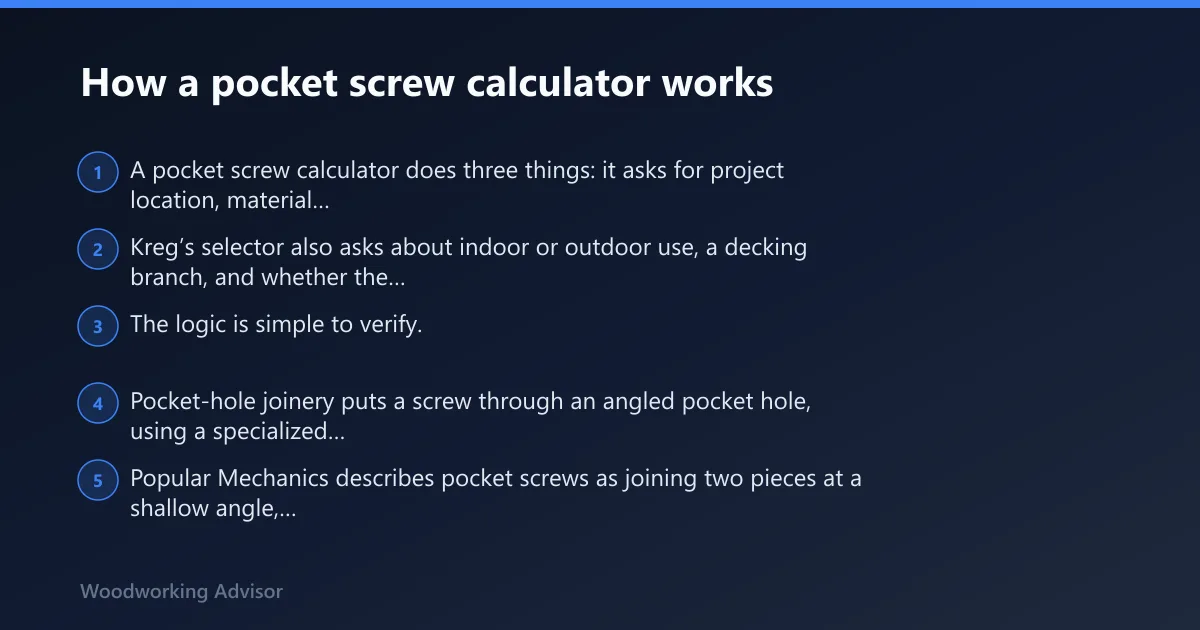
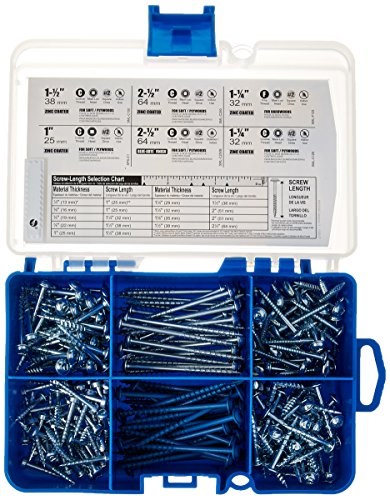
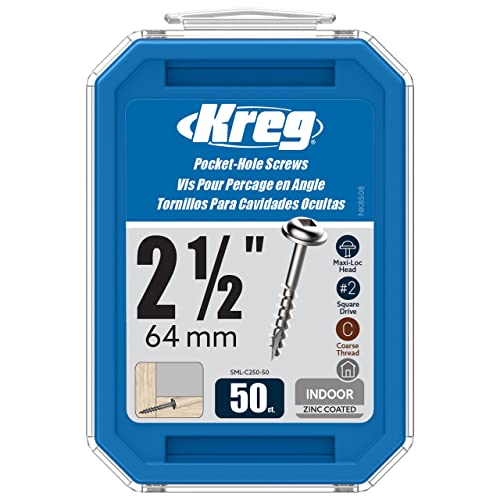

A pocket screw calculator does three things: it asks for project location, material type, and thickness; it checks whether both parts match; then it returns a screw length and thread type that should bite well without poking through. Kreg’s selector also asks about indoor or outdoor use, a decking branch, and whether the units are inches or millimeter.
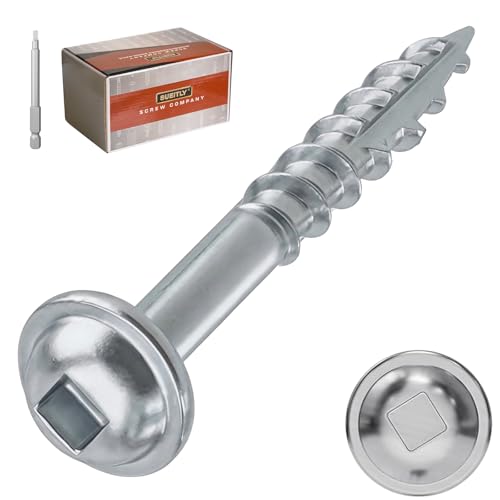
The logic is simple to verify. Pocket-hole joinery puts a screw through an angled pocket hole, using a specialized drill bit, so the screw must be long enough to hold the pieces together but short enough to stay inside the far face. Popular Mechanics describes pocket screws as joining two pieces at a shallow angle, which is why thread reach matters so much. (en.wikipedia.org)
What inputs it asks for
Use actual thickness, not nominal lumber size. The selector asks whether the project is indoor or outdoor, whether decking is involved, whether the material is hardwood or softwood/plywood, which unit system you want, and whether both pieces are the same thickness. Kreg also warns that some projects may need extra help finding the right screw.
How output length and thread type are chosen
For most builds, the calculator is really choosing between two constraints: enough thread engagement in the receiving board for holding power, and no tip breakout on the far side. In practice, hardwood often calls for fine-thread pocket-hole screws. In practice, softwood and plywood often call for coarse-thread pocket-hole screws. Outdoor projects should be matched to the outdoor screw option, not the indoor one.
Where Kreg’s selector tool fits in
Kreg’s Screw Selector Tool is the right place to confirm the final choice when the build is standard. It handles the same-thickness check, the thickness input, and the indoor-outdoor split, including the decking yes/no branch. When the project is mixed thickness or the stock is unusual, the tool may need extra help finding the match.
What size pocket-hole screw do I need?
The best screw size follows actual material thickness, not the nominal label on the board stack. For common stock, thinner parts need shorter screws; thicker parts need longer ones. The goal is steady grip without a tip that exits the face. For mixed builds, the thicker piece often controls the final choice, but not always.
1/2 in stock
For 1/2 in material, the screw has far less room before it reaches the far face. The Kreg 520 Pro is described as working with material from 1/2 inch to 1.5 inches thick, and the thin-stock accessory is described as working with material as thin as 1/2 inch. That is the danger zone where protrusion risk is highest.
3/4 in stock
For 3/4 in material, the usual pocket-hole choices are more forgiving. The screw should still stay inside the far face, but there is enough thickness for a normal pocket-hole screw choice in many shop builds. This is the most common place to sanity-check the calculator output, especially on face frames, cabinet parts, and plywood panels.
1-1/2 in stock and thicker material
At 1-1/2 in, the screw can be longer, but the joint still must avoid breakout. Thicker stock gives more purchase, yet mixed thickness or angled assemblies can still change the answer. If the tool cannot find a standard match, treat that as a signal to recheck the actual measured thickness and the joint layout before drilling.
Why actual thickness matters more than nominal size
Nominal lumber is the label. Actual thickness is what the screw sees. A board sold as 3/4 in may measure a little under that, and that difference changes how far the screw tip travels. In pocket-hole work, a small thickness error can move the point from safe holding power to a visible blowout.
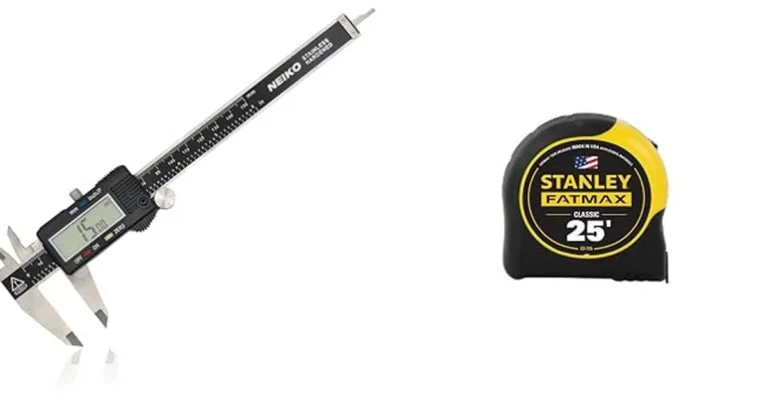
Measure with calipers or a reliable rule before entering the calculator. This matters more with plywood, MDF, and surfaced hardwood, where the finished thickness may not match the size you expected. Kreg specifically advises choosing actual thickness, not nominal lumber size, because the selector is working from the material that is actually in the joint.
How do I choose screws for hardwood, softwood, or plywood?
Use fine-thread pocket-hole screws for hardwood, and coarse-thread screws for softwood and plywood. That split matters because thread form changes how aggressively the screw bites. For indoor projects, the indoor screw variant is usually the one to compare first. For outdoor work, start with the outdoor version instead.
Fine-thread screws for hardwood
Hardwoods resist thread cutting more than softwoods do. Fine-thread pocket-hole screws are designed to cut a cleaner path in harder material and reduce the chance of splitting or stripping the threads. Dense stock also makes poor size choices easier to notice, because the screw can stall before it fully clamps the joint.
Coarse-thread screws for softwood and plywood
Softwood and plywood usually benefit from coarse-thread pocket-hole screws. The deeper thread profile grabs the fibers more readily and helps the joint pull tight. MDF is trickier than either, because it can crumble around the threads; for that reason, verify the thickness carefully and consider test holes in scrap before committing to the part.
Indoor versus outdoor Kreg pocket-hole screws
Kreg distinguishes indoor and outdoor projects in the selector. That branch matters because the screw choice is not only about length; it also reflects where the joint will live. A deck or exterior build should not be treated like an interior cabinet face frame. The decking yes/no input exists for that reason.
What if my two boards are different thicknesses?
Different-thickness pieces usually need a longer screw than the thinner board alone would suggest, but not so long that the tip exits the face of the thinner part. Kreg notes that different-thickness pieces may need a longer screw for strength without poking through. When the two parts do not match, the thicker piece often sets the floor for holding power, while the thinner piece sets the ceiling for tip length.
Which board thickness controls the screw choice
Start with the thinner board, because that is where protrusion risk shows up first. Then ask whether the screw still has enough bite in the thicker part. If the answer is no, the joint may need a different pocket position, a different fastener, or a change in the joint design. One size rarely fits mixed stock cleanly.
When a standard calculator answer is not enough
If the calculator returns a length that looks close but awkward, check the exact board pair, not just the nominal sizes. Mixed MDF and plywood, face frames meeting carcass parts, and step joints all deserve a second look. The tool may need extra help, and Kreg’s warning about that is worth taking seriously.
Signs the joint needs a different approach
Watch for three warning signs: the screw would likely break through the far face, the threads would barely engage the second piece, or the joint would rely on one narrow strip of material for all its strength. In those cases, a different pocket location, a longer mating part, or a different fastener may be safer.
Pocket-hole screw length lookup table
This table is a quick sanity check, not a substitute for measuring the actual boards. It shows common thickness pairs, a likely screw choice, a likely thread type, and a short protrusion check. If the result feels tight on a mixed build, confirm with the current selector before drilling.
| Actual board thickness | Common use case | Likely screw length | Wood type | Indoor or outdoor | Sanity check for protrusion risk |
|---|---|---|---|---|---|
| 1/2 in | Thin face frames, light panels | Short pocket screw | Softwood or plywood: coarse; hardwood: fine | Indoor unless exterior rated parts are needed | High risk; verify on scrap before drilling production parts |
| 5/8 in | Thin cabinet parts, some plywood builds | Short to medium pocket screw | Softwood or plywood: coarse; hardwood: fine | Indoor or outdoor by project | Moderate risk; measure actual thickness carefully |
| 3/4 in | Face frames, shelves, carcass parts | Common pocket screw length | Softwood or plywood: coarse; hardwood: fine | Indoor or outdoor by project | Usually safe if the thickness is real 3/4 in, not assumed |
| 1 in | Thicker shop parts, mixed builds | Medium pocket screw | Softwood or plywood: coarse; hardwood: fine | Indoor or outdoor by project | Good holding room, but check the thinner mate in mixed joints |
| 1-1/2 in | Heavy stock, structural shop parts | Long pocket screw | Softwood or plywood: coarse; hardwood: fine | Indoor or outdoor by project | Lower protrusion risk than thin stock, but still verify the far face |
Which Kreg jig settings match my material thickness?
Match the jig to the measured thickness, then confirm the screw choice against the current selector. The compatibility list appears to cover older K4 and K5 family jigs, including several K4- and K5-series models. That helps, but the thickness still drives the setup.
For a practical workflow, set the jig to the board thickness, drill a test pocket in scrap, and check the screw exit point before touching the real part. The Kreg 520 Pro is described as working with material from 1/2 inch to 1.5 inches thick, and it can be used as a pocket screw drilling station. The KPHA750 Docking Station is another accessory noted in the review.
- Measure the actual thickness of both parts.
- Choose indoor or outdoor, then check whether decking applies.
- Pick hardwood or softwood/plywood.
- Enter the thickness in inches or millimeter.
- Confirm whether both pieces are the same thickness.
- Compare the returned screw length against the table and inspect for protrusion risk.
What do I do if the calculator says it can’t find the right screw?
When the tool cannot find a match, do not guess from nominal size alone. Recheck the actual thickness, the wood category, and whether both pieces are the same thickness. Kreg warns that some projects may need extra help finding the right screw, and that warning is especially relevant for MDF, mixed thickness, and very thin stock.
If the thickness pair is odd, step back and choose the joint strategy first, not the screw. A shop-made test piece can tell you more than a screen can. If the selector still cannot settle on a match, contact Kreg support or technical support and give them the measured thicknesses, the material type, and whether the project is indoor, outdoor, or decking.
Frequently asked questions
How do I choose the right pocket screw length for my wood thickness?
Measure the actual thickness, then select a screw that reaches into the mating board without breaking through the far face. As a rule, pocket screws are usually chosen at roughly half to a bit over half of the workpiece thickness, though the exact choice depends on the material pairing, thread type, and whether the project is indoors or outdoors.
What size pocket hole screw do I need for 1/2 in, 3/4 in, or 1-1/2 in material?
For 1/2 in stock, use a short screw and check for protrusion risk first. For 3/4 in stock, a common pocket screw length is often the right starting point. For 1-1/2 in material, use a longer screw, but still verify that the tip stays inside the far face.
Does Kreg use different screws for hardwood and softwood?
Yes. Kreg distinguishes hardwood from softwood/plywood, and that affects thread choice. Fine-thread pocket-hole screws are the usual match for hardwood. Coarse-thread pocket-hole screws are the usual match for softwood and plywood. That thread split helps the screw bite cleanly and reduces the risk of poor holding power.
What if my two boards are different thicknesses?
Different-thickness pieces need more care than same-thickness joints. The thinner board sets the protrusion limit, while the thicker board helps determine how much screw bite is available. If the standard answer feels marginal, test the joint in scrap or confirm the result with Kreg support before drilling the final parts.
What is the difference between pocket-hole screws and regular wood screws?
Pocket-hole screws are designed for pocket-hole joinery, where the screw enters through an angled hole and pulls one piece to another at a shallow angle. Regular wood screws are not shaped for that path. Pocket-hole screws are built to work with the pocket-hole bit, the angled entry, and the clamp force that joinery creates.
Can I use a pocket screw calculator for metric measurements?
Yes. Kreg’s selector supports both inches and millimeter units. The practical workflow is to measure the actual thickness in the same unit system you plan to enter, choose the material type, and confirm the same-thickness check. Metric inputs still need the same sanity check for protrusion risk as imperial inputs.
Sponsored / affiliate links. As an Amazon Associate I earn from qualifying purchases. I may earn additional commission from eligible campaigns.