How Much Weight Can Hot Glue Hold? The Ultimate Answer
The amount of weight hot glue can hold depends on the type of glue, the materials being joined, and the direction of the force. For general crafts, it can hold a few pounds. For specialty high-strength hot glue on ideal surfaces like wood, a properly made joint might hold 100+ pounds against a shear (sliding) force, but much less against a direct pulling force.
Hello, fellow makers! It’s Md Meraj, your friendly guide in the workshop. I see this question pop up all the time: “How much weight can hot glue hold?” It’s a simple question with a surprisingly tricky answer. Maybe you’ve had a picture frame fall off the wall or a craft project come apart right after you finished it. It’s frustrating!
Don’t worry, you’re not alone. Hot glue is one of the most useful tools in our arsenal, but it has its limits. Today, we’re going to clear up the confusion. We’ll look at what makes hot glue strong, what makes it weak, and exactly when you can trust it for your projects. Let’s make sure your next creation holds together perfectly.
What is Hot Glue, Really?
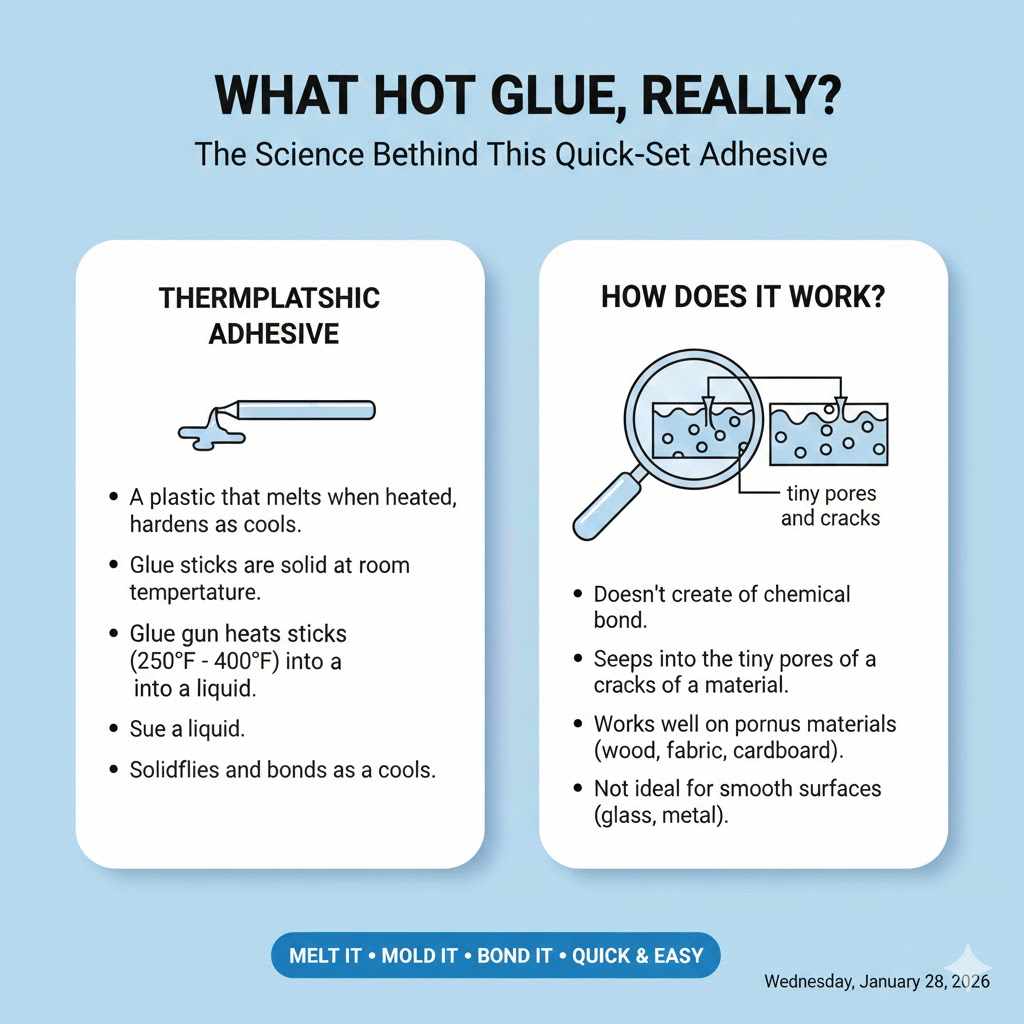
Before we test its strength, let’s understand what we’re working with. Hot glue is a type of thermoplastic adhesive. That’s just a fancy way of saying it’s a plastic that you melt to apply and which hardens as it cools. The glue sticks are solid at room temperature. Your glue gun heats them up (usually between 250°F and 400°F), turning them into a liquid you can apply.
As the glue cools, it solidifies and bonds to the surfaces. It doesn’t create a chemical bond like super glue or epoxy. Instead, it works by seeping into the tiny pores and cracks of a material, creating a physical bond as it hardens. This is why it works so well on porous materials like wood, fabric, and cardboard, but not so well on super smooth surfaces like glass or metal.
The Big Question: So, How Much Weight Can It Hold?
This is where things get interesting. There isn’t one single answer, because the holding power of hot glue is affected by many different things. Think of it less like a fixed number and more like a range that changes with every project.
Understanding Strength: Pulling vs. Sliding
First, we need to know about the two main types of stress a glue joint experiences. Don’t worry, this is easy!
- Tensile Strength (Pulling): This is the force trying to pull the two surfaces directly apart. Imagine hanging a plant from a hook glued to the ceiling. Gravity is pulling straight down. Hot glue is very weak against this type of force.
- Shear Strength (Sliding): This is the force trying to slide the two surfaces past each other. Imagine gluing a wooden block to the side of a wall and hanging a picture from it. The weight is trying to slide the block downwards. Hot glue is much, much stronger against this type of force.
In most DIY and woodworking projects, the force you care about is shear strength. A single drop of standard hot glue might only hold a few pounds of tensile strength, but that same drop could hold 10, 20, or even more pounds of shear strength on the right surface.
Key Factors That Affect Hot Glue’s Holding Power
To get the best results from your hot glue, you need to be a bit of a detective. You have to look at all the clues: the glue itself, the materials, and how you apply it. Let’s break down the most important factors.
1. The Type of Hot Glue Stick
Not all glue sticks are created equal! They come in different formulas designed for different jobs. Using the right stick can make a huge difference in how much weight your hot glue can hold.
| Type of Glue Stick | Best For | Relative Strength | Notes |
|---|---|---|---|
| All-Purpose / Craft Glue | Light crafts, paper, fabric, floral arrangements | Low | This is the most common and cheapest type. It cools quickly and is great for general use, but not for heavy loads. |
| High-Temperature Glue | Wood, plastics, light metals, ceramics | Medium | Creates a stronger bond because it melts at a higher temperature, allowing it to penetrate surfaces better. Your go-to for general workshop tasks. |
| Construction / Woodworking Glue | Wood, MDF, plastics, upholstery | High | These are specialty formulas that take longer to set but create a very strong, more permanent bond. They are often tinted yellow or amber. |
| Specialty Glues (e.g., for Plastic) | Specific materials like acrylic, PVC | Very High (for its purpose) | Formulated to bond with tricky, non-porous surfaces. Always check the package for the intended material. |
2. The Materials You’re Gluing
Hot glue works best when it can grab onto a surface. This is why it performs so differently on different materials.
- Excellent Surfaces (Porous): Wood, paper, cardboard, fabric, and foam are perfect for hot glue. The molten glue soaks into the pores and creates a powerful physical grip when it cools.
- Good Surfaces (Slightly Porous/Textured): Some plastics and painted surfaces can work well, especially if they are lightly sanded or have some texture.
- Poor Surfaces (Smooth & Non-Porous): Glass, smooth metal, and silicone are very difficult for hot glue to stick to. The glue just sits on the surface and can often be peeled right off once it’s cool. Temperature changes can also cause the bond to fail on these materials.
3. Temperature and Cure Time
Temperature is everything with hot glue. A high-temperature glue gun melts the glue at a hotter temperature, making it more liquid. This allows it to seep deeper into porous materials before it starts to cool, creating a stronger bond. According to research from institutions like universities studying wood adhesives, proper temperature is critical for bond formation.
Once you apply the glue, you have a short window of “open time” before it hardens. Press and hold your pieces together firmly during this time. Let the glue cool completely—this can take anywhere from 1 to 5 minutes depending on how much you used. A bond that feels solid after 30 seconds might still be weak on the inside.
4. Surface Preparation is Key
Want to double the strength of your hot glue bond? Prepare your surfaces! This is a step many people skip, but it makes a world of difference.
- Clean It: Make sure surfaces are free of dust, grease, and dirt. A quick wipe with isopropyl alcohol is great for non-porous surfaces.
- Dry It: Glue won’t stick to a wet surface. Make sure everything is completely dry.
- Scuff It: For semi-smooth surfaces like plastic or painted wood, lightly sanding them with 120-grit sandpaper creates tiny grooves for the glue to grip. This drastically increases the holding power.
5. The Amount of Glue Applied
More is not always better. A thick, lumpy line of glue looks strong, but it can create a weak bond because it cools too quickly on the outside. It’s better to apply a consistent, even bead of glue. This ensures the bond is uniform across the entire surface. Pressing the pieces together firmly will spread the glue into a thin, even layer, which is ideal for maximum strength.
How to Test Hot Glue Strength Yourself (A Simple DIY Experiment)
Ready to see this in action? You can do a simple test in your workshop to see for yourself how much weight hot glue can hold.
What you’ll need:
- Your hot glue gun and glue sticks
- Two scrap blocks of wood (like a 2×4 cutoff)
- A bucket with a handle
- Sand, water, or weights to put in the bucket
- A scale (a luggage scale or bathroom scale works)
- Safety glasses
Here are the steps:
- Prepare your wood blocks. Make sure they are clean and dry.
- Apply the hot glue. Lay one block flat and apply a one-inch line of hot glue to its center.
- Press the blocks together. Immediately press the second block on top, forming an “L” shape. Hold it firmly for one minute.
- Let it cure. Let the glue cool and harden completely for at least 10 minutes. More is better!
- Set up the test. Clamp the bottom block securely to the edge of your workbench so the top block hangs over the side.
- Start adding weight. Hang the empty bucket from the top block. Slowly start adding weight (sand is great for this) to the bucket.
- Measure the breaking point. Keep adding weight until the bond fails. Then, weigh the bucket to see how much weight it was holding.
You might be surprised by the results! Try this again with different materials or after scuffing the surface and see how much stronger the bond gets.
Practical Examples: When to Use (and NOT Use) Hot Glue
Now that we know the science, let’s get practical. Knowing when to reach for the hot glue gun is just as important as knowing how to use it.
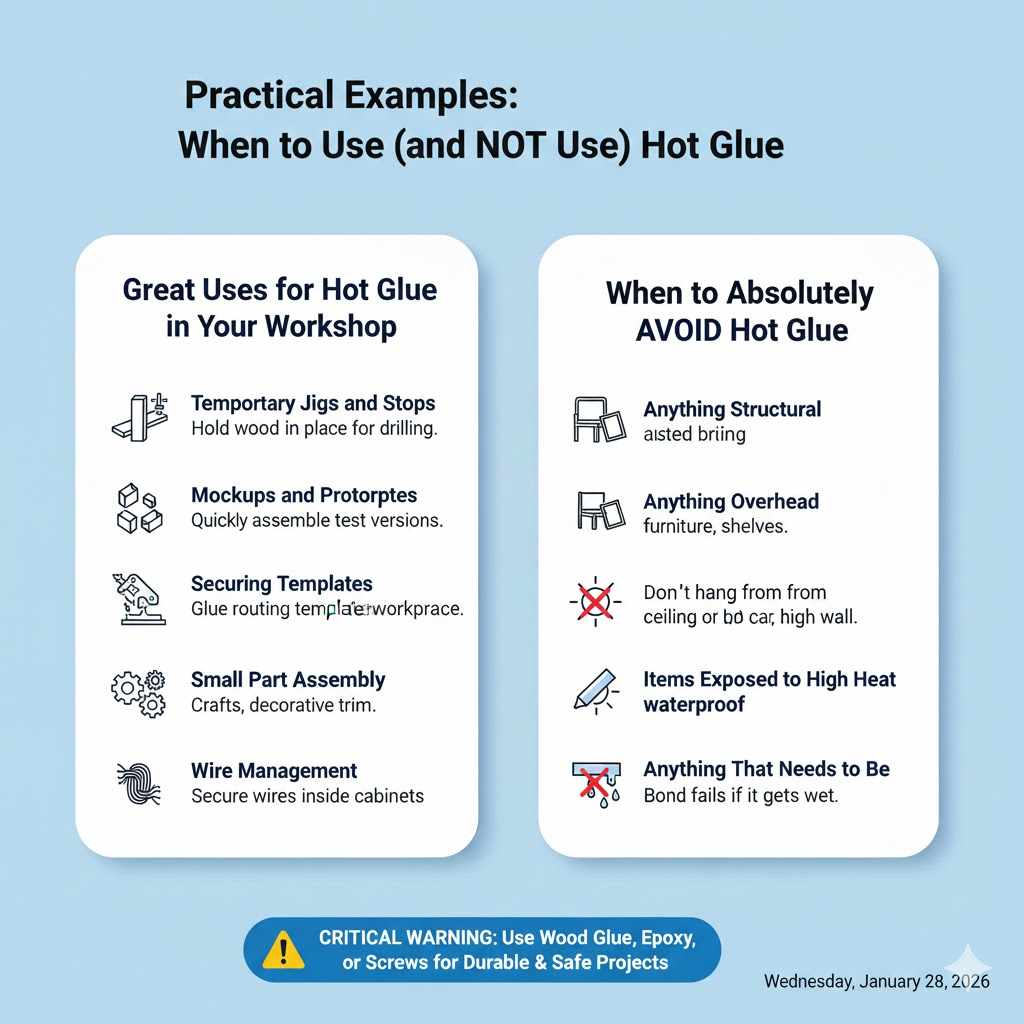
Great Uses for Hot Glue in Your Workshop
- Temporary Jigs and Stops: Need to hold a piece of wood in place for a moment while you drill or saw? A few dabs of hot glue work perfectly and can be peeled off later.
- Mockups and Prototypes: Hot glue is fantastic for quickly assembling a test version of a project before you commit to screws or permanent glue.
- Securing Templates: Gluing a routing template to a workpiece is fast and secure. When you’re done, the template pops right off.
- Small Part Assembly: It’s great for assembling small crafts, decorative trim, or non-structural parts of a larger project.
- Wire Management: A dab of hot glue is perfect for securing small wires inside cabinets or along the back of a desk.
When to Absolutely AVOID Hot Glue
For safety and durability, please never use hot glue for these tasks. This is where you need to use wood glue, epoxy, or mechanical fasteners like screws and bolts.
- Anything Structural: Never use hot glue to assemble furniture, shelves, or anything that will bear a significant human or object load.
- Anything Overhead: Do not use hot glue to hang anything from the ceiling or high on a wall. The bond can fail over time or with temperature changes.
- Items Exposed to High Heat: Remember, hot glue melts with heat. Don’t use it on anything that will be in direct sunlight, in a hot car, or near a heat source.
- Anything That Needs to Be Waterproof: Most hot glues are not waterproof and the bond can fail if it gets wet. For projects that need to resist moisture, the U.S. Forest Service recommends specialized waterproof adhesives.
Frequently Asked Questions (FAQ)
Is hot glue permanent?
It depends on the material. On porous surfaces like wood and fabric, it can be very difficult to remove and is considered semi-permanent. On smooth surfaces like glass or metal, the bond is usually weak and can be easily peeled off, making it temporary.
How can I make hot glue stick better to plastic?
To improve the bond on plastic, start by cleaning the surface with isopropyl alcohol to remove any oils. Then, lightly sand the area with fine-grit sandpaper (around 220-grit) to create a rough texture. Use a high-temperature specialty plastic glue stick for the best results.
Is hot glue waterproof?
No, standard hot glue is not waterproof. Water can weaken the bond over time, causing it to fail. For outdoor or wet applications, you should use a waterproof adhesive like epoxy or a construction-grade silicone sealant.
Can you use hot glue to hang pictures on a wall?
It is not recommended. The bond between the glue and the paint or drywall is often weak (low tensile strength). Changes in temperature and humidity can cause the bond to fail unexpectedly, resulting in a broken frame. Use proper picture-hanging hardware instead.
How do you remove hot glue?
The easiest way to remove hot glue is with isopropyl (rubbing) alcohol. Apply a small amount to the edges of the glue. The alcohol helps to break the bond, allowing you to peel it off. For stubborn spots, you can also gently heat the glue with a hairdryer to soften it before peeling.
How long does it take for hot glue to reach maximum strength?
While hot glue feels hard after about a minute, it takes longer to cure completely. For a standard-sized bead of glue, you should allow at least 5-10 minutes for it to reach its maximum holding power before putting any stress on the joint.
What’s the difference between high-temp and low-temp glue guns?
Low-temp guns are safer for delicate materials like foam, ribbon, and fabric because they won’t melt them. High-temp guns create a much stronger bond because the hotter glue can penetrate surfaces better. For woodworking and general repairs, a high-temp gun is always the better choice.
Conclusion: Your Trusty Helper in the Workshop
So, how much weight can hot glue hold? As we’ve seen, the answer is: “It depends!” It’s a fantastic tool, but not a magical one. Its strength lies in its speed and versatility for temporary holds, mockups, and crafts. On a porous material like wood, a good quality hot glue joint can have impressive shear strength, easily holding several pounds and sometimes much more.
However, it is not a replacement for wood glue, epoxy, or screws when it comes to structural joints. The real secret to success is understanding its limits. By choosing the right glue stick, preparing your surfaces properly, and using it for the right tasks, your hot glue gun will become one of the most reliable and helpful tools on your bench.
Now you have the knowledge to glue with confidence. Get out there, start creating, and build something amazing!