What Causes Creosote Buildup in a Chimney?
Creosote builds up when wood burns wet, the chimney draft is weak, and the flue stays too cold or too large, so smoke condenses instead of leaving the system. Left alone, that buildup can lead to a chimney fire, block venting, and push smoke or carbon monoxide indoors. This guide explains how each cause works, how to spot the main signs, and what to fix first.
Creosote and flue walls
Creosote is commonly described as a black, tar-like wood-smoke residue that can burn. It forms when smoke cools and condenses on chimney flue walls, where it can collect as soot, flakes, tar, or a glazed coating. The flue is the passage that should move smoke out fast enough to keep deposits from sticking.
Once deposits begin, they narrow the flue and slow venting. That slowdown lets more smoke cool on contact with the chimney wall, so buildup tends to feed on itself. Heavy buildup is more than a cleaning issue; it can reduce draft and raise the chance of smoke spillback indoors.
How buildup changes from soot to glaze
Creosote buildup is divided into three degrees or stages. Degree II is a harder, tar-like layer with a porous, shiny appearance. Degree III is a dense, glazed, tar-based coating that is often considered among the most dangerous and hardest to remove.
Stage matters because it helps you judge urgency. Light, flaky deposits usually point to cooler smoke and early buildup. Hard, glazed deposits point to repeated condensation over time, often from poor draft, cold flue conditions, or long stretches of low-temperature burning.
What causes creosote buildup in a chimney?
Creosote buildup comes from three linked problems: wet fuel, weak draft, and a flue that cools smoke too quickly. Any one of those can push smoke below the point where it exits cleanly. When they occur together, buildup speeds up and the chimney becomes harder to keep clean.
Wet fuel
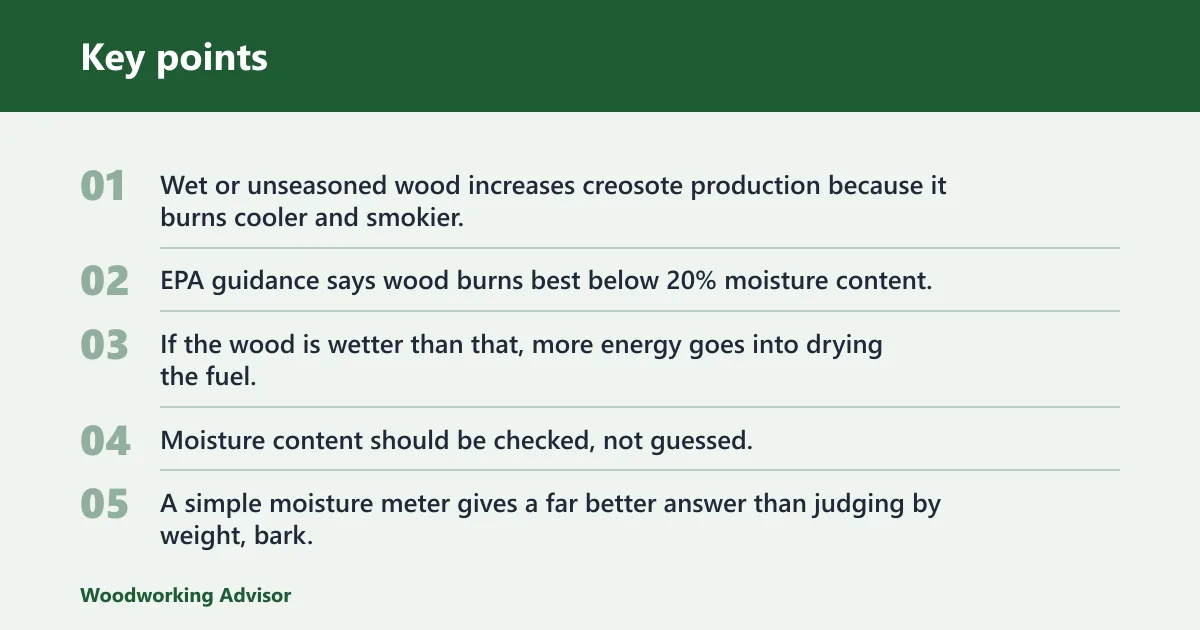
Wet or unseasoned wood increases creosote production because it burns cooler and smokier. EPA guidance says wood burns best below 20% moisture content. If the wood is wetter than that, more energy goes into drying the fuel, less goes into clean combustion, and more smoke reaches the flue.
Moisture content should be checked, not guessed. A simple moisture meter gives a far better answer than judging by weight, bark, or age alone. Seasoned firewood should be the default choice because low moisture content helps fires burn hotter and cleaner and reduces smoke and condensation.
Weak draft
Restricted airflow keeps smoke in the firebox and flue longer, which raises creosote risk. Poor draft also makes the fire burn less completely, so the exhaust contains more unburned material that can stick to chimney walls. Appliance size, air settings, and chimney condition all affect draft.
Smoldering fires are not safe or efficient for most appliances. They often happen when the air supply is turned down too far, the fuel load is damp, or the operator tries to stretch burn time at the expense of heat. Cooler combustion usually leaves dirtier exhaust behind.
Cold or oversized flue
A cold chimney startup can cool smoke before the flue is warmed enough to draw well. Exterior masonry chimneys lose heat faster to ambient air, so they are more likely to chill the exhaust early in the burn. Flue gas temperatures below about 250°F speed condensation.
An oversized flue can do the same thing in another way. If the flue is larger than the appliance needs, smoke slows down and spreads out, which lets it cool and condense sooner. That mismatch is common when a small appliance is tied to a large, cold chimney.
Say your stove lights easily, but the first 20 minutes produce a lazy, gray plume and a sour smell at the cap. The likely problem is not one thing alone; it is often a cold flue plus damp kindling or a weak start-up draft. The first fix is to warm the chimney faster and keep the early fire hotter.
Can slow-burning fires increase creosote?
Yes. Slow-burning or smoldering fires can increase creosote because cooler exhaust carries more smoke and water vapor into the flue. That smoke condenses sooner on chimney walls, especially when the chimney is cold or the airflow is restricted. The result is faster buildup, often with tar-like deposits.
Why low heat leaves more residue
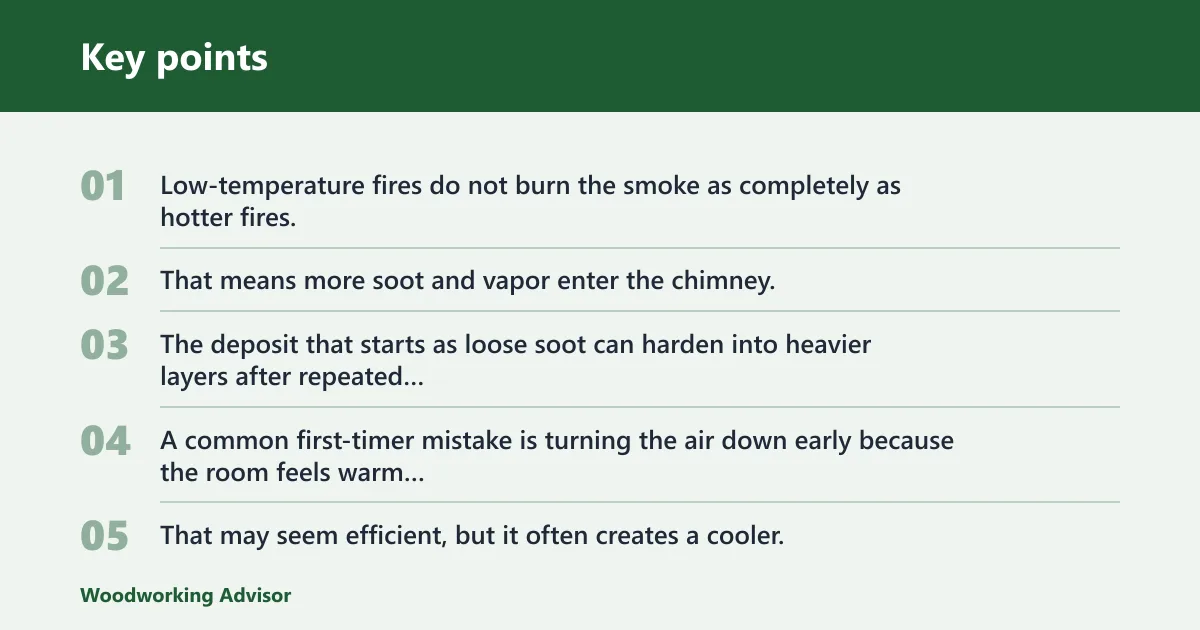
Low-temperature fires do not burn the smoke as completely as hotter fires. That means more soot and vapor enter the chimney, and more of it sticks before it can exit. The deposit that starts as loose soot can harden into heavier layers after repeated low-output burns.
A common first-timer mistake is turning the air down early because the room feels warm enough. That may seem efficient, but it often creates a cooler, dirtier burn that puts more residue on the flue walls. If the fire is going lazy and smoky, more air or drier fuel is usually the better move.
Restricted air supply
Restricted airflow is one of the fastest ways to raise creosote risk. When the appliance cannot get enough combustion air, the fire smolders, the exhaust cools, and the chimney gets coated more quickly. That is why draft, air settings, and fuel condition need to be judged together.
If the appliance is starved for air, adding more fuel rarely helps. The better first step is to open the controls enough to get a hotter, cleaner burn, then check whether the wood is actually dry enough. If the same pattern keeps returning, the chimney may need service.
What chimney conditions make creosote worse?
Cold flues, oversized flues, and exterior masonry chimneys all make creosote worse because they strip heat from smoke before it leaves the system. When smoke cools too quickly, it condenses on the flue walls instead of traveling outdoors. That effect is strongest during startup and in shoulder-season use.
Cold startup
Cold startup is a distinct failure mode. The chimney starts out cold, draft is weak at first, and the initial smoke spends more time in contact with cool surfaces. The result is more condensation before the flue is hot enough to move exhaust efficiently.
If this happens often, the first fix is usually to build a hotter kindling fire and avoid choking it early. A short, brisk startup is better than a long, smoky one. The goal is to warm the flue quickly enough that smoke keeps moving.
Oversized chimneys
Oversized chimneys are a separate problem from weak fuel. A flue that is too large for the appliance can cool smoke, slow draft, and leave more residue behind. The mismatch is especially likely to show up as heavy deposits near the top of the system or repeated trouble in mild weather.
Suppose a small insert is tied to a wide masonry flue and the chimney is on an outside wall. Even with decent wood, the smoke may cool too fast to stay clean. In that case, the fix is not simply “burn hotter”; the chimney may need sizing review or professional correction.
Creosote buildup checklist
This checklist helps you sort the problem by symptom. Match what you see first, then use the likely cause and first fix to decide whether you need better fuel, better airflow, or a chimney sweep.
| Symptom | Likely cause | Why it happens | First fix |
|---|---|---|---|
| Black, flaky soot near the flue entrance | Early-stage deposits from cooler smoke | Smoke cooled before it left the chimney wall | Dry the fuel and warm the startup fire |
| Sticky tar-like flakes or crust | Repeated smoldering burns | Cool, smoky exhaust kept condensing | Open the air supply and stop low-heat burns |
| Shiny, glazed coating | Stage III buildup | Condensation hardened after repeated poor burns | Schedule a professional sweep and inspection |
| Heavy deposits after rainy weather or damp storage | Wet wood | Higher moisture content makes smoke production rise | Check wood with a moisture meter; target below 20% |
| Smoke lingers, fire looks lazy, air controls seem ineffective | Restricted air supply or weak draft | Combustion air is too low for clean burning | Increase air, verify venting, and inspect the flue |
| Worst buildup during first burns of the day | Cold flue startup | Cold surfaces condense smoke early in the burn | Preheat the flue with a brisk startup fire |
| Persistent buildup in mild weather or with a small stove on a large chimney | Oversized flue | Smoke cools too quickly in a large passage | Have the appliance and flue sizing checked |
Yes/no diagnostic flow: if your wood is below 20% moisture content and the fire still smolders, look at airflow and draft. If the fire burns cleanly at startup but deposits keep returning, look at a cold or oversized flue. If glazed buildup is present, stop guessing and schedule a sweep.
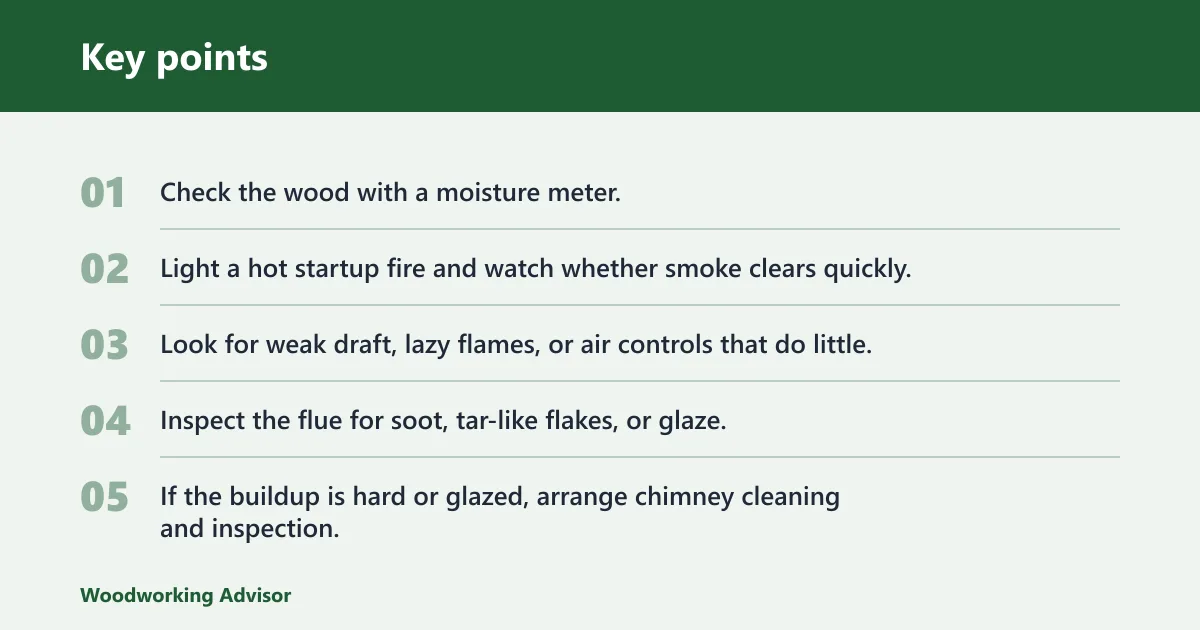
- Check the wood with a moisture meter.
- Light a hot startup fire and watch whether smoke clears quickly.
- Look for weak draft, lazy flames, or air controls that do little.
- Inspect the flue for soot, tar-like flakes, or glaze.
- If the buildup is hard or glazed, arrange chimney cleaning and inspection.
How do I reduce creosote buildup?
Reduce creosote by drying the fuel, keeping the fire hotter and cleaner, and making sure the chimney can move smoke out quickly. The best prevention is not one single habit. It is matching fuel moisture, airflow, and flue size so smoke does not linger and cool on the walls.
Burn drier wood
Choose seasoned firewood and verify moisture with a meter. Wood below 20% moisture content burns cleaner and produces less smoke, which means less condensation in the flue. Wet wood may still burn, but it usually does so with more smoke, more residue, and more frequent sweeping needs.
Keep fires hotter and cleaner
Smoldering fires are a fast path to buildup. Use enough air for active flames, especially during startup, and avoid long stretches of low burn that keep the exhaust cool. Clean combustion usually leaves less residue than slow, smoky burning.
Schedule sweeping and inspection
Annual chimney cleaning is recommended at least once per year, and NFPA 211 states chimneys should be inspected at least once a year. A sweep removes accumulated deposits, and an inspection helps judge whether the buildup is light soot or a harder problem that needs more than routine cleaning.
Glazed deposits may need specialized methods. That is one reason a shiny, hard coating should not be handled like loose soot. If you see stage III buildup, or if the draft has changed sharply, cleaning should be paired with a full inspection of the flue and appliance.
Frequently asked questions
What causes creosote buildup?
Creosote buildup comes from incomplete combustion and smoke cooling inside the flue. Wet or unseasoned wood makes fires burn cooler and smokier, and restricted airflow can leave more residue behind. Cold startup and oversized flues make the problem worse by increasing condensation.
What causes creosote in a chimney?
Creosote in a chimney forms when wood smoke hits cooler surfaces and leaves tar-like residue behind. The main drivers are high moisture in the fuel, poor draft, and low-temperature fires. Exterior masonry chimneys and oversized flues can speed the cooling that causes deposits.
Does wet firewood cause more creosote?
Yes. Wet or unseasoned wood increases creosote production because it burns cooler and smokier than dry wood. EPA guidance says wood burns best below 20% moisture content. If you are not checking with a meter, you are guessing, and guessing often means more buildup.
How often should a chimney be cleaned for creosote?
Annual chimney cleaning is recommended at least once per year, and chimneys should be inspected at least once a year. If you burn wet wood, run many low-heat fires, or see glazed deposits, you may need cleaning sooner. Heavy buildup should not wait for the calendar.
How can I tell if creosote buildup is dangerous?
Creosote becomes dangerous when it turns hard, glazed, or thick enough to restrict the flue. Stage III buildup is the highest risk because it can fuel a chimney fire, which can reach 2,000°F or higher and damage the liner or masonry. Smoke spill or weak venting is also a warning sign.
Sponsored / affiliate links. As an Amazon Associate I earn from qualifying purchases. I may earn additional commission from eligible campaigns.