Elm vs Oak Firewood: Which Burns Better?
Oak Firewood usually burns better for steady heat and long coal life; choose Elm if you want a faster-starting, shorter fire, and use well-seasoned splits for either one. Wet wood or the wrong species can mean smoky starts, weak heat, and more reloads. This guide compares startup, heat, coal bed, seasoning time, and handling so you can pick the right firewood for your stove or fireplace.
This guide is part of our Firewood and Wood Stoves: Drying, Storing and Burning Guide series.
| Factor | Elm | Oak Firewood | Winner |
|---|---|---|---|
| Typical heat output | 20-24 million BTUs per cord | About 24-29 million BTUs per cord, with species variation | Oak Firewood |
| Coal life | Medium coals | Long-lasting coals | Oak Firewood |
| Startup ease | Usually a little faster to light once dry | Often slower to catch than elm if split large | Elm |
| Seasoning window | 6-12 months | Often longer than elm, depending on species and split size | Elm |
| Splitting difficulty | Difficult by hand because of interlocking grain | Generally medium difficult; species and grain pattern matter | Oak Firewood |
| Smoke risk when underseasoned | High | High | tie |
Elm vs oak firewood at a glance
Oak Firewood is the stronger all-around choice for long heat, while elm is the more flexible option when you want easier startup and a shorter burn. Both need to be dried properly, and both burn poorly when moisture stays above about 20%. Density, split size, and storage matter as much as the species name.
Elm is a hardwood in the Ulmus genus. It gives moderate heat and its interlocking grain makes hand splitting frustrating, especially in knotty rounds. Oak is the benchmark hardwood for many buyers because it usually burns longer, makes better coals, and delivers more heat per cord, though white oak, red oak, and other species do not behave exactly the same.
Elm and oak comparison table
This table focuses on the details that change how the wood burns in real use. BTU figures are approximate only, because moisture content, split size, species, and storage all affect the result.
| Use case | Elm | Oak Firewood | Best buy-and-burn recommendation | Typical BTU range | Seasoning window | Splitting difficulty | Coal quality | Smoke risk when underseasoned |
|---|---|---|---|---|---|---|---|---|
| Overnight stove burn | Can work if fully dry, but coal bed fades sooner | Best fit for long heat and fewer reloads | Oak Firewood | Elm: 20-24 million BTUs per cord; Oak Firewood: about 24-29 million BTUs per cord | Elm: 6-12 months; Oak Firewood: often longer | Elm hard; Oak Firewood medium difficult | Elm medium; Oak Firewood excellent | High for both |
| Quick evening fire | Good choice if you want faster startup and a shorter burn | Can be overkill for a short burn unless you want a long coal bed later | Elm | Elm: 20-24 million BTUs per cord; Oak Firewood: about 24-29 million BTUs per cord | Elm: 6-12 months; Oak Firewood: often longer | Elm hard; Oak Firewood medium difficult | Elm medium; Oak Firewood excellent | High for both |
| Mixed-load heating | Useful as a filler around denser hardwoods | Works as the base load for steadier output | Both, with Oak Firewood as the base and elm as the filler | Elm: 20-24 million BTUs per cord; Oak Firewood: about 24-29 million BTUs per cord | Elm: 6-12 months; Oak Firewood: often longer | Elm hard; Oak Firewood medium difficult | Elm medium; Oak Firewood excellent | High for both if not seasoned |
| Open-fireplace use | Better if you want an easier-starting, shorter display fire | Better if you want a longer fire with more coaling after the flame drops | Elm for shorter fires; Oak Firewood for longer fires | Elm: 20-24 million BTUs per cord; Oak Firewood: about 24-29 million BTUs per cord | Elm: 6-12 months; Oak Firewood: often longer | Elm hard; Oak Firewood medium difficult | Elm medium; Oak Firewood excellent | High for both |
Overnight stove burn
Oak Firewood wins here because density usually translates into longer burn time and better coal retention. That matters when you want fewer reloads during the night and a stove that stays warm without constant attention.
Elm can still help if it is fully seasoned, but it usually leaves a smaller coal bed than oak. That means the stove may need another reload sooner, especially if the splits are small or the stove runs with higher draft.
Quick evening fire
Elm is the better fit for a short, useful fire because it tends to light more easily once dry and does not hold heat as long as oak. That makes it practical when you want warmth for a few hours without carrying a heavy coal bed into the next day.
Picture a 6-piece load in a small stove on a mild shoulder-season night. If the goal is to warm the room, then let the fire die before bed, elm is often the cleaner fit. Oak Firewood can still work, but it may leave more heat than you need.
Mixed-load heating
Mixed loads are where elm earns a place in the stack. Use oak as the base for heat and coals, then add elm to shape startup and shorten the overall burn when needed.
Suppose you have a stove that runs too hot on a full load of dense oak. Mixing in some dry elm can trim the burn curve without switching to a weak fuel. That is often a better routine than choosing one species for every fire.
Open-fireplace use
For a fireplace, elm is useful when you want quicker flame and less lingering heat after the visible fire is done. Oak Firewood is stronger if you want a longer, more substantial fire, but that can be too much for a casual evening display.
In an open fireplace, wet wood is a bad fit either way because smoke goes straight into the room instead of into a sealed flue. Dry splits matter more than almost anything else in that setting.
What burns hotter, elm or oak?
Oak Firewood usually burns hotter overall because it carries more BTUs per cord and is denser than elm. Elm is still a real hardwood fuel, with moderate heat output, but the gap shows up when you compare long, steady heat rather than a brief flame burst. Moisture content can shrink that gap fast.
BTU per cord is only a comparison tool, not a promise. A wet oak split can perform worse than dry elm, and a large, poorly stored round can burn worse than a smaller split from the same tree. For clean burning, aim for wood below about 20% moisture.
Which lasts longer in a wood stove?
Oak Firewood usually lasts longer in a wood stove because higher density tends to produce a slower burn and a deeper coal bed. Elm tends to burn down sooner, so you may need to reload sooner if you want steady heat through the evening or overnight.
That difference matters most in stoves that depend on coals to relight the next load. Oak’s coals support that cycle better. Elm is still useful, but it is less reliable when long coal retention is the main goal.
Does elm need more seasoning than oak?
Elm does not necessarily need more drying time than oak in every case, but it often needs careful drying because freshly cut elm can exceed 60% moisture content. Proper seasoning for elm is commonly 6-12 months. Oak often takes longer, especially in larger splits or denser species.
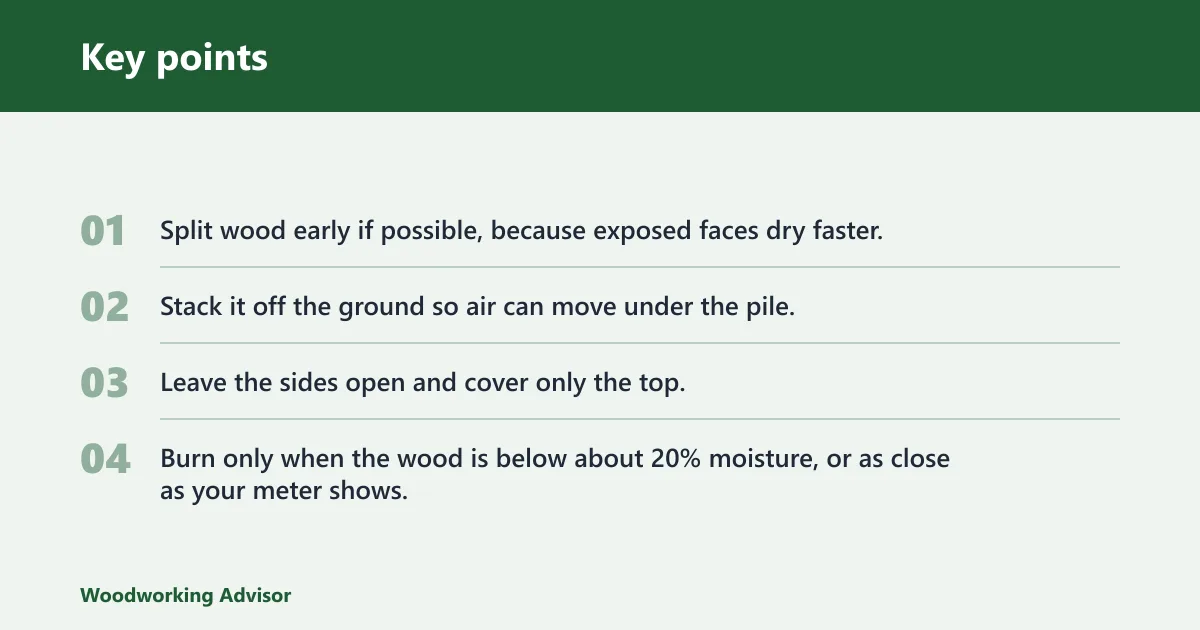
Seasoning depends on split size, stacking method, and airflow. Smaller splits dry faster. Covered top, open sides, and good airflow reduce moisture more effectively than a tight pile on damp ground. If either species stays above the clean-burn threshold, it will smoke more and heat less.
- Split wood early if possible, because exposed faces dry faster.
- Stack it off the ground so air can move under the pile.
- Leave the sides open and cover only the top.
- Burn only when the wood is below about 20% moisture, or as close as your meter shows.
Is elm harder to split than oak?
Yes. Elm is notoriously hard to split by hand because the grain often interlocks and twists around the round. Oak is generally medium difficult, though species, knots, and crotches can make some pieces stubborn. A hydraulic splitter changes elm from a chore into a manageable job for many people.
A common first-timer mistake is judging a stack by species name alone. A straight-grained oak round may split easier than a twisted elm section, and either one can become much harder after it dries unevenly. Always expect some variation within the same load.
Choose Elm if… / Choose Oak Firewood if…
Choose Elm if you want a quicker-starting fire, a shorter burn, or a mixed-load wood that helps shape heat output in shoulder season. It also works when you already have a splitter and want a decent hardwood that can be blended with denser species.
Choose Oak Firewood if you want longer heat, a stronger coal bed, and fewer reloads in a stove. It is usually the better standalone choice for overnight heat, cold snaps, and anyone who wants a dependable benchmark hardwood.
- Choose Elm for quick evening fires, shoulder-season loads, or mixes with denser hardwoods.
- Choose Oak Firewood for overnight stove burns, long coal life, and steadier heat.
- Choose either one only when properly seasoned if you want less smoke and better output.
- Mix both when you want oak’s staying power and elm’s easier startup in one fire routine.


Frequently asked questions
Is elm good firewood to burn?
Yes, elm is good firewood when it is properly seasoned and used for the right job. It gives moderate heat, and it can work well for mixed loads or shorter fires. It is not the strongest standalone choice, but it is far from poor fuel once dry.
Does elm wood burn well?
Dry elm burns well enough for home heating, especially in a stove where you can manage airflow and reload timing. Wet or partially seasoned elm burns poorly, smokes more, and gives less useful heat. The difference between dry and wet matters more than many buyers expect.
Does oak wood burn well?
Yes. Oak Firewood burns well because it is dense, holds heat, and leaves excellent coals. It is one of the most dependable hardwood choices for longer burns. Species still matters, so white oak and red oak do not behave exactly the same, but both are strong fuels when dry.
Can you mix elm and oak in the same fire?
Yes, and that is often a practical way to use both. Oak can give you the coal bed and longer heat, while elm can help with startup and faster flame. That mix works best when both woods are dry and sized for the stove or fireplace you are using.
Is oak the best firewood?
Oak Firewood is one of the best all-around firewoods, but not the best for every job. It is excellent for overnight heat and long burns, yet it can be slower to start and more than you need for a short evening fire. The best choice depends on your heating goal.
Sponsored / affiliate links. As an Amazon Associate I earn from qualifying purchases. I may earn additional commission from eligible campaigns.