How Thick Are Wood Biscuits? (#0, #10 & #20 Compared)
Wood biscuits are all about 4mm (5/32″) thick regardless of size — #0, #10, and #20 biscuits differ only in length and width, not thickness. Using a biscuit thicker than a third of your stock can blow through the face of thin plywood or split delicate edging. This guide covers exact biscuit dimensions by size, how to match biscuit size to your stock thickness, and how to measure biscuits accurately before cutting slots.
Wood Biscuit Sizes and Thickness (The Numbers)
Best Wood Biscuit Variety Pack Pick
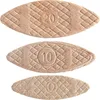
Trend Beechwood Joining Biscuits Variety Pack (100pc) – $10.29
Includes all three sizes (#0, #10, #20) covered in the sizing table above, so you’re never stuck without the right biscuit for a given stock thickness.
- Best for: stocking up once instead of buying single-size packs repeatedly
- Why we picked it: Trend is a long-established biscuit joinery brand and the mixed pack matches the three sizes this guide covers
- Main drawback: only 100 pieces total (roughly 33 of each size) — a bulk project will need a larger box
As an Amazon Associate we earn from qualifying purchases.
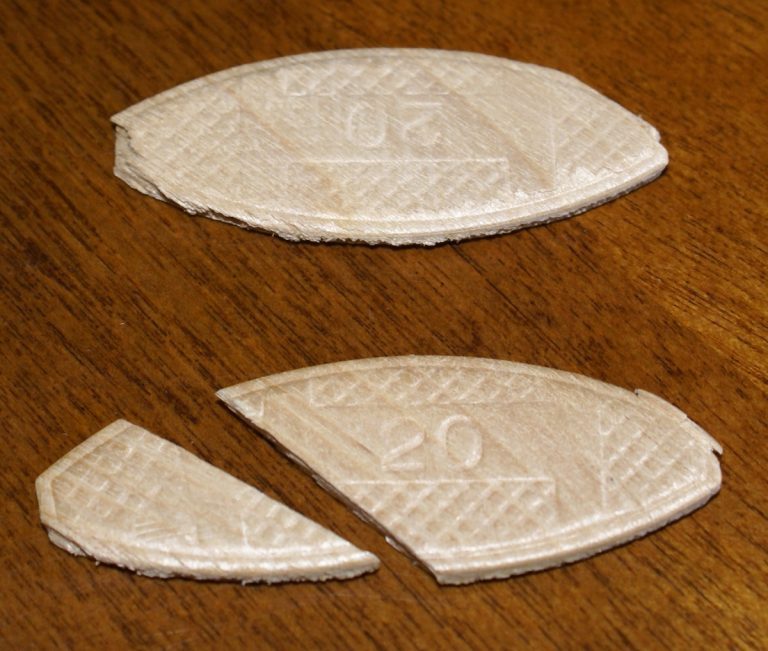
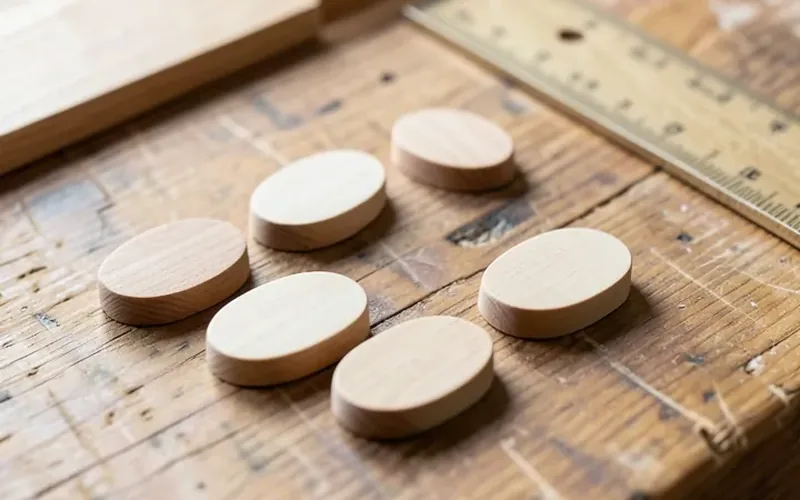
Every standard compressed-beechwood biscuit — #0, #10, and #20 — is die-cut to the same 0.145–0.157 inch (3.6–4.0mm) thickness. Manufacturer spec sheets from Trend, WEN, and Big Horn all confirm this: the number only changes the biscuit’s length and width, which determines how much glue surface and slot length the joint gets, not how thick the football-shaped biscuit itself is.
| Size | Thickness | Length x Width | Best For |
|---|---|---|---|
| #0 | ~4mm (5/32″) | 1.77″ x 0.63″ (44–48mm x 14–16mm) | Face frames, thin stock, delicate joints |
| #10 | ~4mm (5/32″) | 2.13″ x 0.79″ (53–56mm x 19–22mm) | Cabinet parts, general panel glue-ups |
| #20 | ~4mm (5/32″) | 2.28″ x 0.98″ (56–60mm x 23–25mm) | Tabletops, heavy-duty furniture frames |
Because the thickness never changes, every size cuts the same slot depth — you don’t need to reset your biscuit joiner’s cutting depth when you switch from a #0 to a #20. What changes is only how far the fence needs to travel and how much stock width you need on either side of the joint.
Matching Biscuit Size to Your Stock Thickness
A biscuit slot needs roughly half its own width of solid wood remaining on each face to avoid blowout. Since a standard biscuit is about 4mm thick and the slot itself is cut slightly deeper than the biscuit’s half-width, most biscuit joiners recommend a minimum stock thickness of 1/2 inch (12.7mm) for any biscuit size. Below that, the slot cutter can break through the face of the board, especially on plywood where the outer veneer is thin.
- 1/2″ to 3/4″ stock: use #0 biscuits — the shorter slot leaves more margin on thin material.
- 3/4″ to 1″ stock: #10 biscuits are the standard choice for cabinet-grade plywood and solid lumber.
- 1″ and thicker stock: #20 biscuits give the most glue surface for tabletops and load-bearing frames.
- Under 1/2″ stock (thin plywood, 1/4″ panels): skip biscuits entirely — use a spline joint or pocket screws instead, since no standard biscuit size is thin enough to stay hidden.
How to Measure Biscuit Thickness Accurately
If you’re buying biscuits from an off-brand source or reusing biscuits from an old box, verify the thickness before cutting slots — a mismatch of even half a millimeter can leave a joint loose or too tight.
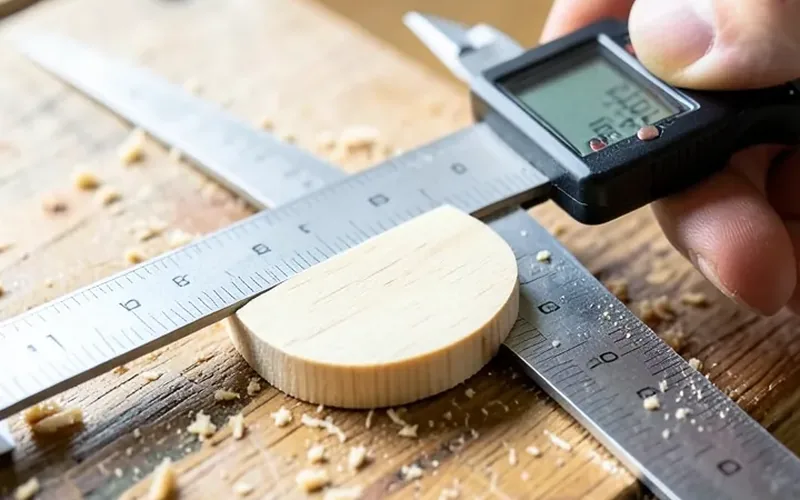
- Set the caliper to zero: close a digital or dial caliper fully and confirm it reads 0.00 before measuring.
- Measure at the widest point: clamp the caliper jaws across the thickest part of the biscuit, not near the tapered edge.
- Take three readings: measure at both ends and the center of the biscuit — compressed wood can swell unevenly if it absorbed any moisture in storage.
- Compare against 4mm (0.157″): a reading under 3.6mm or over 4.2mm means the biscuit swelled from humidity or was cut off-spec — set it aside rather than forcing it into a slot sized for standard stock.
- Test-fit before gluing: dry-fit the biscuit into a scrap slot cut with the same joiner setting to confirm it seats without excess play or force.
📊 An unreinforced miter joint fails at roughly 139 lbs of force; adding a single biscuit raises that to about 545 PSI of tensile strength in independent testing. On a long-grain edge glue-up, though, biscuits mainly add alignment during clamping rather than extra strength, since a PVA wood-glue bond on long grain is already one of the strongest joints in woodworking. Source: Woodgears.ca independent joint strength testing.
Why Biscuit Thickness Can Vary Slightly by Wood Species
Compressed beechwood is the standard biscuit material because it swells slightly when it contacts wet glue, locking the joint tighter as it dries — this is a feature, not a defect. Birch biscuits behave almost identically. Off-brand biscuits made from lower-density wood can measure thinner dry and swell less in the glue, producing a looser joint even at the same nominal size.
Common Mistakes to Avoid
- Assuming a bigger number means a thicker biscuit. #20 is longer and wider than #0, not thicker — using it just because a project seems “bigger” won’t fix a slot-depth problem.
- Cutting slots in stock under 1/2″ thick. This is the single most common cause of blowout on plywood veneer faces — check the minimum stock thickness table above first.
- Skipping the dry-fit. Biscuits are designed with a small amount of side-to-side play built in; a dry-fit catches a misaligned slot before glue is involved.
- Storing biscuits loose in a humid shop. Compressed wood absorbs ambient moisture and swells before it ever touches glue, which throws off the standard 4mm thickness you’re relying on.
“Biscuits work well for tabletop glue-ups, face frames, and mitered joints — anywhere you don’t need heavy strength loads.”
For structural, load-bearing joints, Listi and other professional woodworkers generally reach for dowels or floating tenons instead — both are considered stronger concealed joinery options than biscuits for that kind of load. If your project falls into that category, our mortise and tenon joinery guide covers the stronger alternative in detail, and our mortise and tenon tools guide lists what you’ll need to cut one by hand or machine.
Frequently Asked Questions
How thick are standard wood biscuits?
Standard wood biscuits measure about 4mm (0.145–0.157 inch, or roughly 5/32″) thick across all three common sizes: #0, #10, and #20. The number only changes the biscuit’s length and width, not its thickness, so every size cuts the same slot depth on your biscuit joiner.
Do #0, #10, and #20 biscuits have different thicknesses?
No. All three standard sizes share the same roughly 4mm thickness. #0 is 1.77″ x 0.63″, #10 is 2.13″ x 0.79″, and #20 is 2.28″ x 0.98″ — the size number tracks length and width for the joint’s glue surface, not thickness.
What is the minimum stock thickness for biscuit joinery?
Most biscuit joiner manufacturers recommend a minimum stock thickness of 1/2 inch (12.7mm) for any biscuit size. Cutting slots into thinner material, especially plywood, risks the cutter breaking through the face veneer.
Are wood biscuits strong enough for furniture?
Yes, for alignment-driven joints like tabletop glue-ups, face frames, and miters. On a long-grain edge glue-up, biscuits mainly keep boards from sliding during clamping rather than adding significant strength, since the wood glue bond itself is already very strong. For load-bearing structural joints, dowels or mortise-and-tenon joinery are generally stronger.
Can I use wood biscuits for outdoor projects?
Wood biscuits themselves aren’t inherently weather-resistant. For outdoor furniture, use waterproof (Type III) wood glue and finish or seal the joint completely, since the compressed beechwood will swell and weaken if it stays wet.
Conclusion
Every standard wood biscuit — #0, #10, or #20 — is roughly 4mm thick; the size number only changes length and width. Match the size to your project’s glue-surface needs, keep stock at least 1/2 inch thick to avoid blowout, and verify thickness with calipers if you’re working with an unfamiliar box of biscuits.
Sponsored / affiliate links. As an Amazon Associate I earn from qualifying purchases. I may earn additional commission from eligible campaigns.