Mortise and Tenon Joint: 5 Types, Sizing Rules and Strength
A mortise and tenon joint fits a tenon, a tongue cut on the end of one board, into a mortise, a matching slot in another, then locks it with glue, a peg, or a wedge. The tenon should be about one-third the thickness of the board, so a 3/4-inch rail gets a 1/4-inch tenon. This guide covers five types, a sizing chart for both parts, and when to choose this joint over dowels or pocket holes.
Quick Answer
Mortise and tenon joinery connects two boards by fitting a tenon (a projecting tongue) into a mortise (a matching cavity), then locking the fit with glue, a peg, or a wedge. It is one of the oldest woodworking joints, with examples about 7,000 years old, and it is still the standard for chair frames, table aprons, doors, and timber framing.
What Is a Mortise and Tenon Joint?
A mortise and tenon joint is two parts cut to fit one inside the other: the mortise is a rectangular hole or slot cut into one board, and the tenon is a matching tongue cut on the end of the second board that slides into it. The tenon’s flat faces are called cheeks, its narrow edges are shoulders, and a haunch is a short secondary step cut into the tenon to fill a groove or resist twisting.
The mortise is cut first, then the tenon is sized to it, not the other way around. A mortise gauge set to the exact tenon thickness scribes both parts from the same reference, so the two pieces mate without a separate measuring step for each.
Best Mortise Chisel Pick | |
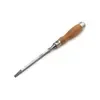 |
Narex Richter 1/4 in. Mortise Chisel, $68.85 The 1/4-inch width is the tenon size the sizing chart below gives for 3/4-inch furniture rails, so one chisel cuts the mortise for the most common frame joint in this guide.
|
As an Amazon Associate we earn from qualifying purchases. | |
How Does a Mortise and Tenon Joint Work?
The joint works by combining mechanical interlock with a long-grain glue surface. The tenon’s cheeks press flat against the mortise walls, giving glue a long-grain-to-long-grain bond, the strongest gluing surface wood offers, while the shoulders butt against the outer face and resist the joint twisting or racking under load. That is the same load pattern behind a stressed wood joint.
End grain, by contrast, barely holds glue at all; it soaks up adhesive like a straw instead of bonding to it. A mortise and tenon joint is engineered specifically to avoid gluing end grain to end grain, which is why a well-fit one outlasts a simple butt joint in the same application.
What Are the Different Types of Mortise and Tenon Joints?
There are five mortise and tenon variants in common use: through, blind (stopped), wedged, haunched, and drawbored (pegged). Each solves a different problem: visible strength, hidden appearance, mechanical locking, or holding without clamps. Picking the wrong one for the job is the most common beginner mistake with this joint.
| Type | How It’s Cut | Best For |
|---|---|---|
| Through tenon | Tenon passes completely through the mortised piece, end grain visible on the far face | Timber framing, exposed joinery where the end grain is a design feature |
| Blind (stopped) tenon | Mortise stops short of the far face; tenon is hidden entirely | Furniture aprons, legs, and any joint that needs a clean show face |
| Wedged tenon | Through tenon with a saw kerf at the tip, driven open with a wedge after assembly | Trestle tables, benches, and knock-down furniture needing extra mechanical lock |
| Haunched tenon | A short step near the shoulder fills a groove (for a panel) or resists twisting near a frame corner | Frame-and-panel doors, cabinet face frames |
| Drawbored (pegged) tenon | A peg driven through offset holes in the mortise cheek and tenon pulls the joint tight without clamps | Timber framing and reproduction furniture built without modern glue |
A sixth variant, the loose or floating tenon, uses a separate tenon piece glued into matching mortises cut in both boards instead of cutting the tenon integrally from one board. It is faster to produce with a router jig or domino-style tool and is common in modern production furniture, though purists consider it a different joint rather than a true mortise and tenon.
Mortise and Tenon Proportions: A Sizing Chart
Most failed mortise and tenon joints trace back to wrong proportions, not wrong technique. The rules below come from Wikipedia entry on mortise and tenon (tenon thickness and haunch), Family Handyman (mortise width, length, and depth), and Popular Woodworking (drawbore offset and pegs). The two right-hand columns apply the rules to the two stock sizes most furniture uses.
| Part | Rule of thumb | On 3/4 in. stock | On 1-1/2 in. stock |
|---|---|---|---|
| Tenon thickness | One-third of the stock thickness, or as close as practical | 1/4 in. | 1/2 in. |
| Mortise width | Matches the tenon; never more than one-third of the mortised piece | 1/4 in. | 1/2 in. |
| Mortise length | 1 to 4 times its width; anything longer, use two tenons | 1/4 to 1 in. | 1/2 to 2 in. |
| Blind mortise depth | One-half to two-thirds of the mortised piece’s depth | 3/8 to 1/2 in. | 3/4 to 1 in. |
| Haunch | One-third of the tenon length, and one-sixth of the tenon width in depth | Scales with the tenon | Scales with the tenon |
| Drawbore offset | Peg hole in the tenon sits closer to the shoulder by 1/16 to 3/32 in. on furniture, up to about 1/8 in. on large work | 1/16 to 3/32 in. | 3/32 to 1/8 in. |
| Peg diameter | 1/4 in. for cabinet work, 3/8 in. for larger work | 1/4 in. | 3/8 in. |
The one-third rule is a balance, not a strength dial. A thicker tenon takes more wood out of the mortised piece, and the two walls left on either side of the mortise are what resist splitting. A tenon much thinner than one-third gives away glue area and shear strength. One-third leaves both sides about equal.
📊 Drawboring: offset the holes 1/16 to 3/32 inch, and use dry, straight-grained white oak for the peg. A wet peg shrinks and lets the joint loosen over time. Source: Popular Woodworking, “Drawboring Resurrected”
How Strong Is a Mortise and Tenon Joint?
A properly sized mortise and tenon joint is among the strongest joints in woodworking because it combines two things most joints have only one of: a large long-grain glue surface on both cheeks, and shoulders that block racking. Fine Woodworking tested 18 popular joints to failure at a Rhode Island lab for its Joinery Shootout (issue #203, 2009), a good starting point if you want measured failure loads for your own joint choices.
Strength depends on getting the fit right more than on any single dimension. A tenon that seats with light hand pressure and has glue on both cheeks outperforms an oversized one forced in with a mallet, which can split the mortise wall. For a 3/4-inch table apron, that means a 1/4-inch tenon; for a 1-1/2-inch leg, a 1/2-inch tenon.
What Is a Mortise and Tenon Joint Used For?
Mortise and tenon joinery connects a rail to a leg or post at a right angle, which covers most of furniture-making: table and chair legs to aprons, door and window frame stiles to rails, and cabinet face frames. The same right-angle connection scales up to timber framing, where posts and beams several inches thick use the identical joint, cut larger and often drawbored with pegs instead of glue.
It is also very old. Wikipedia lists examples about 7,000 years old from China’s Hemudu culture, and the stones of Stonehenge were dressed with mortise and tenon joints before being raised between 2600 and 2400 BC (Wikipedia).
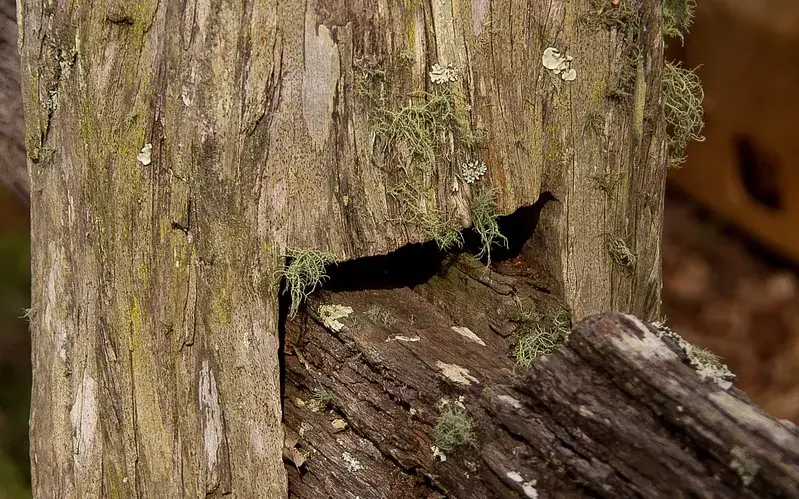
Outdoor structures like fences, pergolas, gates, and garden furniture also use this joint because a tight fit keeps end grain mostly protected from standing water. The joint still needs a rot-resistant species or finish outdoors; softwood sapwood in a wet climate will fail at the joint long before a properly finished white oak or cedar version.
What Are the Advantages of Mortise and Tenon Joinery?
- Strength: long-grain glue surface plus mechanical interlock holds up under racking load better than butt, dowel, and pocket-hole joints
- Longevity: a well-fit joint in solid wood commonly outlasts the finish and hardware on the same piece
- Repairability: a failed glue joint can be disassembled, cleaned, and reglued without replacing either board
- No metal fasteners required: a wedged or drawbored version holds without screws, useful for pieces that need to be knocked down and reassembled
- Room for wood movement: a well-sized mortise leaves the cheeks of the tenon free to move seasonally without splitting the surrounding wood
What Are the Disadvantages of Mortise and Tenon Joinery?
- Precision-dependent: a mortise or tenon that is off by even 1/32 inch produces a visibly loose or unglueably tight joint, with little room for error
- Slower than alternatives: chopping a mortise by hand takes longer than driving a pocket screw, though pocket screws have their own limits; see when not to use pocket holes for the joints where the extra time pays off
- Tool investment: a dedicated mortise chisel, gauge, and either a router jig or benchtop mortiser add real cost for an occasional woodworker
- Layout limits: a mortise cut too close to the end of a board leaves a short, weak section of wood beyond it, so leave extra length (a horn) at the end of the mortised piece and trim it after assembly
A loose joint is the most common failure. If a tenon came out too thin, glue a thin shim of matching wood to the cheek and re-trim it to fit rather than relying on glue to fill the gap, since glue alone is a weak gap filler in a structural joint.
How Is a Mortise and Tenon Joint Made?
Cutting this joint follows four stages in order: lay out both parts from one reference face, cut the mortise first, cut the tenon to fit that specific mortise, then test-fit and adjust before glue-up. Cutting the tenon to match the mortise, not both to a fixed measurement, is what makes the fit tight instead of approximate.
- Lay out from one face: mark both the mortise and tenon locations from the same reference face on both boards, so any small stock-thickness variation doesn’t throw the joint out of alignment. Square each layout line across the board with a try square or speed square rather than eyeballing it.
- Cut the mortise: chop it by hand with a mortise chisel and mallet, rout it with a jig, or plunge it with a benchtop mortiser, to the exact width the mortise gauge scribed.
- Cut the tenon to the mortise: saw the cheeks and shoulders slightly oversized, then pare down with a shoulder plane or chisel, testing fit against the actual mortise rather than a ruler.
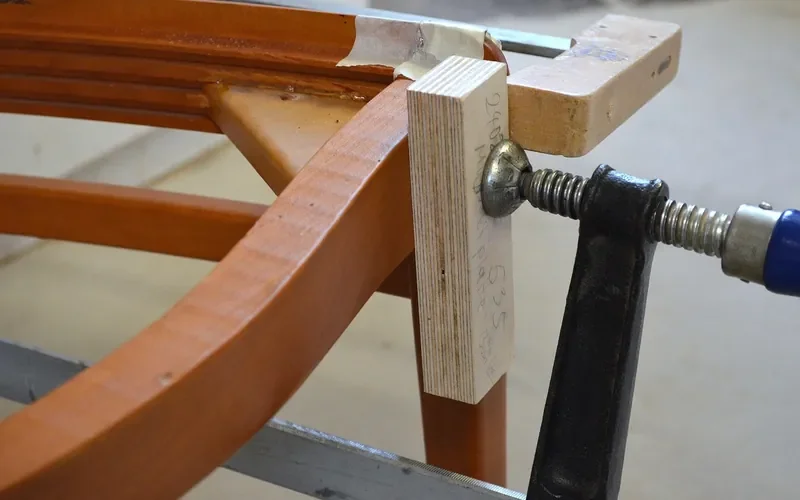
- Test-fit and glue: the tenon should seat with light hand pressure, not a mallet blow; once it does, apply glue to the cheeks (not the end grain) and clamp or wedge it home.
This site’s complete guide to mortise and tenon tools covers the chisel, gauge, saw, mallet, and shoulder plane this process needs in far more depth, including sizing the chisel to the stock and choosing between hand tools and a machine. For the machine route, see the guide to what a mortiser is. If you are cutting the mortise with a router or table saw instead of chopping it by hand, the guide to cutting slots into wood walks through those techniques and the fit-tolerance numbers.
How Does Mortise and Tenon Compare to Dowel, Biscuit, and Pocket-Hole Joints?
A mortise and tenon joint outperforms dowel, biscuit, and pocket-hole joints under racking load because it has far more long-grain glue surface and a mechanical shoulder that resists twisting. The alternatives win on speed and equipment cost, not strength.
| Joint | Relative Strength | Speed | Setup |
|---|---|---|---|
| Mortise and tenon | Highest | Slowest | Chisels and gauge, or a router jig or mortiser |
| Dowel joint | Moderate | Fast with a doweling jig | Doweling jig and dowels |
| Biscuit joint | Moderate, mainly for alignment | Very fast | Biscuit joiner |
| Pocket-hole joint | Lower under racking load, strong in tension | Fastest | Pocket-hole jig and screws |
Pocket-hole joinery holds a rail together well enough for most casual use, but it relies on screw threads gripping end grain rather than a long-grain glue bond, and it fails first under the racking stress of someone leaning back in a dining chair. Reach for mortise and tenon on any joint that carries structural, repeated racking load: table and chair frames, door frames, timber framing. Save dowel joints on round stock, biscuits, or pocket screws for alignment and lighter-duty casework.
Do Mortise and Tenon Joints Need Glue?
Most mortise and tenon joints need glue for long-term rigidity, though a wedged or drawbored (pegged) version can hold permanently without it. The interlocking shape alone resists being pulled straight apart, but it doesn’t resist the joint working loose over years of seasonal wood movement unless glue, a wedge, or a peg locks the fit.
Traditional timber framers built entire barns and houses on drawbored joints with zero glue, using a hardwood peg, ideally cut from a strong dowel species like oak or hickory, driven through slightly offset holes to pull the shoulder tight. That approach still works today and is the standard method for joints too large for any clamp to reach.
If your next project needs a decorative corner joint instead of a structural frame connection, see the guide to cutting dovetail joints by hand, and for a wider survey of basic joinery options, see the overview of simple wood joints.
Frequently Asked Questions
What is the difference between a mortise and a tenon?
The mortise is the hole or slot cut into one board; the tenon is the matching projecting tongue cut on the end of the second board that fits inside it. The mortise is always cut first, and the tenon is sized to fit that specific mortise.
What is the standard tenon-to-mortise size ratio?
The tenon should measure about one-third the thickness of the stock it is cut from, or as close as practical. A 3/4-inch rail takes a 1/4-inch tenon; a 1-1/2-inch leg takes a 1/2-inch tenon, matched to a mortise cut to the same width.
How deep should a mortise be?
A blind mortise should be one-half to two-thirds of the mortised piece’s depth, and a through mortise goes all the way through. In a 1-1/2-inch leg, that puts a blind mortise between 3/4 inch and 1 inch deep.
Can you cut a mortise and tenon joint without power tools?
Yes. A mortise chisel, mallet, mortise gauge, tenon saw, and shoulder plane cut a complete mortise and tenon joint by hand, with no router, jig, or benchtop mortiser required.
Why is my mortise and tenon joint loose?
A loose joint almost always traces back to a mortise cut wider than the chisel and gauge setting, or a tenon pared down past the scribed line. Re-check that the chisel, gauge, and saw are all set to the same width before cutting the next joint, and fix a thin tenon with a glued-on shim of matching wood rather than relying on glue to fill the gap.
Is a mortise and tenon joint stronger than a dowel joint?
Yes. A mortise and tenon joint has significantly more long-grain glue surface and a mechanical shoulder that resists twisting, which is why it outperforms a dowel joint under the racking loads a chair or table frame experiences.
How old is mortise and tenon joinery?
Examples about 7,000 years old are documented from China’s Hemudu culture, and the joint appears in Egyptian shipbuilding, the stones of Stonehenge, and medieval timber framing. It remains a standard structural joint in fine furniture and timber framing today.
Sponsored / affiliate links. As an Amazon Associate I earn from qualifying purchases. I may earn additional commission from eligible campaigns.