How to Bend Marine Plywood: Kerf Cutting, Steam & Lamination Methods
Marine plywood bends best when you work with its cross-ply grain instead of fighting it, and the method you choose (soaking, steam, kerf-cutting, or lamination) depends on how tight a curve you need. A single sheet can take a gentle sweep with nothing more than water and clamps, but a hull’s compound curve or a sharp transom corner usually needs kerf cuts or cold-molded layers. Here is what actually works, why marine plywood cracks when it does, and which technique fits your project.
How Marine Plywood Actually Bends
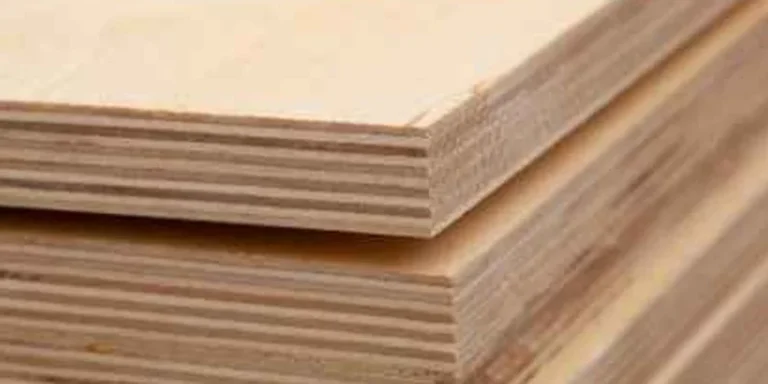
Plywood is built from thin veneers glued with the grain direction alternating layer to layer, which is why a sheet bends far more easily across its width than along its length. Bend it the easy way, across the sheet, and you can often get a workable curve with just water and clamping pressure. Try to bend the same sheet the long way and it will resist until it splinters.
Once you start forcing a curve, the outer face of the panel stretches under tension while the inner face compresses. Wood handles compression reasonably well, but it fights tension, so cracks almost always start on the outer, convex face first. Thinner sheets tolerate tighter curves because there is less material fighting that stretch. As a rough guide, 1/4-inch marine plywood can usually take a radius under a foot with careful soaking, while 3/4-inch stock needs a radius several times that or it needs help from kerfing or lamination instead of straight bending.
Best Epoxy for Kerf-Filling & Lamination
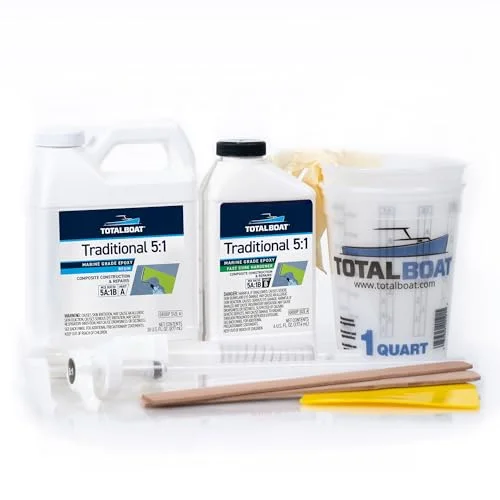 |
TotalBoat 5:1 Marine Epoxy Resin, 1 Quart Kit – $59.99 The same epoxy this guide uses to fill kerf cuts and glue laminated plywood layers to a hull form.
|
Soaking and Steaming: The Low-Tech Approach
For a gentle sweep, water alone will often get you there. Submerge the panel or keep it wrapped in wet towels for at least 48 hours before you try to bend it; a quick spray won’t penetrate deep enough to loosen the veneer bonds. If you have access to a steam box, 8 to 10 hours of steady steam softens the wood faster and more evenly than soaking, though it takes more setup for a full sheet.
For localized bends, a heat gun moved steadily back and forth (never held in one spot) softens the resin in the veneer glue lines enough to work the panel over a form. Some boatbuilders get finer control with a wallpaper steamer or a clothes iron over a damp cloth, steaming a narrow strip at a time as they bend it. Whatever method you use, keep the panel wet or hot while it’s under load, clamp it to the form while still damp, and let it dry fully on the form (usually a day or two) before releasing the clamps, or it will spring back toward flat.
Kerf-Cutting for Sharp, Tight Bends
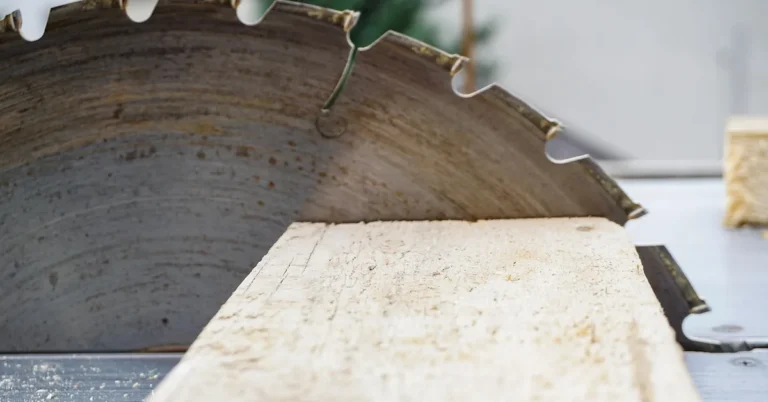
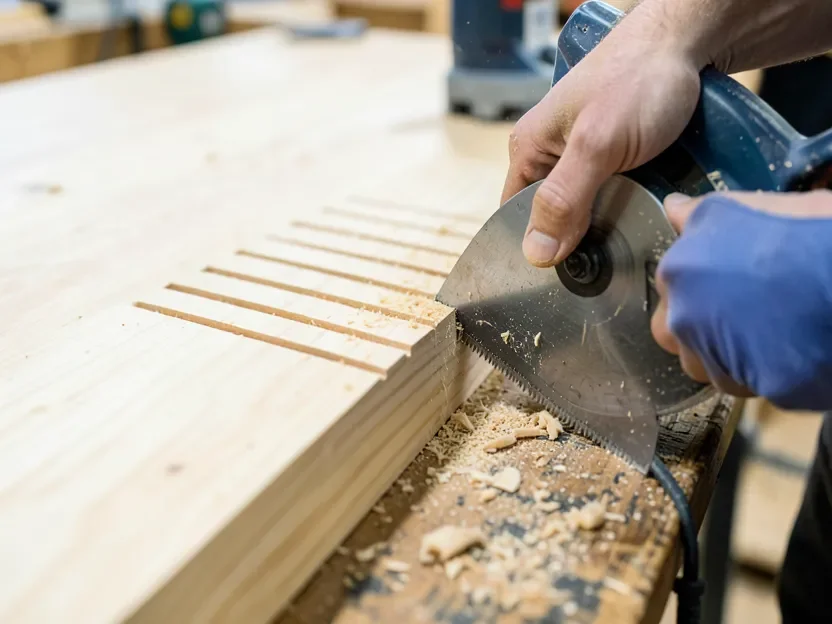
When a curve is too tight for soaking or steam to handle, cut kerfs (thin saw grooves) across the back face instead of fighting the panel whole. Set your saw to about 45 degrees and cut grooves roughly 1 inch apart, going about half to two-thirds of the way through the panel’s thickness. The more and deeper the kerfs, the tighter the radius you can pull, but go too deep and you weaken the panel more than the bend requires.
Right before bending, work thickened epoxy into the kerf grooves with a putty knife, then pull the panel around the form while the epoxy is still workable. Clamp it there until the epoxy cures. The cured epoxy fills the gaps the kerfs opened up and re-bonds the panel into a solid, rigid curve instead of a fragile section, which is why this method is common on hard corners like transoms where soaking alone won’t get a sharp enough angle.
Cold-Molding and Lamination for Compound Curves
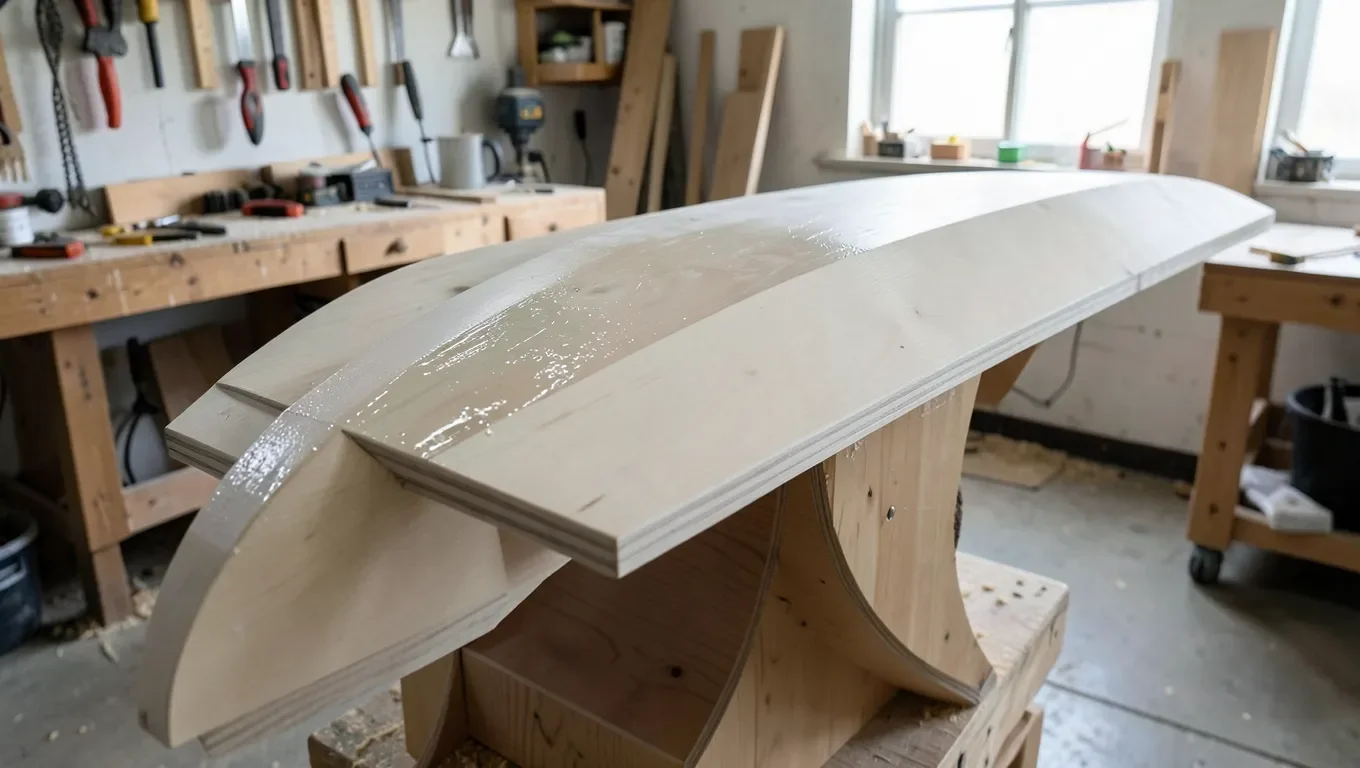
A single sheet of plywood can only take a curve in one direction at a time. A hull often needs a compound curve, bending in two directions simultaneously, and no amount of soaking or kerfing will make a flat sheet do that without buckling or cracking. That’s where cold-molding comes in: thin strips or sheets of plywood (or veneer) are laid up one at a time over a curved form, each layer glued to the one below it with epoxy, with the layers oriented at different angles to each other for strength.
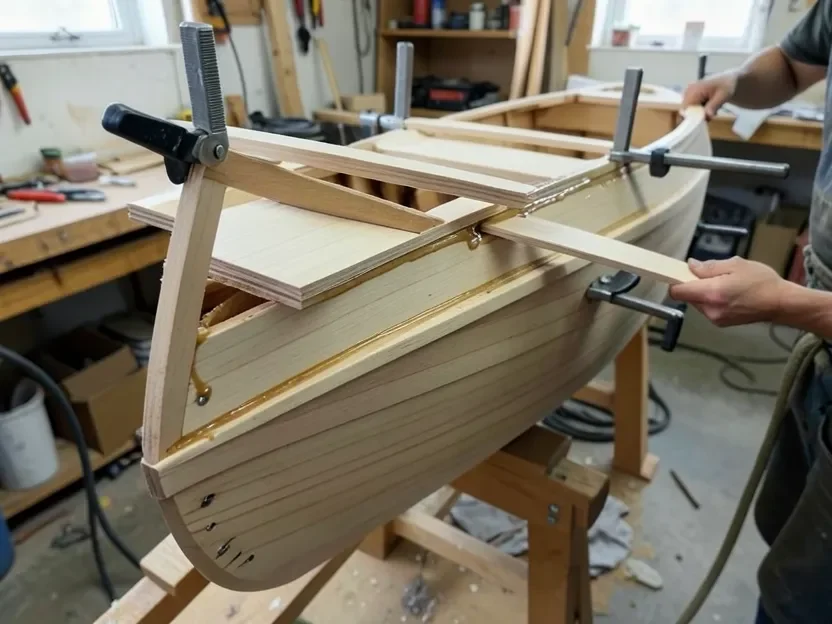
Because each layer is thin, it bends easily around tight compound curves without kerfing or steam. Once the epoxy between all the layers cures, the laminated shell is stiffer and stronger than a single sheet of the same total thickness would be. Cold-molding takes more time and epoxy than a straight soak-and-bend, but it’s the standard technique for building a hull shape that a flat sheet simply can’t reach.
Step-by-Step: Bending a Marine Plywood Panel
- Choose your method based on the curve: soak/steam for a gentle sweep, kerf-cut for a sharp single-direction bend, cold-mold for a compound curve.
- Build or set up the form you’ll bend the panel over, sized to the final curve you need.
- Soak (48+ hours) or steam (8-10 hours) the panel, or cut your kerfs, before attempting the bend.
- Work the panel onto the form gradually, applying even pressure across the width rather than forcing one end first.
- Clamp the panel to the form while it’s still wet, hot, or coated in epoxy (for kerf/lamination methods).
- Let the panel dry or the epoxy cure fully on the form, typically 24-48 hours, before releasing any clamps.
- Check the panel holds its shape once removed; if it springs back noticeably, re-clamp and let it cure longer.
What You’ll Need
- A curved form or jig sized to the bend you’re making (plywood ribs, a bent-lamination buck, or the boat’s actual frame)
- Water and a container large enough to submerge the panel, or a steam box for faster softening
- A heat gun or wallpaper steamer for spot-heating localized bends
- A circular saw or table saw set to a shallow angle, if you’re kerf-cutting
- Marine epoxy with a putty knife or spreader for filling kerfs or laminating layers
- Enough clamps to hold even pressure across the full width of the panel, not just the ends
Common Mistakes That Crack Marine Plywood
- Bending along the length instead of across the width. This ignores the grain direction that makes plywood flex in the first place.
- Rushing the soak or steam time. A panel that looks wet on the surface after an hour hasn’t actually softened through the veneer bonds yet.
- Clamping too hard in one spot before the rest of the panel is seated. This concentrates the tension on the outer face right where it’s most likely to crack.
- Using a panel that’s too thick for the radius you need. If the math doesn’t work for straight bending, switch to kerfing or cold-molding instead of forcing it.
- Releasing the clamps before the panel has fully dried or the epoxy has fully cured. It will spring part of the way back toward flat.
Frequently Asked Questions
Can you bend marine plywood without steam?
Yes. A 48-hour water soak plus a heat gun or wallpaper steamer applied locally will soften most marine plywood enough for a moderate bend. Steam boxes speed the process up but aren’t required for gentle curves.
What thickness of marine plywood bends easiest?
Thinner sheets bend into tighter radii with less risk of cracking. 1/4-inch marine plywood can often handle a radius under a foot with soaking alone, while anything 1/2 inch or thicker usually needs kerf-cutting or cold-molding for a tight curve.
How long does bent plywood need to dry before it holds its shape?
Plan on 24 to 48 hours clamped to the form for a soaked or steamed panel to dry enough to hold its curve, and a full epoxy cure (per the product’s listed cure time) for a kerf-filled or cold-molded panel before you remove the clamps.
Does kerf-cut plywood need to be filled with epoxy?
For structural use, yes. The kerf cuts remove material and weaken the panel; thickened epoxy worked into the grooves before bending re-bonds the section once cured, restoring rigidity that a bare kerf-cut panel doesn’t have on its own.
Marine plywood bending comes down to matching the method to the curve: gentle sweeps go across the grain with water or steam, sharp single-direction bends get kerf-cut and epoxy-filled, and compound curves like a hull get cold-molded from thin, glued-up layers. If your project calls for bending solid wood stock rather than plywood sheets, the technique is different (see our guide to bending wood for a boat) since steam-bending solid lumber behaves differently than laminated panels do. For more on steam setups specifically, our wood steamer guide covers building and running a steam box in more depth.
Sponsored / affiliate links. As an Amazon Associate I earn from qualifying purchases. I may earn additional commission from eligible campaigns.