Pressboard vs Particle Board: What Pressed Wood Really Is
In most stores, pressboard is simply another name for particle board, so the two are the same panel rather than a strong-versus-weak match-up. The exception is hardboard, which really is denser (about 800 to 1,040 kg/m3 against 640 to 800 for medium-density particle board). This guide decodes the label, compares ANSI A208.1 grades with real numbers, and shows which panel to buy.
What Is Pressed Wood?
Best Particle Board Screw Pick
 |
FASTENPOWER #8 x 1-1/4″ Particle Board Screws (100-Pack), $9.99 Coarse-thread screws with a Type 17 point, sold for particle board and MDF. Particle board’s edge screw-holding is its weak spot (the ANSI M-2 grade only has to hold 180 lb at the edge), so a purpose-made thread matters.
|
As an Amazon Associate we earn from qualifying purchases.
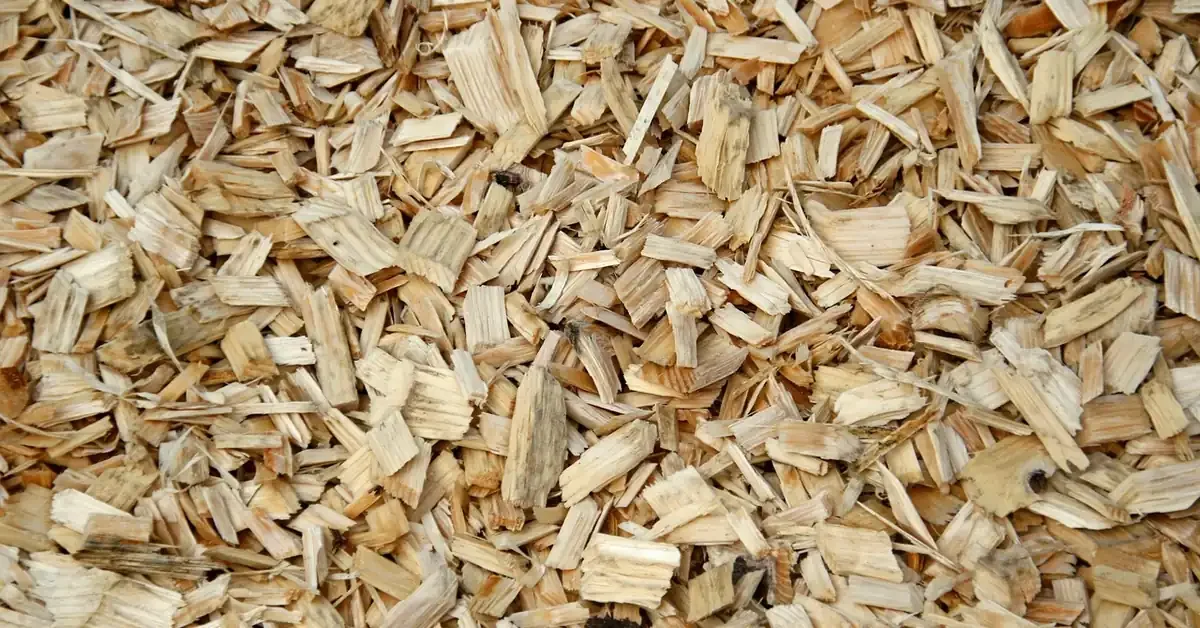
Pressed wood is an engineered material made from wood shavings, particles, sawdust or fibers bonded with an adhesive under heat and pressure. It turns waste wood into flat, consistent panels that cost less than solid lumber or plywood. The family has four common members:
- Particle board: coarse chips and sawdust plus resin, covered by ANSI A208.1. This is the flat-pack furniture panel.
- MDF (medium density fiberboard): fine wood fibers plus resin, covered by ANSI A208.2. Smooth enough to paint; see our particle board vs MDF comparison.
- Hardboard: wood fibers pressed to a density of 500 kg/m3 or more, covered by ANSI A135.4. Thin, hard and smooth; our MDF vs hardboard guide covers the split.
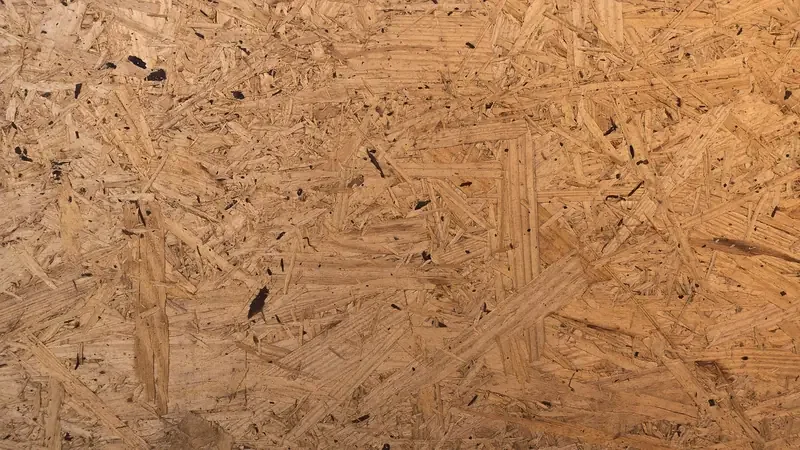
- OSB (oriented strand board): large flat strands laid in alternating directions, used for sheathing and subfloors.
Every one of these is “pressed wood,” which is why the search term and the product names overlap so badly. The trouble starts when a seller attaches the word pressboard to one of them without saying which.
What Does Pressboard Actually Mean?
Pressboard has no grade of its own. ANSI A208.1 names particleboard grades by density class (LD, M, H) plus special grades for decking (D) and underlayment (PBU), and the word pressboard appears nowhere in that list. In practice, you will meet it in three senses:
| What the label says | What it usually is | Typical density | Where you see it |
|---|---|---|---|
| Pressboard on a shelf, desk or cabinet | Particle board (wood chips plus resin) | Medium class: 640 to 800 kg/m3 (40 to 50 lb/ft3) | Flat-pack furniture, cabinet backs, shelving |
| Pressboard or pressed board sold as a thin sheet | Often hardboard (wood fibers, no filler chips) | Usually 800 to 1,040 kg/m3 (50 to 65 lb/ft3) | Drawer bottoms, cabinet backs, crafts, pegboard |
| Pressboard in an electrical context | Cellulose insulation board, not a wood panel at all | Roughly 1.15 to 1.35 g/cm3 | Transformers and motors |
The myth to drop: many pages claim pressboard beats particle board on strength and moisture resistance. That is only true when the seller’s pressboard is hardboard. If it is particle board under another name, the strength and the water behavior are identical, and the grade stamp tells you more than the product name does.
Hardboard’s advantage is real but narrow. It is usually sold in thin sheets, so it works as a back panel or drawer bottom, not as a 3/4 inch shelf. Most people searching for pressboard are holding a particle board shelf.
Material Composition and How Each Panel Is Made
ANSI A208.1 defines particleboard as a composite panel of wood particles, as distinguished from fibers, bonded with a bonding system and sometimes additives. Chips are dried, blended with resin, formed into a mat, then hot-pressed to a set thickness. Finer particles typically go on the faces and coarser ones in the core, which is why the surface is smooth and the middle is rough.
Hardboard starts with fibers, not chips. In the wet (Mason) process one side stays smooth and the back keeps a mesh texture; the dry process gives two smooth faces. Hardboard can bond largely through the wood’s own lignin, which is why it needs little or no added glue. MDF is also fiber-based, and Wikipedia’s MDF entry gives a typical recipe of 82 percent wood fiber, 9 percent urea-formaldehyde resin, 8 percent water and 1 percent wax.
Particle Board Strength by ANSI Grade
This is the information most comparisons skip: particle board is not one strength. ANSI A208.1-2016 sets minimums that climb roughly sevenfold from the lowest grade to the highest, so a cheap LD-1 panel and an H-3 panel are not the same product even though both get called particle board.
| Grade | Density class | Min. bending strength (MOR) | Min. internal bond | Min. face screw hold | Min. edge screw hold |
|---|---|---|---|---|---|
| LD-1 | Low, under 640 kg/m3 | 406 psi | 15 psi | 81 lb | not specified |
| M-1 | Medium | 1,450 psi | 52 psi | not specified | not specified |
| M-S | Medium | 1,595 psi | 52 psi | 180 lb | 157 lb |
| M-2 | Medium | 1,885 psi | 58 psi | 202 lb | 180 lb |
| M-3i | Medium | 2,176 psi | 73 psi | 225 lb | 202 lb |
| H-3 | High, over 800 kg/m3 | 3,060 psi | 131 psi | 405 lb | 315 lb |
Source: ANSI A208.1-2016, Table A (the standard’s own lower limits, listed in psi in the standard). Two things stand out. First, edge screw holding is always lower than face holding, which is why screws near a cut edge pull out first. Second, these are limits, not guarantees: a 2012-sample study of North American M-2 panels in NC State’s BioResources journal found only one tested set met the ANSI bending requirement and none reached the edge screw-withdrawal value.
“The mechanical property requirements are not engineering design values.”
In plain terms, do not size a long shelf from the table. Support it more often than you think you need to, and see our breakdown of the different types of particle board for what each grade is meant to do.
Water, Moisture and Swelling
Particle board’s real weakness is water at the edges. Standard ANSI grades are not required to meet any thickness-swell limit. Only panels labeled MR10 or MR50 must stay at or under 5.5 percent swell after a 24-hour submersion, and MR30 and MR50 add a requirement on bond strength after accelerated aging. If the stamp has no MR designation, assume it is not moisture resistant.
Hardboard and MDF also swell when soaked, so none of these belong in a bathroom or basement without sealing. Prime every cut edge before assembly; our guide to how to seal particle board walks through it, and painting particle board covers the finish coats.
Cost, Formaldehyde and Health
Particle board is cheaper than conventional lumber and plywood, which is the main reason it dominates budget furniture. Prices vary by thickness, grade and region, so check current sheet prices before you plan around a number. Our chipboard vs MDF vs plywood guide shows how the three compare when you are pricing a whole project.
Particleboard certified to ANSI A208.1-2016 may not exceed 0.09 ppm formaldehyde, and since March 22, 2019, composite wood sold in the U.S. must be certified and labeled TSCA Title VI compliant. Source: U.S. EPA, formaldehyde emission standards for composite wood products and ANSI A208.1-2016.
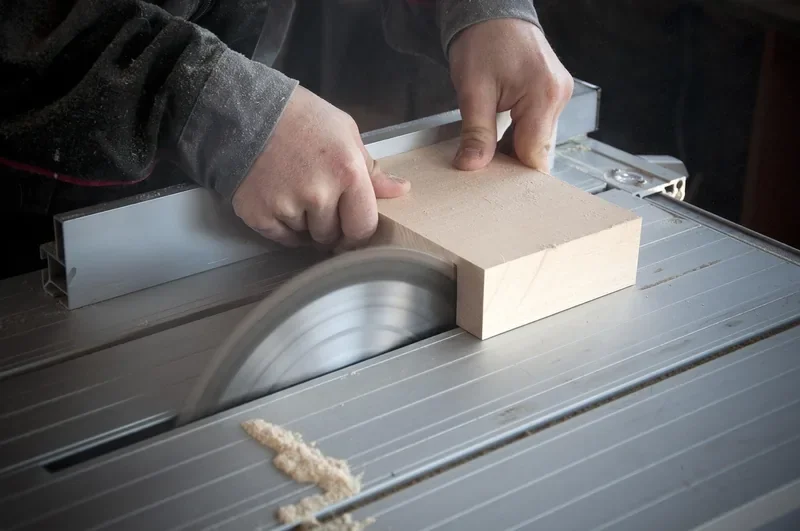
Cutting and sanding any of these panels creates fine dust that carries resin. Work outdoors or with dust collection and a respirator; see whether MDF gives off fumes for the same concerns on the fiber side.
Pros and Cons of Each Panel
| Panel | Strengths | Weaknesses |
|---|---|---|
| Particle board (often sold as pressboard) | Lowest cost, flat and consistent, takes laminate and melamine well | Weak edges, poor screw holding at cuts, swells when wet, heavy for its strength |
| Hardboard (sometimes sold as pressboard) | Hard smooth face, dense for its thickness, good for thin backs and panels | Usually thin, not a structural shelf, swells if soaked |
| MDF | Smooth faces and edges that paint and machine cleanly | Heavy, weak at the edges for screws, dust and swelling issues |
| OSB | Structural strength for sheathing and subfloors | Rough surface, not for furniture faces |
Which One Should You Buy?
- Shelves, desks and cabinet boxes: a medium or high-grade particle board stamped M-2, M-3 or H-grade, edge-banded and sealed.
- Thin backs and drawer bottoms: hardboard, which holds a flat face at 1/8 to 1/4 inch.
- Painted trim and doors: MDF, because the fiber core takes a clean edge.
- Anything that may get wet: not pressed wood. Choose plywood, or an MR10/MR50 panel sealed on every edge.
Before you pay, read the stamp or the product listing for the words particleboard, MDF or hardboard. If all you see is “pressboard” with no grade, ask which of the three it is, and use screws made for particle board such as the one in the box above. For a broader look at wood materials, start from our woodworking tips and materials guide.
Frequently Asked Questions
Are pressboard and particle board the same thing?
In most stores and cabinet shops, yes. Retail sellers use pressboard as another name for particle board, which ANSI A208.1 defines as a panel of wood particles bonded with resin. The exceptions are hardboard, which is made from fibers and is denser, and electrical pressboard, which is a cellulose insulation board used in transformers.
Is pressboard stronger than particle board?
Only when pressboard means hardboard. Hardboard is a fiber panel with a density of roughly 800 to 1,040 kg/m3, so it is denser and harder than particle board, but it is usually sold in thin sheets. If a seller’s pressboard is particle board, it has exactly the same strength as any other particle board of that grade.
Is pressed wood the same as particle board?
Pressed wood is the umbrella term. It covers particle board, MDF, hardboard and OSB, all made by bonding wood pieces with adhesive under heat and pressure. Particle board is the most common type, so the two words are often used interchangeably, but pressed wood is the broader category.
What is the difference between pressboard and MDF?
MDF is a specific fiber panel with a smooth, uniform core and edges that machine cleanly. Pressboard is not a standard grade name, so what you get depends on the seller: usually particle board, sometimes hardboard. Check the grade stamp or product listing for the words particleboard, MDF or hardboard before you buy.
Does pressboard swell when it gets wet?
Particle board does, especially at the edges and cut ends. Standard ANSI grades have no thickness-swell limit. Only panels labeled MR10 or MR50 must stay at or under 5.5 percent swell after a 24-hour soak. Seal every edge and keep unfinished panels off damp floors.
Conclusion
Pressboard is a label, not a standard. Treat it as particle board unless the listing says hardboard, compare the ANSI grade rather than the product name, and seal every edge. That one habit prevents most of the sagging and swelling people blame on the material.
Sponsored / affiliate links. As an Amazon Associate I earn from qualifying purchases. I may earn additional commission from eligible campaigns.