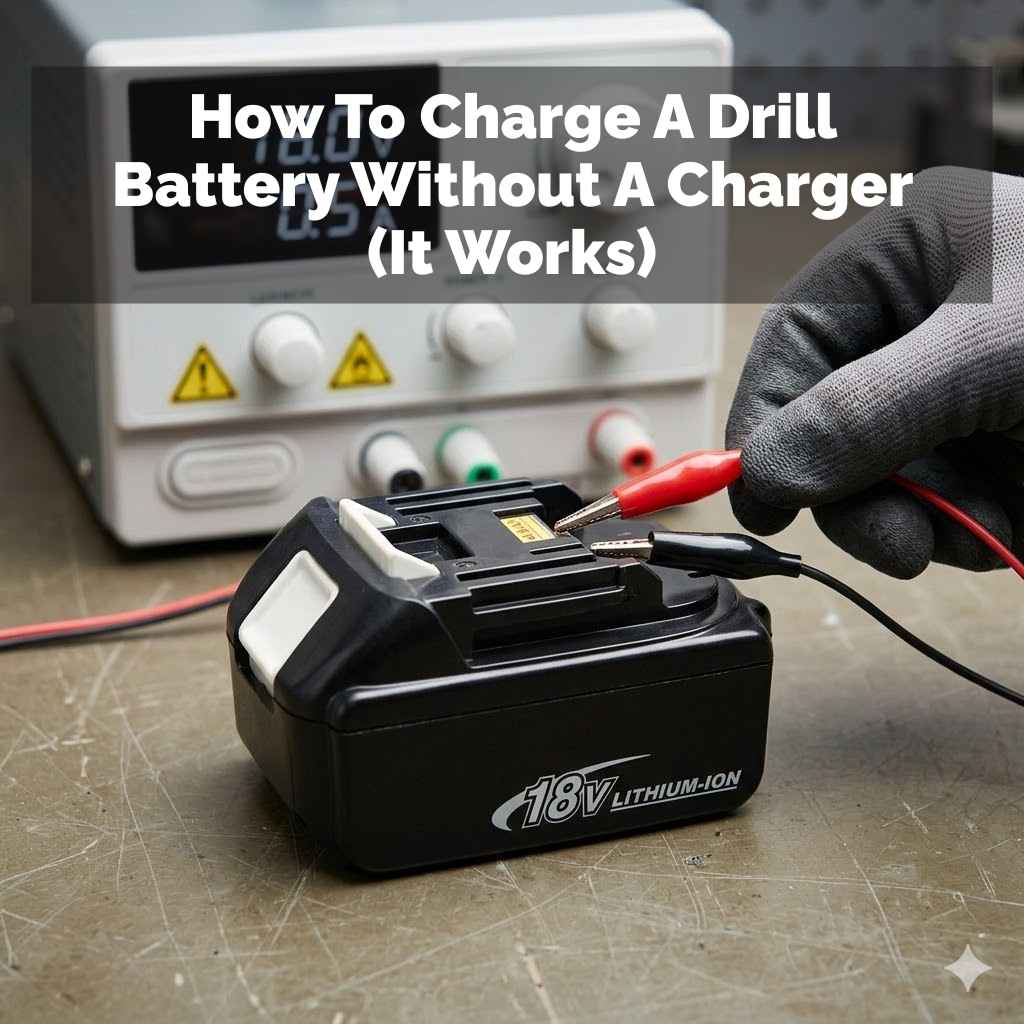
How To Charge A Drill Battery Without A Charger (It Works)
While it’s best to use the original charger, there are some alternative methods to charge a drill battery if yours is missing or broken. These methods involve careful use of other power sources and components, and safety is the top priority. Some popular alternatives include using a universal charger, a car battery, or even a homemade solution with specific parts.
It’s crucial to understand the voltage and compatibility to prevent damage or injury.
Understanding Your Drill Battery
Drill batteries are not all the same. They come in different types. The most common are Nickel Cadmium (NiCd), Nickel Metal Hydride (NiMH), and Lithium-ion (Li-ion).
Each type has unique needs.
NiCd batteries are older. They are heavy. They also have a “memory effect.” This means they lose charge capacity if not fully discharged.
NiMH batteries are better. They are lighter and have less memory effect. Lithium-ion batteries are the newest.
They are the lightest and most powerful. They also charge the fastest.
Your drill charger is designed for a specific battery type. It matches the voltage and chemistry. It also has safety features.
These features stop overcharging. They prevent overheating. Using the wrong charger can damage your battery.
It can even be dangerous.
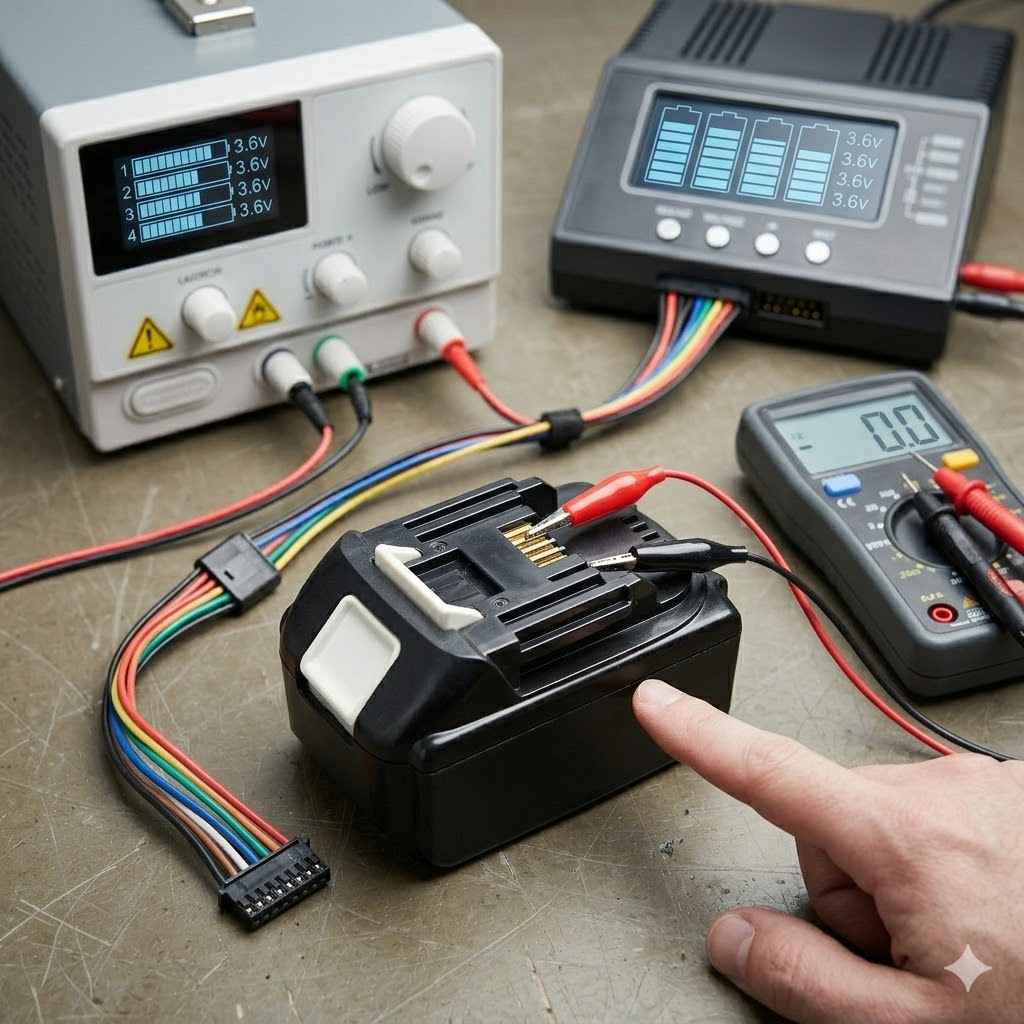
Why Using the Original Charger Matters
Think of your drill battery like a delicate plant. It needs just the right amount of water and sun. The original charger is that perfect balance.
It knows exactly how much power your battery needs. It delivers it at the right speed. This keeps the battery healthy.
It makes it last longer.
Chargers have smarts. They talk to the battery. They check its temperature.
They see how full it is. Then, they adjust the charging. This prevents damage.
It stops the battery from getting too hot. It also stops it from getting too cold. These safety steps are super important.
When you use a non-original method, you lose these protections. It’s like guessing the plant’s needs. You might give it too much water.
Or not enough. This can harm the plant. It can shorten its life.
For batteries, it can mean they die fast. Or worse, they could catch fire.
My Own Drill Battery Scare
I remember one Saturday morning. The sun was shining. I had a big DIY project planned.
A fence to fix. My favorite cordless drill was ready. But the battery?
Dead. Completely dead. I searched everywhere.
Under the workbench. In the tool drawers. Even in the car.
No charger. Panic started to set in. I felt so stuck.
My Saturday project was in jeopardy.
I thought about just buying a new battery. But that costs money. And I knew I had an older drill battery somewhere.
It used a different charger. Maybe, just maybe, I could make something work. My mind raced with ideas.
Some were probably pretty silly. But I was determined not to let a missing charger ruin my day. I spent a good hour looking online for quick fixes.
Most of them looked scary.
Can You Charge a Drill Battery Without Its Charger?
Yes, you can. But it’s not always simple or safe. It depends on your battery type.
It also depends on what tools you have. Some methods are more DIY than others. It’s important to know the risks.
Safety should always come first.
The goal is to match the voltage. You need to match the amperage. You need the right connector.
If you get these wrong, you can ruin your battery. You might even start a fire. Always double-check.
If you’re not sure, it’s best to wait. Get the right charger.
Method 1: The Universal Battery Charger
A universal charger is a good option. It’s designed for many battery types. You can often adjust the voltage.
They have different connectors. Make sure the universal charger fits your battery. Check the voltage settings.
These are often more expensive. But they are safer than DIY methods.
Universal chargers are a step up from custom chargers. They have dials or settings. You pick your battery type.
You pick the voltage. Then you connect it. It’s like having a toolbox of chargers in one.
These are great if you have tools from different brands. They can save you money in the long run.
However, even with a universal charger, be careful. Always read the instructions. Some older batteries need specific charging cycles.
A universal charger might not know that. Always supervise the charging. Don’t leave it unattended for long periods.
Especially when you first try it.
Method 2: Using a Car Battery
This method needs caution. A car battery has a lot of power. It’s 12 volts.
Most drill batteries are 18 volts or 20 volts. You can’t connect them directly. You need a step-up converter.
This device takes the 12 volts. It turns it into 18 or 20 volts.
You will need some wires. And some tools. You connect the converter to the car battery.
Then you connect the converter to your drill battery. Make sure the polarity is correct. Red to red.
Black to black. If you mix them up, you can cause a short circuit. This can damage both batteries.
It can also be dangerous.
This is a temporary fix. It’s not ideal for regular charging. Car batteries have a high amperage.
They can push too much power too fast. This can overheat your drill battery. It can shorten its life.
Only use this if you have no other choice. And only for a short time.
Important Safety Steps for Car Battery Charging
- Always disconnect the car engine. You don’t want the car running.
- Wear safety glasses. Battery acid can be dangerous.
- Check polarity carefully. Red is positive (+). Black is negative (-).
- Use a high-quality step-up converter. Don’t use cheap ones.
- Monitor the battery temperature. If it gets hot, stop immediately.
- Charge for short periods. Don’t leave it connected for hours.
I tried this once when I was camping. My drill was essential for setting up a tarp. The converter worked okay.
But I watched it like a hawk. The battery got a little warm. I only charged it for about 15 minutes.
It was enough to finish my task. But I knew I wouldn’t do it again unless it was an emergency. The risk felt too high.
Method 3: The “Sacrifice” Battery and Power Supply
This is a more advanced DIY method. You need an old power supply. It could be from an old laptop or computer.
You need to find one that matches the voltage. You also need to match the amperage. You will need to cut off the connector.
You will then wire it to your drill battery.
This requires some electrical knowledge. You need to understand how to read voltage and amperage ratings. You need to know how to solder.
You also need to create a connector for your battery. This is not for beginners. Mistakes can be costly.
Or dangerous.
Let’s say you have an 18V drill battery. You might find an old 19V laptop power supply. That’s close.
But not exact. You would need to check the amperage. If the power supply’s amperage is too high, it can overcharge the battery.
If it’s too low, it will charge very slowly. Or not at all.
Quick Scan: Voltage Matching is Key
| Drill Battery Voltage | Close Power Supply Voltage | Amperage Consideration |
|---|---|---|
| 12V | 12V – 13V | Match or slightly higher |
| 18V | 18V – 19V | Match or slightly higher |
| 20V | 20V – 21V | Match or slightly higher |
I saw a friend try this. He was an electrician. He had an old adjustable power supply.
He set it carefully. He used a multimeter to check everything. It worked.
But he admitted it was risky. He said the risk of damaging the battery was high. He only did it because he was bored and had all the parts.
For most people, this is not recommended.
Understanding Battery Chemistry Matters
Lithium-ion batteries are popular. They are lighter. They hold more power.
But they are also more sensitive. They have built-in protection circuits. These circuits stop them from overcharging.
Or from draining too low. If you bypass these, you risk damage.
NiCd and NiMH batteries are tougher. They are less likely to be damaged by slight overcharging. But they still have limits.
Overcharging them can still reduce their lifespan. It can also make them unstable. They might swell up.
This is a clear sign of trouble.
So, if you have a newer Li-ion battery, be extra careful. DIY charging methods are more risky for them. The built-in safety features are there for a reason.
Bypassing them is usually a bad idea. It’s like removing the airbags from your car. You might be okay for a while.
But if something goes wrong, it’s much worse.
Contrast: Li-ion vs. NiCd/NiMH
Lithium-ion (Li-ion)
Pros: Light, powerful, fast charge.
Cons: Sensitive, needs careful charging, riskier for DIY.
Built-in protection: Yes, strong.
NiCd / NiMH
Pros: More forgiving, robust.
Cons: Heavy, slower charge, memory effect (NiCd).
Built-in protection: Less sophisticated.
The Risks of DIY Charging
Let’s be blunt. Messing with batteries can be dangerous. Especially lithium-ion batteries.
They can catch fire if damaged. Or if overcharged. Or if short-circuited.
This is called thermal runaway. It’s a serious problem.
You could also ruin your battery. You might reduce its lifespan. It might not hold a charge anymore.
It might not work at all. This can cost you more than buying a new charger. And it’s usually not covered by warranty.
Fire is a real risk. Imagine a battery overheating. It can start to smoke.
Then it can burst into flames. This can happen very quickly. It can spread.
Always do this in a safe place. Away from flammable materials. Have a fire extinguisher ready.
Just in case.
When is it Worth the Risk?
Sometimes, you have no other choice. You’re in a remote location. Your battery is dead.
You absolutely need to charge it. In these extreme cases, a careful DIY approach might be your only option.
But for most people, most of the time, it’s not worth it. The cost of a new charger is usually less than the cost of a new battery. Or the cost of replacing damaged property from a fire.
Or the cost of medical bills if you get hurt.
Think about the value. Is that one project worth the risk? If the answer is yes, then proceed with extreme caution.
If the answer is no, then wait. Order a new charger. Be patient.
It’s the safer choice.
Observational Flow: Decision Tree for Charging
Problem: Dead drill battery, no charger.
Step 1: Is it an emergency?
- Yes: Proceed to Step 2.
- No: Order a new charger. Wait.
Step 2: Do you have a universal charger?
- Yes: Use it with extreme care. Monitor closely.
- No: Proceed to Step 3.
Step 3: Do you have electrical knowledge and tools for DIY?
- Yes: Consider Method 2 (Car Battery + Converter) or Method 3 (Power Supply) with EXTREME caution. Understand ALL risks.
- No: DO NOT attempt DIY methods. Seek professional help or wait for a charger.
I learned this lesson the hard way with a different tool. I tried to jury-rig a charging system. It worked for a bit.
Then the battery swelled up. It wouldn’t fit the tool anymore. I had to buy a whole new tool.
The “fix” cost me more than the original part.
What to Look for in an Alternative Charger
If you go the universal charger route, here’s what to check:
- Voltage: It MUST match your battery’s voltage.
- Amperage (mA or A): It should be similar to your original charger. Too high can overcharge. Too low charges slowly.
- Connector Type: It needs to physically connect to your battery terminals.
- Battery Chemistry Setting: Li-ion, NiCd, NiMH. Make sure it’s set correctly.
- Safety Features: Look for overcharge protection and temperature monitoring.
Never guess. Always verify. The battery itself often has markings on it.
It will say something like “18V DC”. Your charger will have a similar rating. If you can’t find the original charger’s specs, look up your drill model online.
The manual should have it.
Myth vs. Reality: Charging Drill Batteries
Myth: Any power source can charge any battery.
Reality: Voltage, amperage, and chemistry must match. Mismatches cause damage or fire.
Myth: A faster charge is always better.
Reality: Rapid charging can stress batteries and shorten their lifespan, especially with the wrong equipment.
Myth: DIY charging is just like using the original charger.
Reality: Original chargers have complex safety systems that DIY methods often lack.
I once bought a generic “universal” charger. It looked like it would work. I plugged it in.
The battery got hot. Really hot. Fast.
I unplugged it immediately. The battery was ruined. It wouldn’t hold a charge anymore.
That experience taught me to always read reviews. And to trust the specs.
Real-World Context: Why You Need That Drill
Think about why you’re in this situation. Are you a weekend warrior? Fixing things around the house?
Or a professional on a job site? The urgency is different. For a pro, downtime costs money.
They need solutions that are fast and reliable.
For a homeowner, maybe you just need to hang a picture. Or assemble some furniture. A few hours of waiting for a new charger is usually fine.
The stakes are lower. The risk you might take could be higher. It’s about context.
Consider the environment too. If you’re outdoors, and it might rain, you need that drill to secure a tarp. That’s an emergency.
If you’re in your garage on a rainy day, and you can wait, then it’s not an emergency.
The design of batteries and chargers has improved a lot. Modern drills often use Lithium-ion. These are great, but sensitive.
They communicate with their chargers. This communication ensures optimal charging. And it prevents dangerous situations.
Older NiCd batteries are more forgiving. But they are also less powerful.
What This Means For You
So, what’s the takeaway? Can you charge a drill battery without a charger? Technically, yes.
Is it recommended? Usually, no.
If your original charger is lost or broken, your first step should be to find a replacement. Check the manufacturer’s website. Look for reputable third-party suppliers.
This is the safest and most reliable way to get back to work.
If you absolutely must find an alternative, a good quality universal charger is your best bet. Be meticulous about matching voltage and chemistry. And always supervise the process.
Never leave a battery charging unattended, especially with an alternative method.
DIY methods using car batteries or power supplies are high-risk. They should be reserved for true emergencies. And only if you have the necessary electrical knowledge.
Even then, the risk of damage or fire is significant.
If you see your battery swelling, getting excessively hot, or smelling strange, unplug it immediately. Move it to a safe, non-flammable location. Do not try to use it again.
When to Worry About Your Drill Battery
- It gets very hot during charging. A little warmth is normal, but burning hot is bad.
- It swells up or deforms. This means internal damage.
- It won’t hold a charge for long. Even after full charging.
- It smells burnt or chemical. Stop immediately.
- Your drill acts strangely when the battery is attached. Like losing power suddenly.
Quick Fixes and Tips
Here are some final thoughts to keep your drill ready:
- Buy a spare charger. Keep one at home and one in your workshop.
- Label your batteries. Note their voltage and chemistry type.
- Store batteries properly. Cool, dry places. Not in extreme heat or cold.
- Don’t over-discharge Li-ion batteries. Stop using the drill when power dips.
- Clean battery contacts regularly. Use a pencil eraser or a dry cloth.
Having a spare battery is also a good idea. When one is charging, you can use the other. This minimizes downtime.
It ensures you’re always ready to go. Even if your charger goes missing.
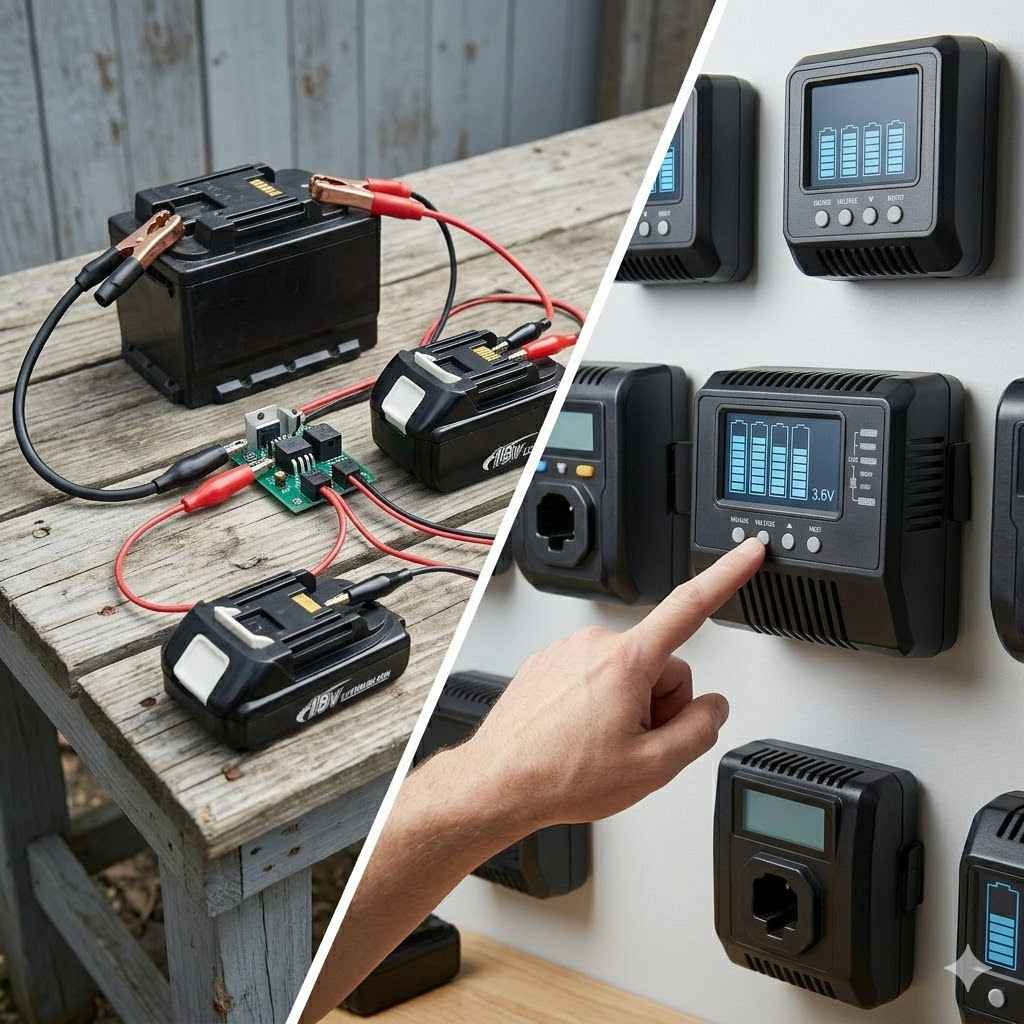
Frequent Questions About Charging Drill Batteries
Can I use a charger from a different brand of drill?
Generally, no. Drill chargers are designed for specific battery voltages and chemistries. Using a charger from a different brand can damage your battery or pose a safety risk.
Always use the charger recommended by your drill’s manufacturer.
What happens if I overcharge my drill battery?
Overcharging can damage the battery. It can reduce its lifespan. For Lithium-ion batteries, it can lead to overheating or even fire.
Modern chargers have safety features to prevent this. However, with alternative charging methods, this risk increases significantly.
How do I know if my battery is Lithium-ion?
Lithium-ion batteries are typically lighter than older battery types like NiCd or NiMH. They often have “Li-ion” or “Lithium-ion” printed on them. They also tend to charge faster and hold more power for their size.
Is it safe to charge a drill battery in my car?
Charging directly from a car’s cigarette lighter is not usually possible. You would need a 12V to 18V/20V DC-DC converter. This method carries risks.
It can potentially damage your battery or the car’s electrical system if not done correctly. It’s best used only in emergencies with proper equipment.
My drill battery is old. Can I still charge it?
Older batteries may not hold a charge as well. They might take longer to charge. It’s possible to charge them, but their overall capacity will likely be reduced.
If an old battery swells or leaks, it should be disposed of properly and not charged.
What is the “memory effect” in drill batteries?
The memory effect is a phenomenon mostly associated with older Nickel Cadmium (NiCd) batteries. If a NiCd battery is repeatedly recharged before being fully discharged, it can “remember” the lower charge level. This reduces its total capacity.
NiMH and Lithium-ion batteries do not suffer from the memory effect.
Conclusion
While the temptation to charge your drill battery without its specific charger is understandable, the risks often outweigh the benefits. Safety and battery longevity are key. Always prioritize using the correct equipment.
If you must explore alternatives, do so with extreme caution and a full understanding of the potential dangers. Your tools, your home, and your safety are worth the extra effort to do it right.
Sponsored / affiliate links. As an Amazon Associate I earn from qualifying purchases. I may earn additional commission from eligible campaigns.