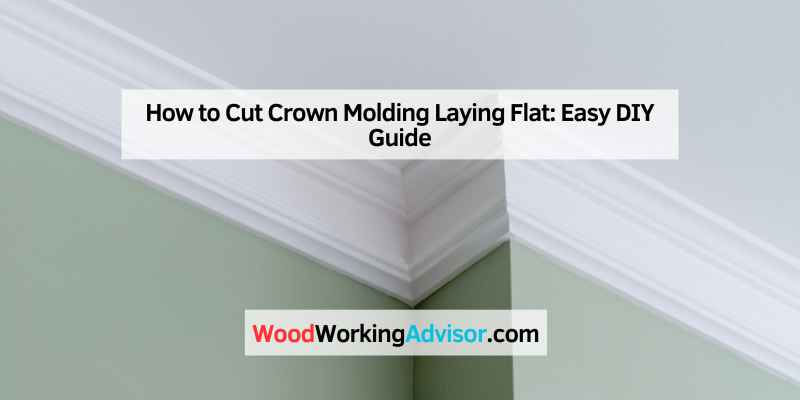
How to Cut Crown Molding Laying Flat: Easy DIY Guide
To cut crown molding laying flat, use a miter saw set at a 45-degree angle. Position the molding upside down against the saw’s fence for accurate cuts.
Crown molding adds elegance and character to any room. Cutting it correctly is crucial for a seamless finish. Many homeowners find themselves intimidated by this task, especially if they lack experience. Laying crown molding flat simplifies the cutting process and helps ensure precision.
This method reduces the risk of mistakes and allows for easy measurement. With the right tools and techniques, anyone can achieve professional-looking results. Whether you’re a DIY enthusiast or a seasoned pro, understanding how to cut crown molding laying flat is essential for your next home improvement project. Let’s dive into the steps to make your installation smooth and successful.
Introduction To Crown Molding
Crown molding adds elegance to any room. It creates a seamless transition between walls and ceilings. This decorative element enhances the overall aesthetic. Understanding its benefits helps homeowners make informed choices.
The Aesthetic Appeal
Crown molding offers visual interest to interiors. It draws the eye upwards, making spaces feel taller. Here are a few key points about its aesthetic value:
- Variety of Styles: Available in traditional, modern, and contemporary designs.
- Material Choices: Made from wood, polyurethane, or plaster.
- Customization: Can be painted or stained to match any decor.
Functional Benefits
Crown molding serves practical purposes beyond beauty. It can hide imperfections where walls meet ceilings. Here are some functional advantages:
- Conceals Gaps: Covers any unsightly gaps or cracks.
- Protects Walls: Shields walls from wear and tear.
- Increases Property Value: Enhances overall home appeal.
| Benefit | Description |
|---|---|
| Concealment | Hides flaws in construction. |
| Protection | Prevents damage from cleaning. |
| Value Boost | Increases marketability of the home. |
Choosing crown molding enhances both beauty and function. It transforms spaces while offering practical advantages.
Tools And Materials Needed
Cutting crown molding laying flat requires specific tools and materials. Each item plays a crucial role in achieving precise cuts. Below is a list of essential tools and materials you need.
Measuring Tape And Pencil
Measuring accurately is key to a successful project. Use a reliable measuring tape and a sharp pencil. Here’s why they are important:
- Measuring Tape: Ensures accurate measurements.
- Pencil: Allows you to mark cut lines clearly.
Miter Saw
A miter saw is essential for cutting crown molding. It provides precise angles and clean cuts. Choose a saw with these features:
| Feature | Description |
|---|---|
| Type | Compound miter saw for angled cuts. |
| Blade Size | 10-inch or 12-inch for better cutting capacity. |
| Laser Guide | Helps in aligning cuts accurately. |
Crown Molding
Select the right crown molding for your project. Consider the following:
- Material: Options include wood, MDF, or polyurethane.
- Style: Choose a style that complements your decor.
- Size: Ensure it fits the space properly.
Safety Gear
Safety is crucial during any DIY project. Always wear appropriate safety gear:
- Safety Glasses: Protect your eyes from debris.
- Hearing Protection: Reduce noise from the saw.
- Dust Mask: Prevent inhaling sawdust.
Preparation Steps
Preparing for crown molding installation is crucial for success. Follow these steps to ensure a smooth process and perfect cuts.
Room Measurement
Accurate measurements are essential. Use a tape measure to gather the room’s dimensions. Follow these steps:
- Measure each wall length.
- Note any corners or angles.
- Calculate the total perimeter.
Write down your measurements for reference. This helps in planning the amount of molding needed.
Choosing The Right Molding
Selecting the right molding enhances the room’s style. Consider these factors:
- Material: Choose between wood, MDF, or polyurethane.
- Style: Match the molding style with your room’s decor.
- Width: Wider moldings create a more dramatic effect.
Visit a local store to see samples. This helps visualize how the molding will look in your space.
Setting Up The Work Area
A well-organized workspace boosts efficiency. Follow these tips:
- Clear the area of furniture and obstacles.
- Lay down a drop cloth to protect the floor.
- Gather tools: miter saw, measuring tape, and clamps.
Ensure proper lighting for detailed work. A clean, organized space prevents accidents.
Cutting Techniques
Mastering crown molding requires understanding various cutting techniques. Using the right methods ensures precise and clean cuts. This section focuses on key techniques for cutting crown molding while laying flat.
Understanding Angles
Angles are crucial in crown molding cuts. Each corner in your room creates a different angle. Knowing these angles helps you make accurate cuts.
- Inside Corners: Typically, 45-degree angles are used.
- Outside Corners: These often require 45-degree cuts as well.
- Bevel Angle: Adjust the saw to match the angle of the wall.
Use a protractor to measure angles accurately. This tool helps avoid mistakes.
Using The Miter Saw
The miter saw is essential for crown molding projects. It allows for precise angle cuts. Follow these steps for optimal results:
- Set the crown molding flat on the saw.
- Adjust the angle to 45 degrees.
- Secure the molding tightly.
- Make the cut slowly and steadily.
Consider using a stop block for repeated cuts. This ensures uniformity in length.
Hands-on Practice
Practice makes perfect. Start with scrap pieces of wood. Cut various angles to gain confidence.
| Practice Piece | Angle | Result |
|---|---|---|
| Piece 1 | 45 degrees | Perfect fit |
| Piece 2 | 30 degrees | Needs adjustment |
| Piece 3 | 60 degrees | Good fit |
After practice, you’ll feel ready to tackle your project. Each cut will become easier with time.
Laying Flat Vs. Angled Cutting
Choosing between laying flat and angled cutting for crown molding can affect your project. Each method has its unique advantages and challenges. Understanding these differences helps achieve a professional finish.
Pros And Cons
| Method | Pros | Cons |
|---|---|---|
| Laying Flat |
|
|
| Angled Cutting |
|
|
When To Use Each Method
- Laying Flat:
- Basic installations.
- Beginners or DIY projects.
- Rooms with simple corners.
- Angled Cutting:
- Complex designs.
- Experienced woodworkers.
- Rooms with irregular angles.
Step-by-step Cutting Guide
Cutting crown molding can be tricky. This guide simplifies the process. Follow these steps for precise cuts.
Aligning The Molding
Proper alignment is key for accurate cuts. Here’s how to align your molding:
- Place the molding flat on the miter saw.
- Position the back of the molding against the fence.
- Ensure the bottom edge is resting on the base.
Check that the angle is correct. The bottom edge should be straight and flush. Use a level tool for precision.
Making The Cut
Now, it’s time to cut. Use these steps:
- Set the miter saw to the desired angle.
- Start the saw and let it reach full speed.
- Gently lower the blade onto the molding.
Keep your hands clear of the blade. Safety first! Make sure to cut at a steady pace for a clean edge.
Checking For Accuracy
Verify your cuts for accuracy. Follow these tips:
- Use a square to check the angle.
- Test fit the molding against the wall.
- Look for gaps or uneven edges.
Adjust the cut as needed. A snug fit makes for a professional finish. Patience is key to great results.
Installation Tips
Installing crown molding laying flat can be simple with the right techniques. Follow these tips to achieve a clean and professional look.
Securing The Molding
Secure your crown molding using these easy steps:
- Measure your walls carefully to determine the right length.
- Cut the molding at a 45-degree angle for corners.
- Use a nail gun or hammer and finishing nails for secure placement.
- Check that the molding is level before nailing.
Coping Joints
Coping joints ensures a seamless look. Follow these tips:
- Cut one piece of molding at a 90-degree angle.
- Cut the adjoining piece with a coping saw.
- Fit the coped edge against the straight cut for a tight joint.
- Test the fit before securing with nails.
Finishing Touches
Complete your installation with these finishing touches:
- Fill any nail holes with wood filler.
- Sand the filled areas smoothly.
- Paint or stain your molding to match your décor.
- Caulk gaps between the molding and the wall.
These steps will enhance the beauty of your crown molding. Enjoy your newly finished space!
Troubleshooting Common Issues
Cutting crown molding laying flat can lead to several challenges. Common issues include gaps, mismatched angles, and splintered edges. Here’s how to tackle these problems effectively.
Adjusting For Gaps
Gaps can occur between the molding and the wall or ceiling. This issue often arises from inaccurate cuts. Follow these steps to fix gaps:
- Use caulk to fill small gaps.
- Choose a color that matches the molding.
- For larger gaps, add wood filler.
Ensure the filler is sanded smooth before painting. A seamless finish will enhance your crown molding’s appearance.
Fixing Mismatched Angles
Mismatched angles can ruin the look of your crown molding. This happens when cuts aren’t precise. Try these solutions:
- Check your miter saw settings.
- Re-cut the affected pieces at the correct angle.
- Use a protractor for exact measurements.
Always measure twice before cutting. This habit prevents costly mistakes and ensures a perfect fit.
Repairing Splintered Edges
Splintered edges can occur during cutting. This issue detracts from the final look. Here’s how to repair splintered edges:
- Sand the edges gently with fine-grit sandpaper.
- Apply wood glue to the splintered area.
- Clamp the pieces together until dry.
After drying, sand again for a smooth finish. This repair will make your crown molding look polished.
Maintaining And Cleaning
Keeping your crown molding clean enhances its beauty and longevity. Regular maintenance protects it from dust and stains. Follow these tips for effective care.
Regular Dusting
Dust can accumulate on crown molding. Regular dusting keeps it looking fresh. Here’s how:
- Use a soft microfiber cloth.
- Dust weekly to prevent buildup.
- For hard-to-reach areas, use a long-handled duster.
Dealing With Stains
Stains can ruin the appearance of crown molding. Quick action helps in cleaning them. Follow these steps:
- Identify the type of stain.
- For water stains, use a damp cloth.
- For grease stains, mix mild soap with water.
- Wipe gently and dry immediately.
Test any cleaning solution on a small area first.
Preservation Techniques
Preserving your crown molding ensures it lasts longer. Use these techniques:
| Technique | Description |
|---|---|
| Regular Inspections | Check for cracks or chips. |
| Protective Coating | Apply a sealant to prevent damage. |
| Humidity Control | Keep indoor humidity levels stable. |
These steps will help maintain the beauty of your crown molding.
Final Thoughts
Cutting crown molding while laying flat can seem tricky. With the right tools and techniques, it becomes easy. Here’s a quick recap of what we covered.
Recap Of Key Takeaways
- Measure accurately: Take precise measurements for every cut.
- Use the right tools: A miter saw works best for clean cuts.
- Set your saw correctly: Adjust the bevel and miter angles for flat laying.
- Practice with scrap wood: Test cuts on scrap pieces first.
- Secure your workpiece: Ensure the molding is stable while cutting.
Encouragement For Diy Enthusiasts
DIY projects can boost your skills. Cutting crown molding is a great way to start. Remember, practice makes perfect. Don’t get discouraged by mistakes.
- Take your time.
- Ask for help when needed.
- Watch online tutorials for extra tips.
Enjoy the process. Your hard work will show in the results. Transform your space with your own hands!
Frequently Asked Questions
How Do You Cut Crown Molding Flat?
To cut crown molding flat, use a miter saw. Set the saw at a 45-degree angle for accurate cuts. Lay the molding flat on the saw’s base. Ensure the back of the molding is flush against the fence for precision.
Practice makes perfect, so consider scrap pieces for practice.
What Tools Are Needed For Cutting Crown Molding?
Essential tools include a miter saw, measuring tape, and a pencil. A square and clamps can help stabilize the molding. Additionally, having safety goggles and ear protection is advisable. These tools ensure accurate cuts and enhance safety while working on your project.
Can Crown Molding Be Cut Without A Miter Saw?
Yes, crown molding can be cut using a hand saw. However, it requires more skill and precision. Make sure to measure carefully and mark your angles clearly. A miter box can assist in achieving accurate cuts. Practice on scrap pieces to improve your technique.
What Is The Best Angle For Cutting Crown Molding?
The best angle for cutting crown molding is typically 45 degrees. This angle helps create a clean joint when two pieces meet. However, the exact angle may vary based on your wall angles. Always measure and adjust accordingly to fit your specific installation needs.
Conclusion
Cutting crown molding while laying flat simplifies the process and ensures accuracy. Mastering this technique enhances your woodworking skills. It also saves time and reduces waste. With practice, you’ll achieve professional results. Embrace this method for your next project and enjoy the beautiful finish that crown molding can bring to your space.