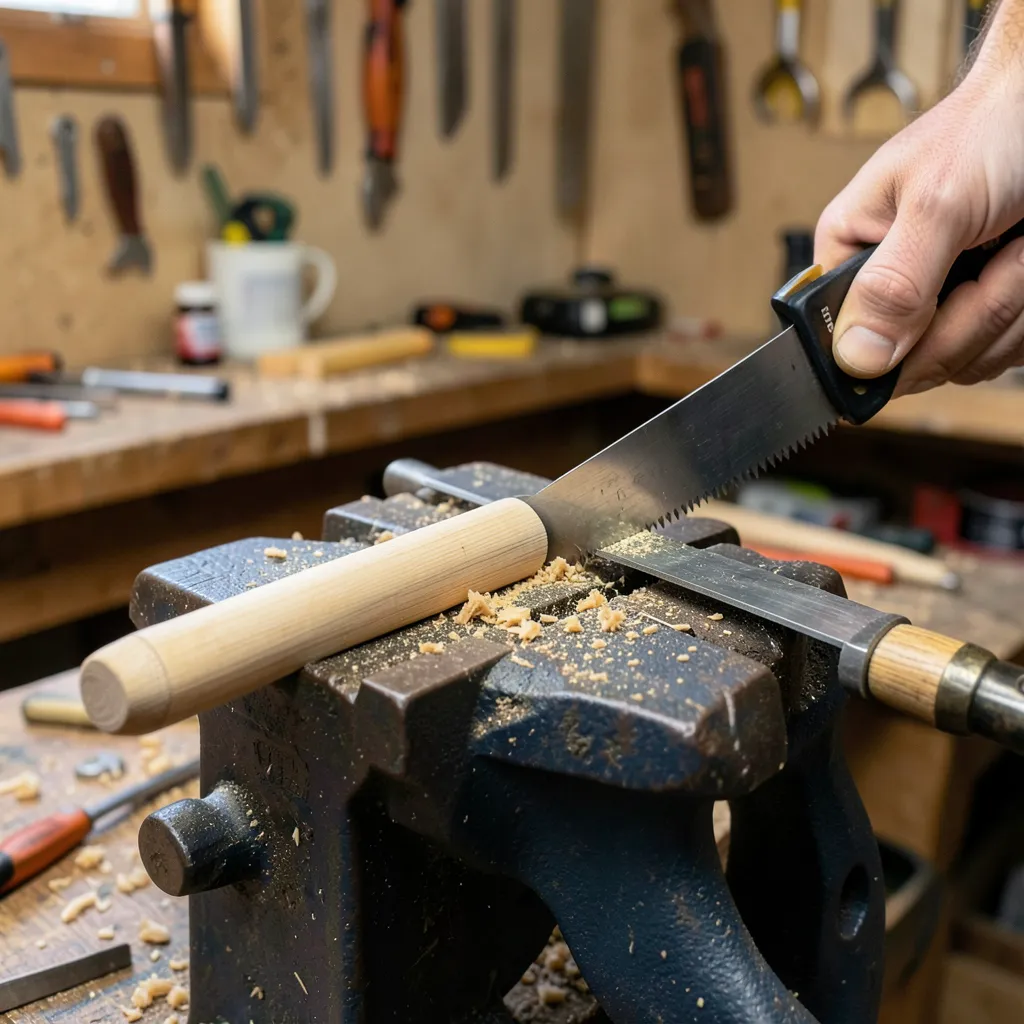
Can a Hacksaw Cut Wood? Yes, But Only in These Situations
A hacksaw can cut wood, but it is built for a different job. Standard hacksaw blades run 24 to 32 teeth per inch — fine enough for clean cuts through steel, but far too fine for wood. Push one through a 2×4 and the tight teeth pack with sawdust, generate friction heat, and either stall or scorch the cut instead of slicing through it.
Where a hacksaw genuinely earns its keep on wood is small, precise work: flush-cutting a protruding screw, trimming a thin dowel, or cutting through a fastener embedded in a board where a bigger saw will not fit. For anything thicker than about half an inch, you will get a cleaner, faster cut from a panel saw, jigsaw, or a hacksaw fitted with a coarse wood-specific blade.
When a Hacksaw Works Best for Wood
Best Hacksaw for Wood + Metal
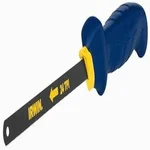 |
IRWIN Tools ProTouch MultiSaw – $16 Ships with a dedicated coarse wood blade so you’re not forcing a 24-TPI metal blade through lumber.
|
So, Can a Hacksaw Cut Wood? When It Works, it’s typically under specific conditions. If you’re dealing with:
- Thin pieces of wood: Like a thin plywood sheet or a small dowel rod.
- Hardwoods: Sometimes, the fine teeth can handle hardwoods better than softwoods because they don’t clog as much.
- Small, precise cuts: If you need to cut off a small section or make a narrow notch.
- When you have no other option: And you just need to get the job done.
Choosing the Right Blade
This is perhaps the most critical factor in determining if your hacksaw can cut wood effectively.
Blade Tooth Count (TPI)
For metal, you often see hacksaw blades with 24 to 32 TPI. These are too fine for most wood. For cutting wood with a hacksaw, you’ll want a blade with a lower TPI.
- 14-18 TPI Blades: These are generally the best bet for cutting wood. They have larger teeth that are spaced further apart. This spacing helps prevent the wood dust from getting stuck (clogging) between the teeth, allowing for a smoother and faster cut.
- Bi-metal blades: These are a good choice as they combine hardness and flexibility, making them durable for various tasks.
Blade Material
While most hacksaw blades are made of hardened steel, some might have special coatings or be bi-metal (a combination of steel and high-speed steel). Bi-metal blades tend to be more durable and flexible, which can be beneficial when cutting wood.
Preparing Your Wood
Before you even touch the hacksaw to the wood, a little preparation goes a long way.
- Marking Your Cut: Use a pencil and a ruler or square to draw a clear line where you want to cut. This ensures accuracy.
- Clamping the Wood: This is super important. The wood needs to be held firmly in place so it doesn’t move while you’re cutting. Use clamps to secure it to a workbench or sturdy surface. If the wood is wobbly, your cut will be uneven and much harder to make.
The Cutting Technique
Now for the actual cutting. How you use the hacksaw makes a big difference.
Tensioning the Blade
Make sure the blade is tensioned correctly in the hacksaw frame. It should be tight, almost like a guitar string. A loose blade will bend, skip, and make a messy cut, or worse, break.
Starting the Cut
Don’t just press down hard and start sawing. Begin by placing the blade on your marked line. Use your thumb or finger to guide the blade and make a small groove.
Then, with light pressure, start to saw back and forth. This helps set the blade on the line and prevents it from jumping off.
The Sawing Motion
The key is to use long, smooth strokes. Let the blade do the work. You don’t need to apply a lot of downward pressure.
Focus on a steady rhythm, moving the saw back and forth. Exaggerate the backstroke where you apply pressure, and be lighter on the forward stroke. This technique helps the teeth cut efficiently and reduces the chance of clogging.
Dealing with Clogging
If you notice the sawdust building up on the blade and the cutting slowing down, stop. You might need to:
- Clear the blade: Use a brush or even your fingers (carefully!) to remove the sawdust.
- Use a wax or soap: Rubbing a bit of candle wax or bar soap along the blade can help the sawdust slide off more easily.
- Change your angle: Sometimes, slightly changing the angle of the saw can help clear out the debris.
Types of Wood Hacksaws Can Handle
The success of cutting wood with a hacksaw depends heavily on the wood itself.
Softwoods vs. Hardwoods
| Wood Type | Hacksaw Suitability | Reason |
|---|---|---|
| Softwoods (Pine, Fir, Cedar) | Challenging | Prone to clogging due to the fibrous nature and dust produced. A lower TPI blade is essential. |
| Hardwoods (Oak, Maple, Walnut) | More Suitable | Denser grain can be cut more cleanly by fine teeth if a proper blade is used. Less clogging. |
Plywood and Particle Board
Cutting thin sheets of plywood can be manageable with the right blade, especially if the veneer is not too thick. However, particle board, with its glue and wood chips, can be very tough on blades and may result in a rough edge.
When NOT to Use a Hacksaw for Wood
While we’ve established that a hacksaw can cut wood, there are definitely times when it’s not the best tool.
- Thick lumber: If you’re trying to cut through a 2×4 or thicker, a hacksaw will take a very long time and a lot of effort. A handsaw designed for wood would be much more efficient.
- Large projects: For any significant woodworking, a handsaw or power saw is the way to go.
- Needing a very clean finish: Even with the best technique, a hacksaw cut might be rougher than what you’d get from a proper wood saw. You might need to sand it afterward.
- Delicate or veneered wood: The aggressive nature of even a wood-appropriate hacksaw blade can easily chip or tear delicate surfaces.
Alternatives for Cutting Wood
If you find yourself struggling with a hacksaw, or if the job is larger than what a hacksaw can comfortably handle, consider these alternatives:
- Wood Handsaw: These are specifically designed for wood. They have coarser teeth that cut through wood much faster and more cleanly than a hacksaw. There are different types for general cutting, cross-cutting, and rip cuts.
- Coping Saw: For intricate curves and detailed work on thinner wood, a coping saw is excellent. It has a very narrow blade that can be easily maneuvered.
- Jigsaw: A power tool that’s great for curved cuts and general-purpose cutting of wood. It’s much faster than any handsaw.
- Circular Saw: For straight cuts on larger pieces of lumber or sheet goods.
Frequently Asked Questions
Question: Can I use any hacksaw blade to cut wood?
Answer: No, it’s best to use a hacksaw blade with a lower tooth count, around 14-18 TPI, specifically designed or suitable for wood. Blades with very fine teeth (24 TPI or higher) are usually too fine and will clog easily.
Question: Will a hacksaw cut through a 2×4?
Answer: It’s possible, but it will be very difficult, time-consuming, and likely result in a rough cut. A proper wood handsaw is much better suited for this task.
Question: How do I prevent the wood from moving while cutting with a hacksaw?
Answer: You must clamp the wood securely to a workbench or a stable surface. This is crucial for a safe and accurate cut.
Question: My hacksaw blade keeps getting stuck in the wood. What should I do?
Answer: This is called clogging. Try using a blade with fewer teeth per inch (lower TPI), clear the blade frequently with a brush, or rub some wax or soap on the blade to help the sawdust slide off.
Question: Can a hacksaw cut soft wood better than hard wood?
Answer: Actually, it’s often the other way around. Hardwoods tend to produce less dust and clog the blade less than softwoods, making them slightly easier to cut with a hacksaw if you have the right blade.
Final Thoughts
When you’re wondering, Can a Hacksaw Cut Wood? When It Works, remember that it’s about having the right blade and the right technique. For small, manageable pieces of wood, especially hardwoods, a hacksaw with a 14-18 TPI blade can absolutely get the job done.
It’s a useful skill to have in your back pocket for those times when a specialized tool isn’t readily available. The key is to clamp your wood securely, use long, steady strokes, and keep that blade clear of dust. Don’t force it; let the saw do the cutting.
If you’re facing thicker wood or larger projects, it’s always best to reach for a tool specifically made for wood, like a handsaw or jigsaw, to save yourself time and frustration. But for those minor tasks, a hacksaw can be a surprising ally. So next time you have a small wood-cutting need, give it a try with the right setup.
Sponsored / affiliate links. As an Amazon Associate I earn from qualifying purchases. I may earn additional commission from eligible campaigns.