How to Fix Marble on Wood: The Right Adhesive (and Why Wood Glue Fails)
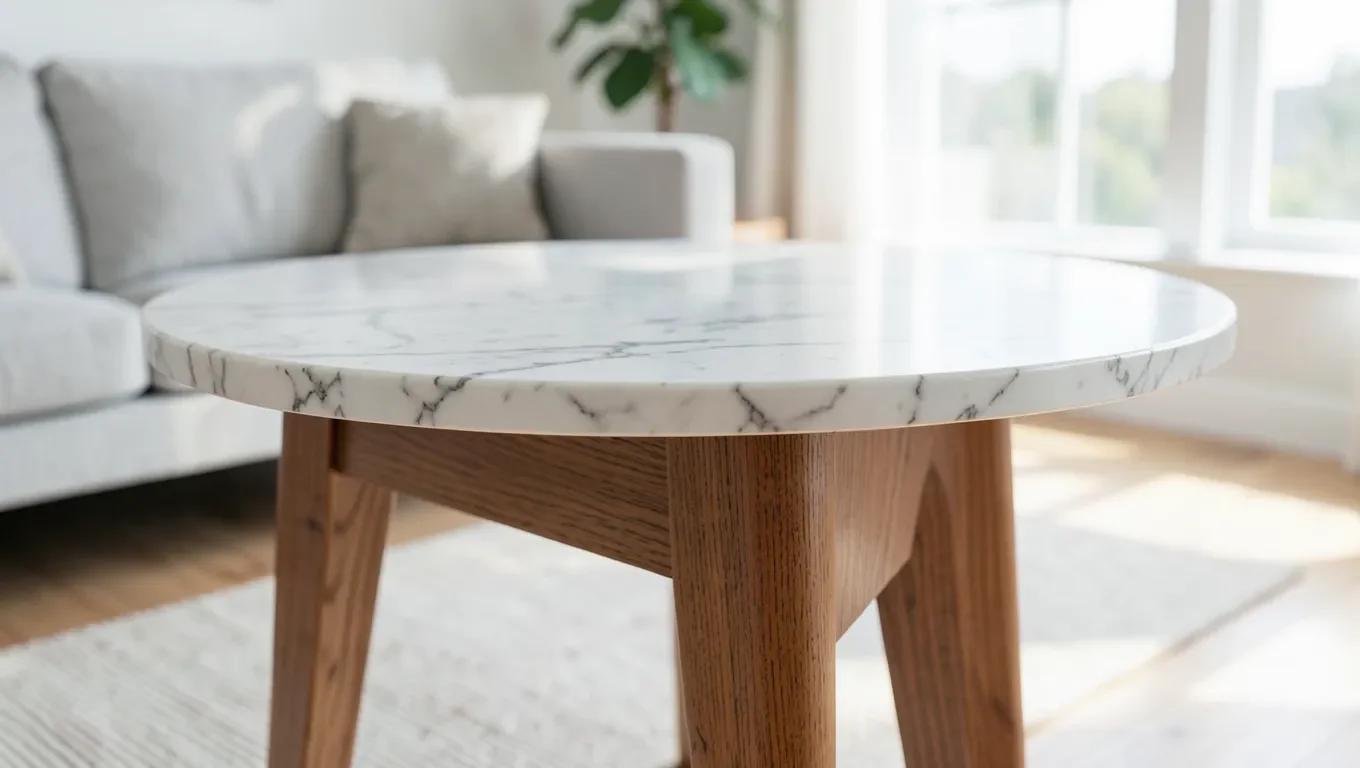
Marble slabs are bonded to wood bases and countertops all the time – in tabletops, vanities, and accent furniture – but most guides skip the one detail that decides whether that bond lasts five years or five months: wood and marble move at completely different rates. Get the adhesive choice wrong and even a picture-perfect installation will crack, gap, or pop loose the first time the seasons change. This guide covers why that matters and exactly how to attach marble to wood so it stays put.
Why Marble and Wood Need a Flexible Adhesive
Wood is hygroscopic – it absorbs and releases moisture from the air, which makes it expand and contract across the grain as humidity changes through the seasons. A flatsawn wood panel can move a noticeable fraction of an inch across its width over a year. Marble, by contrast, barely moves at all with humidity or normal indoor temperature swings. That mismatch is the whole problem: if you bond the two together with a rigid adhesive – standard two-part epoxy, or ordinary wood glue – the wood moves underneath the marble and the rigid glue line has nowhere to give. Eventually it cracks, and either the bond fails or, worse, the stress transfers into the marble itself and chips the edge.
The fix is to use an adhesive that stays flexible after it cures – a polyurethane or hybrid-polymer construction adhesive, or a purpose-made silicone-based stone adhesive – so the bond line can absorb that differential movement instead of fighting it. This is the same reason stone fabricators use flexible adhesives (not thin, rigid mortar) when they set a stone slab onto a plywood substrate.
Best Flexible Adhesive For Marble On Wood
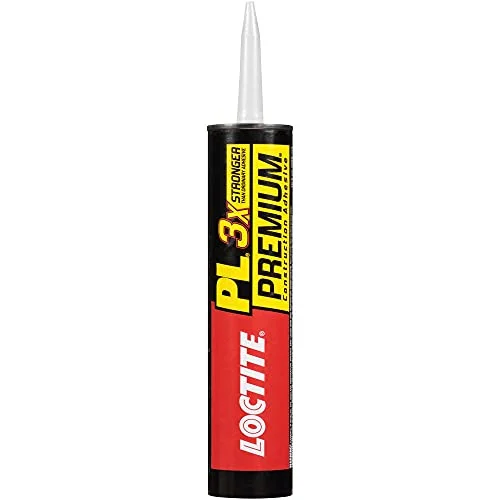 |
Loctite PL Premium Polyurethane Construction Adhesive – $6.48 A flexible, waterproof polyurethane adhesive built to bond wood to stone – exactly the give this job needs.
|
Step 1: Assess and Prepare Both Surfaces
Before any adhesive comes out, check the wood base itself. It needs to be solid, dry, and free of rot or soft spots – a marble slab is heavy, and it will only ever be as stable as what it is sitting on. If the wood substrate is plywood or MDF, confirm it is rated for the weight of the slab you are attaching; a full marble tabletop can easily weigh 40–80 lbs depending on thickness and size.
Clean both surfaces thoroughly. On the wood side, sand lightly to remove any old finish, wax, or dust in the bonding area – adhesive needs to reach bare, clean wood to grip properly. On the marble side, wipe the underside with isopropyl alcohol rather than a soap-based cleaner; soap residue and oily cleaners can leave a film that weakens adhesion. Let both surfaces dry completely before moving on – trapped moisture under the slab is one of the more common causes of adhesive failure down the line.
Step 2: Choose the Right Adhesive for the Job
Not every adhesive on a hardware store shelf is a good match for this job. A few real options, and where each one fits:
- Polyurethane construction adhesive (Loctite PL Premium and similar) – flexible once cured, bonds wood to stone and most other building materials, and is fully waterproof. This is the most common all-around pick for attaching a marble top to a wood base or frame.
- Hybrid polymer / MS polymer adhesive – similar flexibility to polyurethane but non-staining, which matters more on light-colored or honed marble where oils in some adhesives can cause a permanent shadow through the stone.
- 100% silicone adhesive/sealant – the go-to for stone countertop installers when setting a slab onto a substrate, because it stays permanently flexible. It has lower structural strength than polyurethane, so it is often paired with a mechanical support (see below) rather than used as the sole bond on a large or overhanging slab.
- Two-part epoxy – strong and rigid. Reasonable for filling a chip or repairing a crack within the marble itself, but a poor choice for gluing an entire slab to a wood base, since it has no give for that wood-movement mismatch discussed above.
For anything larger than a small accent piece, or anywhere the slab will see temperature and humidity swings (a kitchen, a sunroom, near a window), skip epoxy and reach for a polyurethane or hybrid-polymer product instead. Our wood glue buying guide covers how these adhesive families compare on bond strength, water resistance, and working time if you want the fuller picture before you buy.
Step 3: Apply, Position, and Clamp
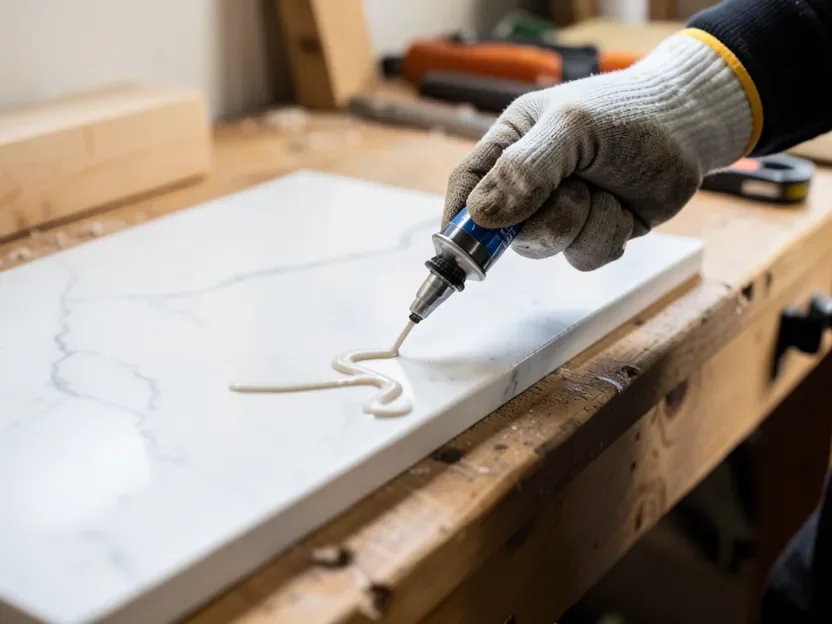
Run the adhesive in beads or dabs across the underside of the marble rather than a single solid layer – a bead pattern lets trapped air and excess adhesive escape to the edges when you set the slab down, instead of forming an air pocket that turns into a soft spot later. Leave roughly an inch of gap from the marble’s outer edge so adhesive does not squeeze out and show once the slab is pressed into place.
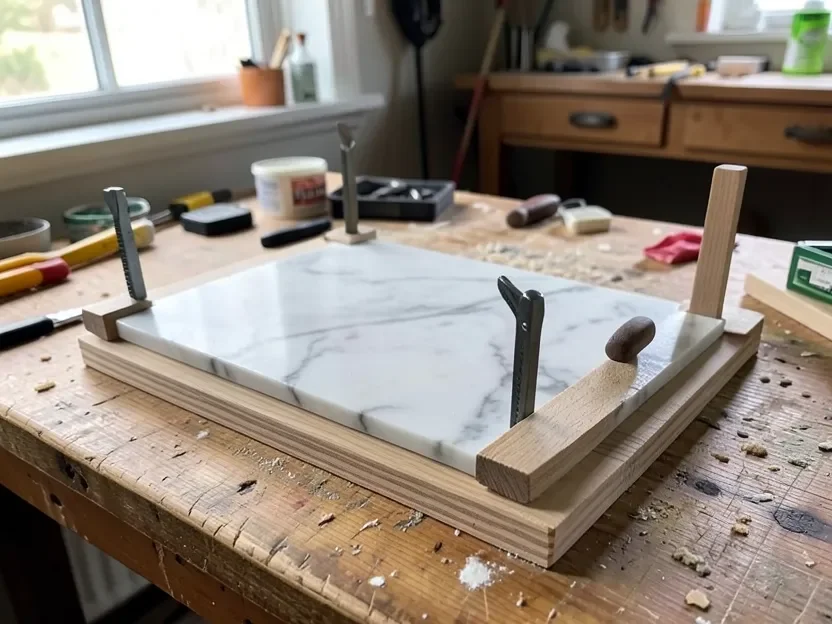
Lower the marble onto the wood base carefully – it is heavy and unforgiving of a dropped corner – and get it aligned on the first placement, since sliding it around afterward can smear the adhesive thin in spots. Once it is positioned, apply firm, even pressure across the whole surface, then clamp or weight it down according to the adhesive’s instructions. For larger slabs, distribute weight (sandbags, books, or padded clamps) across the full surface rather than concentrating pressure at a few points, which can crack the marble under load.
Step 4: Cure Time and Finishing Touches
Most polyurethane and hybrid-polymer adhesives reach handling strength in 30–60 minutes but need a full 24 hours (sometimes longer in cool or humid conditions) to reach full cure strength – check the product’s own data sheet rather than assuming. Keep the piece undisturbed and at room temperature for that full window; moving it early, even gently, can shift the bond before it has set.
Once cured, clean up any adhesive that squeezed out along the edge. Cured polyurethane and hybrid adhesives typically peel away in a rubbery skin rather than sanding off cleanly, so trim it with a sharp utility knife or plastic scraper instead of sandpaper, which can scratch the marble’s polished surface. If the marble edge needs a final polish after cutting or fitting, a marble polishing compound and a soft cloth will restore the shine without introducing new scratches.
Common Mistakes That Cause Marble to Detach
Most marble-on-wood failures trace back to one of a handful of avoidable mistakes:
- Using a rigid adhesive on a large slab. Standard epoxy or ordinary wood glue has no flexibility for the wood-movement mismatch covered above – it is the single most common cause of a bond that looks fine for months and then suddenly fails.
- Skipping surface prep. Wax, old finish, dust, or an oily cleaner residue on either surface will weaken adhesion no matter how good the adhesive itself is.
- No mechanical backup on large or overhanging slabs. Adhesive alone is often enough for a small or fully-supported piece, but a large countertop or anything with an unsupported overhang benefits from mechanical fasteners (concealed brackets or slab supports) in addition to adhesive – adhesive alone is asking a glue line to do a structural job.
- Moving the piece before full cure. Handling strength is not full strength; moving or loading the piece within the first 24 hours is a common way to shift or weaken a bond that would otherwise have held.
Maintaining a Marble-on-Wood Surface
Wipe marble surfaces with a soft cloth and a pH-neutral cleaner – avoid vinegar, lemon, and other acidic cleaners, which etch marble’s calcium-based surface on contact. Use coasters and trivets for anything hot, acidic, or likely to spill, since marble stains and etches more easily than most people expect. Reseal the marble periodically (a water-drop test – if water no longer beads on the surface, it is time to reseal) to keep spills from soaking in before you can wipe them up. Check the wood base itself once or twice a year for any looseness at the joint; catching an early gap and re-clamping it is far easier than dealing with a fully detached slab.
Frequently Asked Questions
What is the best adhesive for gluing marble to wood?
A flexible adhesive is the best choice – a polyurethane construction adhesive or hybrid-polymer/MS polymer adhesive for most builds, or a 100% silicone adhesive for stone-countertop-style installations. Avoid rigid adhesives like standard two-part epoxy or ordinary wood glue for anything larger than a small accent piece, since they cannot flex with wood’s natural seasonal movement.
Why does marble crack or pop loose from a wood base over time?
The most common cause is a rigid adhesive that cannot accommodate the fact that wood expands and contracts with humidity while marble barely moves at all. That mismatch stresses the glue line until it cracks, or transfers stress into the marble itself. Poor surface prep, no mechanical backup on large slabs, and moving the piece before the adhesive fully cures are the other frequent causes.
Do I need clamps or fasteners in addition to adhesive?
For a small, fully-supported piece, a good flexible adhesive alone is usually enough once properly clamped during cure. For a large countertop or any slab with an unsupported overhang, add mechanical support (concealed brackets or slab supports) in addition to adhesive – the extra weight and leverage on a large overhang is more than adhesive alone should be asked to hold.
Conclusion
Fixing marble to wood comes down to one core principle: match the adhesive’s flexibility to the fact that wood moves and marble doesn’t. Prep both surfaces properly, pick a polyurethane, hybrid-polymer, or silicone adhesive over rigid epoxy or wood glue, clamp it evenly, and give it the full cure time before putting any load on it. Get that right and the bond will outlast almost anything else in the piece.
Sponsored / affiliate links. As an Amazon Associate I earn from qualifying purchases. I may earn additional commission from eligible campaigns.