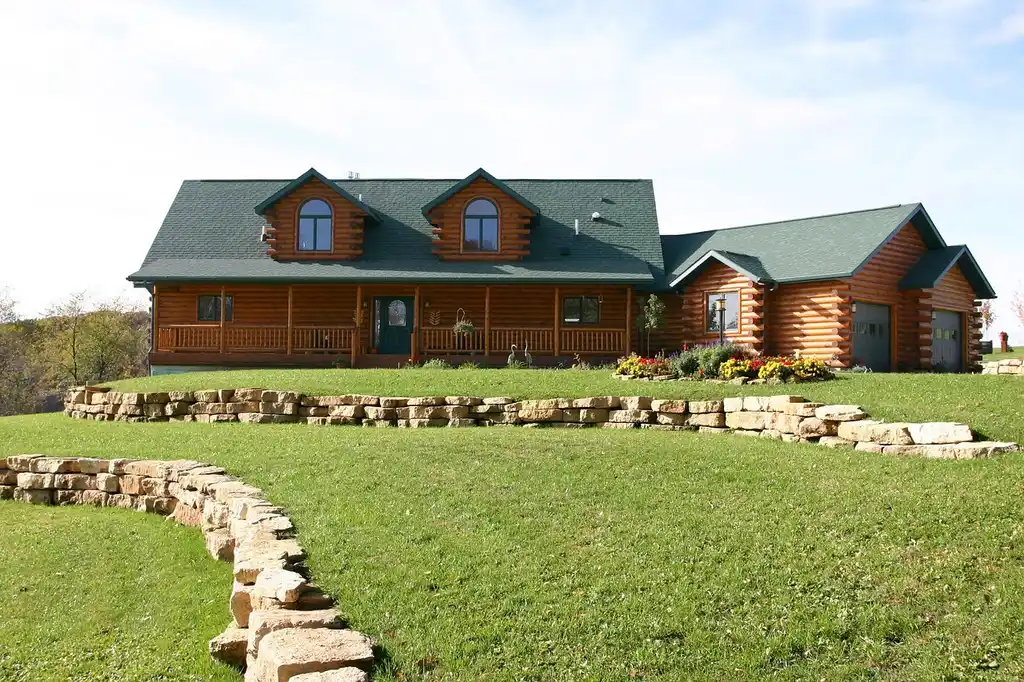
How Long Will a Log Cabin Last?
A well-built log cabin can last 50 to 100 years or more, but water damage at checks, joints, and lower logs usually sets the first hard limit, not the logs themselves. Ignore it, and repair costs rise from patchwork fixes to structural replacement. This guide explains what fails first, what to inspect, and when repair is no longer enough.
Log cabin lifespan basics
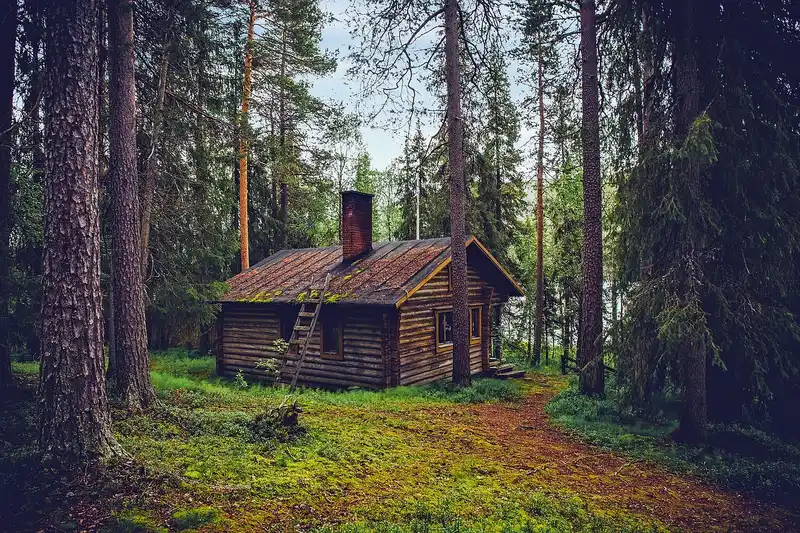
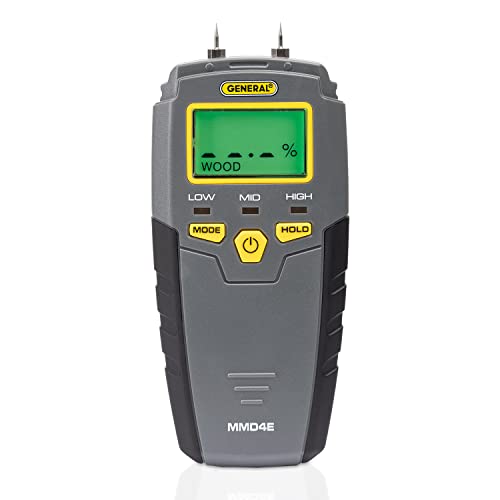
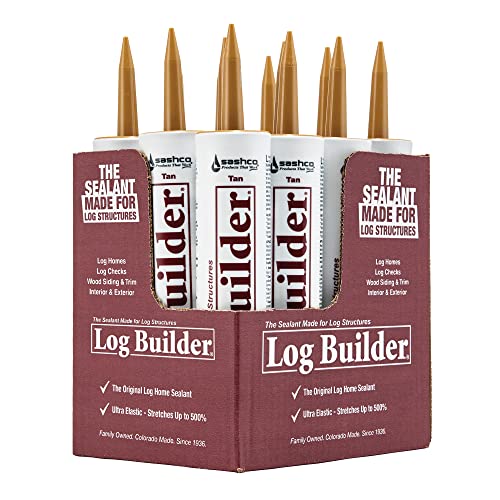
The practical answer is two-part: a properly built cabin with regular care can reach the 50 to 100 year range, while the often-quoted typical lifespan is 20 to 50 years. Those are not contradictions. The lower figure reflects average upkeep and climate exposure, while the upper figure reflects careful detailing and timely repairs.
Typical life versus best case
Maintenance changes the timeline more than any single material choice. Keep water out, preserve the finish, and fix small failures before they spread, and a cabin can last as long as you want it to. Skip those steps, and cabins fail fast.
That is why lifespan estimates should be read as a repair schedule, not a promise. A cabin that stays dry and sealed can remain serviceable for decades. A cabin with chronic leakage, soft lower logs, and open joints can move from repairable to expensive surprisingly fast.
How neglect shortens service life
Neglect does not usually ruin every log at once. It starts with small entry points: a split chink line, a clogged gutter, a failed seal at a window trim, or a patch of damp base log after rain. Those minor openings let moisture sit where wood dries slowly.
Picture a 1,200-square-foot cabin with a leaking roof edge on the windward side. The interior may still look fine for a while, yet the lower wall begins to darken, the caulk line pulls away, and the corner joint stays damp after storms. That is the kind of slow failure that turns routine upkeep into major repair.
What usually fails first?
The first parts to wear out are usually the lower logs, the roof covering, the chinking or caulk, and openings around windows and doors. Corner joints also age early because they collect movement and weather exposure. In most cabins, failure starts at the edges and the base, not in the center of the wall.
Lower logs and base rot
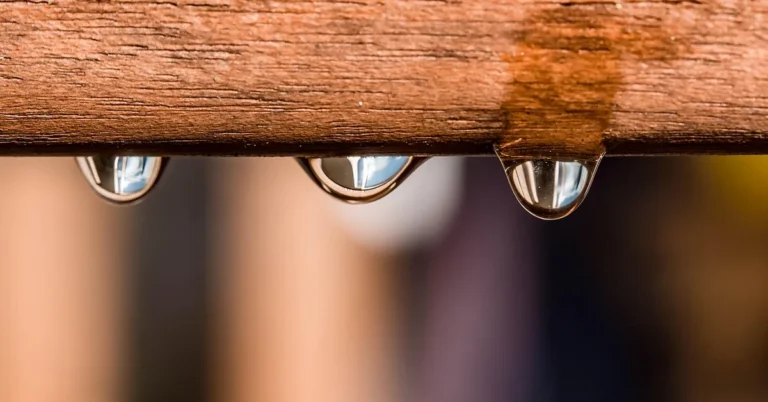
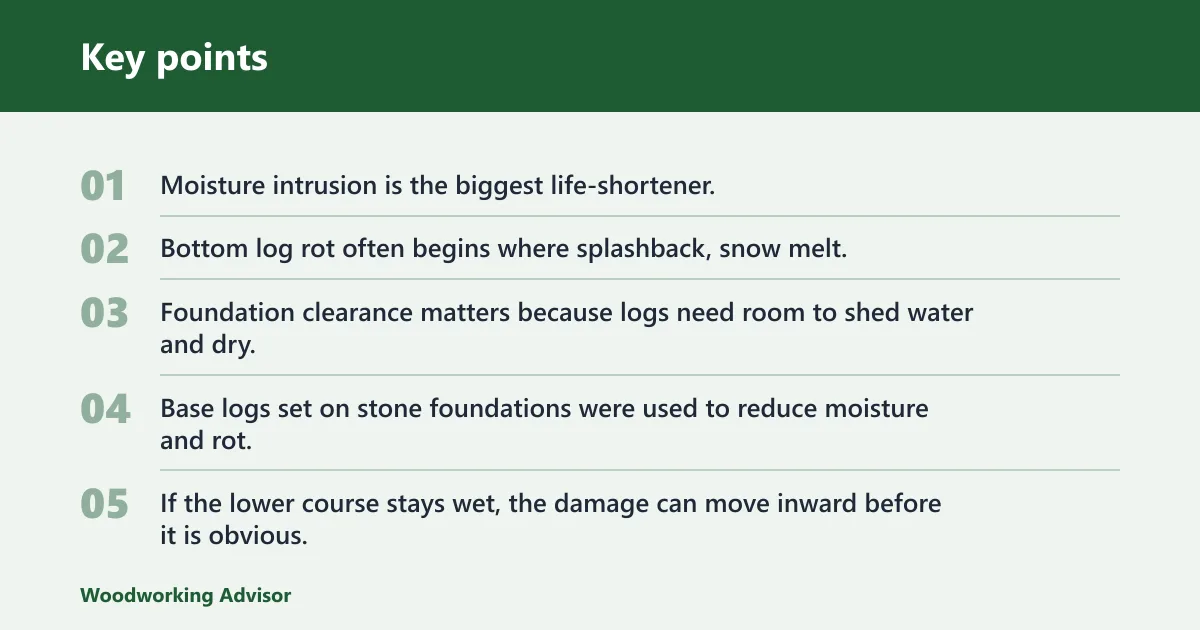
Moisture intrusion is the biggest life-shortener. Bottom log rot often begins where splashback, snow melt, or poor grading keeps the wall damp. Foundation clearance matters because logs need room to shed water and dry. Base logs set on stone foundations were used to reduce moisture and rot, and that principle still applies.
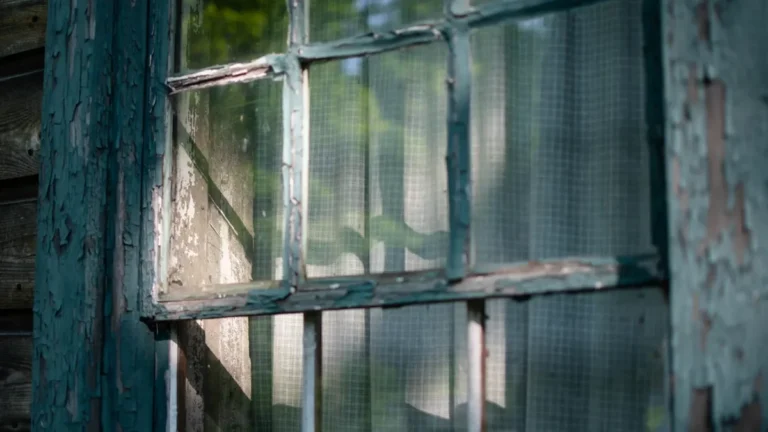
If the lower course stays wet, the damage can move inward before it is obvious. Soft wood, a musty smell, peeling finish, or dark staining at the base are early signs. Once the lower logs lose structural soundness, patching the surface alone is not enough.
Roof, chinking, and openings
The roof is the cabin’s first defense. It is described as strong enough for ice and snow, but that does not mean the covering can be ignored. A small roof leak can feed repeated wetting in the same wall line, which is worse than a single obvious leak because it keeps the wood from drying.
Chinking and caulk are also wear points because they move with the structure. Wood walls should be caulked well to keep outside air out, but the deeper reason is water control. Open seams around windows and doors, or cracked joints in the wall, give moisture a route inside and raise heating costs at the same time.
Corner joints and fit
Corner joints last longer when the logs were fit tightly during construction. Poor notching, gaps that open as the cabin settles, and uneven bearing at the corners all speed deterioration. A cabin can look sound from a distance and still be failing at the joints if the seal line has started to split.
A common first-timer mistake is assuming a roof leak around the chimney will stay minor if the stain on the ceiling looks small. If the crack is active, you need to check for movement, dampness, and log softness behind it. Cosmetic repairs have value, but only after you know the joint is still structurally sound.
Moisture and insect damage
Moisture and insects usually work together. Water weakens wood, and weak wood becomes easier for pests to use. The fastest way to shorten a cabin’s life is to let drainage fail, let the base stay damp, and leave bark or rough surfaces where insects and rot can start.
Drainage, clearance, and water shedding
Water management starts outside the wall. You want positive drainage away from the foundation, enough clearance under the lower logs, and details that shed water rather than trap it. Wet climates, freeze-thaw cycles, and heavy snow all increase the need for frequent checks because they keep wetting the same areas repeatedly.
In snow country, melting drifts can soak the base course long after the roof looks clear. In wet climates such as the UK or Ireland, repeated rain and high humidity mean more attention to flashings, finish wear, and the bottom edge of the wall. Sun exposure matters too, because ultraviolet light breaks down protective finishes faster on south- and west-facing walls.
Bark removal and pest risk
Common cabin logs include pine, fir, spruce, and tamarack. Bark removal was recommended because bark held moisture and invited rot and insects. That logic still matters. Any place that traps moisture gives pests and decay a better start.
Treatment options vary by product and location, so check the manufacturer’s listing for your finish system and follow local pest-control rules. The practical goal is simple: keep the wood dry, keep the surface sealed, and inspect any area where bark, checks, or rough cuts could hold water.
Wood species and build quality
Species choice affects durability, but it does not override bad detailing. Pine, fir, spruce, and tamarack all appear in cabin work, yet the cabin lasts longer when the logs are sound, the base is properly detailed, and the joints are tight. Construction quality often matters more than the name of the species.
Species choice and treated or milled logs
Treated or milled logs can improve consistency because the wood is more uniform and easier to seal. That does not make them maintenance-free. It does mean you can get more predictable fit, which helps with notching, chinking, and moisture shedding.
Untreated or irregular logs need closer inspection for checks, hidden voids, and uneven bearing at the corners. Pine may be serviceable for a long time if it stays dry and sealed, but the finish schedule and drainage details matter more than a simple species label. The same is true for fir, spruce, and tamarack.
Notching, sealing, and fit
Notching controls how well the wall locks together. A good fit reduces air movement, limits water entry, and slows settlement issues. The better the fit, the less work the caulk line has to do later.
Sealing is not a one-time task. It should be checked where logs meet, where corners meet, and where openings break the wall surface. If the fit was poor from the start, you may face earlier log replacement even if the cabin was built from durable wood.
Winter exposure and maintenance
Snow load, freeze-thaw stress, and repeated wetting all shorten service life unless you keep up with inspection and resealing. In harsh weather, a cabin can still last a long time, but the maintenance cycle needs to be tighter because failure points open faster and stay wet longer.
Inspection sequence for aging cabins
- Check the roof first for missing shingles, curled edges, soft spots, and leak stains.
- Walk the perimeter and look at the lower logs for staining, softness, and peeling finish.
- Inspect chinking and caulk at corners, log seams, windows, and doors.
- Check for insect entry, bark remnants, and debris that traps moisture against the wall.
- Review drainage, gutters, splashback, and the clearance between grade and the first log.
- Record any active movement, not just surface wear, before deciding on patching or replacement.
How often does a log cabin need maintenance? At minimum, it needs a regular inspection cycle, with extra checks after severe weather and seasonal changes. Older cabins need more frequent attention because small defects grow faster once the finish weakens and the wood has already aged.
Protective finish and caulking schedule
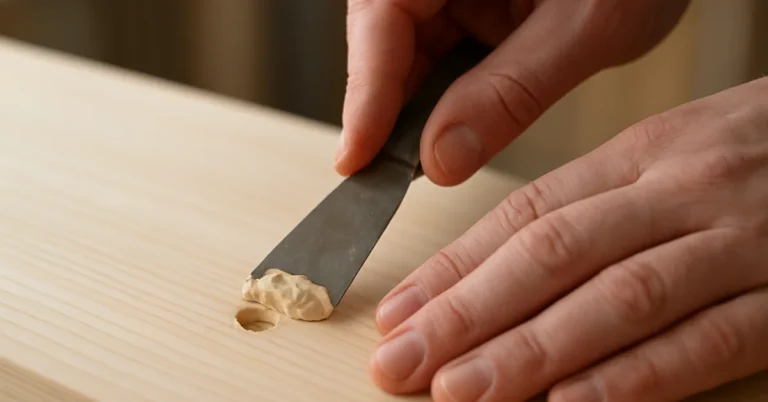
Protective finish is the wall’s outer barrier, so you should renew it before the wood looks bare or gray in high-exposure areas. Caulking should be renewed when it cracks, pulls away, or no longer bridges the joint. Do not wait for water to stain the interior.
Say your cabin sits under heavy tree cover in a wet climate. The north wall may stay shaded and damp longer than the south wall, so one side can age faster even if the building is otherwise sound. That is a reminder to inspect exposure by exposure, not cabin by cabin.
Log cabin lifespan decision table
| Age band | Likely wear pattern | Recommended action |
|---|---|---|
| 0-10 years | Finish wear, settling at joints, first caulk touch-ups | Inspect annually, seal checks early, keep drainage clear |
| 10-25 years | More movement at windows, doors, corners, and exposed logs | Plan detailed inspections, renew caulk and finish as needed |
| 25-50 years | Higher risk of lower-log wear, roof leaks, and repeated patching | Replace damaged logs before decay spreads; assess roof and joints closely |
| 50-75 years | Uneven settling, deeper checks, possible section-specific rot | Decide between log replacement, partial rebuild, or structural review |
| 75+ years | Multiple wear points may be active at once | Use a full structural assessment before choosing repair or rebuild |
| Red flags | Rot at the base, failed chinking, roof leaks, and insect damage | Move from routine repair to major repair planning immediately |
When repair is no longer enough
Repair stops being enough when damage is structural, repeated, or spread across more than one system. If lower logs are soft, joints keep opening, or roof leaks have already soaked the wall for a long time, you need more than patching. That is when partial rebuild or major log replacement becomes the better choice.
When to replace logs
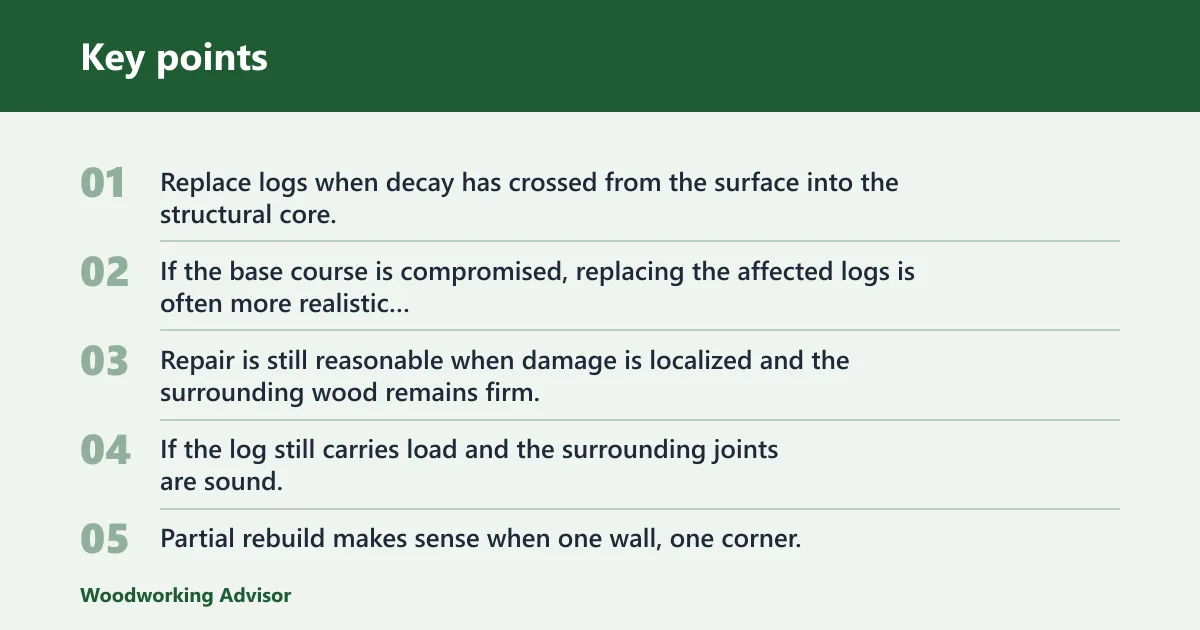
Replace logs when decay has crossed from the surface into the structural core, when pest damage has hollowed out sections, or when the same area keeps failing after repair. If the base course is compromised, replacing the affected logs is often more realistic than trying to seal over the problem.
Repair is still reasonable when damage is localized and the surrounding wood remains firm. If the log still carries load and the surrounding joints are sound, targeted replacement can extend the cabin’s life without forcing a larger rebuild.
When partial rebuild makes sense
Partial rebuild makes sense when one wall, one corner, or one section around openings has failed, but the rest of the cabin remains sound. This is common when moisture has been concentrated in a single exposure, such as the windward side or a section under a leaking roof edge.
Suppose the lower about 8 feet of one wall are affected while the roof structure and opposite wall remain dry and firm. In that case, a partial rebuild may protect the rest of the cabin and cost less than trying to keep patching a failing section.
When to get a structural assessment
Get a structural assessment if you see sagging, repeated settlement, persistent interior staining, soft corners, or multiple active leak points. A cabin with several failure modes may still be recoverable, but you need a clear picture before deciding between repair and replacement.
How long should a log cabin last? As long as the structure stays dry, the lower logs remain sound, and maintenance stays ahead of the damage. The point where repair ends and replacement begins is usually not a calendar date. It is the moment defects stop being isolated.
Frequently asked questions
How long will a log cabin last?
A well-built log cabin can last 50 to 100 years or more if it is kept dry and maintained on schedule. The typical log cabin lifespan is often stated as 20 to 50 years, but that lower figure reflects average upkeep, not the best case. Neglect shortens the life much faster.
How many years will a log cabin last?
There is no single number that fits every cabin. The useful split is typical versus best-case: 20 to 50 years is the common range cited for average care, while properly built and maintained cabins can last 50 to even 100 years. Regular maintenance can extend that further.
How long will a log home last?
A log home follows the same basic durability pattern as a log cabin. The life span depends on moisture control, roof condition, joint sealing, and the condition of the lower logs. If those stay in good shape, the structure can remain usable for many decades.
How long do log cabins last in the UK?
In the UK, the main issue is not cold alone; it is repeated wetting, damp air, and limited drying time. That means the lower logs, chinking, and finish need closer inspection. A cabin with good drainage and regular sealing can still last a long time there.
What makes a log cabin last longer?
Good drainage, enough foundation clearance, sound notching, tight fit, and regular caulking all help. Treated or milled logs can improve consistency, and bark removal reduces moisture retention and pest risk. The biggest factor is still routine inspection before small defects become structural.
What happens if a log cabin is neglected?
Neglect usually starts with cracked caulk, weak finish, and hidden moisture, then moves into lower-log rot, joint movement, and insect damage. Once the base or corners lose strength, repairs become larger and more expensive. Neglect is the main reason cabins fall apart.
Sponsored / affiliate links. As an Amazon Associate I earn from qualifying purchases. I may earn additional commission from eligible campaigns.