How to Get Onion Smell Out of a Wood Cutting Board: 5 Methods That Work
The fastest way to get onion smell out of a wood cutting board: scrub it with coarse salt and half a lemon, let the paste sit for two to three minutes, then rinse with cool water and air-dry upright. For a smell that has soaked in over several uses, follow with a baking soda paste, then a light coat of food-grade mineral oil once the board is fully dry.
Onion smell is one of the few kitchen odors that a normal wash with dish soap barely touches, because the compounds that make onions smell sharp are the same ones that bond easily to open wood grain. Rinse the board and the smell often comes right back the next time you cut something on it, sometimes strong enough to carry into apple slices or bread. This guide covers the salt-and-lemon method that clears most boards in under five minutes, what to do when that isn’t enough, and the one question people searching this actually ask most: does citric acid really do anything, or is it just folk wisdom.
Why Onion Smell Sticks to Wood in the First Place
Onions and garlic release sulfur compounds the moment their cells are cut open – it’s the same chemical family that makes your eyes water while chopping. Wood cutting boards are porous at a microscopic level: even a smooth, well-sanded wooden cutting board has open cell structure that those sulfur compounds settle into, well below where a sponge can reach. Plastic and glass boards don’t have that problem because their surface has no grain to soak into, which is why the same onion spill wipes clean off plastic but lingers on wood.
This is also why plain soap and water often fails: dish soap is built to break down fats and oils, not sulfur compounds trapped in wood fiber. You need something acidic (lemon juice, citric acid, vinegar) to help lift them out, or something absorptive (salt, baking soda) to physically pull them to the surface. Neither one is a magic eraser on its own – that’s why the methods below combine an abrasive with an acid rather than relying on just one.
Best Conditioner After Deodorizing
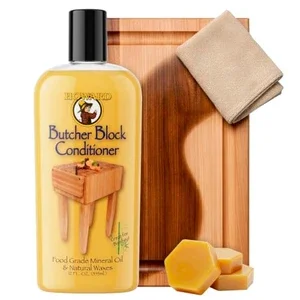 |
Howard Products Butcher Block Conditioner & Food-Grade Mineral Oil, 12oz – $9.18 This is the food-grade mineral oil and wax blend to apply after deodorizing – it reseals the grain so onion smell and moisture don’t soak back in as easily.
|
The Fastest Fix: Coarse Salt and Lemon
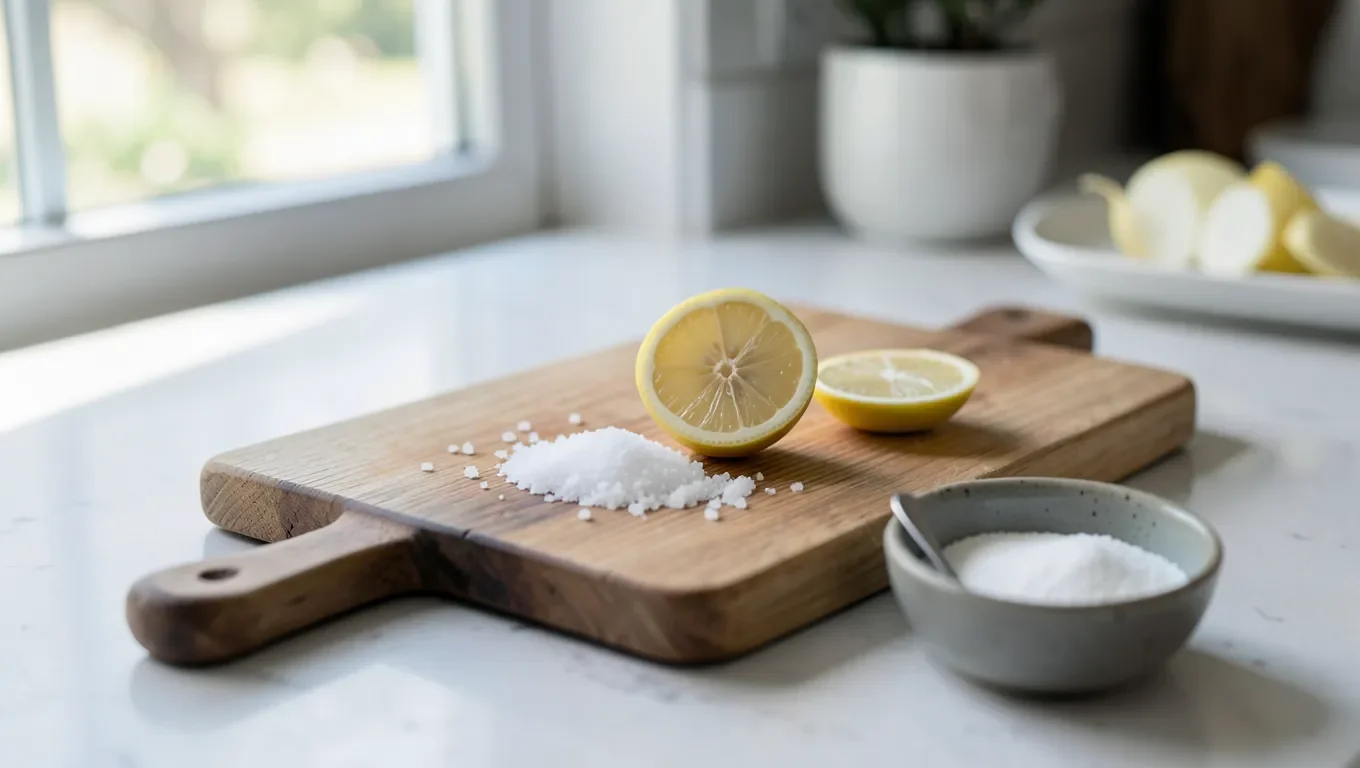
This is the method to reach for first – it works on most onion smell within one pass and doesn’t require anything you don’t already have in the kitchen.
- Sprinkle a generous layer of coarse (kosher or sea) salt over the smelly area. Table salt works but is less abrasive, so use a heavier hand with it.
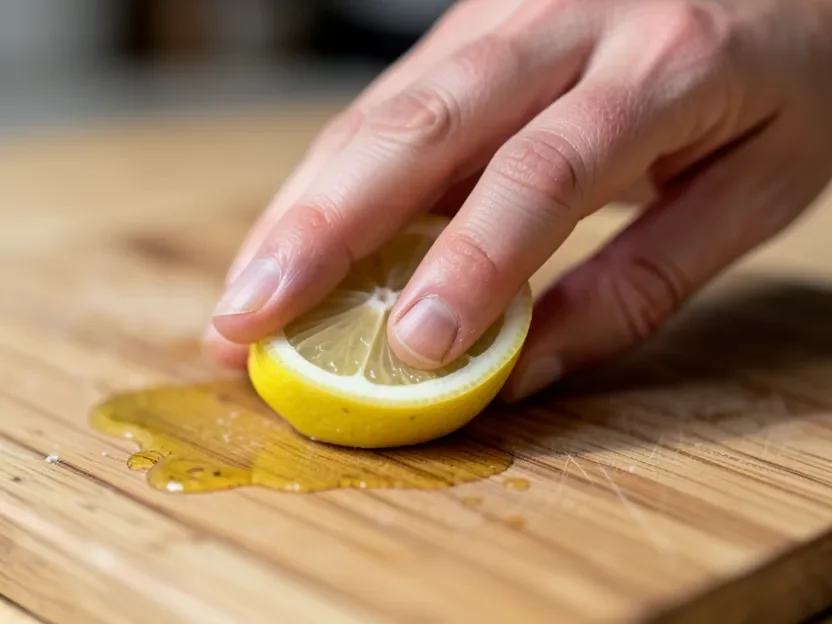
- Cut a lemon in half and use the cut side as a scrub brush, pressing down so the juice mixes with the salt into a gritty paste. Work it into the grain for about a minute, following the direction of the wood, not across it.
- Let the paste sit for two to three minutes so the acid has time to work.
- Scrape off the paste and rinse with cool water – hot water can set some odor compounds rather than remove them.
- Stand the board on edge to air-dry, so both faces dry evenly and it doesn’t sit in its own moisture.
If the smell is faint, salt and lemon alone usually finishes the job. If you can still smell onion after the board is fully dry, move on to the baking soda step below rather than repeating the lemon scrub – a second pass with the same method rarely does more than the first.
Baking Soda Paste for Odor That’s Soaked In
Baking soda works differently from salt and lemon – instead of scrubbing the compounds out, it’s mildly alkaline and absorbs odor over time, which makes it better for smell that’s had days to settle into the wood rather than a fresh cut.
- Mix baking soda with just enough water to form a thick paste, roughly the consistency of toothpaste.
- Spread it over the entire affected area and let it sit for 10 to 15 minutes – this is longer than most quick-tip lists suggest, but the extra time is what lets it actually absorb odor rather than just sit on the surface.
- Scrub lightly with a damp sponge, working with the grain.
- Rinse thoroughly, since dried baking soda residue can leave a chalky film.
- Dry standing up, same as the salt-and-lemon method.
Does Citric Acid Actually Remove Onion Smell From Wood?
Yes, and it’s worth calling out specifically because it’s a real question, not just a lemon substitute. Citric acid – whether from lemon juice or plain citric acid powder dissolved in water – is mildly acidic enough to help break the bond between sulfur compounds and wood fiber without being harsh enough to damage the wood or a food-safe finish. A rough working solution is one tablespoon of citric acid powder per cup of warm water, wiped on with a cloth, left for a couple of minutes, then rinsed. It’s a reasonable substitute for the lemon in the salt scrub above if you’re out of fresh lemons, but it isn’t stronger than the salt-and-lemon combination – the salt’s abrasiveness is doing real work too, so citric acid alone tends to need a longer contact time to match it.
White vinegar is a related but separate option. Its acetic acid works on the same principle as citric acid, and it has the advantage of also being a mild disinfectant, which matters if the board has also handled raw meat or poultry recently. Wipe the board down with undiluted white vinegar, let it sit for a minute, then rinse. Skip cider or balsamic vinegar for this – their stronger color and scent can transfer to the wood.
Stubborn Cases: Sun-Drying and an Oil Treatment
If salt-and-lemon and baking soda both leave a faint smell behind, the odor compounds have likely worked deeper into the grain than a surface scrub can reach. Two extra steps handle most of what’s left.
Wash the board with warm water and a small amount of mild dish soap, dry it with a towel, then set it in direct sunlight for a few hours. UV light breaks down a meaningful amount of the remaining odor-causing compounds and has a mild disinfecting effect on the surface. Bring the board in before it’s been in strong sun for a full day – extended heat and UV exposure can dry the wood out enough to encourage cracking, especially at the edges and any exposed end grain.
Once the board is completely dry, apply a thin, even coat of food-grade mineral oil or a butcher-block conditioner with a clean cloth, working it into the grain in circular motions. Let it soak in for a few hours (overnight is better for a board that’s been sun-dried, since that process pulls moisture and natural oils out of the wood along with the odor). Wipe off any oil that hasn’t absorbed. This step doesn’t remove smell on its own – skip straight to oiling without deodorizing first and you’ll just seal the onion smell in – but it re-seals the grain afterward so new odors and moisture don’t penetrate as easily next time.
Wood vs. Plastic: Is a Wood Board Really Worse for Onion Smell?
In the short term, yes – a non-porous plastic board rinses clean of onion odor almost immediately, while wood needs one of the methods above. Where wood pulls ahead is durability and food safety over time: studies on cutting board bacteria have found that wood’s natural antimicrobial properties and self-healing knife grooves actually harbor less bacteria long-term than heavily knife-scarred plastic, even though wood holds onto smell more stubbornly in the meantime. If onion smell on your board is part of a broader pattern – smells that show up even without onions, or a board that seems to hang onto every strong food odor – that’s usually a bacteria issue rather than an onion-specific one, and it’s worth reading our full breakdown of why wood cutting boards develop lingering smells for the sanitizing steps that go beyond what’s needed for a single onion session.
Preventing Onion Smell Before It Sets In
A few habit changes cut down how often you need any of the methods above:
- Cut onions on one dedicated side or board. Many people keep a separate small board just for onions and garlic, so the smell never transfers to boards used for bread or fruit.
- Rinse immediately, not after the meal. Sulfur compounds have less time to bond with the wood if they’re rinsed off within a minute or two of cutting, rather than sitting on the board while you cook.
- Keep the board properly oiled. A well-conditioned board has fewer open pores for odor compounds to settle into – a bone-dry, unoiled board absorbs smell faster.
- Store it standing up in a dry spot. Boards stacked flat or stored in a closed, humid cabinet trap moisture, and residual moisture makes any trapped odor compounds smell stronger and last longer.
When to Stop Trying to Save the Board
Occasionally a board reaches the point where cleaning isn’t solving the problem anymore. Deep knife grooves and cracks give bacteria and odor compounds a place to hide that no surface scrub can reach, and a board in that condition is a food-safety concern as much as a smell one. Signs it’s time to replace rather than keep deodorizing:
- Deep, visible knife grooves or cracks that catch a fingernail
- Odor that returns within a day of thorough cleaning and oiling, every time
- Dark staining that doesn’t sand or scrub out
- Warping, so the board rocks on the counter
If you’re not there yet, regular deodorizing and a consistent oiling schedule will keep a wood board smelling clean for years – onion smell is a maintenance issue, not usually a sign the board is failing.
Frequently Asked Questions
How Do You Get Onion Smell Out of a Wood Cutting Board Fast?
Scrub the board with coarse salt and the cut side of a lemon, let the paste sit two to three minutes, then rinse with cool water and stand the board up to air-dry. This clears most onion smell in under five minutes.
Does Citric Acid Remove Onion Smell From a Wood Cutting Board?
Yes. Citric acid, whether from lemon juice or citric acid powder mixed with warm water, helps break the bond between sulfur odor compounds and the wood fiber. It works as a substitute for lemon in the salt scrub, though it generally needs a longer contact time than lemon juice with salt’s added abrasiveness.
What Neutralizes Onion Smell on Wood?
Salt combined with lemon juice or white vinegar is the most effective combination – the salt physically scrubs odor compounds out of the wood grain while the acid helps break them down. Baking soda paste is a good second step for smell that has already soaked in over several days.
Can You Get Onion Smell Out of a Wood Table the Same Way?
On an unfinished or oil-finished wood table, yes – the same salt-and-lemon or baking soda methods work. On a table with a sealed varnish or polyurethane finish, skip the salt scrub (it can dull a sealed finish) and just wipe with a diluted vinegar or citric acid solution, since the smell hasn’t penetrated a properly sealed surface the way it does bare wood.
Conclusion
Coarse salt and lemon handles most onion smell in one pass, baking soda paste picks up what’s left for a smell that’s had time to set in, and citric acid or white vinegar are solid substitutes when you don’t have fresh lemon on hand. For a board that keeps smelling no matter what you use, sun-drying followed by a proper mineral oil or butcher-block conditioner closes the loop by resealing the grain so odor and moisture have a harder time getting back in.
Sponsored / affiliate links. As an Amazon Associate I earn from qualifying purchases. I may earn additional commission from eligible campaigns.