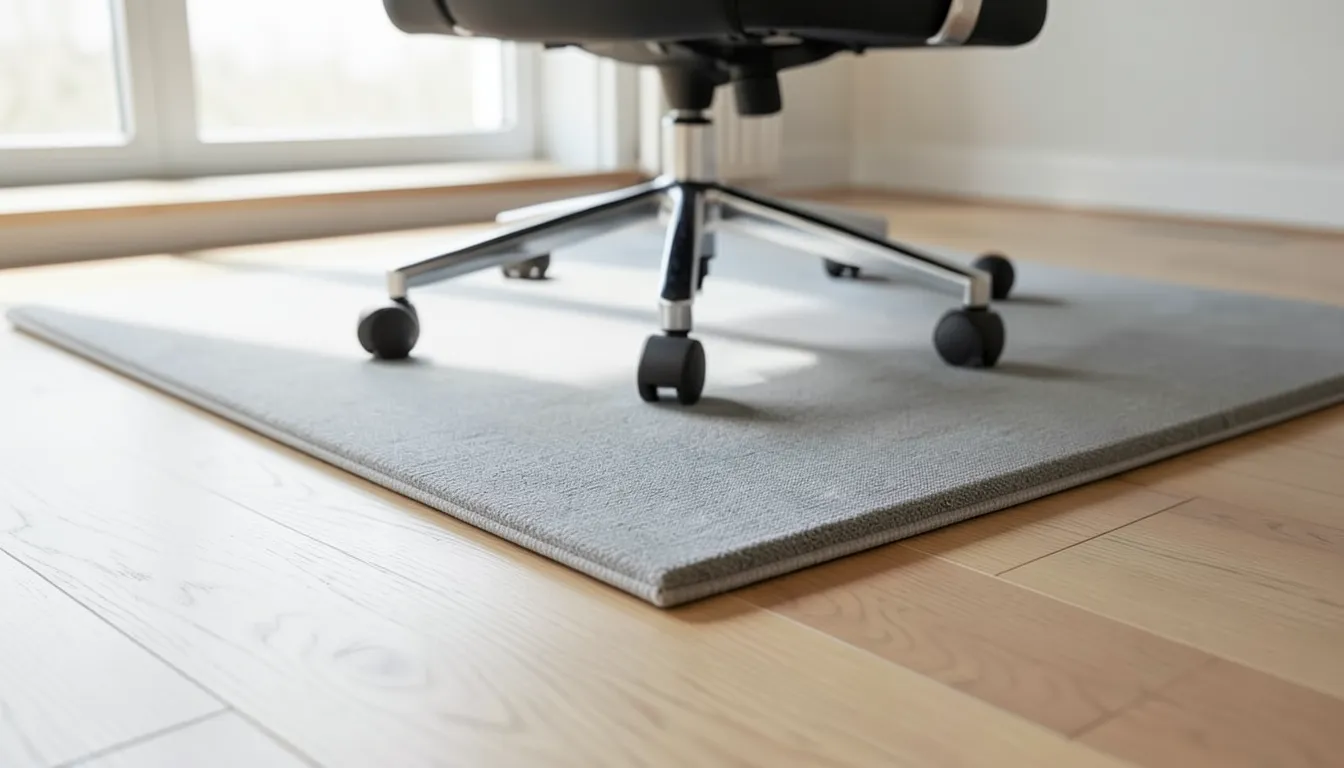
How to Keep a Chair Mat From Sliding on Hardwood Floors (7 Fixes That Work)
The fastest fix: slide a textured rubber or open-grid rug pad under the mat. It works in under five minutes because it grips both the mat’s smooth underside and the hardwood at the same time, which is the one thing a slick vinyl chair mat can’t do on its own.
Most “anti-slip” chair mats aren’t actually designed to grip hardwood at all. They’re built for carpet, where small plastic cleats or a raised lip dig into the pile to hold the mat still. Set that same mat on a hard, flat, finished floor and those cleats have nothing to bite into — so the mat slides on the first push of your chair. Below are the fixes that actually solve this, starting with the one that works for almost everyone, plus the reasons the other common advice (double-sided tape, in particular) can backfire on a finished floor.
Why Carpet-Style Chair Mats Slide on Hardwood
Best Fix That Skips Tape Entirely
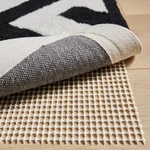 |
Gorilla Grip Rug Gripper Pad, 4×6 FT – $18.99 Trim it to the shape of your chair mat and it grips the hardwood on one side and the mat’s underside on the other — no adhesive touches your floor.
|
Look at the underside of a typical chair mat and you’ll usually find one of two designs. Carpet mats have small plastic teeth, nubs, or a beveled lip meant to anchor into carpet fibers. Hard-floor mats have a flat, smooth (sometimes lightly textured) bottom with no teeth, because there’s no pile to grab — they’re meant to stay put through sheer weight, surface friction, and a slightly tackier PVC formulation. If you bought a “chair mat” without checking which type it was rated for, there’s a decent chance you have a carpet mat sitting on a hard floor, and no amount of repositioning will fix a design mismatch. That’s the root cause worth ruling out before you try anything else.
7 Ways to Stop a Chair Mat From Sliding
- Add a non-slip rug pad underneath. A rubber or open-grid PVC rug pad (the same kind used under area rugs) grips both surfaces without any adhesive touching your floor’s finish. Trim it about an inch smaller than the mat on all sides so it stays hidden.
- Switch to a hard-floor-specific mat. If your current mat has cleats or a lip on the bottom, it was made for carpet. A mat labeled specifically for hardwood, tile, or laminate has a flat, weighted underside built to stay put without teeth.
- Use carpet tape sparingly, and test it first. Double-sided carpet tape works, but some formulations can pull finish off a floor when removed, especially on older or oil-based finishes. Press a small piece in an inconspicuous corner for 24 hours and check it before committing the whole mat.
- Try clear anti-slip corner clips. Small silicone or rubber corner grippers (sold for keeping area rugs flat) hold the mat’s corners down without covering the whole underside in adhesive.
- Clean both surfaces before placing the mat. Dust, floor polish residue, and cleaning-product film all reduce friction. Wipe the floor and wipe the underside of the mat with a barely damp cloth, let both dry fully, then set the mat back down.
- Weight the edges near your desk. A slim furniture strip or the front edge of a desk resting just past the mat’s border keeps the leading edge from creeping forward, which is usually where sliding starts.
- Size up. A mat that’s too small for your chair’s full range of motion gets pushed and dragged constantly. Moving to a larger mat means your casters stay inside its boundary, so there’s less repeated force trying to shift it.
What to Avoid
Skip permanent adhesive strips or construction adhesive on a finished hardwood floor — if you ever need to move the mat or refinish the floor, pulling up a strong adhesive can lift finish or even splinter wood fibers. Also avoid rubber-backed mats that aren’t specifically labeled safe for hardwood: some rubber and PVC blends contain plasticizers that can react with certain floor finishes over months of contact, leaving a yellowed or tacky outline on the floor even after the mat is removed. If you’re not sure whether a mat’s backing is safe for a finished floor, a barrier layer — like the rug pad above — also protects the finish from direct rubber contact.
Frequently Asked Questions
Will a rug pad damage my hardwood floor?
A rug pad made from PVC or natural rubber and labeled safe for hardwood won’t damage the finish. Avoid pads made with recycled rubber that aren’t specifically rated for hard floors, since some can leave a residue over long-term contact.
Why does my chair mat only slide near my desk?
That’s usually repeated caster pressure at one spot, often because the mat is slightly too small for how far your chair travels. Sizing up, or adding a rug pad specifically under that high-traffic zone, usually solves it.
Is double-sided tape safe for hardwood floors?
It can be, but test a small piece in a hidden corner first. Some adhesives bond too aggressively to certain finishes and can pull up a thin layer of finish when removed, particularly on older or oil-finished floors.
Do I need a different mat for hardwood versus carpet?
Yes. Carpet mats rely on cleats or a lip that grips carpet fibers, which do nothing on a hard, flat floor. A mat labeled for hard floors has a flat, non-slip underside designed to work without carpet pile to anchor into.
Sponsored / affiliate links. As an Amazon Associate I earn from qualifying purchases. I may earn additional commission from eligible campaigns.