Can You Use a Steam Cleaner on Hardwood Floors? Why Most Manufacturers Say No
The short answer is no. Steam cleaners are not recommended for hardwood floors, and this isn’t just an overcautious internet opinion – it’s the official care guidance from most major flooring brands, including Bona, Bruce, Mannington, Shaw, and Mohawk. Even on a floor with a fresh, fully sealed polyurethane finish, steam can work its way into seams and hairline cracks, and using one can void the finish warranty on your floor entirely.
That doesn’t mean your floor has to stay dirty. It means the fast, convenient tool for the job isn’t a steam mop – it’s a good microfiber spray mop and the right cleaner. Below, we’ll cover exactly why manufacturers draw this line, what steam damage actually looks like when it happens, the narrow exception some brands still allow, and what to reach for instead.
The Short Answer: No – And It Can Void Your Floor’s Warranty
If you take away one thing from this article, make it this: as a general rule, the hardwood flooring industry does not recommend steam mops on wood floors of any kind, and several of the largest flooring manufacturers say so explicitly in their own care documentation.
Steam-Free Hardwood Cleaning Pick
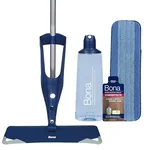 |
Bona Hardwood Floor Premium Spray Mop – $41.97 A controlled, low-moisture way to clean sealed hardwood without the heat and saturation risk of a steam cleaner.
|
Bona’s own care instructions warn against steam mops on its finished wood floors. Bruce and Mannington do the same. Shaw and Mohawk’s warranty language excludes damage caused by excess heat and moisture – which is exactly what a steam cleaner produces. On a quality prefinished hardwood floor, that finish warranty can run 25 to 50 years. One pass with a steam mop that seeps into a seam can forfeit that coverage, and you’d be paying out of pocket for a repair the warranty was supposed to cover.
This is the real risk most articles on this topic skip past: it’s not just “steam might damage the wood.” It’s that steam damage specifically is the kind of damage your warranty is least likely to cover.
Why the “It Has a Sealed Finish” Argument Doesn’t Hold Up
A lot of guides suggest that a sealed, polyurethane-finished floor is fair game for steam because the finish acts like a raincoat. In practice, that logic misses two things.
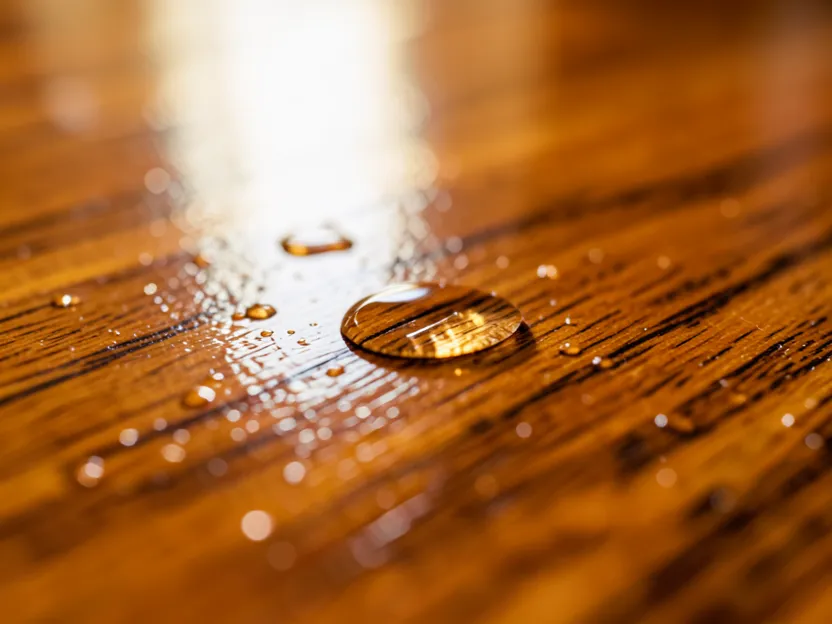
First, no finish is a perfect, unbroken seal across an entire floor. Every plank has a seam where it meets the next one, and seams are exactly where steam – a fine, hot vapor under pressure – is best at finding its way in. A garden-variety spill sits on top of the finish long enough for you to wipe it up. Steam is applied directly, repeatedly, and it’s actively pushed toward the surface by the mop head.
Second, “sealed” isn’t a permanent state. Everyday foot traffic, grit tracked in on shoes, and pet nails create microscopic scratches in the topcoat well before they’re visible to the eye. The simple water-drop test some guides recommend – drip water on the floor and see if it beads – only tells you the finish is intact at that exact spot, at that exact moment. It says nothing about the rest of the floor, and it definitely doesn’t reproduce what happens when hot vapor is pressed into the surface under a moving mop head for several minutes at a time.
That’s the myth this article wants to correct: an intact-looking finish is not the same thing as a steam-proof floor. Manufacturers who tell you not to steam a sealed floor aren’t being overly cautious – they’re accounting for seams, wear, and time that a spot test can’t see.
What Actually Happens When Steam Damages a Floor
Hardwood is porous. When moisture – especially hot moisture, which penetrates faster than cold – gets past the finish, the wood fibers absorb it and swell. That swelling doesn’t resolve itself once the floor looks dry on the surface.
- Cupping: the edges of each board rise higher than the center, so the floor develops a slightly concave, rippled feel underfoot.
- Crowning: the opposite problem – the center of the board swells higher than the edges, usually after cupped boards are sanded flat and then dry out unevenly.
- Finish breakdown: repeated heat and moisture can cloud, bubble, or peel the topcoat, leaving dull patches that don’t respond to polish.
- Mold and mildew: moisture that gets trapped between planks or under the floor can support mold growth you won’t see, only smell, until the problem is well established.
None of this shows up immediately. A single steam mopping usually won’t ruin a floor on the spot – the damage is cumulative, which is exactly why it’s easy to convince yourself “it’s fine” after using one a few times, right up until it isn’t.
The Narrow Exception Some Manufacturers Still Allow
A handful of steam mops market “low-moisture” or “dry steam” modes specifically for sealed hardwood, and a few flooring brands don’t flatly prohibit them. If you fall into this narrow case, the conditions are strict: the floor must have an intact, fully cured polyurethane finish with no visible wear, you’d use only the lowest steam setting with a dry microfiber pad rated for the purpose, and you’d still check your specific flooring manufacturer’s written care guide first – not the steam mop manufacturer’s marketing claims, which have an obvious incentive to say yes.
Even flooring brands that don’t outright ban steam typically frame it as tolerable, not recommended. Given that the downside – a voided finish warranty and potential board replacement – is so much larger than the upside of a slightly faster clean, most professional installers will tell you it isn’t worth testing your luck.
Engineered Wood and Laminate: The Same Rule Applies
If your floor is engineered hardwood rather than solid wood, steam is arguably riskier, not safer. Engineered wood is built from thin layers glued together, and the seams between planks and the plywood-style core underneath are more vulnerable to trapped moisture than solid wood. Laminate isn’t real wood at all, but it has the same weak point: moisture that reaches the fiberboard core through a seam causes swelling that can’t be sanded or refinished away. In both cases, manufacturer guidance leans the same direction as solid hardwood – skip the steam.
What To Use Instead of a Steam Cleaner
The good news is that the alternatives aren’t a downgrade. They’re what flooring manufacturers actually recommend, and they get a sealed hardwood floor just as clean without the risk.
Sweep or Dust-Mop First, Every Time
Grit and sand are abrasive – they scratch the finish every time something rolls or drags across them. A daily or every-other-day pass with a soft-bristle broom or a microfiber dust mop removes that grit before it does any damage, and it’s the single habit that extends a finish’s life the most.
Damp-Mop With a pH-Neutral, Wood-Specific Cleaner
For a deeper clean, a fine-mist spray mop paired with a cleaner formulated for sealed wood – like the pick above – puts down a controlled amount of moisture and pairs it with a microfiber pad that absorbs as it goes. The floor should look dry within a minute or two; if you see puddling or streaks, you’re using too much liquid, the same underlying problem steam cleaners have, just easier to control by hand.
Handle Spills the Moment They Happen
Blot, don’t wipe, and follow with a dry cloth. Spills that sit on the finish for hours are a bigger moisture risk than a quick, well-wrung damp mop ever is.
Call In a Professional for Deep Restoration
If a floor has years of buildup or dullness that routine cleaning isn’t fixing, a professional service can use low-moisture buffing and screening methods to restore shine without saturating the wood – the same principle steam cleaning violates, done safely instead. For a full weekly routine, see our guide on how to deep clean hardwood floors safely.
Frequently Asked Questions
Question: Can I use a steam mop on my hardwood floors if they’re brand new and sealed?
Answer: Most flooring manufacturers still advise against it even on a brand-new, fully sealed floor, because seams and future wear remain a risk and steam damage is commonly excluded from finish warranties. Check your specific flooring brand’s written care guide before using one.
Question: Will using a steam cleaner void my hardwood floor’s warranty?
Answer: It can. Several major manufacturers, including Shaw and Mohawk, exclude heat- and moisture-related damage from their finish warranties, and steam mop use is a common reason a warranty claim gets denied.
Question: What kind of damage does steam cause on hardwood floors?
Answer: The most common issues are cupping and crowning of the floorboards, finish clouding or peeling, and, in cases where moisture gets trapped, mold or mildew growth between planks. This damage tends to build up over repeated use rather than appearing after one pass.
Question: Is a steam mop safer on engineered wood or laminate than on solid hardwood?
Answer: No, if anything it’s riskier. Engineered wood and laminate both have seams and a layered core that trap moisture more easily than solid wood, so manufacturer guidance for both generally steers away from steam as well.
Question: What should I use instead of a steam cleaner on hardwood floors?
Answer: Sweep or dust-mop regularly to remove abrasive grit, then use a fine-mist spray mop with a pH-neutral cleaner made for sealed wood for a deeper clean. Blot spills immediately, and bring in a professional for buffing or screening if the floor needs a deeper restoration.
The Bottom Line
Steam cleaners are convenient, but on hardwood floors the convenience isn’t worth the trade-off. The moisture and heat that make steam effective at sanitizing are the same moisture and heat that cause cupping, crowning, and finish breakdown – and the damage they cause is exactly the kind most finish warranties don’t cover. Unless your specific flooring manufacturer explicitly approves it in writing, skip the steam mop.
A microfiber spray mop with a wood-specific cleaner, regular sweeping, and fast attention to spills will keep a sealed hardwood floor looking its best without gambling on a warranty claim you might not win.
Sponsored / affiliate links. As an Amazon Associate I earn from qualifying purchases. I may earn additional commission from eligible campaigns.