How to Make Shiplap Boards with a Table Saw (Dado Blade Method)
A table saw fitted with a stacked dado blade cuts true shiplap rabbets — depth set to half the board’s thickness — not the circular-saw-and-glue shortcut some beginner guides describe. Get that depth wrong and boards sit proud instead of flush, or split at a thin edge. This guide covers the exact rabbet depth and width to set, the safe cutting order with a sacrificial fence and featherboard, and how the table-saw method compares to using a router or table router instead.
Quick Answer
To make shiplap on a table saw, fit a stacked dado blade and cut a rabbet on the back top edge and the front bottom edge of each board. Set the rabbet depth to half the board’s thickness and the width to 1/2″–3/4″ — the width difference between the two cuts creates the classic 1/4-inch reveal once boards are installed.
Tools and Materials You’ll Need
Best Dado Blade Set Pick

Diablo 8″ Carbide Stacked Dado Saw Blade Set – $109.97
The stacked set this guide’s rabbet-depth numbers assume — swap chippers to dial in the exact 1/2″–3/4″ width called out in Step 1 without buying two separate blades.
- Best for: 8″ table saws needing clean, splinter-free rabbets in one setup
- Why we picked it: Carbide teeth hold an edge through pine and cedar runs without re-sharpening mid-project
- Main drawback: Needs a saw that accepts an 8″ dado stack — check your arbor and throat plate first
Compare more dado blade options
 Option 1 DEWALT 8″ Stacked Dado Saw Blade (DW812DADO) – $96.84
|
 Option 2 FOXBC 8″ Carbide Stacking Dado Blade Set – $79.99
|
 Option 3 Tooltech 8″ Stacking Dado Blade Set (23-Piece) – $54.99
|
As an Amazon Associate we earn from qualifying purchases.
- A table saw with a stacked dado blade set (6″ on benchtop/jobsite saws, 8″ on most contractor and cabinet saws — check your arbor size first)
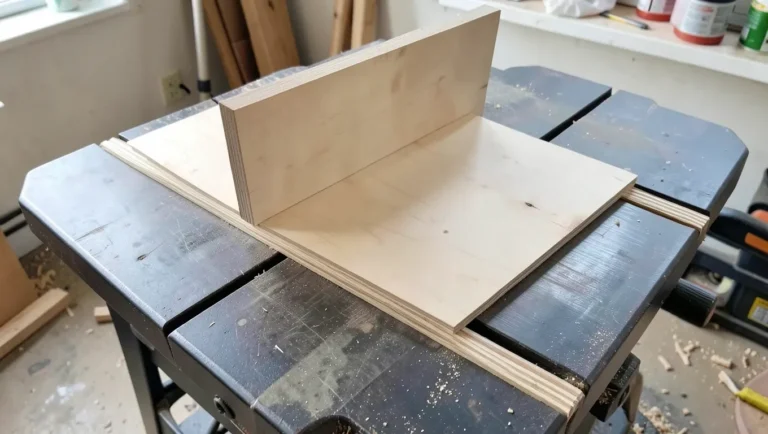
- A sacrificial auxiliary fence (a length of scrap clamped to your rip fence)
- A featherboard and a push block or push stick
- 1x lumber — pine or cedar are the common picks, 3/4″ nominal thickness
- Tape measure and a combination square
- Safety glasses and hearing protection
Not sure how many boards to buy? Run your wall dimensions through a shiplap board calculator before you cut anything — it saves a second trip to the lumber yard.
Step 1: Set the Dado Blade Width and Height
Stack the dado blade to the width you want the reveal to be. For the classic look, cut one rabbet at 1/2″ wide and the matching rabbet at 3/4″ wide — the 1/4″ difference is what shows as the reveal line once boards are installed. Set the blade height to exactly half your board’s thickness (a 3/4″ board gets a 3/8″ deep rabbet).
Clamp a sacrificial fence over your rip fence before making any cut — it supports the board fully and stops tear-out on the back edge where the blade exits.
Step 2: Rip the First Rabbet Along the Face
Lay the board flat against the table with the fence set to the rabbet width. Run the face of the board through the blade, keeping it tight against the fence the whole pass with a push block. Never feed by hand alone this close to a dado stack.
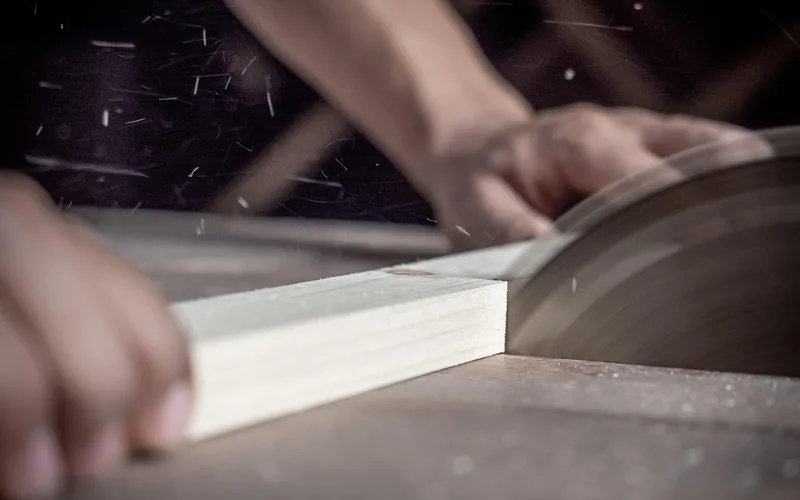
📊 Rabbet depth should equal exactly half your board’s thickness, with rabbet width between 1/2″ and 3/4″ — Source: Family Handyman, Shiplap Siding Guide
Step 3: Flip the Board and Cut the Matching Rabbet
Without changing the blade height, flip the board end-for-end and stand it on its opposite edge (or flip face-for-face, depending on your fence setup) to cut the second rabbet on the matching corner. Keep the dado height untouched between the two cuts — that’s what keeps every board in the run identical.
“The rabbet depth is the detail beginners get wrong first — cut it even a hair deeper than half the board’s thickness and the boards sit loose instead of flush. Sneak up on the final pass with a test offcut before you touch your good lumber.”
Step 4: Dry-Fit, Sand, and Finish
Dry-fit two boards together before cutting your whole run — the rabbeted edges should overlap with a visible 1/4″ reveal and no gap behind it. Sand the faces and cut edges smooth, then apply your finish of choice before installation; finishing boards individually on a bench is far easier than finishing them after they’re on the wall.

Ready to hang them? See our guide to installing shiplap boards for fastener spacing and layout once your boards are cut.
Table Saw vs. Router: Which Should You Use for Shiplap?
Both tools cut a valid rabbet joint. The right one depends on what you already own and how many boards you’re making.
| Factor | Table Saw + Dado Blade | Router + Rabbeting Bit |
|---|---|---|
| Setup time | Slower — stack width, clamp sacrificial fence | Faster — one bit, no stacking |
| Speed per board | Fast once set up (full-length pass) | Slower — may need multiple router passes |
| Precision | Very consistent across a long run | Depends on steady hand-held control |
| Best for | Making a lot of boards at once | A few boards, or no table saw on hand |
Common Mistakes — and the Safety Setup That Actually Matters
Skip any setup that involves removing a table saw’s blade guard to “see the cut better,” or hand-feeding a board past a spinning dado stack with no push block. Neither is necessary, and both remove the safety margin the saw is designed to give you. The setup below is what actually keeps a dado cut safe:
- Sacrificial fence: clamp scrap over your rip fence so the dado stack never contacts the metal fence face
- Featherboard: position it just before the blade to hold the board flat and prevent kickback
- Push block, not fingers: keep hands at least 6″ from the spinning blade at all times
- Test cut first: run one offcut at your exact settings before committing your good lumber
Other frequent mistakes: mitering the board ends too tight (leaves a jagged, hard-to-fix edge), and rushing the flip step so the two rabbets end up at different heights — both come from skipping the test-cut step above.
Frequently Asked Questions
What size dado blade do you need for shiplap?
A 6″ or 8″ stacked dado blade set works, sized to fit your table saw’s arbor — most benchtop and jobsite saws take 6″, while contractor and cabinet saws typically use 8″. Either size can be adjusted to cut the 1/2″–3/4″ rabbet widths shiplap needs.
How deep should a shiplap rabbet be cut?
Cut the rabbet depth to exactly half your board’s thickness. On a standard 3/4″ nominal 1x board, that’s a 3/8″ deep rabbet on both the face and the matching edge.
Do you need a dado blade, or can a regular table saw blade work?
A standard blade can cut a rabbet with multiple overlapping passes, but it’s slower and leaves a less even bottom than a single dado-stack pass. If you’re making more than a handful of boards, a dado set pays for itself in setup time saved.
What’s the difference between shiplap and tongue-and-groove boards?
Shiplap boards overlap with a rabbet cut into each edge, leaving a visible reveal line where they meet. Tongue-and-groove boards interlock with a protruding tongue on one edge fitting into a groove on the next, hiding the seam almost completely.
How much reveal should shiplap have?
A 1/4″ reveal is the traditional look, produced by cutting one rabbet 1/2″ wide and the other 3/4″ wide. A wider gap reads more rustic; a tighter gap looks closer to flush paneling.
Conclusion
A dado-blade rabbet on a table saw is the fastest way to turn straight 1x boards into real shiplap, and the only measurements that matter are a rabbet depth at half your board’s thickness and a width between 1/2″ and 3/4″. Dry-fit a pair of boards before committing your whole run, and the rest of the project is sanding, finishing, and installing.
Once the dado stack is set up, it’s worth reusing for other joinery — browse more table saw projects on the site for ideas.
Sponsored / affiliate links. As an Amazon Associate I earn from qualifying purchases. I may earn additional commission from eligible campaigns.