How to Make Wood Water Resistant: Expert Tips & Techniques
To make wood water-resistant, apply a waterproof sealant or wood finish. Choose products specifically designed for outdoor or high-moisture environments.
Wood is a versatile material used in various applications, from furniture to outdoor decking. However, exposure to water can lead to damage like warping, rot, or mold. Making wood water-resistant not only prolongs its lifespan but also enhances its aesthetic appeal.
Several methods exist to protect wood, including sealants, oils, and paints. Understanding the right approach for your specific project ensures durability and beauty. This guide will explore effective techniques to make wood resistant to water, helping you maintain its integrity and appearance for years to come. Embrace the beauty of wood while safeguarding it against moisture-related issues.
The Importance Of Water Resistance In Wood
Water can damage wood over time. Protecting wood from water is very important. It helps to keep the wood strong and beautiful. Water can cause wood to warp or crack. This damage can be costly to fix.
Using water-resistant wood can save money long-term. It reduces the need for repairs and replacements. Water-resistant wood lasts longer than untreated wood. This means less waste and more sustainability.
Investing in water-resistant wood protects your home. It also ensures your furniture remains in good shape. Keeping wood safe from water improves its overall appearance.
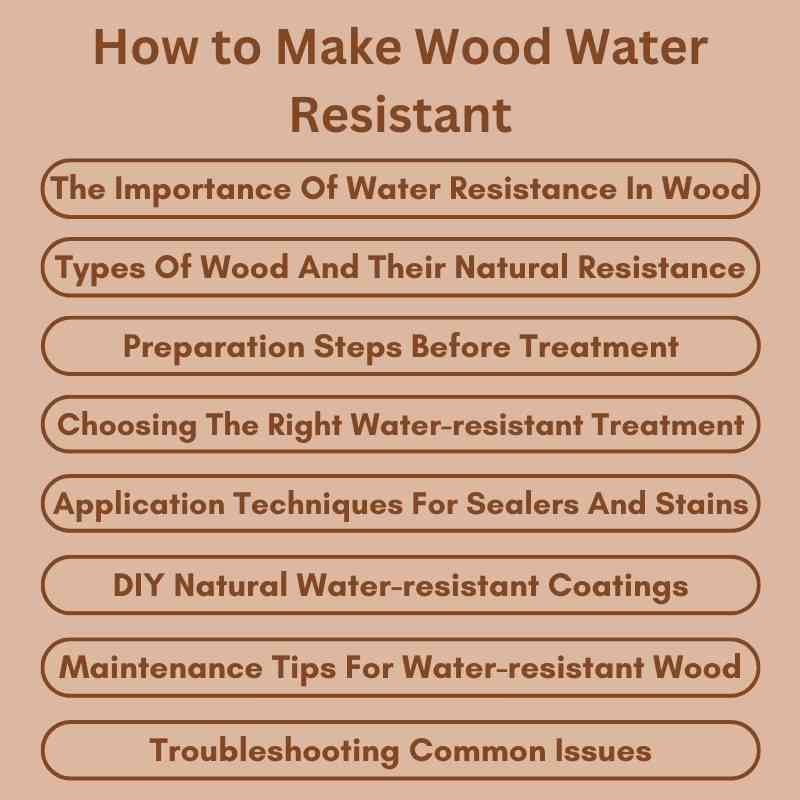
Types Of Wood And Their Natural Resistance
Naturally resistant woods include cedar, redwood, and teak. These woods can withstand moisture well. They contain natural oils that help prevent rot. Using these types of wood is a great choice for outdoor projects.
Common woods that need treatment include pine, oak, and birch. These woods are prone to water damage. Treating them with sealants or paints is essential. This protects the wood from moisture and extends its life. Regular maintenance keeps the wood safe from the elements.
Preparation Steps Before Treatment
Start by cleaning the wood surface thoroughly. Use soap and water to remove dirt. Rinse well and let it dry completely. Any residue can affect the treatment.
Sanding the wood helps with absorption. Use medium-grit sandpaper for the best results. Sand in the direction of the grain. This opens up the pores of the wood.
After sanding, wipe away any dust with a clean, damp cloth. Ensure the surface is smooth. A smooth surface allows the treatment to penetrate deeply.
Choosing The Right Water-resistant Treatment
Choosing the right treatment is key for wood protection. Oil-based sealers provide a strong barrier. They penetrate deep into the wood. This helps to keep moisture out. Water-based sealers dry quickly and are easy to clean. They are less toxic and safer for indoor use.
UV protection is also important. Sunlight can cause wood to fade and crack. Many sealers come with UV blockers. This keeps the wood looking fresh and new.
Consider your needs before making a choice. Oil-based sealers last longer but take time to dry. Water-based sealers are quick and simple but may need reapplication.
Application Techniques For Sealers And Stains
Choosing between brush and spray application can impact your project. A brush allows for precise control, making it easier to cover small areas. It also helps to work the sealer into the wood grain. However, it can take more time and effort.
Spraying is faster and covers large areas quickly. This method creates an even finish. Yet, it may lead to overspray and waste material. It also requires more cleanup.
Ensuring even coverage is crucial. Apply in thin layers to avoid drips and uneven spots. Allow each layer to dry completely before adding another. This process enhances the water resistance of the wood.
DIY Natural Water-resistant Coatings
Using wax is a simple way to make wood water resistant. Natural beeswax works best for this purpose. Melt the wax and apply it evenly on the wood surface. Allow it to dry and then buff it for a smooth finish.
Homemade oil mixtures can also help protect wood. Combine equal parts of linseed oil and vinegar. Apply this mixture generously with a cloth. Let it soak into the wood for at least 30 minutes. Wipe off any excess oil for best results.
Both methods not only enhance water resistance but also improve the wood’s appearance. Regular application keeps wood looking great and extends its life.
Maintenance Tips For Water-resistant Wood
Regular checks for damage are very important. Inspect the wood for cracks or peeling. Look for signs of moisture buildup. Early detection helps prevent serious problems.
Reapplication of sealants keeps wood protected. Apply a new coat every year or as needed. Choose high-quality sealants for the best results. Follow the manufacturer’s instructions carefully.
Use a clean brush or roller for application. Make sure the wood is dry before sealing. This ensures the sealant sticks well and lasts longer.
Troubleshooting Common Issues
Peeling and flaking can ruin your wood’s look. To fix this, sand the area gently. Use fine-grit sandpaper for smoothness. After sanding, clean the surface to remove dust. Apply a new coat of water-resistant finish. This helps seal the wood better.
Mold and mildew can grow on damp wood. To prevent this, keep wood dry and clean. Use a mixture of water and vinegar to clean affected areas. Let the wood dry completely before applying any sealant. Regular checks can help catch any growth early.
Frequently Asked Questions
How Can I Make Wood Water Resistant?
To make wood water resistant, apply a waterproof sealant. Options include polyurethane, varnish, or epoxy. Ensure the wood is clean and dry before application. Use a brush or roller for even coverage. Allow the sealant to cure fully for optimal protection against moisture.
What Are The Best Sealants For Wood?
The best sealants for wood include polyurethane, marine varnish, and epoxy. Polyurethane is versatile and durable, ideal for indoor and outdoor use. Marine varnish offers excellent UV protection. Epoxy provides a strong, waterproof barrier. Choose based on your project’s specific needs and exposure conditions.
Can I Use Oil To Waterproof Wood?
Yes, using oil can effectively waterproof wood. Tung oil and linseed oil penetrate the wood and create a water-resistant barrier. Apply multiple coats for better protection. However, reapplication is necessary over time to maintain effectiveness. This method is great for furniture and decorative items.
How Often Should I Reapply Waterproofing?
Reapply waterproofing every one to three years, depending on exposure. Factors such as weather, usage, and type of sealant affect longevity. Regular maintenance ensures continued protection against moisture damage. Always inspect your wood regularly for signs of wear or water infiltration.
Conclusion
Making wood water resistant is essential for its longevity. By using effective methods like sealants and treatments, you can protect your wood from damage. Regular maintenance will also enhance its durability. With these tips, you can enjoy beautiful, long-lasting wooden structures and furniture that withstand the elements effectively.