How to Restain a Deck: Water Test, Strip or Sand, Stain Types
Restain a deck only after a water test: if drops soak into the boards, clean, sand with 60-80 grit, and recoat; if they bead up, the old finish is still sealing and new stain will not penetrate. Cabot and Sherwin-Williams both give 50 to 90 degrees F as the working range. This guide covers the water test, strip versus sand, which stains can go over which, and real coverage and recoat times.
Does Your Deck Need Restaining? The Water Test, Read Correctly
Best Deck Stain Applicator Pick
 |
Cabot 6-Inch Wood Stain Pad Applicator, $14.99 A pad spreads stain in a thin, even film and lets you keep a wet leading edge along each board, which is the lap-mark rule covered in the application section below.
|
As an Amazon Associate we earn from qualifying purchases.
Sprinkle a few drops of water on several boards, including a high-traffic spot and a shaded spot. Cabot says that if the drops are quickly absorbed the surface is ready to prep, and Sherwin-Williams gives the same test on its SuperDeck Log Home and Deck Stain data sheet. This Old House uses the test the other way round, as a sign it is time to restain: water that soaks in means the old finish has stopped protecting the wood.
Both readings are correct, and the bead result matters just as much. Sherwin-Williams adds that if the water beads up or does not penetrate, you must remove the existing coating or sealer before staining, then test again. Fresh stain cannot soak into a surface that still sheds water, so it sits on top and peels.
| What the water does | What it means | What to do |
|---|---|---|
| Soaks in fast and darkens the wood | Old finish has worn through | Clean, let dry, light sand, restain |
| Soaks in on some boards, beads on others | Finish wore unevenly (foot traffic, sun side) | Clean and scuff-sand the beading boards so they absorb, then stain the whole deck |
| Beads up on every board | Old finish is still sealing, or it is a film-forming solid stain | Wait another season, or strip the finish if you are changing stain type or color |
| Surface peels, flakes or chalks | Film has failed | Strip or sand back to bare wood; see our 3-point strip test |

How to Restain a Deck, Step by Step
- Test: run the water test on 4 to 5 boards and note which ones bead.
- Repair: reset or replace popped screws and nails, swap split boards, and fill small checks with exterior filler.
- Clean: sweep, then wash with a deck cleaner. Mixing ratios and pressure-washer settings are in our deck cleaning guide, so they are not repeated here.
- Strip if needed: only when the old film is peeling or you are switching stain type. Neutralize with a brightener afterward.
- Dry: let the wood dry fully unless your stain is rated for damp wood.
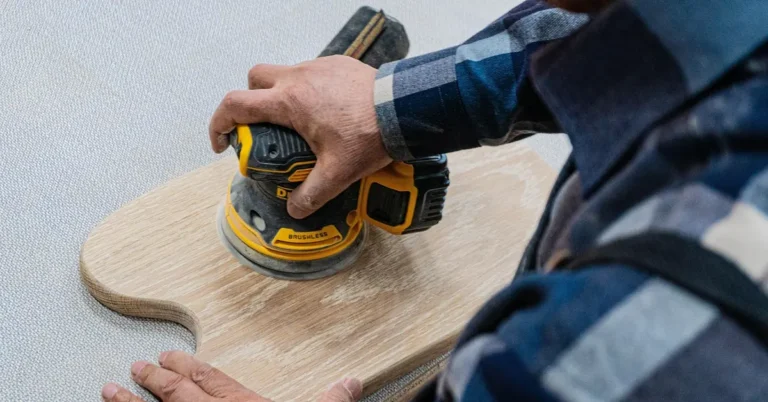
- Sand: 60 to 80 grit along the grain, then sweep and vacuum the dust.
- Stain: thin coat, one board at a time, end to end.
- Recoat or stop: only if the can allows a second coat, inside its recoat window.
Strip, Clean or Sand: Which Prep Does Your Deck Need?
Cleaning removes dirt and mildew. Sanding smooths raised grain and dulls a glossy surface so stain can grip. Stripping chemically removes a film. They are not interchangeable, and most restains need only the first two.
| Condition of old finish | Clean | Sand | Strip |
|---|---|---|---|
| Faded or worn, no film left | Yes | Light scuff | No |
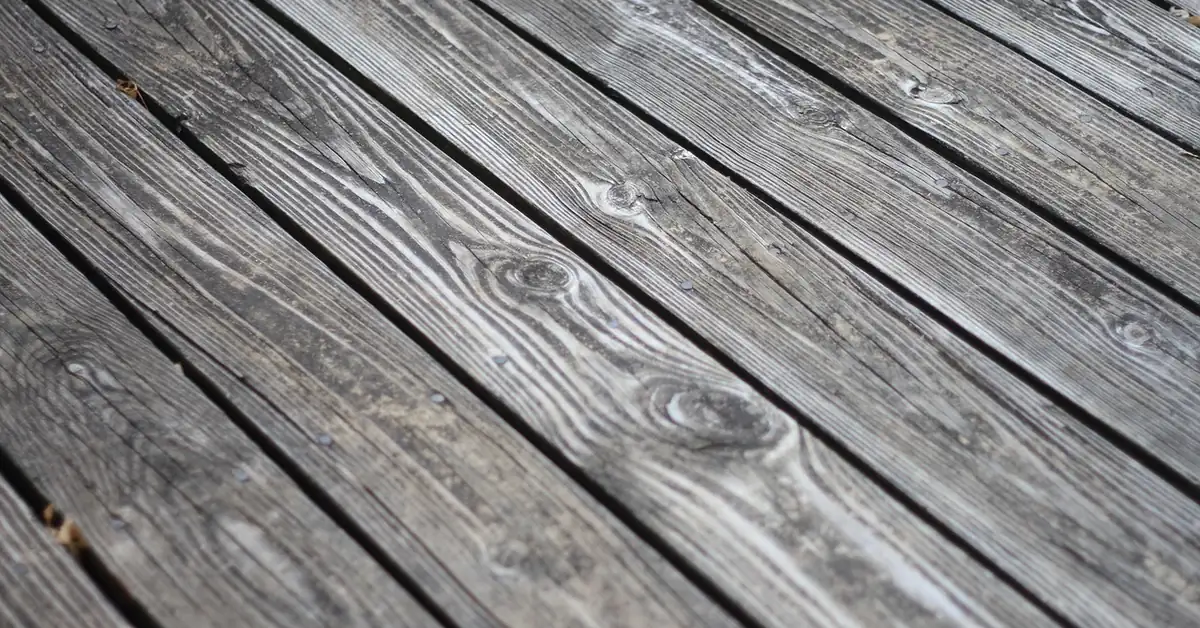
| Gray, rough, fuzzy wood | Yes | 60-80 grit | No |
| Intact matching semi-transparent stain | Yes | Optional | No |
| Peeling or flaking film | Yes | If only thin patches | Yes, or sand to bare wood |
| Solid stain, going to semi-transparent | Yes | Not enough on its own | Yes |
Sanding a deck: grit and tools
For decks, 60 to 80 grit does the work: it clears loose fibers and the weathered surface without gouging softwood. This Old House runs 40, then 60, then 80 on its floor sander when a heavy film has to come off first. Sand with the grain, stop at 80 so the pores stay open for stain, and vacuum before staining. Our sandpaper grit chart covers the full range. If the deck was ever painted, treat the dust with care: Sherwin-Williams warns that sanding or scraping old paint can create lead dust and calls for a NIOSH-approved respirator.
Stripper and brightener safety
Stripper is caustic. Cabot Wood Stripper lists sodium hydroxide and carries a DANGER label for eye and skin burns, with acid-resistant rubber gloves, goggles, boots and a dust mask as required protection. Per the Cabot page: apply to a surface that is not hot or wet, leave it 15 minutes without letting it dry, rinse with a garden hose or a washer at no more than 1000 PSI, then neutralize with a brightener. It covers 150 to 200 square feet per gallon.
The brightener is hazardous too. Cabot Wood Brightener contains oxalic acid, sits for 15 to 20 minutes, and its label calls for the same gloves and goggles plus ventilation. The CDC NIOSH pocket guide on sodium hydroxide says to irrigate eyes immediately and flush skin with water right away after contact. Keep a hose running nearby.
Which Stain Can Go Over Which Old Stain?
The rule is simple: penetrating stain needs open wood or a penetrating finish underneath. You can go darker or more opaque over what is there, but you cannot go lighter or more transparent without removing it. Sherwin-Williams states that old semi-transparent color can show through a new semi-transparent coat, and not to apply its semi-transparent stain over paint or solid stain.
| Existing finish | Safe next coat | Do not do this |
|---|---|---|
| Bare or worn-off semi-transparent | Any deck stain | Skipping the water test |
| Semi-transparent stain, intact | Same type, semi-solid, or solid (goes darker) | Expecting a lighter color to cover it |
| Solid or film-forming stain | Another solid stain after sanding and cleaning | Penetrating oil-based stain over the film: it cannot soak in and peels |
| Paint | Strip, then stain; or repaint | Any semi-transparent stain |
Switching color follows the same logic: darker is easy, lighter means stripping and brightening first. To choose a product, start with our deck stain comparison. Using Sherwin-Williams? Our SuperDeck guide breaks down the lines. Restaining cedar and want to keep the grain? See the best finish for cedar. New pressure-treated lumber needs time to dry before any stain; our treated lumber wait-time guide has the numbers.
When Is the Best Time to Restain a Deck?
Pick a stretch of dry weather with surface temperatures from 50 to 90 degrees F. Sherwin-Williams says to stain in shade, not on a hot surface or in direct sun, and not to apply if rain is expected within 24 hours. Cabot gives the same 50 to 90 degrees F range. Early morning is the practical window on a south-facing deck.
How Much Stain Do You Need, and How Long Does It Take to Dry?
The numbers below come from the makers’ own pages. Weathered boards drink far more than new ones, which is why the Sherwin-Williams range is so wide.
| Product (maker page) | Coverage per gallon | Dry / recoat |
|---|---|---|
| Cabot Semi-Solid Stain + Sealer | 400-500 sq ft | Dry 24-48 hours, recoat after 24 hours |
| Sherwin-Williams SuperDeck Log Home and Deck Stain (waterborne semi-transparent) | 350 sq ft smooth, 100-200 sq ft rough or porous | Touch 1 hour, recoat after 4 hours minimum and within 3 days |
| Cabot Wood Stripper (for prep) | 150-200 sq ft | Leave 15 minutes, do not let dry |
Worked example: a 12 x 16 foot deck floor is 192 square feet. At the Sherwin-Williams rough-wood rate of 100 to 200 square feet per gallon that is roughly 1 to 2 gallons for one coat; at Cabot’s 400 to 500 it is under half a gallon on smooth boards. Add rails, steps and a margin. The Sherwin-Williams sheet is dated 2020, so check the can in your hands before buying.
Applying the Stain: Avoid Lap Marks
- Stir the can before and during use, and mix cans together so the color is uniform.
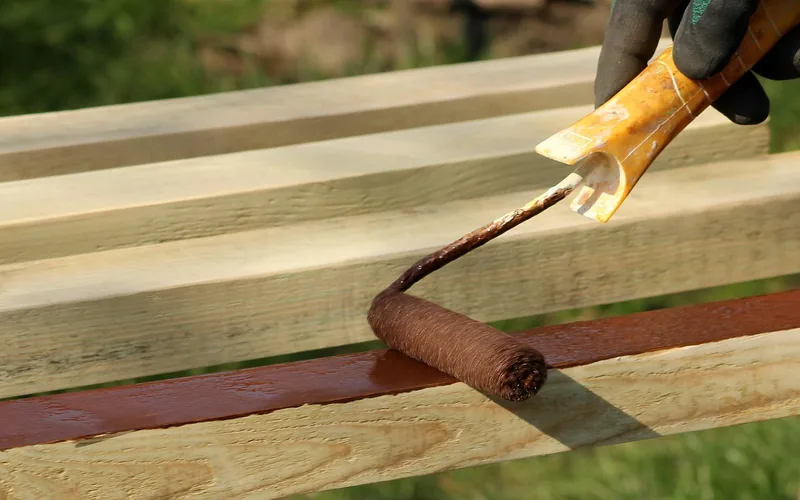
- Work in shade, from a dry area into the wet edge, and stain a board from end to end so the lap never lands mid-board.
- Keep the leading edge wet and spread the finish evenly; redistribute puddles instead of leaving them.
- Sherwin-Williams says two coats may be needed to reach the selected color on its semi-transparent stain, with the second coat inside the recoat window.
- Back-brush sprayed or rolled stain into the wood fibers, and coat the cut ends and joints.
Fixing Common Restaining Problems
Peeling or flaking after a few months
Almost always stain applied over a surface that still shed water, or over a film. Strip back to bare wood and run the water test again before recoating.
Blotchy or dark patches
Heavy absorption on weathered boards. Sand evenly, apply a thin coat, and wipe up puddles. Test color on a hidden board first, since the wood and any old stain change the final shade.
Lap marks
Caused by staining in sun or letting an edge dry. Follow the wet-edge steps above and work in smaller sections.
Frequently Asked Questions
Do I Need To Remove Old Stain Before Restaining A Deck?
Not always. If the water test shows the wood absorbing and the old stain is not peeling, clean and sand lightly. Strip when the film is peeling, when it beads water and you are changing stain type or color, or when it is solid stain going to semi-transparent.
Can You Stain Over An Already Stained Deck?
Yes, if the surface is clean and absorbs water. Going darker or more opaque works; going lighter does not. Sherwin-Williams states not to apply its semi-transparent stain over paint or solid stain.
Do You Have To Sand A Deck Before You Restain It?
Usually a light sanding helps. Use 60 to 80 grit along the grain to smooth the surface and open it for stain. Sherwin-Williams says to sand any deteriorated wood to a fresh surface. Skip heavy sanding if the wood already absorbs water.
Do You Need To Pressure Wash A Deck Before Restaining?
No, a scrub-brush wash with deck cleaner works. If you do use a washer, keep pressure low enough not to raise splinters; Cabot caps its stripper rinse at 1000 PSI. Let the wood dry before staining unless the stain is rated for damp wood.
Can You Restain A Deck A Different Color?
Yes, if the new color is darker or more opaque than the old one. Going lighter means stripping and brightening the wood first, because old color shows through semi-transparent stain.
What Is The Best Weather To Restain A Deck?
Dry weather with surface temperatures of 50 to 90 degrees F, in shade, with no rain expected for 24 hours, per Sherwin-Williams. Cabot also gives 50 to 90 degrees F.
Conclusion
Restaining works when the old finish has stopped sealing and the new stain can reach clean, open wood. Run the water test, match the new stain to what is already there, sand to 60-80 grit, and stay inside the temperature and recoat limits on the can. For general decking care, see our woodworking tips and fixes guide.
Sponsored / affiliate links. As an Amazon Associate I earn from qualifying purchases. I may earn additional commission from eligible campaigns.