How to Move a Glass Table Top: Real Weight-by-Thickness Data
A glass table top’s weight scales directly with thickness — roughly 3.3 lbs per square foot at 1/4-inch, up to 6.5 lbs per square foot at 1/2-inch — so a typical 1/2-inch round top can weigh 50-60 lbs, heavy and rigid enough that a dropped edge cracks instead of bouncing. Gripping bare glass is the most common cause of a slipped, dropped top. This guide covers real weight-by-thickness numbers, when one person can safely carry a top alone, and why upright transport beats laying it flat.
How Much Does a Glass Table Top Actually Weigh?
Best Glass-Moving Suction Handle Pick
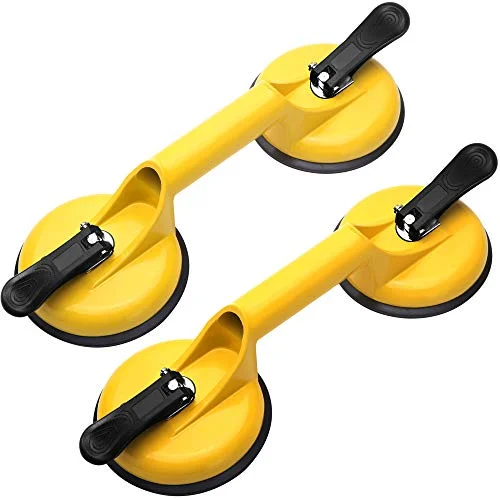 |
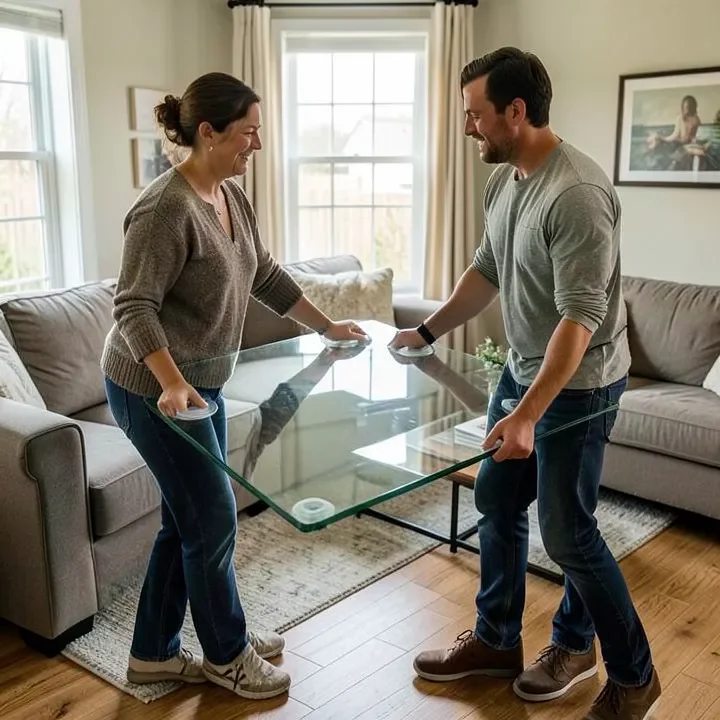
FCHO Heavy-Duty Glass Suction Cup Handles (2-Pack) – $20.99 Two suction handles give each person a real grip point on opposite edges — exactly the two-person carry method this guide recommends instead of gripping bare glass.
|
Weight comes down to thickness times area — a bigger top isn’t just harder to maneuver, it’s genuinely heavier per the same rule. Use this table to estimate your own top’s weight before deciding whether you need a second person.
| Thickness | Weight per Sq. Ft. | Example: 8 Sq. Ft. Top | Carry Recommendation |
|---|---|---|---|
| 1/4" | 3.28 lbs | ~26 lbs | One careful person, or two for larger tops |
| 3/8" | 4.91 lbs | ~39 lbs | Two people recommended |
| 1/2" | 6.54 lbs | ~52 lbs | Two people, suction handles recommended |
| 3/4" | 9.84 lbs | ~79 lbs | Two people minimum, consider a dolly |
How to Grip and Lift a Glass Table Top Correctly
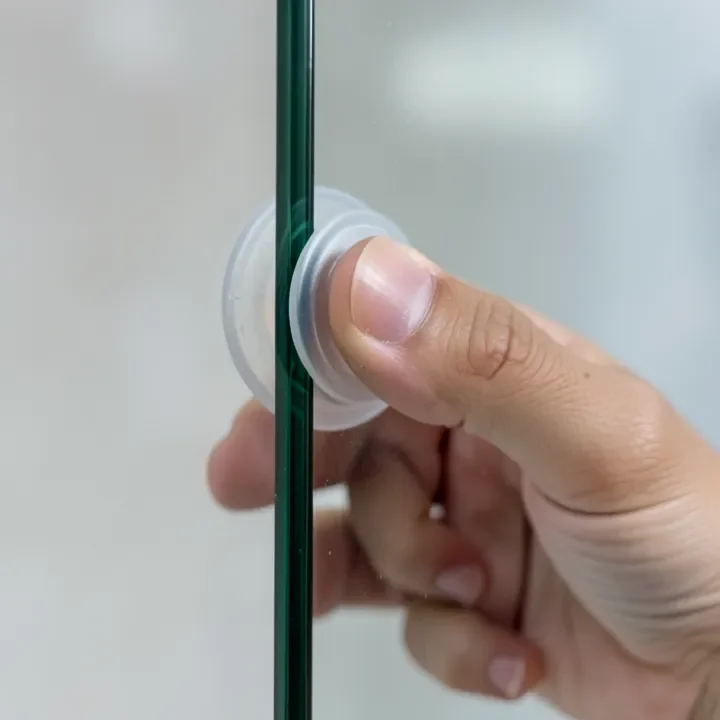
Grip from underneath the edge with a flat, spread hand — never pinch the top surface between fingertips, since that grip fails the instant hands sweat or the glass has any residue on it. Never lift by the center of the panel; unsupported center flex under the glass’s own weight is what starts the hairline stress cracks that show up days later, not immediately.
Transporting a Glass Table Top: Upright, Not Flat
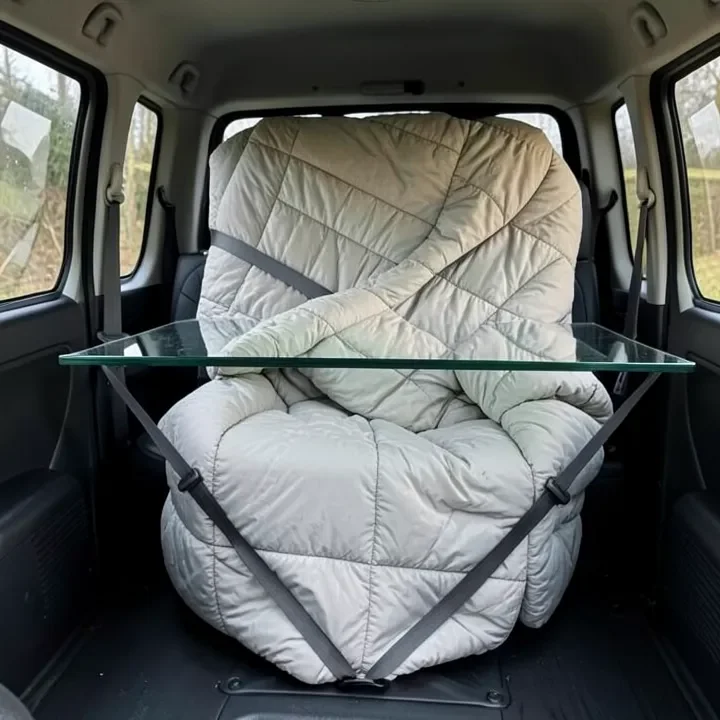
Transport the panel upright and strapped against a padded wall, the same way glass shops ship sheet glass — standing on edge distributes weight along the glass’s strongest axis. Laying a top flat in a trunk or truck bed lets it flex under its own weight wherever it isn’t fully supported, and that flex is enough to crack glass that would otherwise survive the trip fine. Wrap it in moving blankets, place cardboard on both faces, and use straps rather than stacking anything on top of it.
📊 Glass weight scales from about 3.3 lbs per square foot at 1/4-inch thick up to roughly 13.1 lbs per square foot at a full inch thick — nearly a 4x jump across that thickness range, which is why a thick custom top can weigh far more than it looks. — Source: Omni Calculator glass weight reference
“The moves that go wrong are almost always a solo carry on a top someone assumed was ‘light because it’s just glass’ — run the thickness through the weight numbers first, and the decision to grab a second person usually makes itself.”
Common Mistakes When Moving Glass Table Tops
- Gripping the center instead of the edges — unsupported center flex is a leading cause of delayed stress cracks.
- Laying the panel flat during transport — upright and strapped is stronger than flat and unsupported.
- Underestimating weight on thicker glass — a 3/4-inch top can weigh nearly 80 lbs at 8 square feet, well past comfortable one-person range.
- Using suction handles on dirty or textured glass — wipe the contact area first and test the seal before committing full weight to it.
Frequently Asked Questions
How much does a glass table top weigh?
Weight scales directly with thickness and area: standard glass runs about 3.28 lbs per square foot at 1/4-inch thick, 4.91 lbs per square foot at 3/8-inch, and 6.54 lbs per square foot at 1/2-inch. A 1/2-inch-thick, 40×40-inch round top (about 8.7 square feet) weighs roughly 57 lbs — heavy enough that a two-person carry is the safer default, not just a precaution.
Can one person safely move a glass table top alone?
Only for small, thin tops under roughly 25-30 lbs, and even then a drop risk exists because glass offers no forgiving flex like wood. For anything 3/8-inch thick or larger than about 3 feet across, use a second person or a suction-handle set rather than attempting a solo carry.
What’s the best way to grip a glass table top when moving it?
Grip from underneath the edges with flat, spread fingers rather than pinching the top surface, or use suction cup handles rated for glass, which lock onto the surface and remove the risk of a slipping bare-hand grip. Never lift by gripping the center of the glass — unsupported center flex is what causes stress cracks in transit.
Should a glass table top be transported flat or upright?
Upright and secured with straps, not flat. A glass panel laid flat in a vehicle bed or trunk can flex and crack under its own weight if not fully supported edge-to-edge, while an upright panel braced against a padded wall distributes weight along its strongest axis — the same reason glass shops ship panels standing on edge.
Bottom Line
Glass table tops aren’t just fragile — they’re genuinely heavy once you run the actual per-square-foot numbers by thickness, which is why most drop incidents trace back to an underestimated solo carry rather than bad luck. Check your top’s approximate weight against the table above, grip from the edges (or use suction handles) instead of the center, and transport it upright rather than flat.
Sponsored / affiliate links. As an Amazon Associate I earn from qualifying purchases. I may earn additional commission from eligible campaigns.