Woodcut vs Wood Engraving: Grain, Tools and Real Differences
A woodcut is cut into the side grain of a plank with knives and gouges, while a wood engraving is cut into the end grain of a dense block, traditionally boxwood, with a fine graver. The surface you cut decides everything else: line weight, detail, tool choice and block size. This guide covers both techniques, the wood behind each, a comparison table with real hardness numbers, and how to tell them apart on sight.
Woodcut vs Wood Engraving: The Short Answer
BEST WOODCUT TOOL SET PICK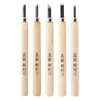 |
KAKURI Japanese Wood Carving Tool Set, 5-Piece
|
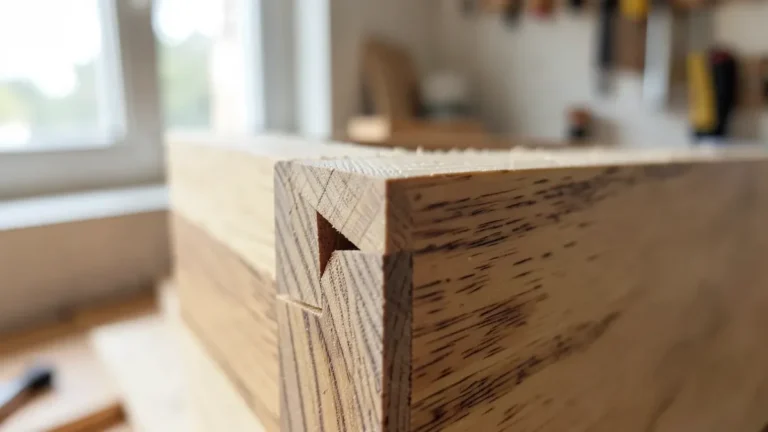
Both are relief printing methods. You cut away the parts that should stay white, ink the raised surface that is left, and press paper onto it. What separates the two is which face of the wood you cut. If the block is a plank with the grain running along its surface, the print is a woodcut. If the block is a slice across the trunk, so the grain ends at the surface, the print is a wood engraving.
| Feature | Woodcut | Wood engraving |
|---|---|---|
| Wood surface | Plank (side grain) | End grain (cross-section of the trunk) |
| Typical wood | Cherry, basswood, shina plywood, pear | Boxwood, plus lemonwood or cherry |
| Janka hardness of a typical block wood | Basswood 410 lbf, black cherry 950 lbf | Boxwood 2,940 lbf |
| Main tools | Knives, chisels, U and V gouges | Gravers (burins), spitstickers, scorpers |
| Block size | As large as the plank you can find | Small, often glued up from boxwood pieces |
| Line character | Bold, angular, visible grain in solids | Fine, delicate, smooth tonal hatching |
That one difference explains the rest of the table. Side grain splits and tears along its fibers, so a woodcut artist works with knives and gouges and leaves bold shapes. End grain resists that splitting, so an engraver can push a graver in any direction and cut lines only a fraction of a millimetre wide.
Why the Grain Direction Changes Everything
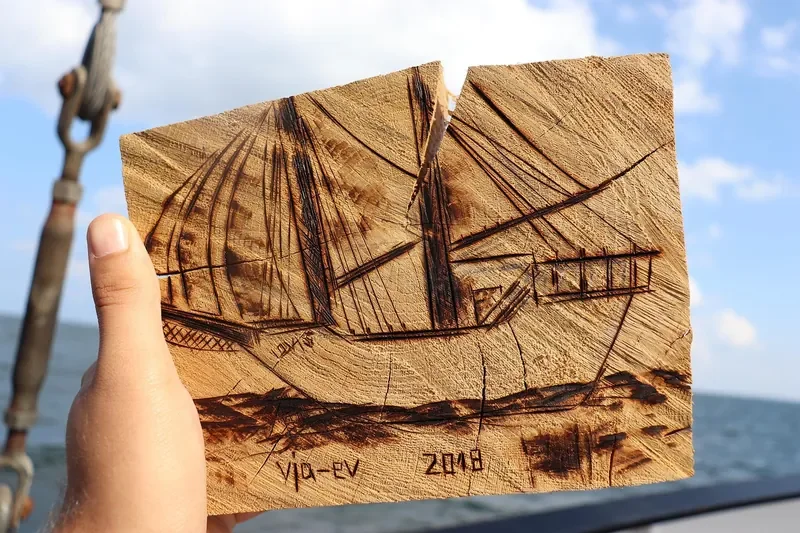
Think of a plank as a bundle of straws lying side by side. A knife cutting across the straws makes a clean edge, but a gouge running along them follows the fibers and can lift a sliver well past where you wanted to stop. That is why woodcut artists plan their cuts around the grain, and why the grain often shows up in the print as faint streaks in the solid black areas. Some printmakers like that texture, and others avoid it by choosing a tight, even-grained wood.
End grain is the opposite. The fibers point straight up at the tool, so the surface has no easy splitting direction. A graver cuts a crisp line whichever way it travels, and the block prints the same in every direction. The trade-off is hardness. Measured with the Janka test, boxwood scores about 2,940 lbf according to the Wood Database, against 410 lbf for basswood and 950 lbf for black cherry. Cutting boxwood is slow, precise work, which suits an engraver.
There is one more woodworking reason engraving blocks are small. Boxwood trunks are narrow, and a wide end-grain slab is prone to cracking as it dries, so engraving blocks are typically built from small boxwood pieces glued together. Engravers have traditionally worked at small sizes for that reason, which is why classic wood engravings tend to be book illustrations rather than wall-sized prints.
A Common Myth: Woodcut Is Softwood, Engraving Is Hardwood
You will often read that woodcut uses soft woods like pine and engraving uses hard woods like boxwood. The second half is right, but the first half is misleading. Grain direction defines the technique, not hardness. Basswood and cherry, two of the usual woodcut woods, are both hardwoods in the botanical sense. Basswood is very soft (410 lbf) and cherry is medium-soft (950 lbf), but neither is a softwood like pine.
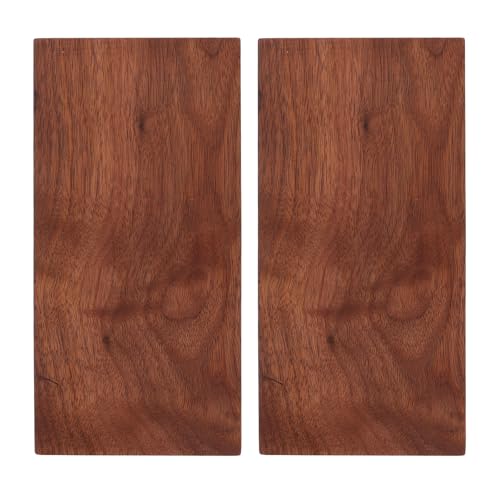
Pine is a poor choice for a first block anyway. Its alternating soft earlywood and hard latewood makes gouges skip and print a heavy grain pattern. Many printmakers prefer shina plywood, which is faced with veneer from Japanese linden and is close in character to basswood, or an even-grained hardwood such as cherry. Our guide to woodblock printing woods and setup costs compares ten block materials in more detail.
Tools: Knives and Gouges vs Gravers
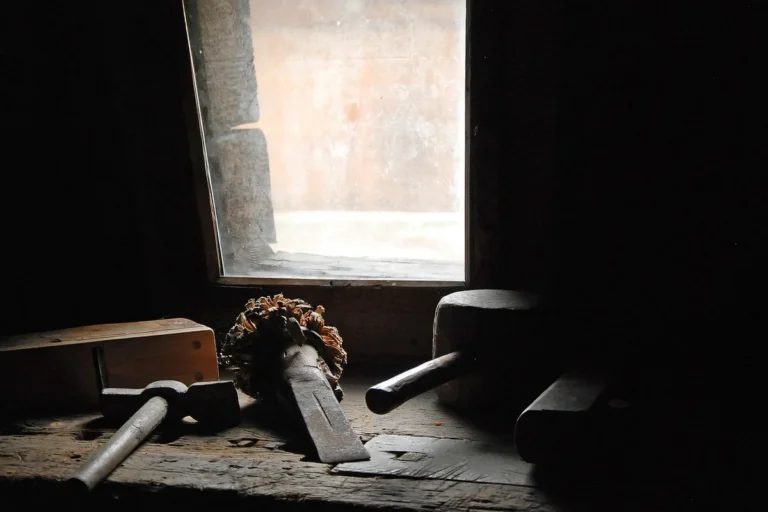
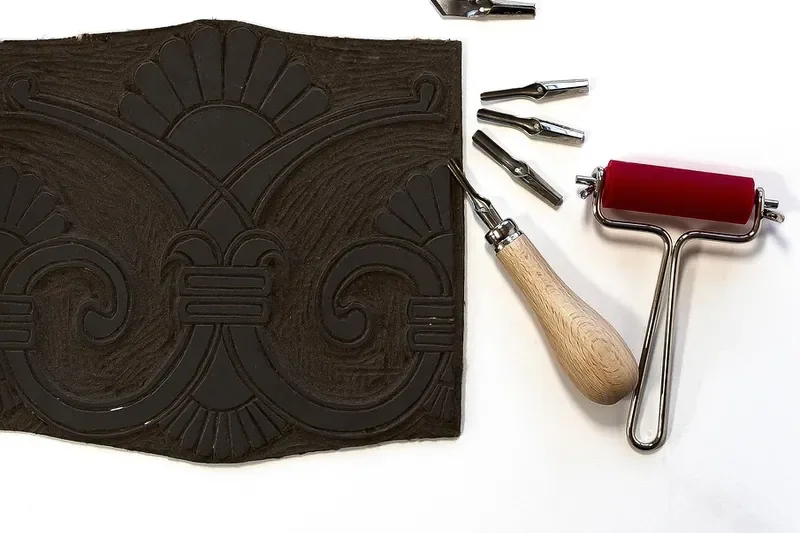
A woodcut kit is a set of knives, flat chisels and gouges. The V gouge cuts fine lines, U gouges clear larger areas, and a skew chisel cleans up corners. A basic set like the five-piece Japanese set above covers most of what a beginner needs. A knife cut leaves an angular, crisp edge, while a gouge cut leaves a rounder one, so experienced woodcut artists pick the tool for the edge they want.
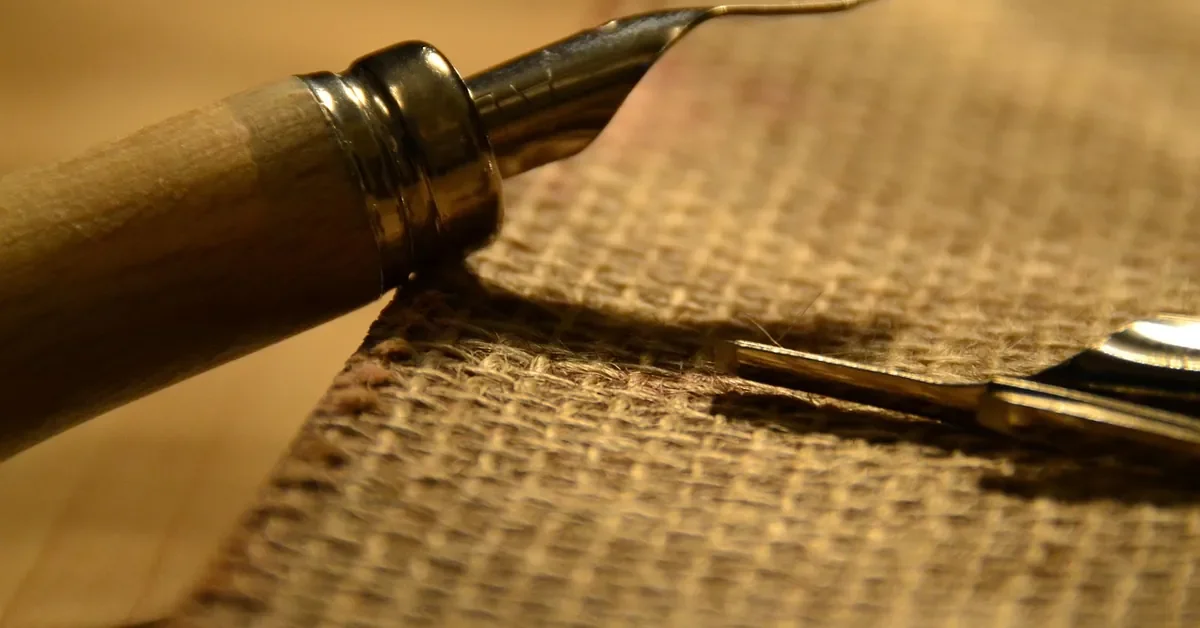
Wood engraving uses gravers, also called burins. The lozenge graver cuts a variable-width line, V-shaped gravers do hatching, the spitsticker cuts fine tapering lines, and round and flat scorpers clear larger areas. You push a graver with the heel of your palm rather than hammering or levering it, which is why sharpness and steady control matter far more than muscle. If you want the hands-on process, see our step-by-step wood engraving guide.
Black Line vs White Line: How the Two Prints Look
In a typical woodcut, the lines and shapes you want to see in black are the parts left standing, and you carve away the background. Bold outlines and solid black shapes are the natural result. Wood engraving tends to work the other way. Thomas Bewick (1753-1828), who developed the technique in Britain, treated white lines as the main design element. Each cut you make prints white, so an engraver builds tone by cutting a fine web of lines into a dark block, with more cuts giving lighter areas. Bewick used a burin on end-grain hardwood instead of the knives used in earlier woodcuts, which let him produce thin, delicate lines and large dark areas in the same block.
This is why an engraved book plate can show a bird’s feathers with soft gradation while a woodcut of the same bird shows sharp, poster-like shapes. Both can do either line style, but these are the tendencies.
A Short History of Both Techniques
Woodcut is the older of the two. Chinese printers were pressing carved wooden blocks onto textiles and paper more than a thousand years ago, and the Diamond Sutra of 868, a woodblock-printed scroll, is regarded as the oldest dated printed book. Woodcut reached Europe around 1400 and became the standard way to illustrate books and print single images.
Wood engraving came late. Bewick perfected it in the late 18th century, and his History of British Birds (1797-1804) is the classic example. Because engraved blocks are hard and low-pressure to print, they wear more slowly than copper plates, and printers could lock them into a press alongside metal type. Around the mid-19th century, electrotyping made it possible to copy a block in metal for mass printing while the original was preserved. In the early to mid 20th century, artists such as Eric Gill, Eric Ravilious and Tirzah Garwood revived wood engraving as an art form in its own right.
Famous Artists and Who Actually Cut the Block
Many famous woodcuts were not carved by the artist whose name is on them. Albrecht Dürer drew for the printing trade, and in most cases professional block cutters carved his drawings. Katsushika Hokusai’s Great Wave (about 1831) came out of a Japanese workshop system where the designer, carver and printer were different people. Edvard Munch, in contrast, cut his own woodblocks, including a woodcut version of The Scream.
The same applies to engraving. Gustave Doré drew on the block, but professional engravers cut most of the blocks for his book illustrations. Bewick and Gill are better examples of artists who both designed and cut their own work.
Which Should You Try First?
For most woodworkers, woodcut is the easier start. A five-piece tool set costs around $29, a plank of basswood or shina plywood costs a few dollars, and you can cut, ink and hand-print a block in an afternoon. Wood engraving asks for gravers, a sharpening setup, a sandbag to rest the block on, and blocks of dense end-grain wood, which are much smaller and pricier. Plan on a slower learning curve, with more practice needed to get consistent line width.
Whichever you choose, use a sharp tool, cut away from your holding hand, and clamp or brace the block. Carving tools slip most often on the first few cuts. If you are new to carving in general, our how to carve wood guide covers grip and safety, and the types of wood guide will help you judge grain and hardness before you buy a block.
How to Tell a Woodcut From a Wood Engraving
- Look for grain ghosting. Faint streaks or wavy texture in solid black areas point to a woodcut on side grain.
- Check the lines. Bold, angular outlines with big flat shapes suggest woodcut. Very fine parallel hatching that builds smooth tone suggests engraving.
- Look at the size. Large, wall-sized relief prints are almost always woodcuts, because engraving blocks are small.
- Look at the edges of the cut. Rough, gouge-shaped edges and chipped corners suggest woodcut. Sharp, uniform cut ends suggest a graver.
Frequently Asked Questions
What is the main difference between woodcut and wood engraving?
A woodcut is cut into the side grain of a plank with knives and gouges. A wood engraving is cut into the end grain of a hard block, usually boxwood, with a graver. The grain direction lets engravers make much finer lines than woodcutters can.
Can you use woodcut tools for wood engraving?
No. Gravers are made for cutting end grain in any direction with a pushing motion. Knives and gouges are meant for side grain and will chip or skip on the dense end grain used for engraving. The two toolsets are not interchangeable.
What is the best wood for a beginner woodcut?
Basswood, shina plywood and cherry are the usual choices because they cut cleanly and have an even grain. Basswood is the softest at 410 lbf, cherry is harder at 950 lbf and holds fine detail, and pine is best avoided because its hard and soft growth rings make gouges skip.
Is a Japanese woodblock print a woodcut?
Yes. A Japanese woodblock print is a woodcut, since the blocks are plank wood cut along the side grain. The main difference from Western woodcut is that traditional Japanese printers use water-based inks and hand-rubbing rather than oil-based ink and a press.
Why is wood engraving more detailed than woodcut?
End grain does not split along the fibers the way side grain does, and boxwood is very hard at about 2,940 lbf. A sharp graver can cut hairline lines in any direction without the wood tearing, so the block holds much finer detail.
Conclusion
Woodcut and wood engraving are cousins separated by one choice: side grain or end grain. Side grain gives you bold, large, quick-to-carve blocks and a grain texture you can use or avoid. End grain gives you tiny, hard blocks and lines as fine as a hair. If you enjoy the tools and the wood, start with a basswood or shina plywood block and a small gouge set, then move to gravers and boxwood once you want more detail.
Sponsored / affiliate links. As an Amazon Associate I earn from qualifying purchases. I may earn additional commission from eligible campaigns.