How to Paint Walls Without Getting Paint on the Ceiling: Pro Tips
To paint walls without getting paint on the ceiling, either mask the edge with painter’s tape pressed firmly and sealed, or skip tape entirely and “cut in” freehand with a steady angled brush – both work, but they trade off differently between speed and skill required. Taping is more reliable for beginners; cutting in freehand is faster once you’ve practiced the technique, and it’s what most professional painters actually do.
Preparation
Gather an angled sash brush (2-2.5″ is standard for cutting in), a roller and tray for the open wall area, painter’s tape if you’re using it, and a drop cloth. Clean the wall-ceiling joint of dust first – tape doesn’t seal well over dust, and dust under a freehand brush stroke causes the paint to skip and look uneven.
Method 1: Painter’s Tape
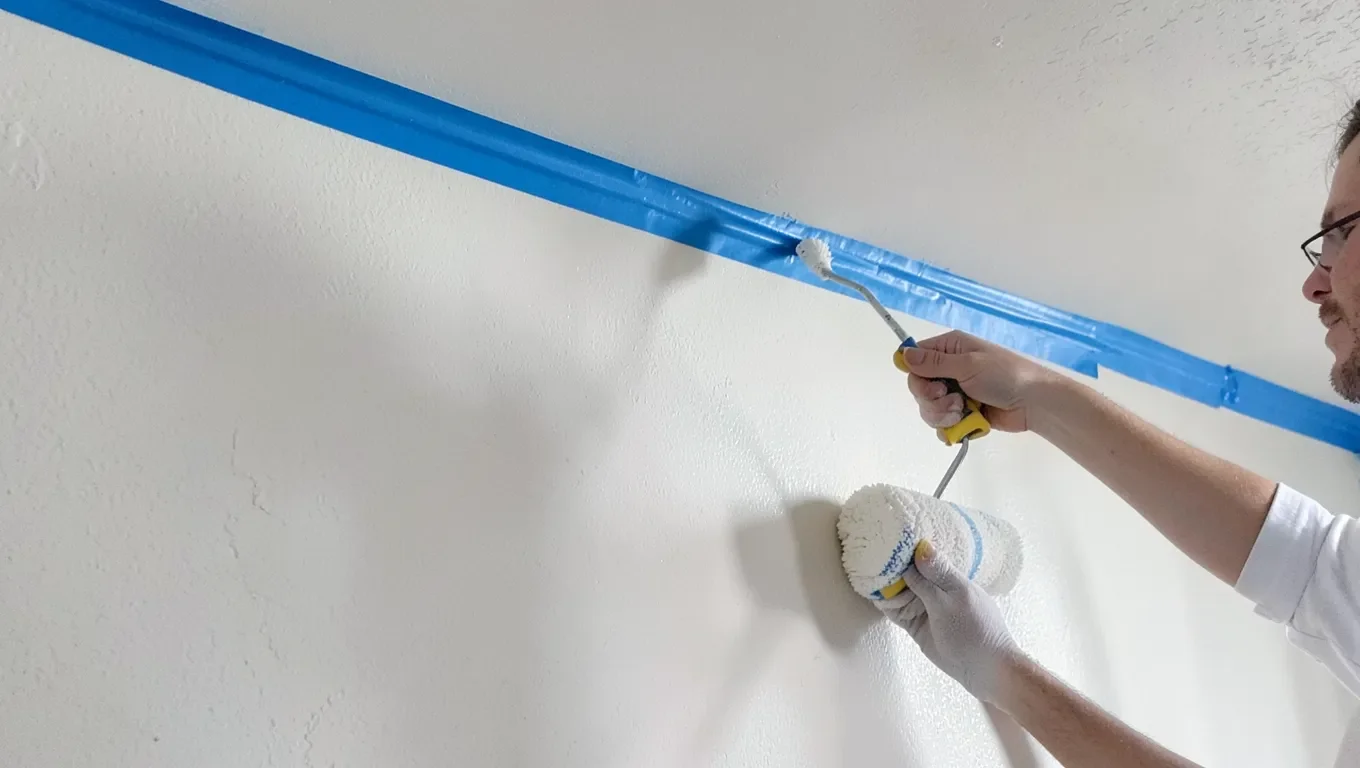
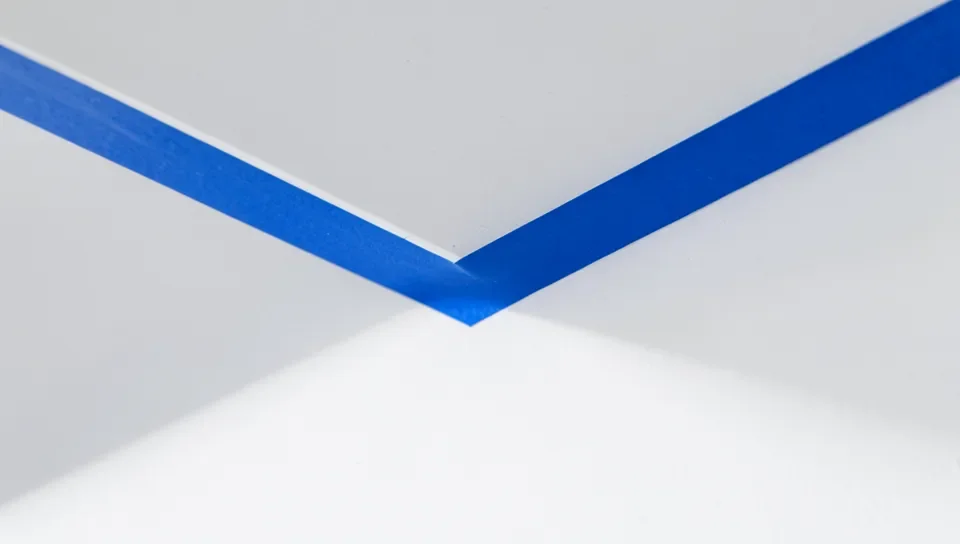
Press the tape firmly along the ceiling edge, running a fingernail or a putty knife along it to seal the bottom edge – this is the step people skip, and it’s the actual cause of most “paint bled under the tape” complaints, not a tape quality problem. Paint right up to and slightly onto the tape’s edge; a light coat first, then a second coat once the first is tacky, seals the tape edge better than one heavy coat.
Remove the tape while the paint is still slightly wet to touch (not fully cured) – pull it back on itself at roughly a 45-degree angle, slowly. Waiting until paint is bone dry increases the risk of the paint film tearing away with the tape at the edge.
Best For Sharp, Clean Ceiling Lines
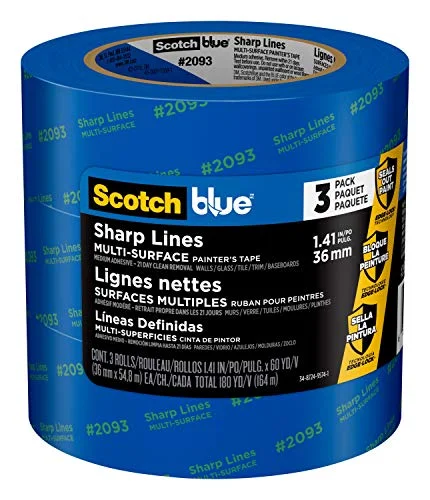 |
ScotchBlue Sharp Lines Painter’s Tape, 3-Pack – $14.98 Edge-Lock technology is specifically built to seal out paint bleed at the ceiling line, which is the exact failure point most DIY tape jobs run into.
|
Method 2: Cutting In Freehand
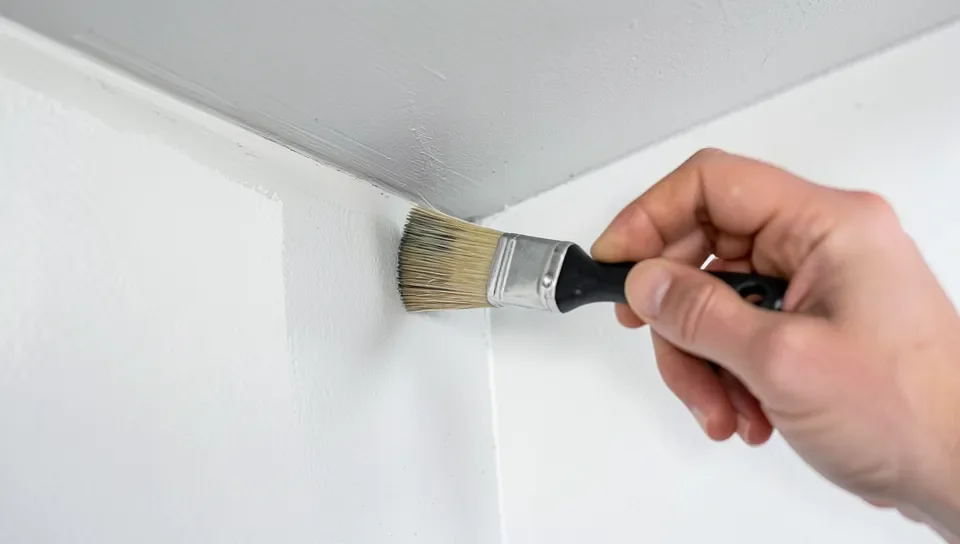
Load the angled brush and wipe off the excess so it doesn’t drip, then draw a steady line about 1/8″ below the ceiling, using the brush’s angled edge as your guide. Work in short sections (2-3 feet at a time) rather than trying to cut in the whole room’s edge in one continuous stroke – a shorter, controlled stroke stays straighter than a long one. Most professional painters skip tape entirely and cut in freehand because it’s faster once practiced, but it does take real repetition to get a straight line without a guide.
Rolling Without Splatter
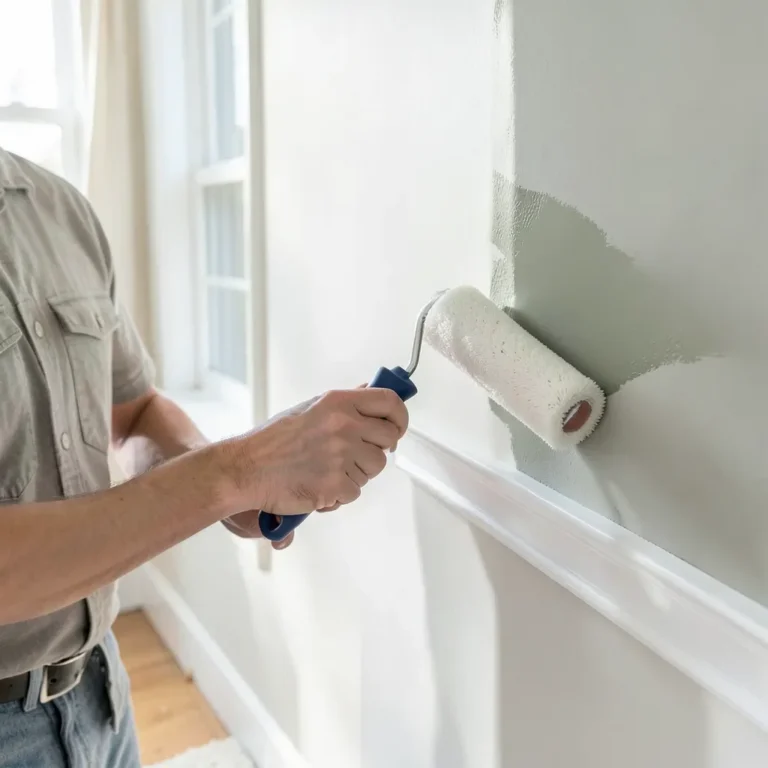
Start rolling from the middle of the wall, not from the ceiling edge – work the roller toward the top only after it’s already partly unloaded of paint, since a fully-loaded roller is what causes splatter when it first touches the wall. Keep the roller a few inches below the cut-in line and let the cut-in edge blend into the rolled area while both are still wet, which avoids a visible line where the two techniques meet.
Fixing Paint That Got on the Ceiling
If it’s still wet, wipe it immediately with a damp cloth – fresh latex paint comes off cleanly with water. Dried paint needs a gentle approach: a soft sponge with warm soapy water for a small spot, or careful scraping with a plastic scraper for a thicker spot, working slowly to avoid scratching the ceiling texture. If the spot is stubborn or noticeable, a small touch-up with ceiling-matched paint and a small brush, blended with light strokes, usually looks better than aggressive scrubbing.
Conclusion
Both painter’s tape (sealed firmly at the edge) and freehand cutting in with an angled brush keep paint off the ceiling – tape is more forgiving for a first-timer, cutting in is faster once you’ve built the skill. Either way, work in short controlled sections, keep a damp cloth on hand for immediate cleanup, and remove tape while the paint is still slightly tacky rather than fully cured.
Frequently Asked Questions
How do I avoid painting the ceiling?
Use painter’s tape sealed firmly along the ceiling edge, or cut in freehand with a small angled brush and a steady hand. Both work; tape is more forgiving for beginners.
What’s the best tape for ceiling edges?
A dedicated painter’s tape with an edge-seal technology (like ScotchBlue Sharp Lines) reduces paint bleed at the seam better than generic masking tape. Pressing the tape’s edge down firmly matters as much as the tape itself.
Can I use a paint guard for ceilings?
Yes – a handheld paint shield/guard held firmly at the wall-ceiling edge blocks brush or roller contact with the ceiling. It works well for touch-ups but is slower than taping or cutting in for a full room.
Is an angled brush necessary for cutting in?
Not strictly necessary, but strongly recommended – the angled bristle edge gives much better control at corners and the wall-ceiling line than a straight brush, making a clean freehand line realistically achievable.
Sponsored / affiliate links. As an Amazon Associate I earn from qualifying purchases. I may earn additional commission from eligible campaigns.