How to Remove Spray Paint from Concrete With Ease
Household items genuinely work on spray paint on concrete — but mostly on paint that’s fresh or just a light overspray dusting. Once spray paint has fully cured into concrete’s porous surface (typically within a few days to a couple of weeks), dish soap, vinegar, and baking soda usually only fade it rather than fully remove it. For cured or old spray paint, you’ll likely need a dedicated paint/graffiti remover, acetone, a pressure washer, or as a last resort, light surface sanding. Here’s an honest breakdown of what actually works for each situation.
Step 1: Figure Out What You’re Dealing With
Best Cured Paint Remover
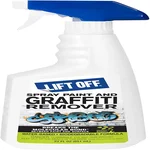 |
Motsenbocker’s Lift Off Spray Paint & Graffiti Remover, 22 fl oz – $15.42 A water-based formula made specifically for spray paint and graffiti on concrete and other hard surfaces — a real step up from soap and water on cured paint without moving straight to acetone.
|
Two things determine which method will actually work: how old the paint is, and whether it’s oil-based or water-based.
- Fresh (hours to a day or two old): household methods below have a real chance of fully removing it.
- Cured (several days or older): household methods will likely only lighten it. Plan on a dedicated remover, acetone, or pressure washing.
- Oil-based spray paint (enamel): thicker, glossier, stronger solvent smell, dries slower, and bonds to concrete more aggressively — harder to remove regardless of age.
- Water-based (acrylic/latex) spray paint: dries faster, less shiny, and comes off more easily with soap and water while still relatively fresh.
Before You Start
Gather a bucket, stiff-bristle scrub brush, rags, dish soap, baking soda, and white vinegar — all common household items. Wear rubber gloves and old clothes, and work in a ventilated outdoor space (which an exterior driveway or patio already is). If you move on to a chemical remover or acetone later, add safety glasses and, ideally, a respirator rated for organic vapors — don’t rely on a basic dust mask for solvent fumes. Always test any method on a small, inconspicuous corner first, especially on colored, stamped, or sealed decorative concrete, since some solvents can dull a sealer’s finish or lighten dyed concrete.
For Fresh Paint: Household Methods
Dish Soap and Water
Mix warm water with a few drops of dish soap until it’s sudsy, pour it over the stain, and let it sit for several minutes to soften the paint. Scrub with a stiff-bristle brush, applying steady pressure, then rinse with clean water. This works best on water-based paint that’s still fresh — repeat if there’s any residue left, but don’t expect it to touch fully cured paint.
Baking Soda Paste
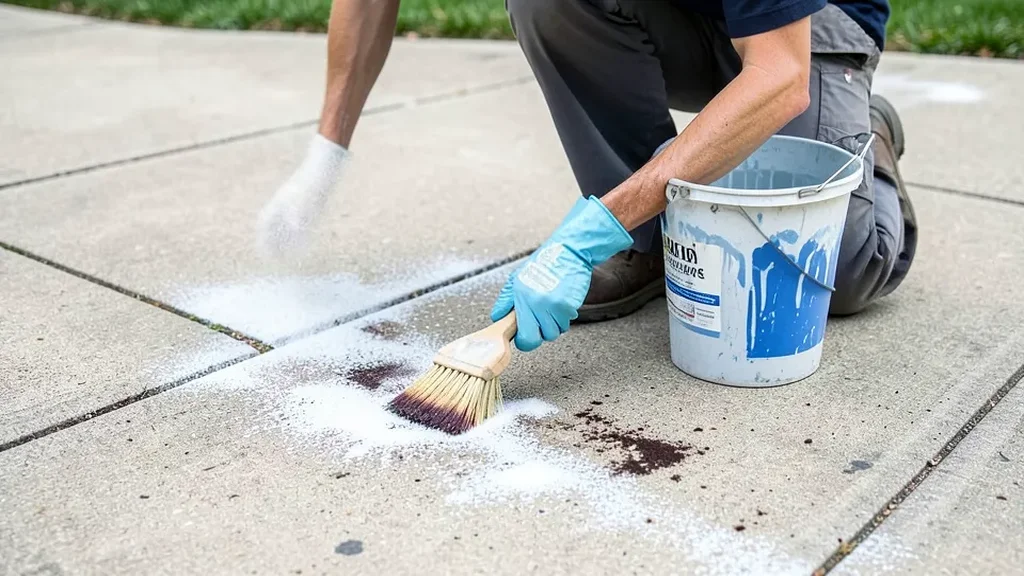
Mix baking soda with a small amount of water into a thick paste, spread it over the stain, and let it sit for several minutes before scrubbing. Baking soda works as a mild abrasive, which helps it lift paint that soap alone can’t, without scratching concrete the way a harsher abrasive might.
White Vinegar
Apply undiluted white vinegar directly to the stain, let it sit 15-20 minutes to help soften the paint’s bond, then scrub. Vinegar is mild and won’t damage most concrete, but it’s also the weakest of the household options — best paired with baking soda or soap rather than used alone on anything beyond a light stain.
For Cured or Stubborn Paint: Stronger Methods
Dedicated Paint and Graffiti Remover
A purpose-made remover is the most reliable option for cured spray paint without resorting to harsh solvents. Apply it per the label, let it dwell the recommended time (this is what actually breaks the paint’s bond — don’t rush it), then scrub and rinse. Repeat for stubborn spots rather than reaching for a stronger chemical right away.
Acetone (Handle With Real Care)
Acetone dissolves many cured paints effectively, but it’s flammable and produces strong fumes — keep it away from any open flame or ignition source (including a nearby grill or a running heat gun), work outdoors, and wear gloves since it’s hard on skin. Apply a small amount to a cloth, rub the stained area, and scrub gently as the paint softens. Rinse thoroughly with water afterward. Skip this option entirely on colored, dyed, or sealed decorative concrete, since acetone can strip sealers and lighten dye.
Pressure Washing
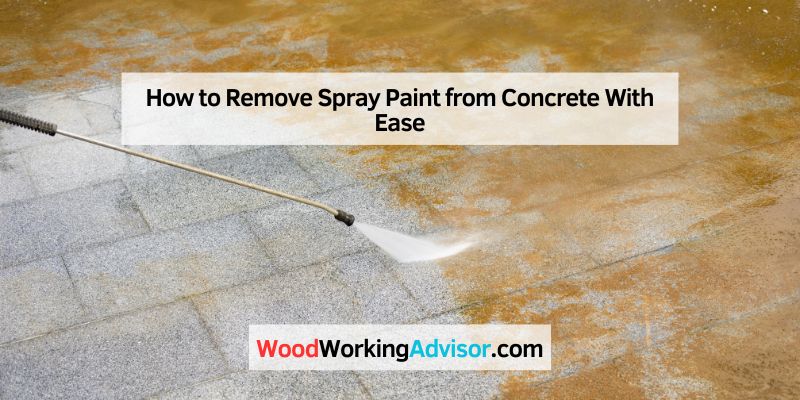
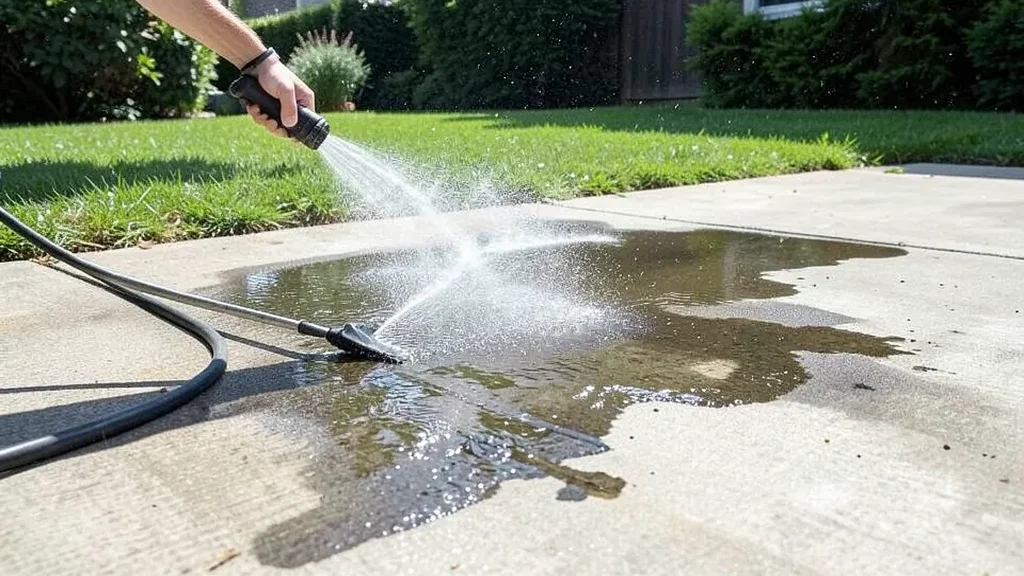
A pressure washer rated at least 2,000-3,000 PSI with a narrow, adjustable nozzle can strip paint that scrubbing alone can’t reach, especially combined with a chemical remover applied first. Start spraying from a couple feet away and move closer gradually rather than blasting from close range immediately — too much pressure at close range can etch or pit the concrete surface itself, which is a real and permanent risk on softer or older concrete. Wear eye and ear protection, since pressure washers are loud and can kick up debris.
Sanding or Grinding (Last Resort)
For small, isolated, stubborn spots where chemicals haven’t worked, coarse-grit sandpaper or a handheld grinder can physically remove the top layer of concrete along with the paint. This is a genuinely last-resort option — it will visibly change the surface texture and color of that spot compared to the surrounding concrete, so it’s better suited to a hidden corner than the center of a visible patio. Wear a dust mask rated for silica dust, since grinding concrete produces fine particulate that’s harmful to breathe.
Heat Gun (For Small Areas)
A heat gun can soften cured spray paint enough to scrape it off with a stiff plastic or metal scraper. Keep the heat gun moving constantly rather than holding it in one spot, work in small sections, and let the softened paint cool slightly before scraping for cleaner removal. This works best on small, isolated spots rather than large stained areas, where the household or chemical methods above are faster.
A Word on Mixing Chemicals
Don’t combine cleaning products to try to boost their effectiveness — mixing bleach-based products with ammonia or with acid-based cleaners produces genuinely dangerous toxic gas, and combining random household and commercial chemicals in general is a real, if less publicized, way people get hurt during a routine cleaning project. Use one product at a time, rinse thoroughly between different methods, and never assume “if a little works, more (or a mix) works better.”
Preventing Future Stains
A quality concrete sealer, reapplied every couple of years, makes the surface less porous, so future spills and overspray sit on top rather than soaking in — a genuinely useful head start if paint does land on the surface again. Beyond that, sweep regularly, address small cracks before they widen and trap dirt and stains, and clean spills as soon as you notice them; the difference between a fresh spill and one that’s had days to cure is often the difference between a five-minute cleanup and one of the stronger methods above.
Frequently Asked Questions
Can vinegar remove spray paint from concrete?
Vinegar can help with fresh, light spray paint stains — apply it undiluted, let it sit 15-20 minutes, then scrub. It’s mild enough to be low-risk for the concrete, but it’s also the weakest option here and generally won’t fully remove paint that’s already cured.
Does baking soda remove spray paint from concrete?
Yes, for fresh paint. Mix it with water into a paste, apply to the stain, let it sit, then scrub with a brush. The mild abrasive action helps lift paint that soap alone can’t, though it has real limits on paint that’s fully cured.
Can dish soap and water remove spray paint?
Dish soap and warm water work well on fresh, water-based spray paint stains. Apply, scrub, and rinse thoroughly. It’s the gentlest option here and best for small, recent stains rather than cured or oil-based paint.
Is acetone safe to use on concrete?
Acetone works on many cured paints but needs real caution: it’s flammable, needs good ventilation, and can strip sealers or lighten dyed/colored concrete. Test an inconspicuous spot first, and never use it near an open flame or another heat source.
Bottom Line
Household items are worth trying first, and they genuinely work on fresh spray paint. For paint that’s had time to cure, be realistic: a dedicated remover, careful acetone use, or a pressure washer are the methods that actually finish the job, and light sanding is the last resort for a stubborn small spot. Whichever method you use, test it first and never mix cleaning chemicals together.
Sponsored / affiliate links. As an Amazon Associate I earn from qualifying purchases. I may earn additional commission from eligible campaigns.