How to Remove Epoxy From Wood: Cured vs Uncured Methods
The method depends entirely on whether the epoxy is still uncured (soft/tacky) or fully cured (hard). Uncured epoxy wipes up with a solvent like acetone or isopropyl alcohol. Fully cured epoxy is a cross-linked thermoset plastic that solvents barely touch — removing it means heat and mechanical scraping, or sanding, not dissolving it away.
The Correction Most Guides Get Wrong: Solvents Don’t Dissolve Cured Epoxy
This is worth being precise about, because it’s the single most repeated inaccuracy in epoxy-removal advice. When epoxy resin cures, the resin and hardener cross-link into a rigid polymer network — a genuinely different chemical structure than the liquid components you mixed. That cross-linked structure is what makes cured epoxy solvent-resistant by design; it’s the same property that makes epoxy useful as a coating in the first place. Acetone, alcohol, and paint thinner can soften and help wipe up epoxy that’s still uncured or only partially kicked, but once it’s fully hard, wiping it with acetone does close to nothing. If you’re dealing with a fresh spill that’s still soft or tacky, reach for solvent. If it’s been sitting for hours or days and is rock hard, skip straight to heat and mechanical removal.
Removing Cured Epoxy: Heat + Scrape
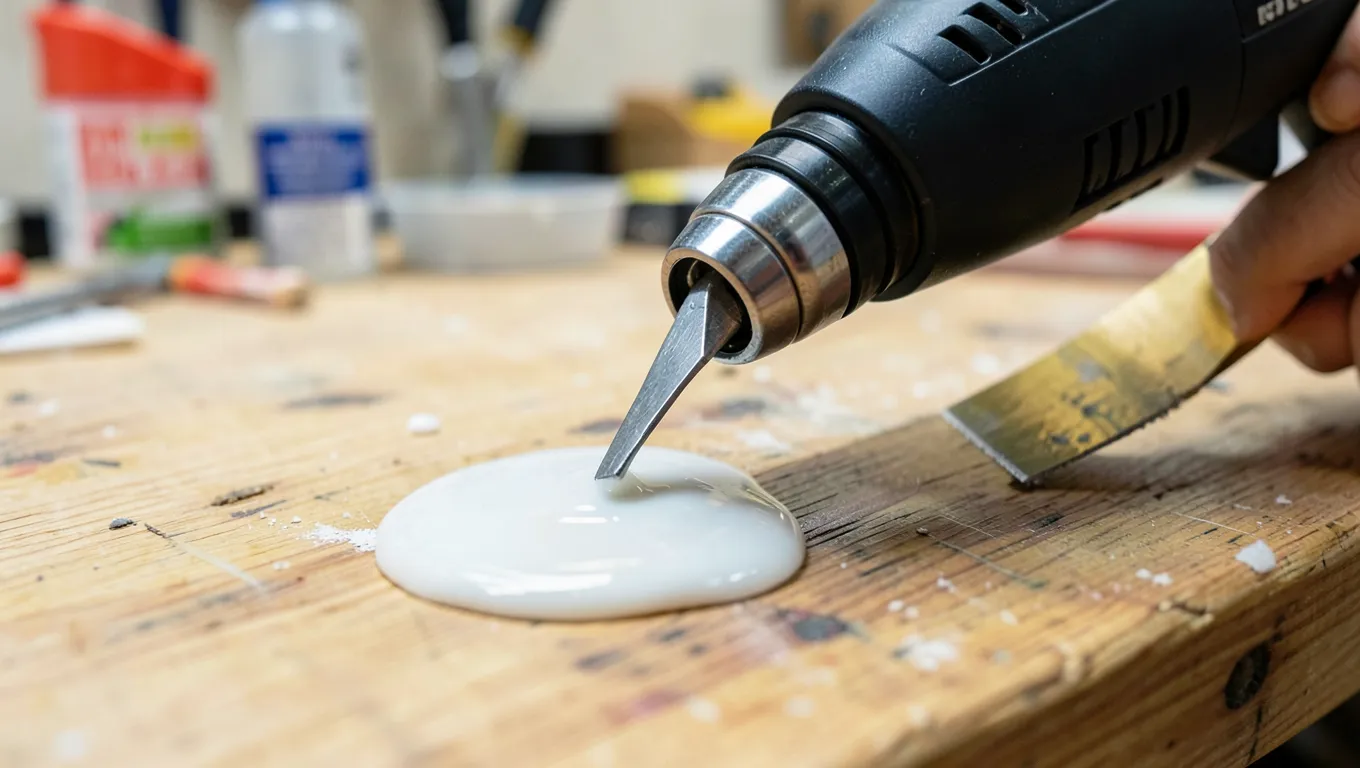
A heat gun on low-to-medium heat, held a few inches away and kept constantly moving, softens cured epoxy enough to lift it with a plastic or metal putty knife. Metal scrapers work but risk gouging wood if you press too hard or hold the corner at an angle; a plastic scraper is more forgiving on softer woods. Work in small sections, reheating as the epoxy re-hardens, and clean the blade often since softened epoxy gums it up fast.
Get the Right Heat Gun for This Job
Best Heat Gun for Epoxy Removal
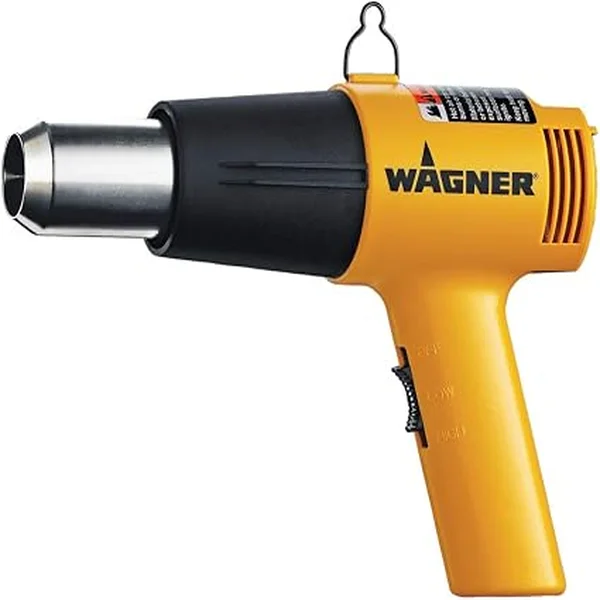 |
Wagner Spraytech HT1000 Dual-Temperature Heat Gun – $24.99 Two heat settings (750°F/1000°F) give you enough control to soften epoxy without scorching the wood underneath — a fixed-temp gun makes that balance harder.
|
Sanding: Best for Thin Residue and Final Cleanup
Start with 80-grit to cut through the bulk of a thin epoxy film, move to 120-grit to level the surface, then finish with 220-grit before refinishing. Sand with the grain, use light, even pressure, and check often — epoxy sands differently than wood and it’s easy to keep going past the point where it’s actually gone and start removing good wood underneath. Sanding is genuinely the best option for a thin residual film after heat-scraping has removed the bulk of a spill, rather than trying to sand off a thick blob from scratch.
Removing Uncured or Partially Cured Epoxy
If you catch a spill while it’s still wet or tacky, this is where solvents genuinely earn their reputation: acetone or isopropyl alcohol on a cloth will dissolve and lift uncured epoxy cleanly, usually without needing heat or scraping at all. Work quickly, use a rag rather than soaking the wood (both solvents can raise wood grain or affect nearby finish), and always test an inconspicuous spot first if the surrounding wood is finished or stained.
What Doesn’t Work
Goo Gone and similar citrus-oil adhesive removers are formulated for sticker residue and general adhesives, not epoxy — they won’t meaningfully soften cured epoxy resin. Vinegar has no real effect on cured epoxy either. If a product isn’t specifically marketed as an epoxy remover or a genuine paint/varnish stripper, assume it won’t touch a hardened epoxy spot and don’t waste time testing it before moving to heat or mechanical removal.
After the Epoxy Is Gone
Wipe the area with a clean cloth and, if solvent was used, let it fully evaporate before doing anything else. Light sanding with fine-grit paper smooths any remaining unevenness and gives a clean surface for refinishing. If you’re staining afterward, apply a wood conditioner first — the area where epoxy sat can absorb stain slightly differently than surrounding wood, and a conditioner evens that out.
Preventing It Next Time
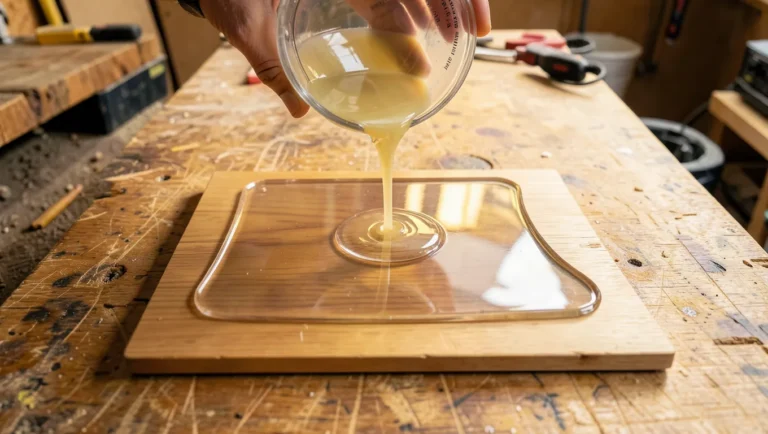
Mask off adjacent areas with painter’s tape before pouring or applying epoxy, and keep a damp (not wet) rag nearby to catch drips immediately while they’re still workable with a plain wipe. If you’re using epoxy for wood rot repair, mix only what you need for the section you’re working on — excess epoxy that skins over before you use it is one of the most common sources of accidental spills and drips on surrounding wood.
Frequently Asked Questions
How do you remove cured epoxy from wood?
Use a heat gun on low-to-medium heat to soften it, then scrape with a plastic or metal putty knife. Sand any remaining thin residue. Solvents have little effect on fully cured epoxy.
What dissolves epoxy?
Acetone and isopropyl alcohol dissolve uncured or still-tacky epoxy effectively. Once epoxy is fully cured into its cross-linked, hardened state, these solvents no longer dissolve it – heat and mechanical removal are needed instead.
Can epoxy be sanded off wood?
Yes, especially thin residue after heat-scraping has removed the bulk of a spill. Use progressively finer grits (80 to 120 to 220) and sand with the grain to avoid damaging the wood underneath.
Will Goo Gone remove epoxy resin?
No. Goo Gone is formulated for adhesive and sticker residue, not epoxy, and it won’t meaningfully soften cured epoxy. Use heat and scraping, or a solvent only if the epoxy is still uncured.
Bottom Line
Check whether the epoxy is still soft or fully hardened before you pick a method — solvents work on uncured epoxy but do almost nothing to fully cured resin, which needs heat and scraping or careful sanding instead.
Sponsored / affiliate links. As an Amazon Associate I earn from qualifying purchases. I may earn additional commission from eligible campaigns.