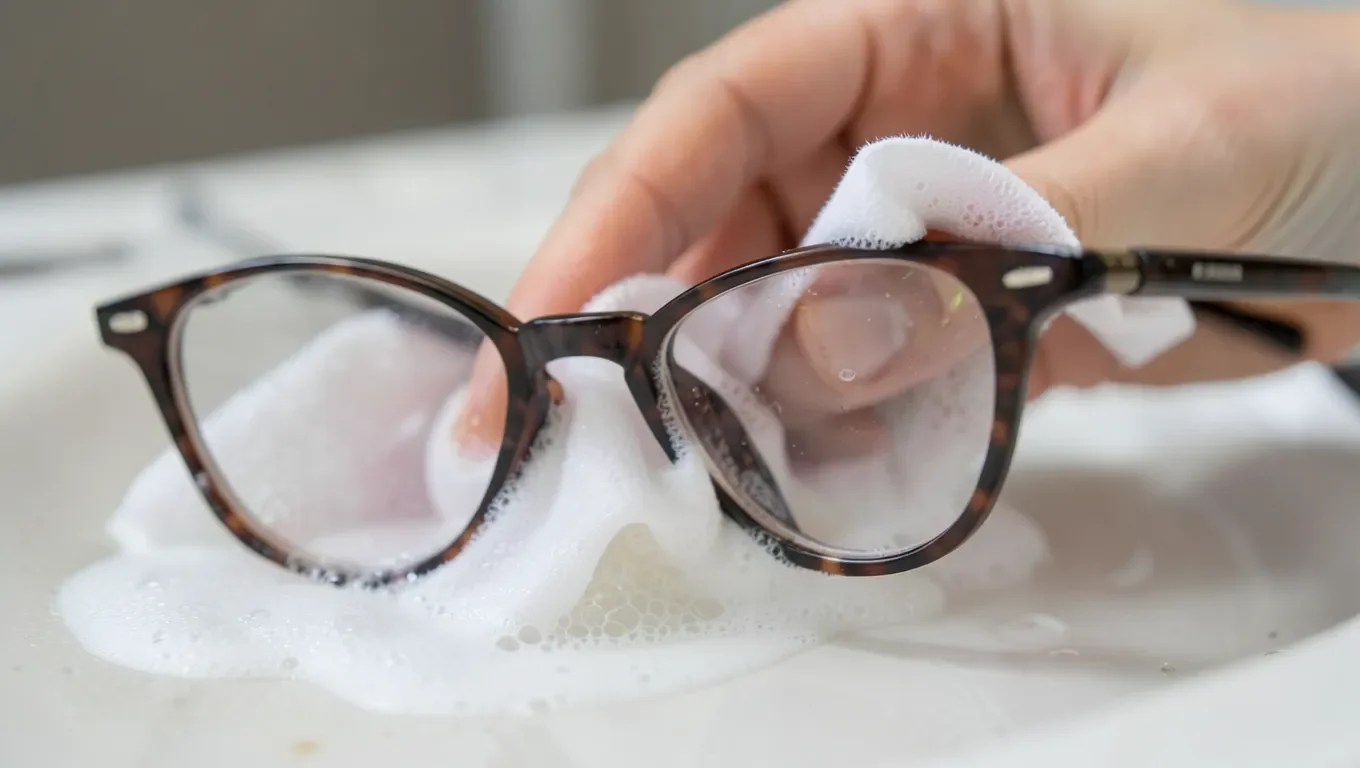
How to Remove Super Glue from Plastic Glasses Lenses: Expert Tips
Don’t reach for acetone or nail polish remover — it’s the most commonly recommended “fix” online, but it will cloud, craze, or even melt most plastic lens materials (CR-39, polycarbonate, Trivex) and strips anti-reflective or anti-scratch coatings almost instantly. The safe approach is warm soapy water to soften the glue, then gentle mechanical removal with a soft cloth, cotton swab, or plastic edge — never a chemical solvent strong enough to also attack the plastic itself.
This guide walks through the safe removal steps, what to avoid, and when to just take the glasses to an optician instead of risking the lens.
Why Acetone Is The Wrong Answer For Plastic Lenses
Acetone is a strong solvent that dissolves cyanoacrylate (super glue) effectively — which is exactly why it’s the top search result for glue removal, and exactly why it’s dangerous on eyewear. Plastic lens materials aren’t chemically inert to acetone the way glass is: it can cloud or craze the lens surface, and it reliably strips anti-reflective (AR) and anti-scratch coatings on contact, sometimes within seconds. There’s no reliable way to tell in advance which lenses will survive it, so the safest rule is simply not to use it on plastic lenses at all — acetone is fine on glass lenses and on metal or many plastic frame materials, just not on the plastic lens itself.
Best For Finishing Touches After Glue Removal
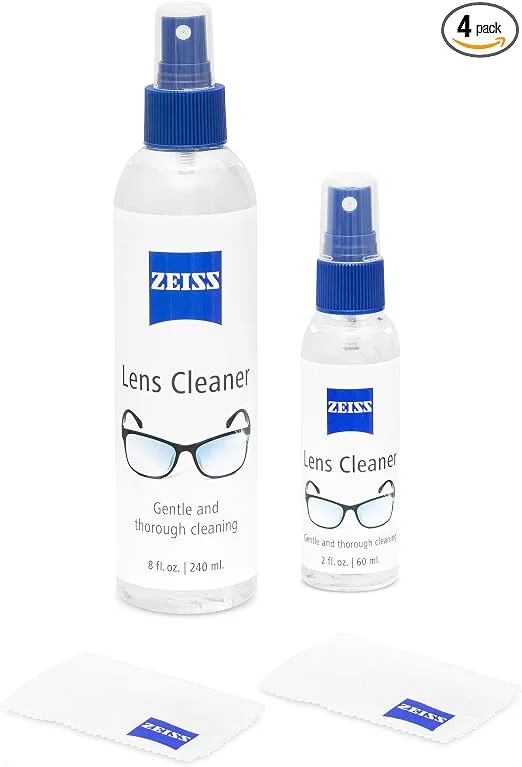 |
ZEISS Lens Cleaning Kit, 8oz + 2oz Spray with Cloths – $10.99 Formulated safe for coated plastic lenses — use it for the final clean and polish once the glue itself is gone.
|
Essential Precautions
Handle uncured super glue with gloves and work in a ventilated area — it bonds skin fast and the fumes can irritate eyes at close range. Test any cleaning method on a small, less-visible edge of the lens first, since even “safe” methods can occasionally react badly with certain coatings. Use a soft cloth or cotton swab, never a paper towel or abrasive material, and keep glue away from children and pets during storage.
Gathering Supplies
You’ll need: a bowl of warm (not hot) water with a few drops of dish soap, a soft microfiber cloth, cotton swabs, and optionally a plastic scraper or old gift card for stubborn spots. Isopropyl (rubbing) alcohol can help loosen glue on frames or coating-free lenses but should still be spot-tested first, since it can affect some coated lenses too.
Safe Removal Steps
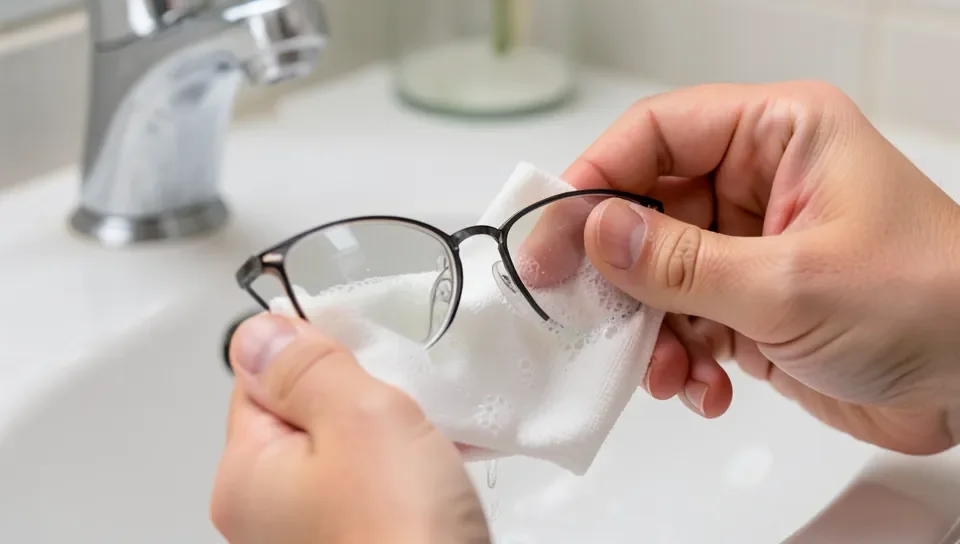
- Soak first: submerge the lens area in warm soapy water for 5-10 minutes to soften the glue. Hot water can warp some plastic frames, so keep it warm, not hot.
- Rub gently: use a fingertip or soft cloth in small circles. Cyanoacrylate softened by soaking often lifts with light pressure alone.
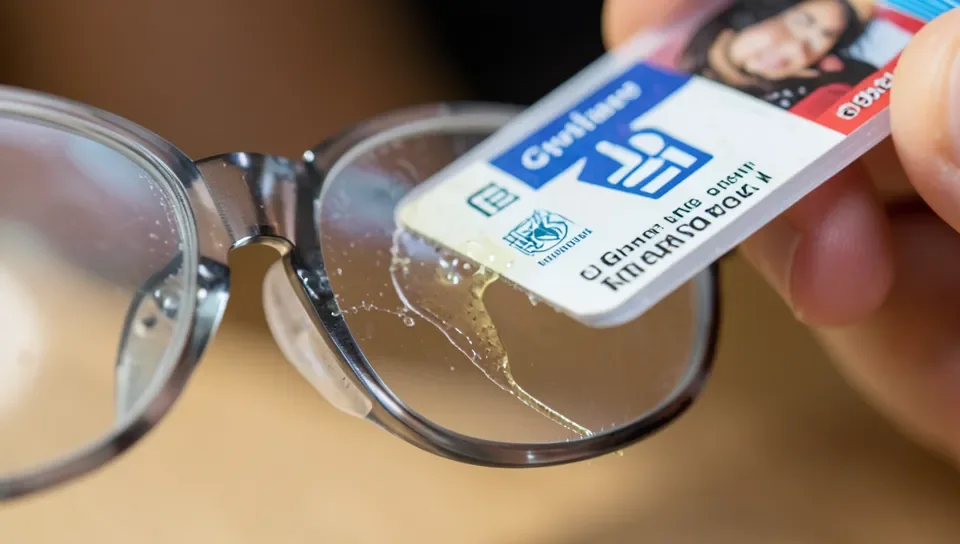
- Scrape carefully if needed: for glue that won’t budge, use the edge of a plastic card or a plastic scraper at a shallow angle — never a metal blade or razor, which will scratch the lens.
- Re-soak and repeat: stubborn spots usually need 2-3 soak-and-scrape cycles rather than more aggressive force in one pass.
- Finish with a proper lens cleaner: once the glue is gone, a coating-safe spray and microfiber cloth removes any residue and restores clarity.
Gentle Scraping Technique
An old plastic gift card or a dedicated plastic scraper is the right tool once the glue has softened from soaking — it’s rigid enough to lift dried glue but soft enough not to gouge the lens. Hold it at a shallow angle, apply light pressure, and work in small sections rather than one long scrape. Stop immediately if you notice any cloudiness or scratching and switch back to soaking rather than pushing harder.
When To See An Optician Instead
If the glue has already hardened into a thick blob, if repeated soaking isn’t loosening it, or if you notice any clouding, hazing, or coating damage during your attempts, stop and take the glasses to an optician rather than continuing to work at it. Lens coatings and some plastic materials are not something a home fix can restore once damaged, and a professional has tools (and, in some cases, the ability to simply order a replacement lens) that don’t risk further harm.
Preventive Measures
Keep super glue on a stable, flat surface away from where glasses are set down, and make sure the cap is sealed tight after every use — a surprising number of glue-on-lens incidents happen from a glasses case or a nearby surface, not direct application. Wear gloves during any project involving super glue, work over a surface you don’t mind getting glue on, and wipe up any drips immediately before they can spread or get bumped.
Frequently Asked Questions
How Do You Remove Dried Super Glue From Plastic Lenses?
Soak the lens in warm soapy water for several minutes to soften the glue, then gently rub or scrape it off with a soft cloth or plastic edge. Avoid acetone, which can cloud plastic lenses and strip coatings.
Does Rubbing Alcohol Remove Super Glue From Glasses?
Rubbing alcohol can help loosen super glue on frames, but test it on a small, hidden area of coated lenses first since it can affect some anti-reflective coatings. Warm soapy water is the safer default for the lens itself.
Why Shouldn’t You Use Acetone On Plastic Glasses Lenses?
Acetone can cloud or craze most plastic lens materials and reliably strips anti-reflective and anti-scratch coatings, often within seconds of contact. It’s safe on glass lenses but not a safe choice for plastic ones.
Can WD-40 Remove Super Glue From Plastic?
WD-40 can loosen super glue on some plastics, but it’s not recommended for eyeglass lenses specifically since it can leave an oily residue that’s hard to fully clean off a coated lens. Stick to warm soapy water for glasses.
Conclusion
Removing super glue from plastic glasses lenses is straightforward with patience: warm soapy water to soften it, gentle mechanical removal with a soft cloth or plastic scraper, and a proper lens cleaner to finish. Skip the acetone entirely — it’s the fastest way to trade a glue spot for a permanently clouded or coating-stripped lens.
Sponsored / affiliate links. As an Amazon Associate I earn from qualifying purchases. I may earn additional commission from eligible campaigns.