5 Best Wood Glues for Small Repairs (2026): we compared
For small wood repairs, use fast-set glue when the parts can be aligned very quickly, ideally in under a minute. Choose a glue with roughly 5 to 10 minutes of open time when you need to fit clamps, veneer, trim, or awkward parts. Pick the wrong one, and you get glue-starved joints, shifted trim, squeeze-out in the wrong place, or a repair that has to come apart and be done again. This guide breaks down fast-set cyanoacrylate, PVA, and hide glue by real repair time, plus the jobs each one handles best.
Quick picks for small repairs
Best fast-set PVA for quick wood-to-wood fixes: Titebond Original Wood Glue is a sensible default for clean wood joints when you still have a minute or two to align the parts.
Best CA glue for tiny chips and hairline cracks: a fast cyanoacrylate works when the repair area is tiny, the fit is exact, and you need grab almost immediately.
Best epoxy for gaps, damage, and odd shapes: a two-part epoxy is the better fit when the wood is missing, the break is irregular, or the joint needs material rebuilt as well as bonded.
Quick comparison
| Product | Badge | Best for | Price | ||
|---|---|---|---|---|---|
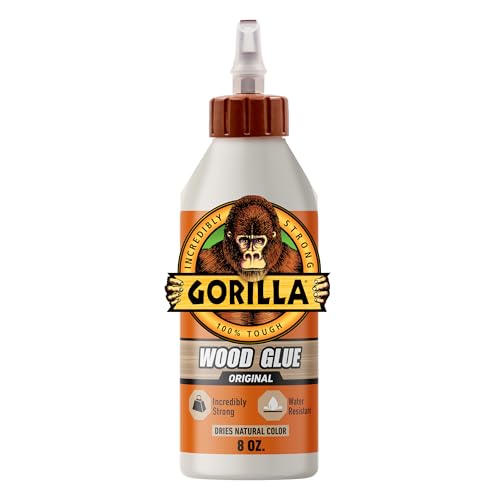 |
Gorilla Wood Glue, Fast Clamp, Water Resistant PVA, 8 ozGORILLA | Our pick | 20–30 min clamp · 24 hr cure | $4.37
Price as of 26 Sep 2026
|
View |
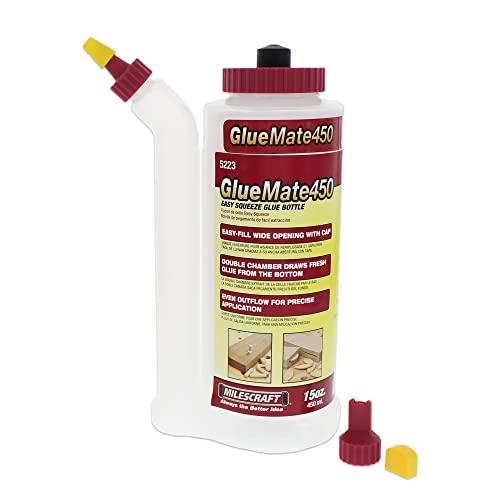 |
Milescraft 5223 Glue Mate 450-15oz. (450ml) Precision WoodMilescraft | Pair with it | 15 oz anti-drip precision dispenser | $6.89
Price as of 26 Sep 2026
|
View |
 |
Titebond Original Wood Glue 5064, Industry Standard forTitebond | Also great | 16 oz aliphatic resin glue | $5.49
Price as of 26 Sep 2026
|
View |
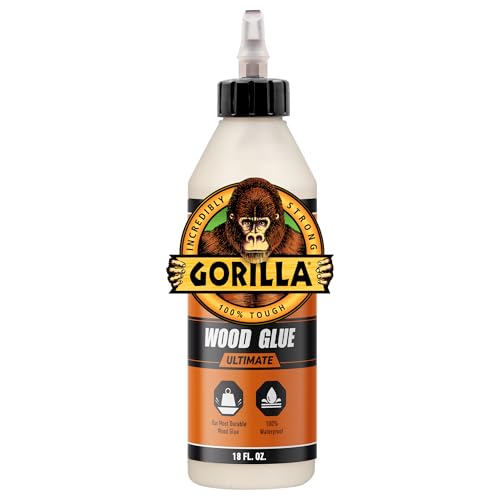 |
Gorilla Ultimate Waterproof Wood Glue, Natural Color, 18 ozGORILLA | Upgrade pick | 100% waterproof · 15 min open time | $11.32
Price as of 26 Sep 2026
|
View |
 |
PC Products PC-Woody Wood Repair Epoxy Paste Kit withPC Products | Also great | Two-part epoxy for missing wood repair | $13.38
Price as of 26 Sep 2026
|
View |
This is the part most buying pages skip. Small repairs fail when the adhesive does not match the alignment window, so the useful comparison is not “strong” versus “stronger,” but how much time the repair actually gives you.
Open time, clamp time, set time, and full cure are different milestones. Mix them up, and you can lose a trim piece to skinning, lock a joint with squeeze-out, or clamp a chair too soon and weaken the bond.
How we chose
The picks below are based on repair size, joint type, and how much alignment time the job really needs. That matters more than brand hype for tiny furniture fixes.
We also weighed clamp time against cure time, because those are not the same thing. A glue that grabs fast may still need a longer clamp window than its label implies, especially in cool air or damp conditions.
Finally, we favored adhesives that fit common small-repair problems: clean wood-to-wood joints, tiny chips, loose chair parts, vertical touch-ups, and damaged spots that need fill as well as bond.
For the common PVA range, Titebond wood glues are recommended for gluing wood, and one retailer calls Titebond the number one wood glue. That does not make it the right choice for every repair, but it does make it a useful baseline for wood-to-wood work.
PVA wood glue: best for most wood-to-wood repairs
PVA is the right starting point for clean wood-to-wood repairs when the pieces fit well and you have a little time to align them. It is the common choice for furniture repair because it bonds wood cleanly and gives enough open time for normal clamping work.
When fast-set PVA helps
Fast-set PVA helps when the joint is already fitted and the clamp plan is simple. It is useful for small trim returns, edge repairs, and loose parts that can be seated quickly without a long dry fit.
The tradeoff is less room for correction. Once a fast PVA starts to grab, the joint can skin over or lock before the parts are fully seated, especially on a tiny repair where there is little glue mass to keep the surface wet.
When longer open time matters
Longer open time matters when the repair takes more than a quick press together. Veneer, molding, and awkward little assemblies need time for positioning, clamp adjustment, and cleanup before the glue starts to close down on you.
For those jobs, a PVA with more open time is safer than a fast grab formula. It lowers the chance of misalignment and makes it easier to avoid glue-starved joints.
Loose chair joints and trim fixes
For a loose chair joint, PVA is often the cleaner choice if the joint still fits and the surfaces are sound. Epoxy becomes the better option only when the tenon, mortise, or socket has been chewed up and no longer meets cleanly.
For trim fixes, PVA is usually enough when the molding is intact and the back side seats flat. If the part must be nudged into place along a wall or casing, choose more open time rather than a quick grab formula.
Cyanoacrylate (CA) glue: best for tiny, precise repairs
CA glue is the better fit for very small repairs that need almost no repositioning time. It works well on hairline cracks, tiny chips, and clean break lines where the parts can be held in place immediately.
Hairline cracks and chipped edges
CA is useful when the repair line is narrow and the pieces meet well. It can wick into a crack and bond quickly, which is why it works for chipped corners, tiny slivers, and small edge damage on furniture or trim.
It is a poor choice when the break is loose, gappy, or needs real alignment time. The glue sets too fast for that, and a rushed repair often ends with misalignment or a brittle-looking glue line.
When to use CA activator
Use CA activator when the repair needs faster cure, the room is dry, or the glue layer is thick enough to slow the reaction. The activator helps the bond close down quickly and is sold in a 150 ml aerosol can.
That speed is useful on tiny fixes, but it also shortens your margin for error. Once the activator hits, the parts need to be where they belong.
Where CA fails on larger joints
CA is not the right answer for a loose chair rung, a split apron, or any joint that needs working time and clamping pressure. It does not give enough time to square the parts, and it is not meant to rebuild missing material.
For larger joints, CA can become a trap: it grabs before alignment is finished, then leaves you with a repair that looks tight but lacks a proper bond area.
Epoxy adhesive: best for gaps and damaged wood
Epoxy is the better choice when the repair is missing material, the break is irregular, or the joint needs a filler as much as an adhesive. Two-part epoxy also helps when the fit is poor and you need the glue body to bridge small voids.
When two-part epoxy beats PVA
Epoxy beats PVA when the wood no longer fits cleanly. Broken corners, stripped screw holes, rotten edges, and odd fractures are all better candidates for epoxy because it can stay where you put it and rebuild the damaged area.
J-B Weld ClearWeld is a fast setting, multi-purpose two-component epoxy adhesive. It is effective on wood and metal among other surfaces, and the 14 ml version is described as hardening in 5 minutes.
5-minute formulas versus slower epoxies
Five-minute epoxy is good when you need a quick grab on a small damaged spot, but speed cuts working time. That makes it less forgiving on repairs that need shaping or careful placement.
Slower epoxies give more open time for positioning and cleanup. They are often the safer choice when the repair has irregular edges or when the part needs to be packed in and tooled before it sets.
Using J-B Weld KwikWood for holes and rebuilds
J-B Weld KwikWood is a premium epoxy sealer for easy wood repairs. It suits exterior and interior use, and it is machinable after 60 minutes, which makes it practical for filling holes, rebuilding corners, and shaping damaged areas after the initial set.
The drawback is that it is not a simple wood-to-wood joint glue. It is a repair material first, so it belongs where wood is missing, not where two clean mating faces already exist.
How to choose by repair timeline
Choose by the time you actually have to position the parts, not by the label’s strength claim. If the joint can be aligned almost instantly, CA or fast PVA can work. If the repair needs real setup time, move toward PVA with longer open time or epoxy.
Under 60 seconds
If you have under 60 seconds, CA is often the best fit for a tiny chip, crack, or broken sliver. It is fast enough for repairs where the parts can be pressed into place without clamp gymnastics.
Under 5 minutes
If you have under 5 minutes, a fast PVA or 5-minute epoxy can work, depending on whether the repair is clean wood-to-wood or damaged and irregular. This is the window where loose trim, small chair parts, and minor edge damage get decided by fit, not hype.
Under 20 minutes
If you have under 20 minutes, choose a PVA with more open time or a slower epoxy. That extra time helps when clamps are awkward, the part is vertical, or the repair needs cleanup before final squeeze-out control.
Repair timeline decision table
The table below maps common small-repair jobs to the adhesive type that fits the timeline best. The failure risk column matters as much as the glue choice, because most bad repairs fail from rushed alignment, not from weak chemistry.
| Small repair scenario | Ideal adhesive type | Working time | Clamp time | Main failure risk |
|---|---|---|---|---|
| Tight furniture seam or edge split | PVA wood glue | 5 to 10 minutes | 20 to 30 minutes for fast-set PVA; longer for cooler or damp conditions | Glue-starved joint if clamped too late |
| Small trim or molding touch-up | PVA with longer open time | 10 to 20 minutes | At least long enough to hold the part still until grab | Misalignment while setting |
| Vertical repair on a tiny chip | CA glue with activator | Under 1 minute | Minimal, then hold until set | Bond locks before the piece is square |
| Loose chair joint with clean mating faces | PVA wood glue | 5 to 15 minutes | Long enough to maintain pressure while the joint grabs | Joint shifts if rushed |
| Missing corner, hole, or damaged edge | Epoxy or epoxy putty | 5 to 20 minutes depending on formula | Varies by chemistry; many need support until initial set | Void remains if the fill is underpacked |
| Rebuild of rotted or crushed wood | J-B Weld KwikWood | Short working window before it firms up | Support until it holds shape | Poor shaping if the putty is not packed tightly |
What is the best wood glue for small repairs?
For clean wood-to-wood small repairs, PVA wood glue is usually the best starting point. It fits most furniture repair work, gives enough open time for alignment, and clamps cleanly without the brittleness or speed limits of CA glue. Titebond wood glues are a common PVA option range for that kind of job.
Should I use fast set wood glue or open time for a small repair?
Use fast set only when the parts fit easily and can be aligned almost at once. Choose longer open time when you need to position clamps, adjust a trim piece, or manage awkward angles. The more fiddly the repair, the less sense a fast grab formula makes.
How long does wood glue need to clamp on a small repair?
Clamp time depends on glue chemistry, part fit, and room conditions, so it is not the same as full cure. On small PVA repairs, the clamp period may be short, but the joint still needs pressure long enough to stop movement and let the bond develop. Cold air and humidity can slow that down.
Is PVA or epoxy better for a loose chair joint?
PVA is better when the chair joint still fits cleanly and the parts meet well. Epoxy is better when the joint is worn, crushed, or missing material. A loose chair joint that still has good wood-to-wood contact usually wants PVA, not a filler-heavy adhesive.
When should I choose CA glue for a quick wood repair?
Choose CA glue when the repair is tiny, the fit is exact, and you need almost instant grab. It is useful for chipped corners, hairline cracks, and small slivers, especially when activator can help in low humidity or on a thicker glue layer. It is not the answer for loose or gappy joints.
What glue works best for vertical wood repairs?
For vertical repairs, choose a glue that stays where you put it. Thickened epoxy or epoxy putty is often best for damaged spots, while CA with activator works for tiny chips that need quick lockup. Thin PVA is more likely to run unless the joint is well clamped and fitted.
Does wood glue work on metal or plastic repairs?
Wood glue belongs on wood-to-wood work, not on metal or plastic as a general rule. Epoxy is the better option when the repair must bridge wood to metal, and J-B Weld ClearWeld is described as effective on wood and metal. Plastic is a different case and often needs a plastic-specific adhesive instead.
What is the difference between fast-drying and long-open-time wood glue?
Fast-drying wood glue gives less working time and reaches initial grab sooner, which helps when alignment is simple. Long-open-time glue stays workable longer, which matters for trim, veneer, and awkward parts. The tradeoff is simple: faster grab means less forgiveness, while longer open time gives more room to position the repair.
Which one should you buy
For the best budget choice on clean wood-to-wood repairs, Titebond Original Wood Glue is the practical default. It is a sensible PVA choice when the parts fit well and you want a familiar furniture-repair glue.
For tight alignment windows, buy a CA glue and keep CA activator on hand. That combination is for tiny, precise fixes, not broad joints or loose assemblies.
For damaged or missing wood, choose an epoxy product. J-B Weld KwikWood is a strong fit for filling holes and rebuilding broken areas, while PC Products PC-Woody is another epoxy paste option for missing wood repair, indoor or outdoor use, and high-tack vertical work.
For a more all-around small-repair setup, keep one PVA for clean joints, one CA for tiny chips, and one epoxy for damage and gaps. That three-glue approach covers almost every small repair better than betting on a single bottle.
Sponsored / affiliate links. As an Amazon Associate I earn from qualifying purchases. I may earn additional commission from eligible campaigns.