How to Remove Urine Odor from Wood Floors: The Real Fix
Vinegar and baking soda only mask a fresh urine spill on a wood floor. Once urine has dried, the actual smell comes from uric acid crystals bonded to the wood fibers, and those crystals need an enzymatic cleaner to break down, not just a rinse or a pleasant-smelling cover-up.
Most “clean your wood floor” advice treats urine like any other spill: wipe it up, mop with something acidic, sprinkle baking soda, done. That works for the first hour or two. It does almost nothing once urine has dried into the finish or soaked past it into the wood grain, because the odor isn’t sitting on the surface anymore, it’s a chemical reaction happening inside the wood. This guide covers the actual mechanism behind that smell, the product category that reliably removes it, a real safety warning most cleaning tutorials skip, and an honest answer for when a floor is too far gone for a spray bottle to fix.
Why Urine Odor Behaves Differently Than a Normal Spill
Fresh urine is mostly water, urea, and a small amount of uric acid. As it dries, the water evaporates and the uric acid is left behind as microscopic crystals bonded into whatever it soaked into, including wood fibers and the wood’s finish if the seal has any hairline gaps. Uric acid crystals are not very water-soluble, which is exactly why a quick mop-up doesn’t remove them. Worse, those crystals rehydrate on humid days or when the floor gets mopped again, releasing more odor, which is why an “already cleaned” spot can start smelling again weeks later.
This is also why plain soap and water, most general-purpose cleaners, and air fresheners don’t solve the problem. None of them break the chemical bond holding those crystals in place. They can lift surface residue and mask the smell for a day or two, but the crystals are still there.
Best Enzymatic Cleaner for Wood Floors
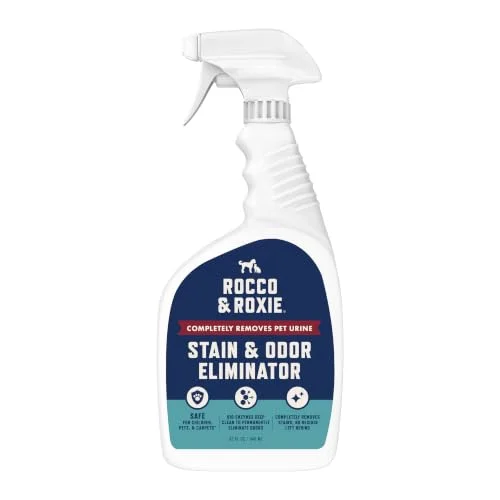 |
Rocco & Roxie Enzyme Stain & Odor Eliminator – $23.92 A chlorine-free enzymatic spray built to break down the actual uric acid crystals holding odor in a wood floor’s grain, not just cover the surface.
|
The Real Fix: Enzymatic Cleaners, Not Vinegar or Baking Soda Alone
Enzymatic cleaners contain live bacterial cultures that produce enzymes specifically suited to digesting uric acid and the proteins in urine. Instead of masking the odor, the enzymes actually consume the crystals, which is why enzymatic cleaners are the standard recommendation from carpet cleaners, vets, and flooring pros for pet accidents, not a home hack. Vinegar and baking soda aren’t useless: vinegar’s acidity can help neutralize a fresh, still-wet spill, and baking soda absorbs some surface moisture and odor. But neither one reaches or breaks down crystals that have already bonded to dried wood fibers.
Step-by-Step: Treating a Urine Stain or Odor on a Wood Floor
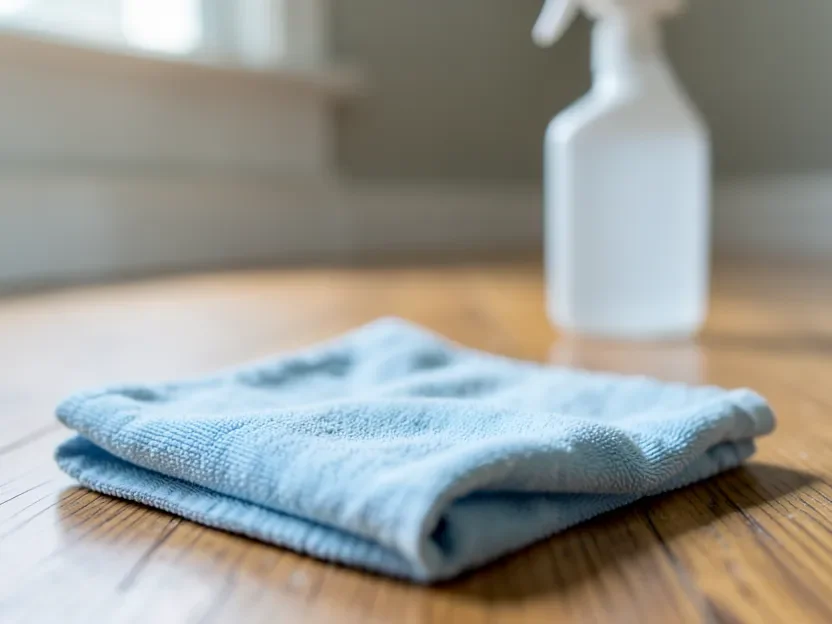
- Blot, don’t scrub. If the spot is still wet, blot with a clean cloth to lift as much liquid as possible. Scrubbing pushes it deeper into the wood grain and any seams between boards.
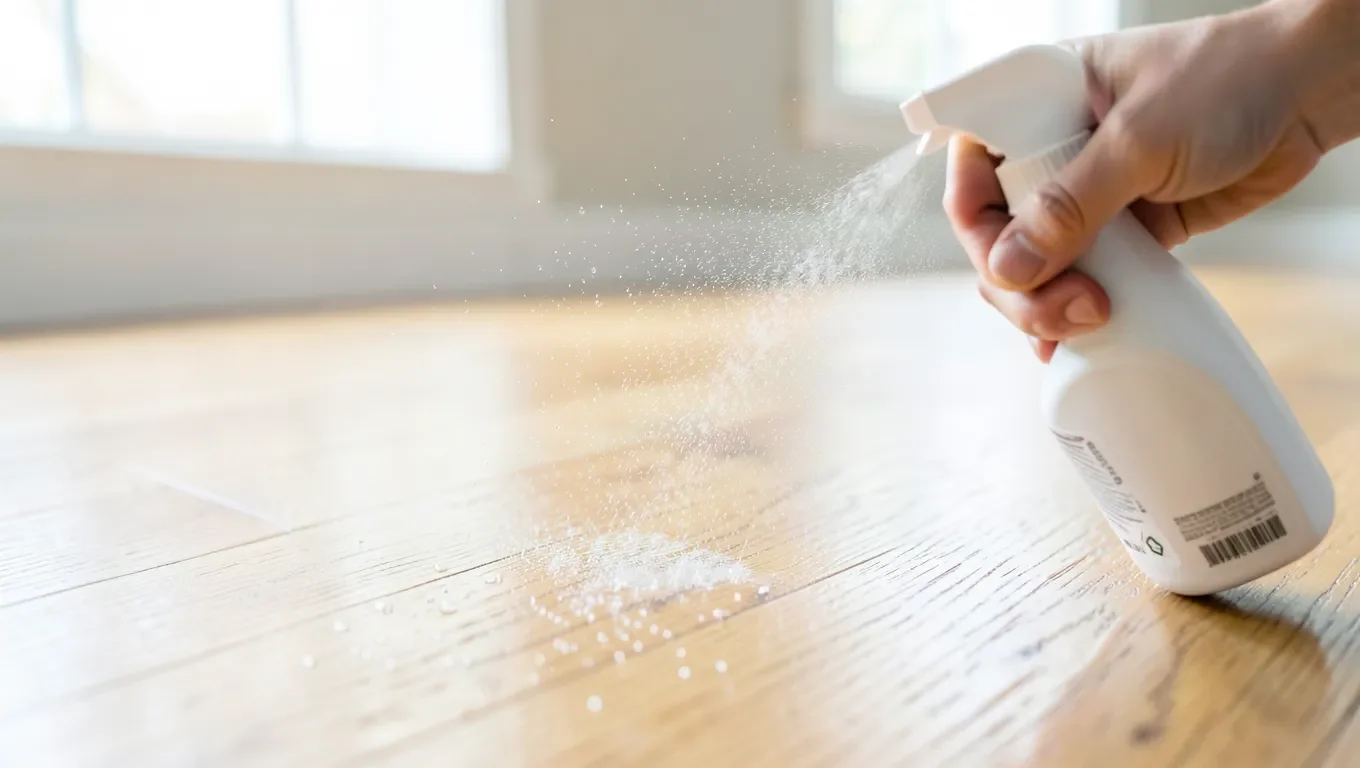
- Saturate the area with an enzymatic cleaner. Follow the label, but as a rule the cleaner needs to soak into the same depth the urine did, not just sit on top. A light mist isn’t enough for a set-in stain.
- Let it dwell. Enzymes need time to work, typically 10 to 15 minutes for a fresh spot and considerably longer, sometimes overnight under a damp towel, for odor that’s been there for weeks or months.
- Blot dry and let the floor air out. Open a window if you can. Don’t seal the room up while the area is still damp, since trapped moisture on wood is its own problem.
- Re-test the smell once fully dry. A dried floor tells you the truth an enzymatic cleaner can’t while it’s still wet. If odor is still there once dry, repeat the treatment rather than adding a different product on top of it.
The Bleach and Ammonia Warning Most Guides Skip
Urine itself breaks down into ammonia compounds as it ages, and some pet-odor products and DIY recipes are ammonia-based. Never mix bleach with an ammonia-containing cleaner, including on or near a urine stain. The reaction produces chloramine gas, which is genuinely toxic and can cause serious respiratory irritation in an enclosed room. If you’re using a bleach-based solution anywhere on the floor, ventilate the room well, don’t combine it with any other cleaning product, and never use it directly on top of an area you’ve already treated with an ammonia-based product.
When the Odor Has Soaked Through to the Subfloor
Sometimes a spray, no matter how good, isn’t enough, and that’s worth saying plainly instead of promising every case is fixable from the surface. If urine has soaked all the way through a worn or unsealed finish and into the wood itself, or down through the seams to the subfloor, an enzymatic cleaner can only reach what it can physically penetrate. Signs you’re past a surface fix: the smell gets worse in humid weather no matter how many times you’ve treated it, you can see dark staining that follows the wood grain rather than sitting on top of it, or the smell is noticeably stronger from below (a basement or crawlspace) than from the room itself.
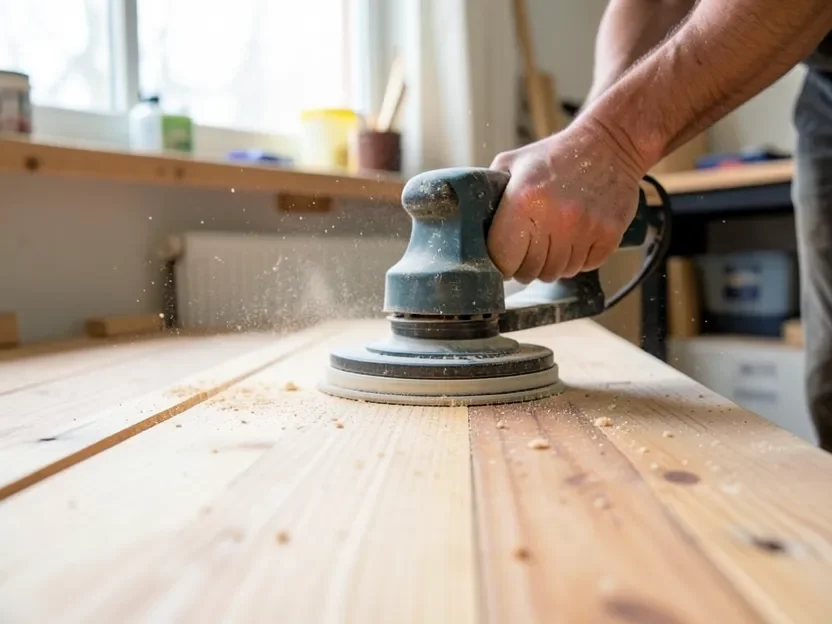
In that case, the realistic options are sanding the affected boards down to bare wood and resealing, or replacing the board section entirely if the staining and odor have gone all the way through. Both are more work than a spray bottle, but they’re the honest fix once urine has fully penetrated the wood rather than just sitting in the finish.
Dog, Cat, or Something Else? The Species Matters a Little
The enzymatic-cleaner approach above works for urine odor from any source, pet or otherwise, but the practical details shift depending on what you’re dealing with. Dog urine is typically deposited in a larger volume in one spot, which usually means deeper penetration and a longer dwell time; our dog urine stain removal guide covers stain-lifting specifically. Cat urine is more concentrated in ammonia and territorial marking tends to hit the same spot repeatedly, which is why the smell can seem worse than the visible stain suggests; our cat urine smell guide goes deeper on that. This page is the one to bookmark for the underlying chemistry, the bleach and ammonia warning, and knowing when a spot is too far gone for cleaning alone, whichever animal (or situation) you’re dealing with.
Preventing Repeat Accidents in the Same Spot
Pets and people alike tend to return to a spot that still smells like urine to them, even after you can no longer smell it. That’s another reason a proper enzymatic treatment matters: it removes the actual scent trigger, not just the smell you can detect. Beyond that, keep a rotating stock of enzymatic cleaner on hand for quick treatment (waiting a day lets urine dry and soak in further), address pet training or medical causes of repeat accidents, and consider a washable rug or mat over any spot with a documented history until the behavior is resolved.
Frequently Asked Questions
Does vinegar actually remove urine odor from a wood floor?
Vinegar can help neutralize a urine spill while it’s still fresh and wet, since its acidity reacts with some of the compounds in urine. It does not remove dried, set-in odor, because the smell by that point comes from uric acid crystals bonded to the wood, which vinegar doesn’t dissolve. For dried or older odor, an enzymatic cleaner is the reliable fix.
Is it safe to mix bleach with a pet urine cleaner?
No. Never mix bleach with an ammonia-containing cleaner, and urine itself contains ammonia compounds as it breaks down. Combining them produces chloramine gas, a genuine respiratory hazard. If you use a bleach-based product anywhere near a urine stain, ventilate the room well and never layer it on top of an ammonia-based cleaner.
How do you get urine smell out of a wood subfloor?
An enzymatic cleaner can only reach what it physically penetrates. If urine has soaked through the finish, through the boards, and into the subfloor, surface treatment usually isn’t enough on its own. At that point, sanding the affected boards down to bare wood and resealing, or replacing the board section, is the realistic fix rather than repeated surface cleaning.
Why does the urine smell come back after cleaning?
Uric acid crystals are not very water-soluble, so a cleaning that only removes surface residue can leave crystals behind in the wood. Those crystals rehydrate on humid days or when the floor is mopped again, releasing odor that seemed gone. An enzymatic cleaner with a long enough dwell time breaks the crystals down instead of just rinsing the surface, which is why it holds up better over time.
Sponsored / affiliate links. As an Amazon Associate I earn from qualifying purchases. I may earn additional commission from eligible campaigns.