How to Remove Wax from Wood Floor Without Damaging It
To remove wax from a wood floor, scrape off as much as you can with a plastic putty knife, then place a brown paper bag over what’s left and run a warm iron over it to lift the rest into the paper. Finish with a small amount of a wood-safe adhesive remover on a cloth for any greasy residue, not a full wipe-down with vinegar or water.
The same scraping and heat-transfer method works whether it’s a dripped candle or old floor wax buildup. If the spill landed on furniture instead of the floor, the basics are the same – see our guide on how to remove wax from a wood table.
What You’ll Need
- A plastic putty knife or an old credit card (never a metal blade, which can scratch the finish)
- Brown paper bags (a plain grocery bag works, cut open flat)
- A clothes iron
- Ice cubes in a plastic bag, for stubborn or soft wax
- A wood-safe adhesive/residue remover for any leftover greasy film
- Soft, clean cloths
For The Greasy Residue Left Behind
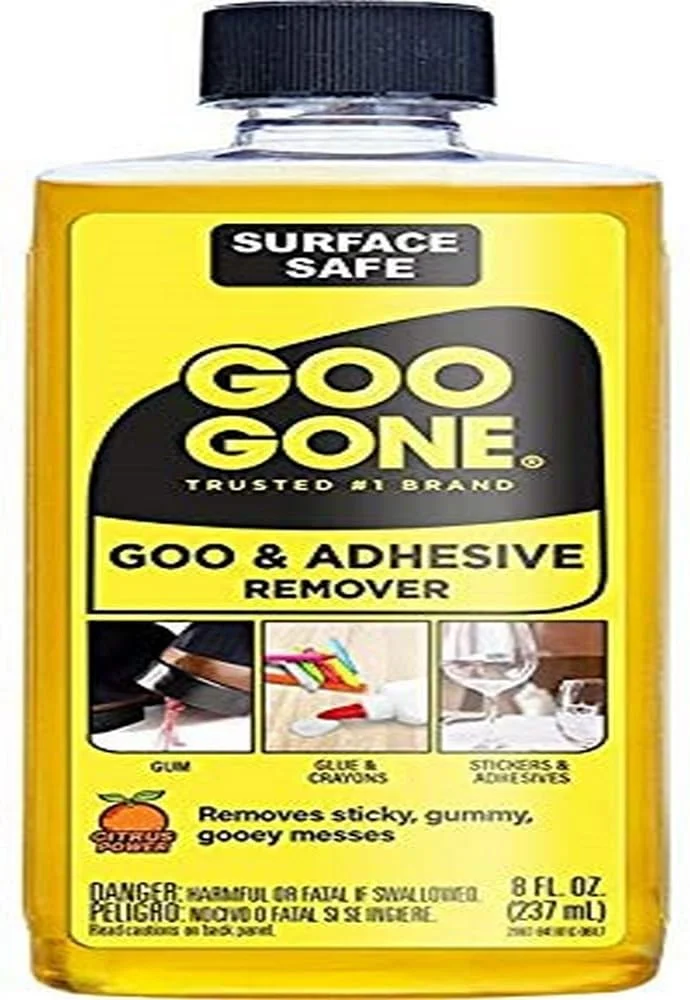 |
Goo Gone Original, 8 oz Cuts through the last waxy film after scraping and ironing, without the water exposure a vinegar wipe-down brings.
|
Step 1: Scrape Off What You Can
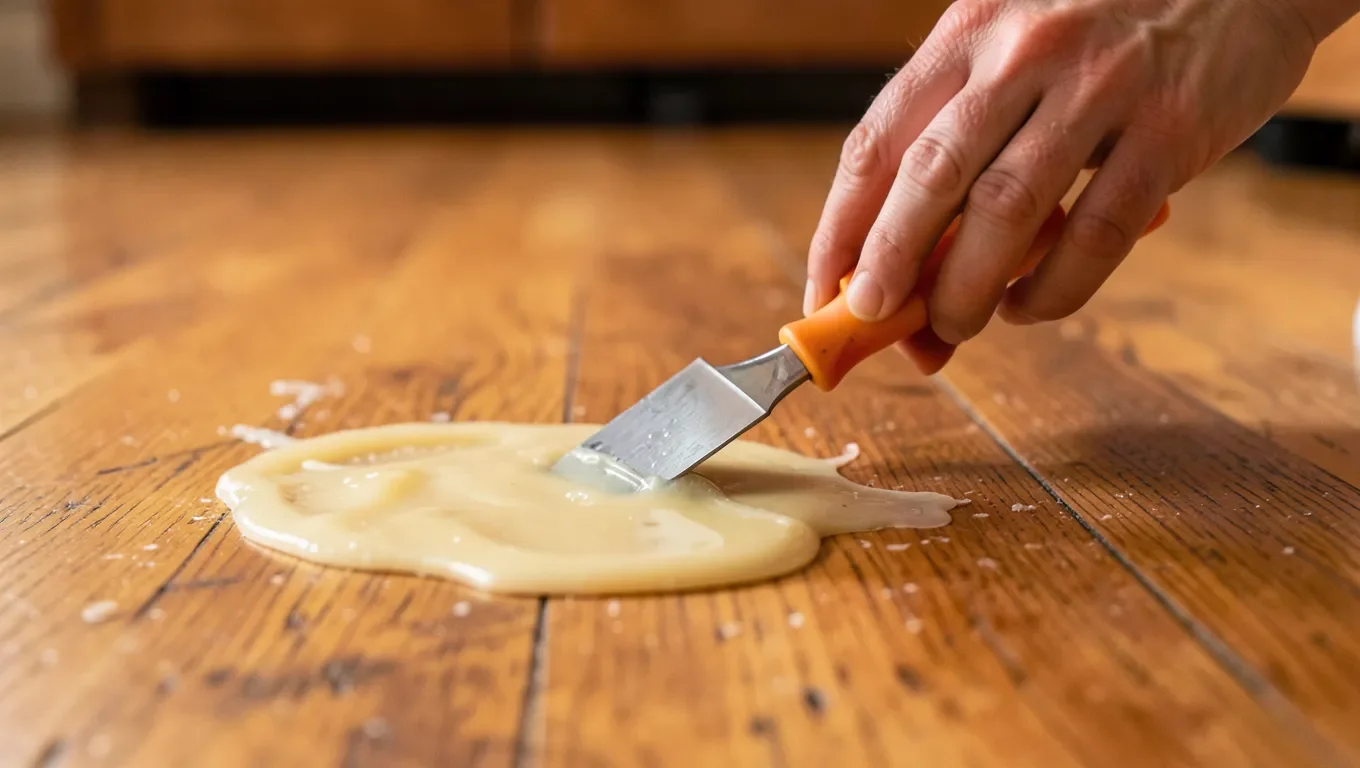
Let the wax harden completely first – working with soft wax just smears it into the grain. Hold a plastic putty knife or old credit card at a low angle and scrape in small sections, lifting rather than digging in. If the wax stays soft or gummy, press an ice cube wrapped in a cloth against it for a minute or two; the cold hardens the wax so it chips off cleanly instead of smearing.
Step 2: Lift the Rest with Heat
Once the bulk of the wax is scraped away, place a flattened brown paper bag over what remains. Set an iron to its lowest heat setting (no steam) and run it over the bag in small circular motions. The heat melts the residual wax just enough for it to wick up into the paper instead of the floor – lift and reposition the bag to a clean section as it absorbs wax, and repeat until no more transfers.
Cleaning Up the Last Residue
After the iron-and-paper-bag step, a faint waxy film often remains. This is where the vinegar-or-not question actually gets answered: a small amount of white vinegar, applied on a barely damp cloth and wiped once rather than scrubbed, is generally fine on a sealed, finished wood floor for a quick spot-cleanup. What actually causes damage is soaking the floor with vinegar or water repeatedly as a regular cleaning method, or using it on unfinished or waxed (not polyurethaned) wood, where the moisture can penetrate the bare wood or strip a wax finish entirely.
A wood-safe adhesive remover made for gum, glue, and wax residue is the more reliable choice if you’re not sure what finish your floor has, since it’s formulated to cut through waxy residue without introducing water. Apply a small amount to a cloth (not directly to the floor), work it into the residue, then buff dry.
Fresh Spill vs. Old, Built-Up Floor Wax
A single candle drip and years of old floor wax buildup aren’t quite the same job, even though the scrape-and-heat method works for both. A fresh spill is usually shallow and limited to one spot, so a few passes of the paper-bag-and-iron technique typically clears it completely. Old buildup from years of applying floor wax (common on pre-polyurethane finishes) tends to be a thin film across a much larger area, and repeated heat-and-scrape passes over that much surface area risk overheating the finish underneath if you work too slowly in one spot.
For large-area old wax buildup, work in smaller sections than you think you need to, moving the iron continuously rather than holding it in place, and expect the job to take considerably longer than a single spill. If the floor has decades of built-up wax layers rather than a recent spill, a professional refinish may genuinely be faster and safer than trying to strip it all by hand.
Preventing Future Wax Buildup
- Use candle holders with a wide, deep base or a drip tray under any candle near flooring.
- Skip floor waxes and polishes on modern polyurethane-finished floors – they’re designed for older shellac/oil finishes and just build up a film on poly.
- Wipe up a fresh wax drip immediately with a paper towel while it’s still soft, before it has a chance to set into the grain.
Frequently Asked Questions
How do you get wax off hardwood floors?
Scrape off as much hardened wax as possible with a plastic putty knife or credit card, then use the iron-and-paper-bag method to lift the rest. Finish with a wood-safe adhesive remover on a cloth for any remaining residue.
What will remove wax from wood?
Scraping combined with heat (an iron over a paper bag, or a hairdryer to soften stubborn spots) removes the bulk of it. A wood-safe adhesive remover handles the leftover waxy film better than water-based cleaners.
Is it safe to use vinegar on a wood floor to remove wax?
A small amount on a barely damp cloth, wiped once, is generally fine on a sealed polyurethane finish. The risk comes from soaking the floor or using vinegar repeatedly as a regular cleaner, and from using it on unfinished or wax-finished (not polyurethaned) wood, where moisture can damage the surface.
What’s the easiest way to remove floor wax buildup?
Let it harden, scrape off the bulk, then use the paper-bag-and-iron method to lift what’s left. This avoids introducing water or chemical solvents for most jobs.
Conclusion
Wax on a wood floor looks worse than it is to fix: scrape, apply heat with a paper bag, and clean up the last residue with a wood-safe remover rather than a heavy water or vinegar wipe-down. Take it in that order and the floor comes out clean without any risk to the finish underneath.
Sponsored / affiliate links. As an Amazon Associate I earn from qualifying purchases. I may earn additional commission from eligible campaigns.