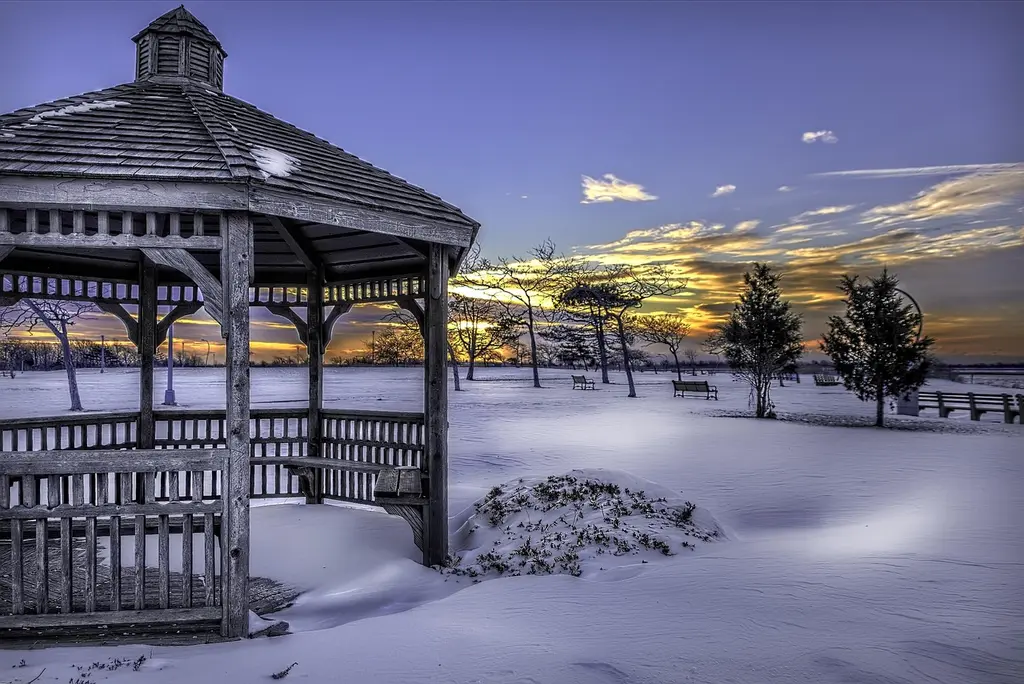
How to Stabilize a Gazebo on Any Surface Safely
Stabilize a gazebo by anchoring each post, tightening or replacing failed connectors, and adding diagonal bracing if it still racks. If the structure moves more than a little under hand pressure, fix the support first, not the roof. Ignoring wobble can lead to torn anchors, distorted framing, and collapse in wind or snow. This guide shows how to diagnose instability on concrete, decks, pavers, or soil and choose the least invasive repair that actually holds.
Why a gazebo feels unstable



A gazebo usually feels unsafe for one of three reasons: the base can move, the frame can rack, or a connector can fail. Those problems look similar from a few feet away, but they need different fixes. If you treat a loose leg like a wind problem, or ballast like a structural repair, the wobble comes back.
Wobble versus racking versus lift
Wobble is side-to-side motion at the posts or footplates. Racking is the frame turning into a parallelogram because corners are not square or joints are loose. Lift is upward movement at the roof or corners when wind gets under the structure. A gazebo can have all three at once, but the first visible symptom often points to the weakest part.
Say your hardtop gazebo shifts when you push one corner, but the roof stays level. That usually points to base movement or loose post hardware. If the roof twists as well, the frame may be racking and the top connections may need attention before any surface anchor will hold properly.
When wind load is the real problem
Wind is only part of the issue until the gazebo is properly anchored. Some hardtop models are rated up to 90 mph winds and up to 30 inches of snow when anchored as intended, which means those ratings do not apply to a loose frame sitting on a surface with no load transfer. Temporary tie-downs can reduce movement, but they do not turn a weak setup into a bolted one.
How snow and settling change the fix
Snow adds downward load to the roof, which can expose bent members, weak joints, or a footing that has already shifted. Settling is different. If one post sinks or heaves, the frame goes out of square and the roof can bind. On soil and pavers, freeze-thaw movement matters because repeated expansion and contraction can lift or tilt posts over time.
Gazebo instability troubleshooting matrix
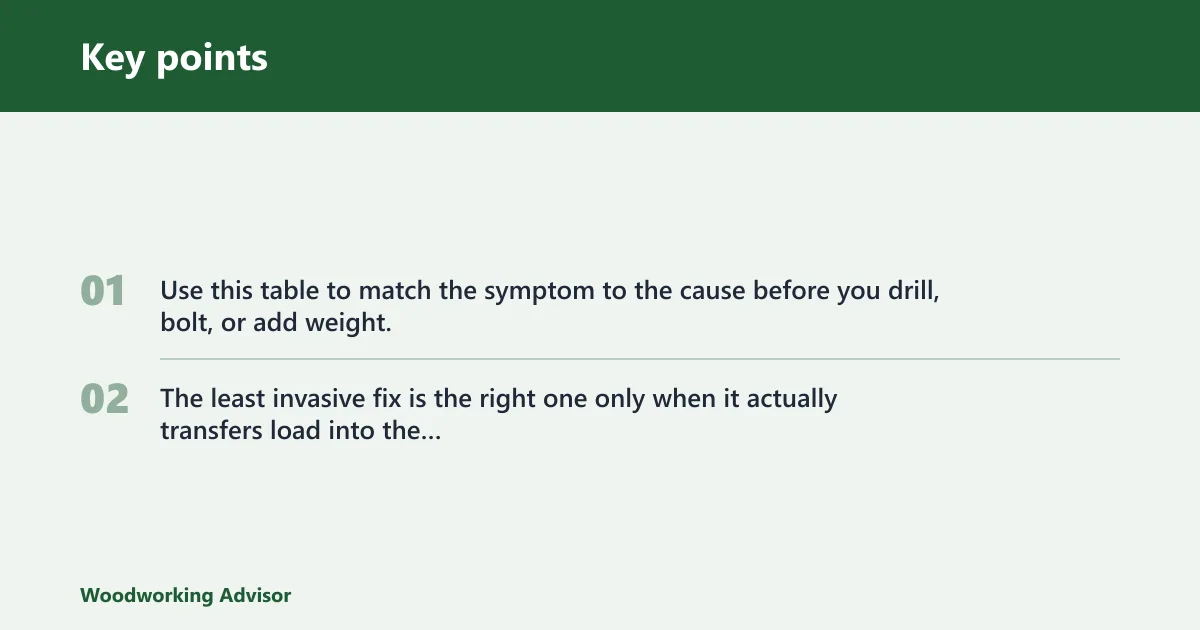
Use this table to match the symptom to the cause before you drill, bolt, or add weight. The least invasive fix is the right one only when it actually transfers load into the surface or framing below.
| Symptom | Likely cause | Best fix | Required hardware/tools | When to call a pro |
|---|---|---|---|---|
| Wobble at all four corners | Base not anchored, or post bases are not squared and leveled | Anchor every post after squaring and leveling the frame | Level, square, anchor kit, drill or driver, surface-specific anchors | If the frame still shifts after all corners are anchored |
| One leg moves more than the others | Loose footplate, damaged base plate, or failed fastener | Tighten hardware, replace damaged parts, re-anchor the leg | Wrenches, replacement bolts, post base or footplate hardware | If the post is bent, cracked, or pulled out of plane |
| Roof flexes or lifts in wind | Top frame lacks bracing, or anchors are too light for the unit | Add diagonal bracing and upgrade to proper anchors for the surface | Brackets, anchor kit, lag screws or concrete anchors, bracing hardware | If roof members are bent or the manufacturer’s connections have failed |
| Frame rocks after rain or thaw | Post settlement, freeze-thaw movement, or footing too shallow | Re-set the post on a footing below local frost depth | Excavation tools, concrete mix, forms, level | If multiple posts have settled or the structure is out of square |
| Corner lifts on a hardtop gazebo | Anchors missing, loose, or undersized for the post base holes | Install anchors matched to the post base holes and surface | Hammer drill, masonry bit, wedge anchors or sleeve anchors | If the slab is cracked, spalling, or too thin for safe anchoring |
| Movement on pavers or soil | Surface is shifting, or no footing below frost depth | Use concrete footings below frost line for long-term stability | Post-hole tools, concrete, forms, anchor hardware | If the site heaves every season or the ground drains poorly |
How do I stabilize a gazebo on concrete?
Concrete is the simplest hard surface for a permanent gazebo. Use concrete wedge anchors or sleeve anchors, along with a hammer drill and a masonry bit sized to the anchor. Match the anchor size to the post base holes. Mark every hole location before drilling, square and level the frame first, and anchor each corner or post, not just one side.
Concrete or pavers are often described as ideal for direct bolting with a gazebo anchor kit, but only if the base plates land flat and the slab is sound. If the holes are off by even a little, the post base can bind and pull the frame out of square as you tighten it.
Concrete anchoring steps
- Set the gazebo in position and check that all posts are plumb.
- Square the frame by measuring diagonals until they match.
- Level the post bases or footplates.
- Mark each hole location through the base plate.
- Drill with a hammer drill and a masonry bit sized for the anchor.
- Install wedge anchors or sleeve anchors and tighten evenly.
- Recheck square, then retighten after the first wind or storm.
How do I stabilize a gazebo on a deck?
A wood deck needs more than surface screws. Use lag screws or through-bolts that fasten into joists or blocking, not into deck boards alone. Deck boards are not load-bearing framing. If the gazebo sits between joists, add blocking beneath the post bases so the load transfers into the structure under the deck surface.
Wood decks require extra reinforcement and under-structure assessment. If you cannot confirm joists or blocking beneath each post, stop and open the underside before drilling. A fastener that bites only into decking can loosen, split the board, and let the gazebo walk in wind.
Deck anchoring steps
- Locate joists or install blocking under every post.
- Square and level the gazebo before drilling.
- Mark the post base holes.
- Use lag screws or through-bolts sized for the anchor plate and framing.
- Fasten each corner into solid framing, not deck boards alone.
- Check for bounce or deflection in the deck before and after tightening.
How do I stabilize a gazebo on pavers or grass?
Pavers and grass need different solutions than a slab or deck. For pavers, the most reliable long-term fix is a concrete footing below each post, set below local frost depth. For grass or soil, ground auger anchors or stakes work better for lighter-duty or seasonal setups, but they are less reliable when freeze-thaw movement shifts the ground.
A common first-timer mistake is placing a gazebo on leveled pavers and treating the surface itself as the anchor. Pavers can settle and move. If the site sees cold winters, footings below the frost line reduce heave and help keep the posts where you set them.
Ground and paver options
- Ground auger anchors: better for temporary or seasonal gazebos on grass or soil.
- Concrete footings below frost line: best for long-term stability where heave is a risk.
- Paver installs: use footings under each post when you want a lasting fix.
No-drill stabilization options
No-drill options can help with temporary wind control, but they do not replace structural anchoring on a permanent hardtop gazebo. Use them when you need a damage-free setup, a seasonal shelter, or extra resistance while waiting for a proper anchor job. They are support measures, not final repairs.
Temporary tie-down methods
Ratchet straps and bungee cords can fasten a gazebo to nearby objects such as rails, fences, or posts. They are useful for short-term control, especially during a storm watch, but they should not be the only support on a hardtop unit. Guy ropes and stakes can also improve wind resistance on lighter setups.
Sandbags, water bags, and concrete blocks are another damage-free option. Water weights save space and move easily. Sandbags spread load well. Concrete blocks add mass but can be awkward to position. Distribute the weight evenly around the frame so one corner does not stay loose while the others are loaded.
They are best for portable or temporary gazebos. They are weaker than bolted anchors for hardtop units.
How do I fix a wobbling frame or loose leg?
If the frame wobbles or one leg feels loose, start at the post base and work upward. Tighten the joints, inspect the footplates, and look for damage in the base plate or connectors. If the frame is still moving after the hardware is snug, the issue is usually a racked frame, a loose base, or a bent part that needs replacement.
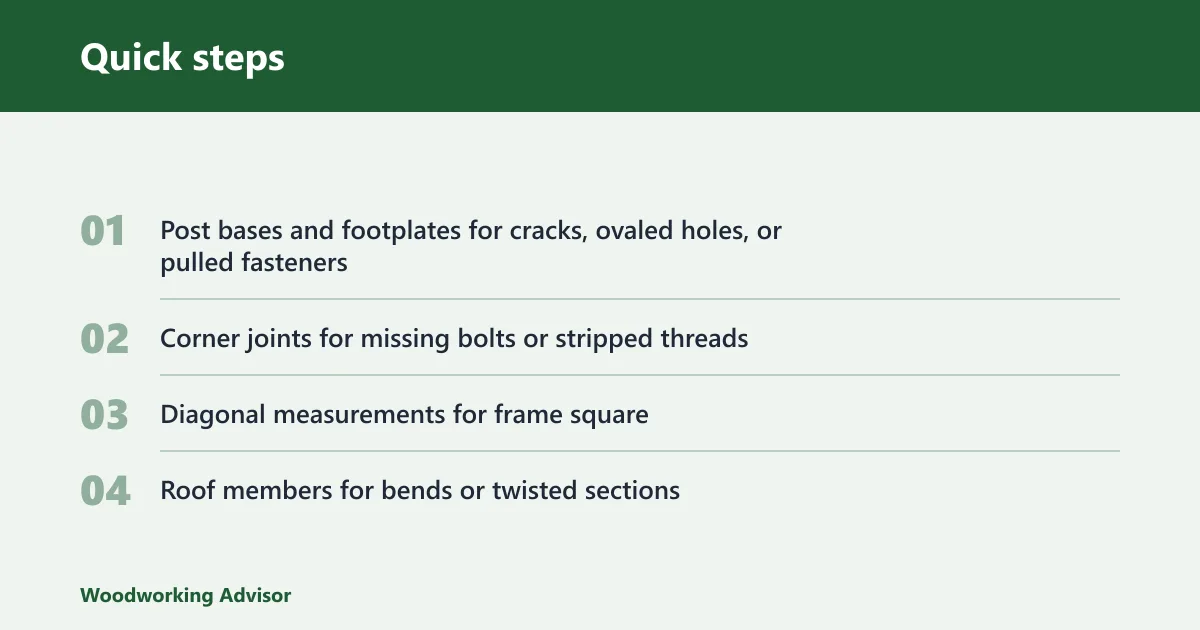
What to inspect first
- Post bases and footplates for cracks, ovaled holes, or pulled fasteners
- Corner joints for missing bolts or stripped threads
- Diagonal measurements for frame square
- Roof members for bends or twisted sections
If a post base has torn away from the surface, stop relying on the old holes. Replace the damaged anchor and inspect the mounting surface for cracks, rot, or crushed material. If a leg is bent or the post is split, replacement is safer than trying to tighten around damaged metal or wood.
How do you keep a gazebo from blowing away? Anchor every corner, then add temporary tie-downs only as backup. A gazebo with one unanchored leg can still tip, even if the others are fixed. Recheck hardware after storms, because repeated loading can loosen nuts, stretch straps, and shift the frame out of square.
How do I stabilize a pergola the same way as a gazebo?
Yes, the same surface logic applies. A pergola also needs its posts matched to the base, the frame squared, and each corner anchored to the correct substrate. Concrete can take direct bolting, wood decks need load-bearing framing below, and soil or pavers need footings that resist movement.
The difference is load path. A gazebo roof is usually more enclosed and catches more uplift, while a pergola may shed wind differently. That does not reduce the need for proper anchors. It only changes how much load reaches each connection.
Frequently asked questions
What is the best way to stabilize a gazebo on a deck?
Fasten into joists or blocking with lag screws or through-bolts, not into deck boards alone. Check the framing from below first. A deck that bounces or lacks solid blocking may need reinforcement before the gazebo is attached, especially for a hardtop model that sees wind or snow.
How do I keep my gazebo from blowing away?
Use the right anchor for the surface, then add temporary ballast or tie-downs if wind exposure is high. Ratchet straps, bungee cords, sandbags, water bags, and concrete blocks can help, but they are not a substitute for bolting down a permanent hardtop gazebo. After storms, check every fastener and anchor.
What should I do if my gazebo frame is wobbling?
Diagnose the motion first. If the wobble starts at the base, re-anchor the posts. If it starts at the corners, tighten or replace connectors. If the frame is racked or a member is bent, repair or replace the damaged part before you trust the roof or add more weight.
Can I stabilize a gazebo without drilling into the surface?
Yes, but only for temporary or portable setups. Weighted sandbags, water weights, concrete blocks, ratchet straps, bungee cords, guy ropes, and stakes can reduce movement without drilling. They help with wind control, but they do not equal a properly bolted anchor system for a permanent hardtop gazebo.
Sponsored / affiliate links. As an Amazon Associate I earn from qualifying purchases. I may earn additional commission from eligible campaigns.