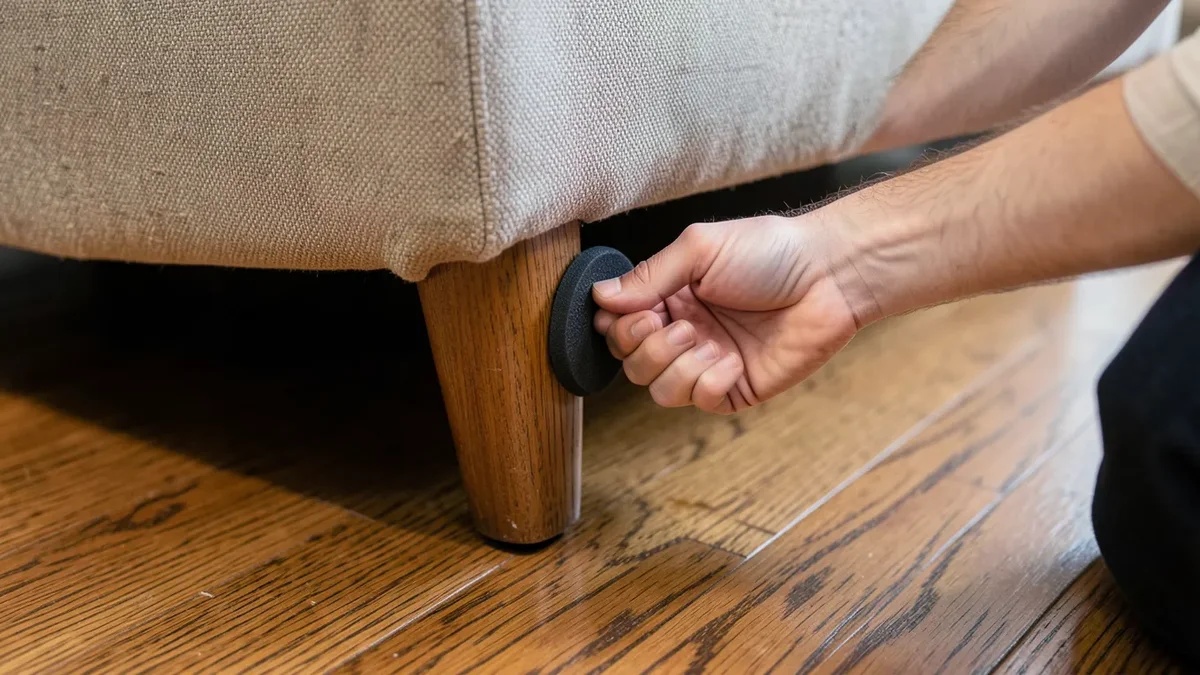
How to Stop a Couch From Sliding on Hardwood Floors
A couch that drifts across hardwood isn’t a defect in your floor or your furniture — it’s just physics. Sealed hardwood and a hard plastic or bare-wood furniture foot have very little friction between them, and every time someone stands up, that small forward shove nudges the couch a fraction of an inch. Do that enough times and a couch walks several inches off its original spot in a month. Here’s what actually stops it, ranked from cheapest and most reversible to most permanent.
Causes Of Sliding Couches
Best Non-Slip Fix for Couch Legs
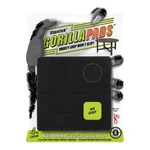 |
Slipstick GorillaPads CB140, 4″ Furniture Gripper Pads – $12 Rubber (not felt) pads that add real friction under couch legs instead of helping furniture glide — pre-scored so you can cut them to fit any leg size.
|
Sliding comes down to a basic physics problem: the coefficient of friction between hard, sealed wood and a hard furniture foot (plastic glides, bare wood, or unfinished metal) is genuinely low, especially once a layer of dust or floor polish sits between them and acts almost like a lubricant. Polyurethane-finished hardwood is smoother and lower-friction than an unfinished or waxed floor, which is part of why sliding often gets worse right after a floor gets refinished.
The push itself usually comes from getting up and sitting down — a person’s weight shifting onto the front edge of the cushion as they stand transmits a forward shove through the frame and legs, and because that shove happens dozens of times a week, even a fraction of an inch of movement per instance adds up to a couch that’s visibly out of position within a month. A couch with more weight on one end (a chaise-style sectional, or one arm loaded down with books) tends to walk unevenly, drifting more on the heavier side because that side has more downward force pressing into whatever small amount of grip exists.
Non-slip Pads
Rubber and felt pads solve the sliding problem in opposite ways, which is worth knowing before picking one. Rubber pads work by adding real friction — the rubber’s surface grips the wood mechanically, resisting the kind of forward shove that happens when someone stands up. Felt pads actually do the reverse: they let the couch glide smoothly and are meant to prevent scratching when you deliberately move furniture, which means a felt pad on a couch you don’t want to move is often counterproductive since it reduces friction rather than adding it. For a couch that keeps drifting on its own, rubber (or a rubber-and-felt combo pad with the rubber side down) is the correct choice.
Grip only works on a clean surface — a film of dust, wax buildup, or floor polish under a rubber pad cuts its effective grip dramatically, the same way an oily patch would. Wipe both the floor and the bottom of each couch leg before applying, press the pads on firmly enough to fully seat the adhesive, and check them every few months, since rubber pads compress and lose grip over time, especially under a heavily-loaded corner of the couch.
Furniture Grippers
Furniture grippers are a step up from adhesive-backed pads: instead of sticking flat to the bottom of a leg, they typically cup or wrap around the leg itself, which matters because a stuck-on pad can eventually peel or shift under repeated shoves while a gripper that grips the leg’s shape mechanically doesn’t rely purely on adhesive. Matching the gripper’s inner diameter to your couch leg’s actual width matters more than most buyers expect — a gripper sized too loose won’t seat fully against the leg and loses much of its holding power, while one sized too tight can be difficult to install without deforming it.
Installation follows the same logic as pads: clean floor and clean leg first, since grime undercuts grip regardless of what product is providing it. After installing all four, the real test isn’t looking at the couch, it’s sitting down on it near the front edge and pushing slightly forward with your legs the way you would standing up — if it doesn’t budge under that specific motion, the grippers are doing their job.
Rubber Feet And Caps
Rubber caps are the semi-permanent version of the grippers above — instead of a pad or wrap you press on, a cap slides fully over the bottom of the leg like a sock, which means it moves with the couch instead of staying behind on the floor if the couch does get pushed or dragged. They also cushion the couch leg itself, which matters on furniture where the legs are a softer wood or a finish that can chip if dragged directly across hardwood; the same fix used for bed frames sliding on hardwood applies here.
Fit is everything with a cap — measure the leg’s diameter (or width and depth if it’s a square leg) before buying, since a cap that’s even slightly oversized will wobble instead of gripping and one that’s too small won’t seat fully over the leg. Tilt the couch onto its other legs or get help lifting it rather than dragging it to install caps, since dragging a bare leg across hardwood to get access is exactly the scratching problem the caps are meant to prevent.
Rug Placement Strategies
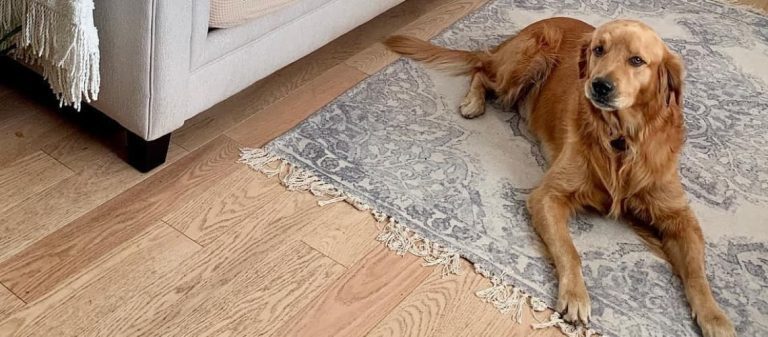
A rug fixes sliding indirectly: it’s not that a rug is inherently grippier than bare wood, it’s that a rug with a proper non-slip (usually natural rubber or a rubberized mesh) backing anchors itself to the floor, and a couch leg sitting on top of that anchored rug has something stable to push against instead of sliding hardwood. A rug with no backing, or a cheap PVC backing that’s degraded and gone slick with age, doesn’t solve anything — the rug itself just becomes the thing that slides, taking the couch along with it.
Getting the front legs onto the rug (even if the back legs stay on bare floor) is usually enough to stop the forward-shove sliding that happens when someone stands up, since that’s the direction and the leg pair actually doing the work in that motion. A rug pad underneath an already-backed rug adds a second layer of grip against the floor and is worth the extra cost on a hard, glossy-finished floor where even a rubber-backed rug can still slide slightly on its own.
DIY Solutions
Adhesive hook-and-loop strips (one side stuck to the bottom of each leg, the matching side stuck to the floor) work by mechanically locking the couch to a fixed point rather than just adding surface friction, which makes them one of the strongest holds on this list — and also the one with the most commitment, since the floor-side adhesive is meant to stay put and can leave a faint residue or mark if removed carelessly later. It’s a better fit for a couch that never needs to move for cleaning than for one you shift around every week.
Cutting squares from an old rubber shelf liner, a leftover carpet scrap, or a rubber placemat and setting them under each leg gets most of the benefit of a store-bought gripper at effectively no cost, since the mechanism is identical — a soft, high-friction material between a hard leg and a hard floor. The only real tradeoff versus a purpose-made gripper is thickness consistency: hand-cut squares that aren’t uniform can leave the couch sitting slightly unlevel if one leg’s pad is thicker than the others.
Maintenance Tips
Regular Cleaning
Dust and residual floor polish both cut friction between a couch leg and the wood, which is why a couch can start sliding again after a period of stability with no change to the grippers themselves — the floor underneath simply got slicker. A regular dust-mop pass, and specifically getting under and around furniture rather than just the open floor, keeps that friction from silently degrading. Stick to a cleaner formulated for hardwood and avoid soaking the floor, since standing water works into seams between boards and can cause cupping or warping over time.
Checking Furniture Stability
A couch that rocks slightly or has one leg not quite touching the floor slides more easily than a fully stable one, because that instability concentrates force unevenly across the legs every time someone sits or stands. Tightening any loose frame bolts and confirming all four legs bear weight evenly (a folded piece of cardboard under a short leg is a quick diagnostic, if not a permanent fix) address the root instability that grip-adding products alone can’t fully compensate for.
Frequently Asked Questions
What’s the fastest way to stop a couch from sliding on hardwood floors?
Rubber (not felt) gripper pads under each leg, applied to a clean, dust-free floor and clean leg bottoms. They add real mechanical friction in under ten minutes and are fully reversible if you rearrange the room later.
Will a rug stop my couch from sliding?
Only if the rug itself has a real non-slip backing (natural rubber or rubberized mesh) that anchors it to the floor. A rug with no backing, or a degraded PVC backing, just becomes the thing that slides, taking the couch with it.
Why does my couch slide more after refinishing the hardwood floor?
A fresh polyurethane finish is smoother and lower-friction than an older, slightly worn or waxed floor, so couches that stayed put for years can suddenly start sliding right after a refinish. The fix is the same — add grip at the leg or under a rug — but expect to need it sooner on a newly finished floor.
How do I get furniture drag marks off hardwood floors?
Wipe the marks with a soft cloth dampened with a vinegar-and-water solution, and use a light baking-soda paste on stubborn spots. Avoid harsh chemicals or abrasive pads, which can dull the finish, and add furniture pads afterward so the marks don’t come back.
Bottom Line
Every fix on this page works by the same underlying principle — adding real friction (or a mechanical anchor) between a hard leg and a hard floor — so the right choice comes down to how permanent you want the fix to be. Rubber pads and grippers are the reversible, no-commitment option; hook-and-loop strips are the strongest hold for a couch that’s staying put for good; a properly backed rug solves it while adding to the room’s look. Whichever you pick, keep the floor underneath clean and check the grip periodically, since dust and pad wear are the two things that quietly undo a fix that worked fine the day you installed it.
Sponsored / affiliate links. As an Amazon Associate I earn from qualifying purchases. I may earn additional commission from eligible campaigns.