How to Transport 16 Foot Lumber Safely (Overhang Rules Explained)
A 16-foot board overhangs almost every standard pickup bed by 8-10 feet, which puts you squarely into flagging and lighting requirements in nearly every US state. A roof rack, a trailer, or a truck with a bed extender all work — but whichever you use, the overhang itself is the part that needs real attention, not just tying the wood down.
Below is what actually matters: how much overhang you’re dealing with by vehicle type, the flagging rule most states share, a tie-down method that actually holds (not just “use straps”), and route planning that accounts for the extra length, not just the extra weight.
How Much Overhang You’re Actually Dealing With
Two-Point Tie-Down Pick
 |
4-Pack Heavy Duty Ratchet Straps, 10,000 lb Break Strength – $42.59 Four straps is exactly enough for the two-point-plus-safety-line setup this guide recommends, with real J-hooks instead of the bungee cords that loosen over a long drive.
|
| Vehicle / Setup | Typical Bed/Roof Length | Overhang with 16 ft Lumber |
|---|---|---|
| Full-size truck, standard bed | ~6.5 ft | ~9.5 ft |
| Full-size truck, long bed | ~8 ft | ~8 ft |
| Full-size truck + bed extender | ~10-11 ft | ~5-6 ft |
| SUV/car roof rack | ~4-5 ft | ~11-12 ft (both ends) |
| Small utility trailer (8-10 ft) | 8-10 ft | ~6-8 ft |
A roof rack carries the overhang split between the front and back, which is more stable than a truck bed’s single-direction overhang, but only if the rack’s front and rear crossbars are spaced far enough apart to actually support the load’s center of gravity — a rack with both bars bunched near the middle of the roof lets the ends whip in crosswinds.
The Flagging and Lighting Rule
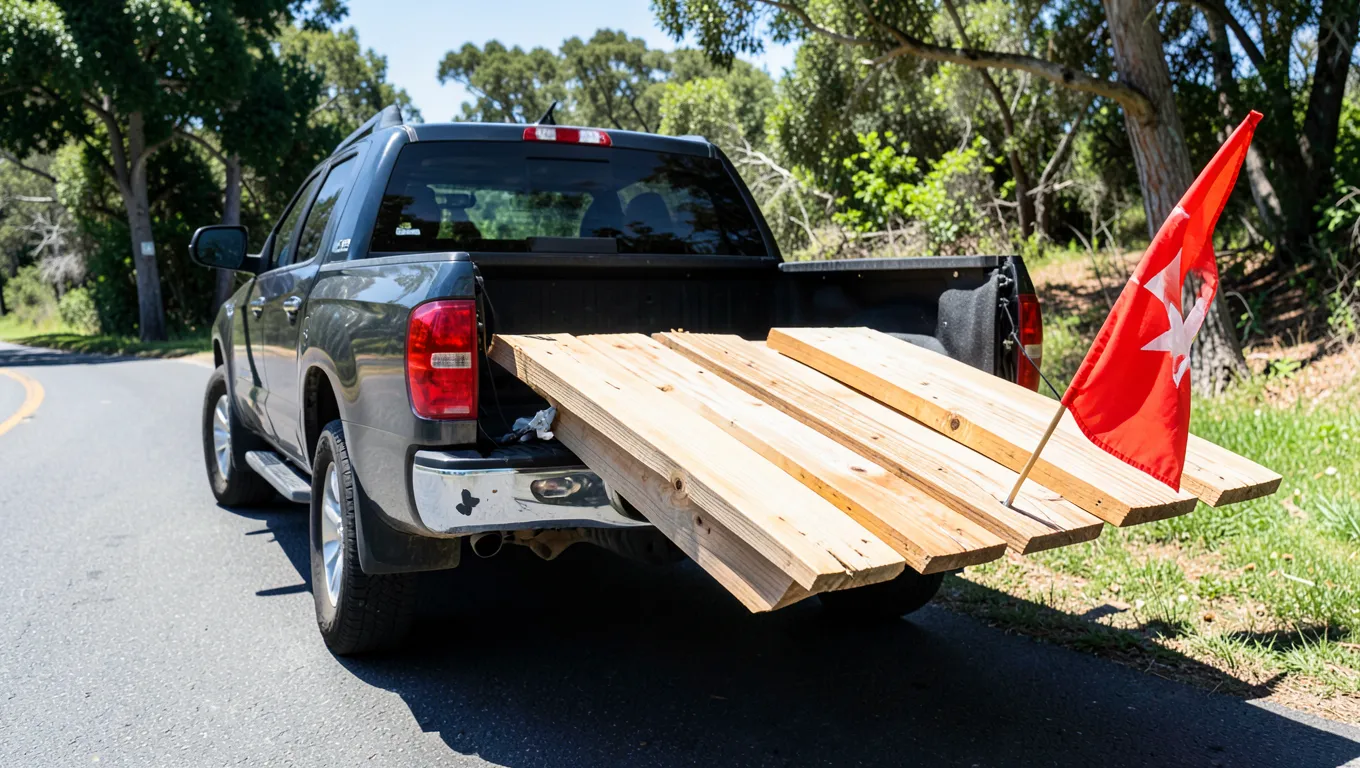
Most US states follow the same general threshold, adapted from federal DOT guidance: a load that extends 4 feet or more beyond the rear of the vehicle needs a red or orange flag (at least 12×12 inches) during the day, and a red light or reflector visible from 500 feet at night or in low visibility. With a 16-foot board overhanging a standard truck bed by roughly 9-10 feet, you’re well past that threshold — this isn’t a “maybe check” situation, it applies almost every time. Exact distances and flag specs vary slightly by state, so a quick search for your state’s DOT overhang rule is worth the two minutes, but assume you need a flag unless you’ve confirmed otherwise.
Tying It Down So It Actually Stays
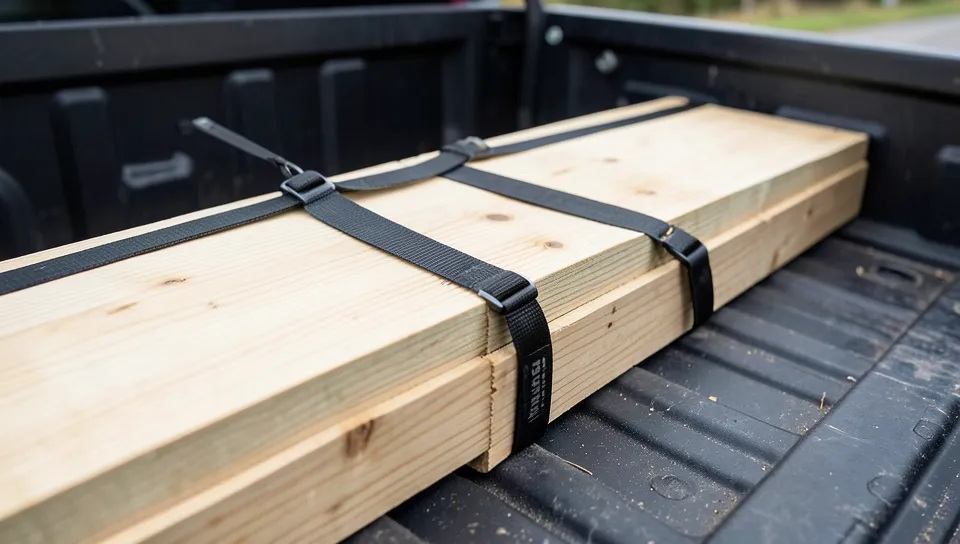
- Support the lumber at two points minimum — near the front of the bed/rack and near the tailgate/rear crossbar — not just one strap in the middle, which lets both ends bounce independently.
- Use ratchet straps, not just bungee cords, for the main tie-down points. Bungees stretch under vibration and loosen over a long drive; ratchet straps hold their tension.
- Tie a safety line (rope or a second strap) from the overhanging end back to the vehicle as a backup — if the main strap fails or loosens, this keeps the board from sliding off entirely.
- Pad any contact point between the lumber and metal (tailgate edge, roof rack bar) to prevent the strap or vibration from cutting into the wood over a long drive.
- Re-check strap tension after the first 10-15 minutes of driving — straps commonly loosen slightly as the load settles, and this is the single most-skipped step.

Route Planning for Length, Not Just Weight
An overhanging load changes your effective turning radius and following distance in ways a normal load doesn’t. Plan for wider turns (the rear overhang swings out on tight corners), longer stopping distance if the load shifts weight backward, and route around anything requiring a tight parking maneuver or a steep driveway approach, where the overhang can scrape or catch. Low clearances matter less for a horizontal load than people expect (it’s not sticking up), but sharp dips or steep driveway transitions can cause the rear overhang to strike the ground — take those slowly and at an angle if possible.
Unloading Without Damage
Release the rear safety line first, then the main straps, keeping a hand on the board so it doesn’t shift unexpectedly once tension is released. For anything over about 8 feet, unload with a second person — one person lifting a 16-foot board alone risks losing control of the far end. Inspect the board after transport for new cracks, splits, or checking at the ends, which can develop from vibration and flex during a long drive even if the board looked fine when loaded.
Frequently Asked Questions
How Do You Transport 16 Foot Lumber?
With a truck bed, roof rack, bed extender, or small trailer, tied down at two points minimum with ratchet straps plus a safety line, and flagged per your state’s overhang rule since a 16-foot board typically overhangs a standard bed by 8-10 feet.
Can I Use A Car To Transport Lumber?
Only with a properly rated roof rack, and even then the 11-12 foot overhang on each end (since a typical car roof is only 4-5 feet long) makes this one of the least stable setups. A truck bed, bed extender, or trailer is safer for a full 16-foot board.
What Equipment Do I Need To Secure Lumber?
Ratchet straps for the main tie-down points, a separate rope or strap as a rear safety line, padding for any metal contact points, and a DOT-compliant flag or light for the overhanging end.
Is It Legal To Transport Long Lumber?
Yes, with proper flagging or lighting on the overhang — most states require this once a load extends 4 feet or more past the rear of the vehicle, which a 16-foot board in a standard truck bed almost always does. Check your specific state’s DOT rule for exact distance and flag requirements.
Conclusion
The overhang, not the weight, is what makes 16-foot lumber different to transport: it almost always triggers flagging requirements, changes your turning and stopping distance, and needs a two-point tie-down with a safety line rather than a single strap. Plan for the length specifically, and the actual driving is routine.
Sponsored / affiliate links. As an Amazon Associate I earn from qualifying purchases. I may earn additional commission from eligible campaigns.