Helical vs Spiral Cutterhead: Noise, Cost & Cut Quality
A helical cutterhead uses small, staggered carbide inserts set at an angle to slice wood fibers — quieter and cleaner on hardwood than a spiral cutterhead’s continuous angled knife, but typically $250–$300+ more to buy or retrofit. Picking the wrong one means either overpaying for noise reduction you don’t need, or fighting tear-out on figured hardwood for years. This guide compares noise, cut quality, replacement-insert cost, and which planer/jointer brands sell each type.
Quick Answer
A helical cutterhead is the better all-around choice if noise and hardwood tear-out matter — its small, indexable carbide inserts each rotate to a fresh edge instead of needing a full re-sharpen. A spiral cutterhead (continuous or segmented straight-knife style) costs less upfront and is fine for softwood or occasional use, but the whole knife strip needs removal and sharpening once it dulls.
Helical Cutter Head Basics
Best Helical Cutterhead Planer Pick
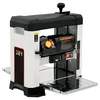
JET JWP-13BT 13″ Benchtop Thickness Planer, Helical Style Cutterhead
A factory-helical benchtop planer, so you skip the retrofit decision entirely and get the quieter, cleaner cut out of the box.
- Best for: Shops planing hardwood who want helical performance without sourcing a separate retrofit head
- Why we picked it: Two-speed feed and a helical-style head match this article’s noise/tear-out comparison directly
- Main drawback: Costs more upfront than an equivalent straight-knife or spiral benchtop planer
Compare more cutterhead upgrade options
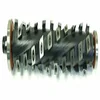 Option 1 Byrd Shelix OEM Helical Cutterhead for DeWalt DW735
|
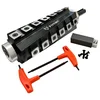 Option 2 FOXBC 6″ Helical Cutter Head (Jet/Grizzly/Ridgid Jointers)
|
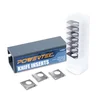 Option 3 POWERTEC 14.3mm Carbide Inserts (Spiral & Helical Heads)
|
As an Amazon Associate we earn from qualifying purchases.
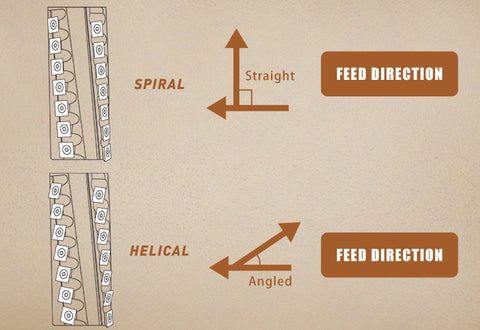
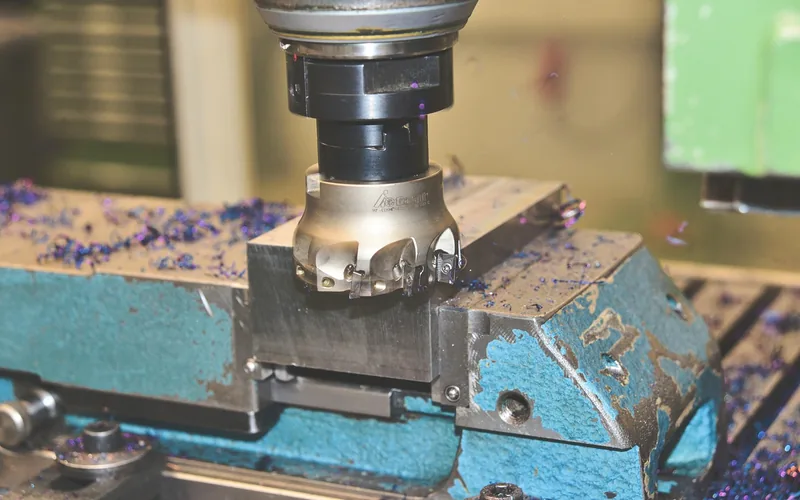
A helical cutterhead is a cylindrical cutter shaft fitted with dozens of small, square or diamond-shaped carbide inserts arranged in a staggered spiral (helix) pattern around the shaft. Each insert sits at a slight angle to the cutting axis, so it slices through wood fibers with a shearing action instead of chopping straight into them.
The practical advantage is at the insert level: each carbide insert typically has 2 to 4 usable cutting edges. When one edge dulls, you rotate or index that single insert to a fresh edge with a hex key — you don’t pull the whole cutterhead or resharpen a full-length blade. Byrd’s Shelix heads (the best-known helical design) use 4-sided inserts for exactly this reason.
Spiral Cutter Head Features
A spiral cutterhead is a cutter shaft with one continuous spiral-ground knife, or several straight-knife segments mounted end-to-end in a helical line, cutting at roughly a 90-degree angle to the workpiece. It still produces a shearing cut similar to helical designs, but through longer continuous edges rather than dozens of small indexable inserts.
Because the cutting edge is one long knife (or a few long segments) rather than small rotatable inserts, a dull spiral knife has to come off the head entirely for sharpening or replacement — there’s no quick quarter-turn fix per edge. This is the opposite of what a common but inaccurate claim online says (that spiral heads offer the “easy rotate-to-a-fresh-edge” convenience) — that convenience belongs to helical’s small indexable inserts.
Terminology note: manufacturers don’t use these terms consistently. Byrd, Rikon, and Grizzly all market indexable small-insert heads as “helical,” while budget brands like WEN and Cutech often call the same small-insert design a “spiral cutterhead.” Check the actual insert description (small indexable squares vs. one continuous knife) rather than relying on the product name alone.
Key Differences
Both designs cut at an angle rather than head-on, which is why both beat a straight-knife (non-spiral) cutterhead on noise and tear-out. Between the two, helical’s small staggered inserts create more individual shearing points per rotation, which further reduces vibration and impact noise compared to a longer continuous spiral knife.
| Factor | Helical Cutterhead | Spiral Cutterhead |
|---|---|---|
| Noise level | Quietest — small staggered inserts cut with the least impact per pass | Quieter than straight knives, slightly louder than helical |
| Cut quality / tear-out | Best on figured or dense hardwood; minimal tear-out | Good on softwood and straight-grain hardwood; more tear-out on figured grain |
| Upfront cost | Higher — retrofit kits often run $250–$400+ more than spiral | Lower — the budget upgrade from straight knives |
| Replacing a dull edge | Rotate the single indexable insert (2–4 edges each), ~$3–$5/insert | Remove and resharpen or replace the full knife strip |
| Best for | Hardwood, figured grain, noise-sensitive shops | Softwood, budget upgrades, occasional use |
Performance Analysis
On dense or figured hardwood (curly maple, quilted walnut, tiger oak), helical’s staggered shearing cut produces the smoothest surface with the least tear-out, often needing little to no sanding before finishing. Spiral cutterheads still outperform a straight-knife head on the same material, but figured grain can catch a longer continuous edge more than it catches helical’s small staggered inserts.
On softwood and straight-grain hardwood, the gap narrows considerably — both designs leave a clean, glue-ready surface, which is why a spiral cutterhead is often the more sensible upgrade for shops that mostly run pine, poplar, or straight-grain oak.
📊 OEM helical carbide inserts run about $3–$5 each (Byrd Shelix ~$3/insert in 10-packs, Grizzly JT-brand ~$4.88/insert) — Source: Byrd Tool and Grizzly Industrial retail pricing, 2026. A full head with 26–44 inserts (typical for 13–16″ planers) runs roughly $100–$260 to fully re-index over the head’s life, spread across many small swaps rather than one big bill.
Cost Considerations
Buying in, a helical retrofit kit or factory-helical machine usually costs $250–$400+ more than the equivalent spiral or straight-knife version — the extra machining for dozens of individually seated inserts drives the price up. A benchmark: a straight-knife-to-spiral upgrade for a 6″ jointer runs roughly $150–$200, while the equivalent helical retrofit is often $350–$500.
Over the life of the machine, the math shifts. Helical’s per-insert replacement cost (~$3–$5, rotate 2–4 edges per insert before replacing it) is cheaper per repair event than pulling and resharpening a full spiral knife strip, which typically costs $15–$40 per sharpening pass at a saw-sharpening shop. High-volume shops recover the higher helical purchase price through lower per-edge maintenance costs within a few years; hobbyists doing occasional planing rarely plane enough board-feet to reach that break-even point.
“When we cross-checked replacement insert pricing across Byrd, Grizzly, and Woodcraft for this guide, the per-insert cost stayed in a tight $3–$5 band regardless of brand — the real cost difference between helical and spiral shows up at initial purchase, not in the long-run maintenance bill.”
Which Planer and Jointer Brands Offer Each Type?
Helical cutterheads are now common across both benchtop and stationary machines. Grizzly‘s G0959 combo planer/jointer uses 28 inserts arranged diagonally in two rows; Rikon‘s 25-212H (12″) and 25-216H (16″) planer/jointers use 34 and 44 four-sided inserts respectively; Jet‘s JWJ-8HH jointer and JWP-13BT planer both ship with helical-style heads; Powermatic‘s PJ-882HH 8″ jointer uses a parallelogram frame with a helical head.
Spiral cutterheads dominate the budget benchtop segment — WEN, Cutech, and aftermarket kits from FOXBC and FindBuyTool retrofit popular 13″ planers like the DeWalt DW733/DW735 with spiral-style heads at a lower price point than OEM helical upgrades.
User Preferences and Feedback
Woodworking forums (Sawmill Creek, FineWoodworking, LumberJocks) consistently show the same split: hobbyists running mostly softwood or straight-grain stock report spiral cutterheads deliver “good enough” results at a lower price, while shops running figured hardwood or doing furniture-grade finish work standardize on helical for the noise reduction and tear-out control, and consider the higher price a one-time cost against years of use.
Applications in Woodworking
Professional cabinet and furniture shops lean toward helical heads for face-grain and end-grain work on hardwoods where surface quality goes straight into the finish. Production shops planing dimensional softwood lumber, or hobbyists doing occasional jointing/planing, get most of the benefit from a spiral head at a fraction of the retrofit cost. Understanding how a jointer’s cutterhead removes material in the first place makes it easier to see why the insert geometry matters more on a jointer’s face-jointing pass than on a planer’s thickness pass.
Choosing the Right Option
- Working mostly figured or dense hardwood, or noise matters in a shared/home shop → choose helical.
- Working mostly softwood, straight-grain hardwood, or on a tight tool budget → a spiral cutterhead is the more practical upgrade over straight knives.
- Already own a DW733/DW735-style planer and just want less tear-out → an aftermarket spiral or helical retrofit head is usually cheaper than replacing the whole machine.
- Not sure you need a dedicated jointer at all yet? Confirm you actually need one before comparing cutterhead types on a machine you may not need.
Frequently Asked Questions
Which Is Better, A Spiral Or A Helical Cutterhead?
A helical cutterhead is the better all-around choice for smoother cuts, less tear-out, and reduced noise, because its small carbide inserts can be rotated to a fresh edge instead of resharpened. A spiral cutterhead costs less upfront and suits softwood or budget upgrades well. Choose based on your wood type and budget, not just price.
Are Helical Head Planers Better?
Helical head planers provide quieter operation and smoother cuts, especially on hardwood. They excel at minimizing tear-out, and their indexable carbide inserts rotate to a fresh edge instead of needing a full resharpen. For professionals doing finish-grade work, helical is often the preferred choice over straight-knife or basic spiral heads.
Are Helical And Spiral The Same?
No. Helical describes a 3D coil-like arrangement of small individual inserts around the cutter shaft; spiral traditionally refers to one continuous or segmented knife following a helical line. In cutterhead marketing the terms overlap heavily – check whether the head uses small indexable inserts (commonly called helical) or one long knife (commonly called spiral) rather than trusting the product name alone.
What Is The Difference Between Helical And Spiral Path?
A helical path moves in a three-dimensional corkscrew, maintaining a constant radius while advancing along an axis – like threads on a screw. A spiral path lies flat and expands or contracts outward in a plane, like a watch spring. On a cutterhead, both terms describe how the cutting edges wind around the shaft, which is why the naming overlaps in practice.
Can You Retrofit A Straight-Knife Planer With A Helical Or Spiral Cutterhead?
Yes, for many popular benchtop models. Aftermarket kits from Byrd, FOXBC, and FindBuyTool retrofit machines like the DeWalt DW735 and 6-inch Jet, Grizzly, and Ridgid jointers. Retrofit kits typically cost $150-$500 depending on whether it’s a spiral or helical head, and installation is a bolt-in cutterhead swap rather than a full machine replacement.
How Much Do Helical Cutterhead Replacement Inserts Cost?
OEM carbide inserts typically run $3 to $5 each when bought in 10-packs (Byrd Shelix around $3/insert, Grizzly’s JT-brand inserts around $4.88/insert). A full cutterhead has 26 to 44 inserts depending on planer or jointer width, so a complete re-index runs roughly $100-$260 – spread across single-insert swaps rather than paid all at once.
Conclusion
Choose a helical cutterhead if you work figured or dense hardwood, run a shared or home shop where noise matters, and can absorb the higher upfront cost. Choose a spiral cutterhead if you mostly plane softwood or straight-grain hardwood and want the noise and tear-out improvement over straight knives without the full helical price tag. Either way, budget for insert or knife maintenance as a small recurring cost, not a one-time purchase.
Sponsored / affiliate links. As an Amazon Associate I earn from qualifying purchases. I may earn additional commission from eligible campaigns.