Transport Wood in a Car Safely (Flag Rule at 4+ Feet)
Transporting wood in a car works safely when the load stays inside the vehicle’s footprint and is tied to at least two solid anchor points with straps rated well above the wood’s weight — pieces extending 4 feet or more beyond the rear require a red flag or light in most states. Skipping that tie-down step is how boards become road debris at highway speed. This guide covers vehicle capacity, loading strategy by length, securing methods, and the overhang laws that actually apply.
What You Need to Transport Wood Safely
Best Ratchet Strap Pick
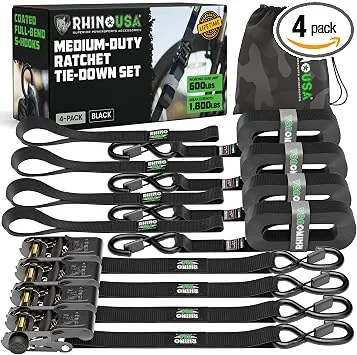 |
Rhino USA Ratchet Tie Down Straps (4-Pack), 1in x 15ft – $36.90 This is the strap style referenced in the securing and FMCSA working-load-limit sections below — 600 lb working load limit per strap, so two crossed straps give roughly 600 lbs of real holding power for a trunk load of lumber.
|
A roll of ratchet straps, an old moving blanket or tarp to protect seats and paint, and — for anything longer than the car itself — a red flag or reflective marker are the only real requirements. Rope and bungee cords stretch under vibration and are not a substitute for a rated ratchet strap on anything heavier than a few boards.
How Much Wood Can Your Vehicle Actually Carry
Check the payload capacity sticker on the driver’s door jamb before loading — it lists the maximum combined weight of passengers and cargo, not just cargo alone. A typical sedan’s payload capacity is 850–1,000 lbs; a rough-cut oak board 8 feet long and 2 inches thick weighs roughly 60–70 lbs, so a stack of ten fills a meaningful share of that budget fast.
Subtract the weight of passengers and anything already in the trunk from that payload number before estimating how much wood is left to carry — overloading softens suspension response and extends stopping distance well before a warning light ever comes on.
Loading Strategy by Wood Length
Where the wood goes depends almost entirely on how long it is relative to the car:
| Wood Length | Where It Goes | Watch For |
|---|---|---|
| Under 4 ft | Trunk or back seat, diagonally | Sharp cut ends near upholstery |
| 4–8 ft | Folded rear seats through to the front, or partly out a cracked trunk/hatch | Rear window and mirror obstruction |
| Over 8 ft | Roof rack, load bars, or a rented trailer (or switch to a pickup — see our guide to transporting plywood in a pickup) | Legally required flag/light on the overhang |
Secure the Load Step by Step
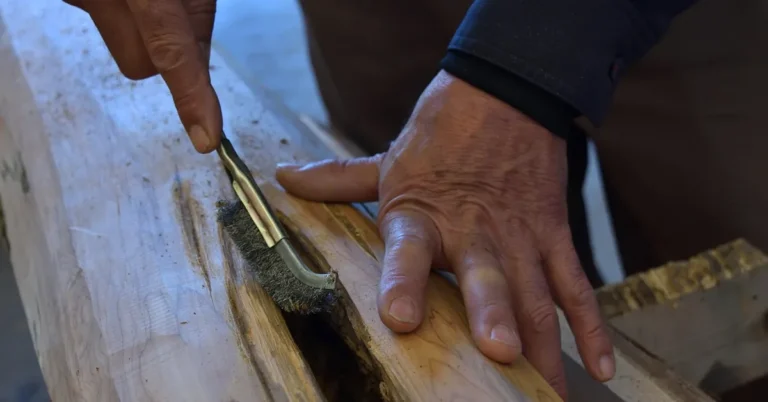
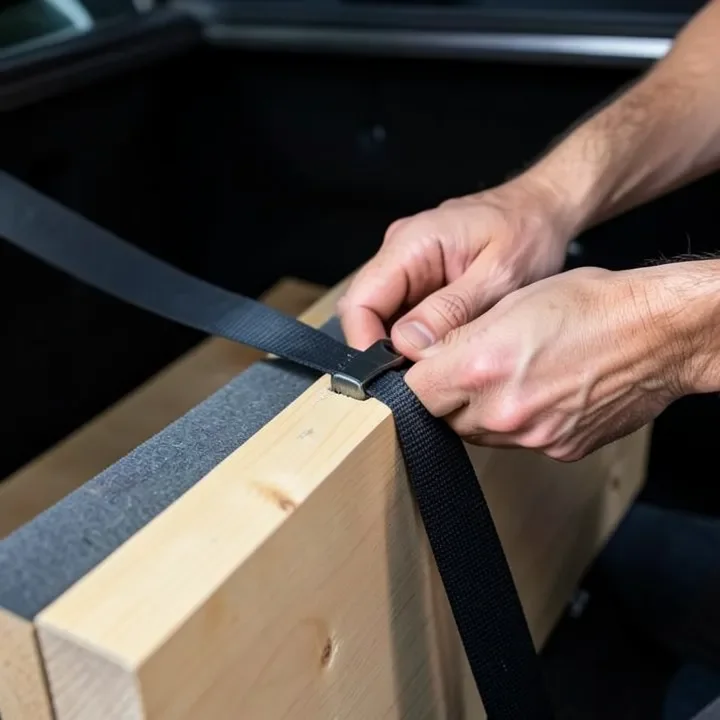
- Pad contact points: Lay a moving blanket or tarp anywhere wood touches paint, glass, or upholstery.
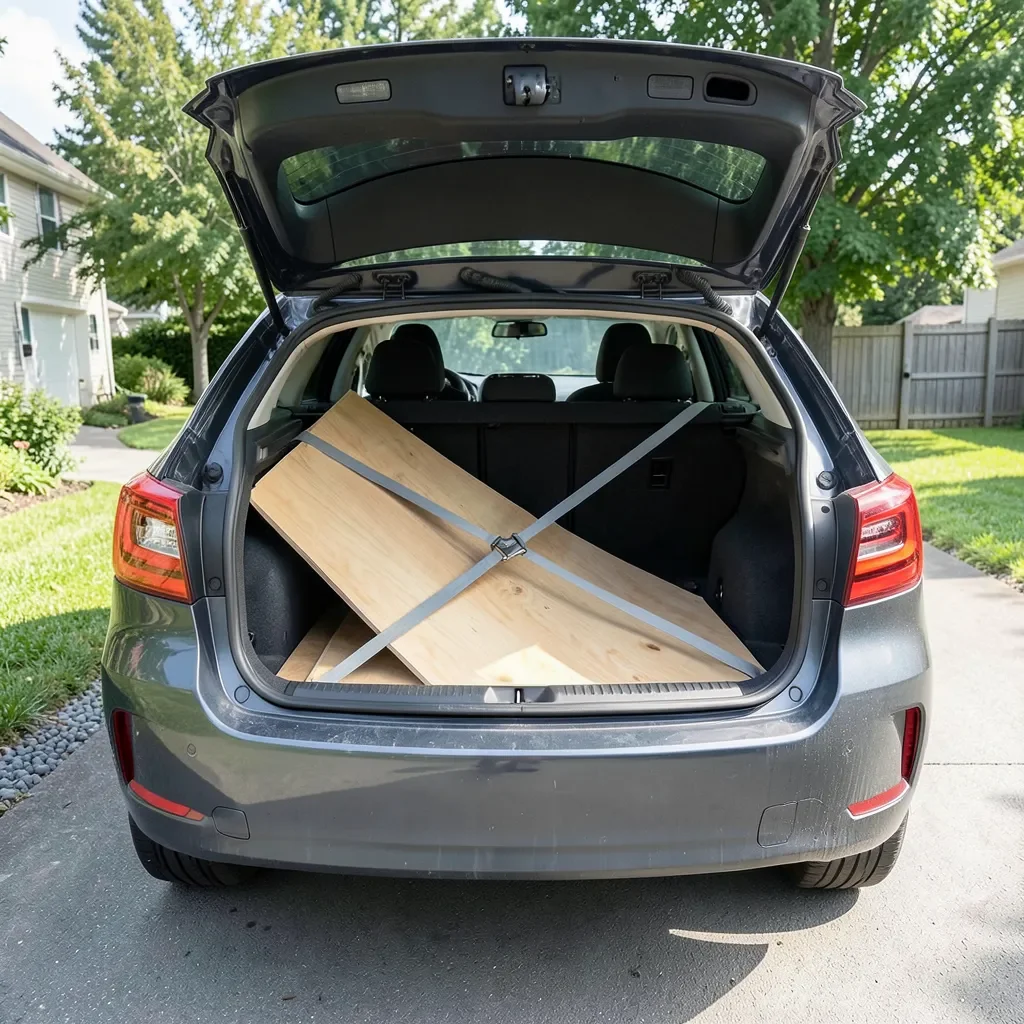
- Pick two anchor points minimum: Use factory tie-down loops, roof rack crossbars, or a cargo hook — never a seatbelt buckle alone.
- Cross the straps when possible: An X pattern resists both forward and side shifting better than parallel straps.
- Ratchet snug, not maximum: Tension until the wood cannot shift by hand; over-tightening thin boards can crack them.
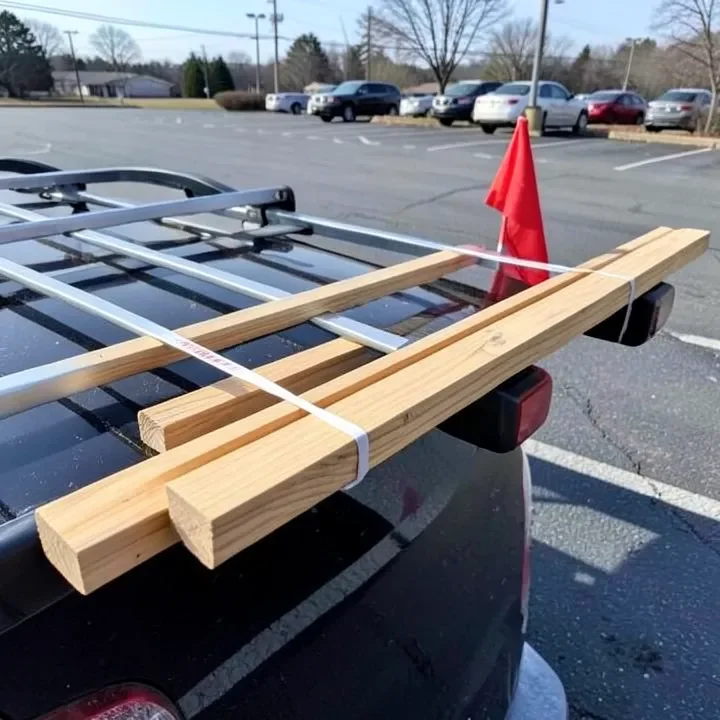
- Add the flag or light if it overhangs 4+ feet: Clip it to the extreme rear end of the load, not the bumper.
- Re-check after the first few miles: Straps settle as the load compresses; retighten once before continuing.
“The aggregate working load limit of the tiedowns used to secure a load must be at least one-half the weight of the cargo they are holding.”
That rule is written for commercial trucking, but the math holds up for a car trunk too: two straps each rated for 600 lbs give you roughly 600 lbs of usable holding power (not 1,200) once routing and angle losses are accounted for — plan the number of straps around the load, not the other way around.
Legal Overhang and Flag Rules
Most states regulate exactly how far wood can stick out past your car and what has to mark it:
📊 A load extending 4 feet or more beyond the rear of the vehicle requires a red flag (commonly at least 12–18 inches square) by day, and red lights or reflectors visible from 500 feet at night, in most states. — Source: Virginia Code § 46.2-1121, Flag or Light at End of Load. Exact flag size and side-overhang limits vary by state, so check your own state’s motor vehicle code before a long-board run.
Side overhang is regulated separately and more strictly than rear overhang in most states — if a board sticks out past your mirrors on either side, it is safer and often required to trim it, reposition it, or use a roof rack instead.
Protecting Your Car’s Interior
- Fold rear seats down before loading rather than trying to angle wood over them — it reduces scratches and gives a flatter surface for straps. For loading a truck bed instead, see our guide to hauling 16-foot lumber in a pickup.
- Crack a window slightly on humid days when hauling freshly cut or wet wood to reduce condensation on interior glass.
- Vacuum out bark, sawdust, and sap residue promptly — sap left on carpet or fabric sets permanently within a day or two in warm weather.
Frequently Asked Questions
How do I secure wood in my car?
Pad every contact point with a blanket, run ratchet straps — not rope or bungee cords — through at least two solid anchor points in an X pattern, and tension until the load cannot shift by hand.
What type of wood can I transport in a car?
Any dimensional lumber, plywood sheet, or firewood load that fits within your vehicle’s payload capacity and can be secured to at least two anchor points works. Wet, freshly cut, or sap-heavy wood needs a tarp barrier to protect upholstery.
Can I fit large wood pieces in my vehicle?
Pieces longer than about 8 feet generally need a roof rack, load bars, or a trailer rather than the interior — folding rear seats can extend interior space to roughly 6–7 feet in most sedans and hatchbacks, but rarely more.
Is it safe to transport wood in a trunk?
Yes, for pieces short enough to close or nearly close the trunk lid, as long as the load is strapped to a fixed anchor point rather than left loose. A trunk lid tied shut over protruding wood is not a substitute for a proper flag if the load extends 4 or more feet past the bumper.
Conclusion
Match the wood’s length to the right part of the car, strap it to at least two anchor points with ratchet straps rated for the load, and flag anything overhanging 4 feet or more — that sequence covers what actually causes roadside incidents, not the specific vehicle you happen to drive.
Sponsored / affiliate links. As an Amazon Associate I earn from qualifying purchases. I may earn additional commission from eligible campaigns.