How to Transport Plywood in a Pickup (Does a 4×8 Sheet Fit?)
A standard 4×8 plywood sheet measures 96 inches long, so it only lies flat with the tailgate up in an 8-foot long bed — a 5.5-foot short bed or 6.5-foot standard bed needs the tailgate down, with the sheet overhanging the rear. Federal rule 49 CFR 393.87 requires a red or orange flag on any load overhanging more than 4 feet past the tailgate, and two flags once the load is wider than 2 feet — a full sheet is 4 feet wide. This guide covers bed-length fit, tie-down technique, and the overhang flag rule. Hauling in a car or SUV instead of a pickup? See our guide to transporting wood in a car.
Does a 4×8 Sheet of Plywood Fit in Your Truck Bed?
Best Ratchet Straps for Hauling Plywood
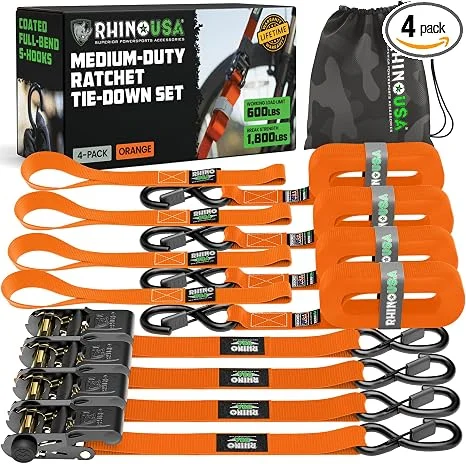 |
Rhino USA Ratchet Straps Tie Downs, 1in x 15ft (4-Pack) – $39.80 This guide recommends ratchet straps over rope for exactly the reason above — rope stretches loose on the highway, while a ratchet mechanism holds tension mechanically for the whole drive.
|
A full sheet of plywood is 48 by 96 inches. Whether it lies flat inside your bed with the tailgate closed depends entirely on your bed length — most pickups fall into one of three standard lengths, and only the longest one swallows a full sheet without an overhang.
| Bed Length | Approx. Length | Fits a 96″ Sheet Flat? |
|---|---|---|
| Short bed | ~66 in (5.5 ft) | No — about 30 in overhangs with the tailgate down |
| Standard bed | ~78 in (6.5 ft) | No — about 18 in overhangs with the tailgate down |
| Long bed | ~96 in (8 ft) | Yes, flat with the tailgate up and closed |
Measure your own bed rather than assuming — the same truck model often comes in two or three bed lengths, and the numbers above are rounded averages. If your bed is a short or standard length, plan on hauling with the tailgate down and the load overhanging the rear. If you don’t have a pickup at all, or the sheet needs to ride inside an SUV or car instead, see our complete 4×8 plywood transport guide covering every vehicle type, or how to secure plywood to a roof rack if the bed is too short and you’d rather not deal with an overhang at all.
The 4-Foot Overhang Rule (and When You Need a Flag)
Federal rule 49 CFR 393.87 requires a red or orange fluorescent warning flag, at least 18 inches square, on any load extending more than 4 feet past the rear of the vehicle. A full plywood sheet is 4 feet wide — wider than the 2-foot threshold in the same rule — so once it overhangs past that 4-foot mark, you need two flags, one at each rear corner, not just one in the middle.
On a short bed with the tailgate down, roughly 30 inches (2.5 feet) of sheet typically overhangs the tailgate — under the 4-foot trigger, so a flag isn’t federally required in that specific case, though checking your state’s own rule is still worth doing since some states set a lower threshold. If you’re hauling something longer, like framing lumber, that clears 4 feet of overhang, see our full breakdown of the 4-foot overhang rule for lighting requirements after dark.
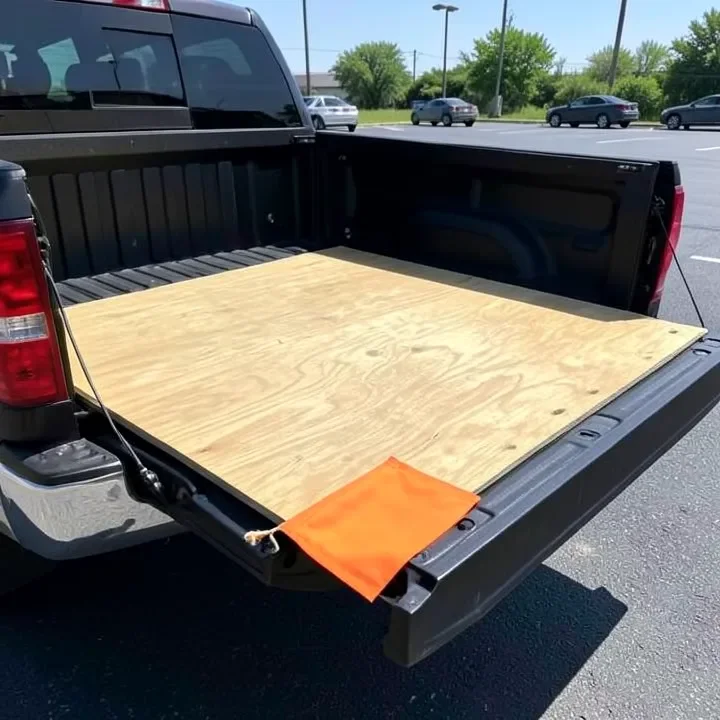
Preparing Plywood and the Truck Bed
Inspect each sheet for cracks, splintered edges, or delamination before loading — a damaged sheet can shed splinters or break apart under strap tension. Sweep the bed clear of gravel, tools, or anything that could scratch the plywood face or roll underneath it and rock the load.
Lay down a moving blanket, rubber mat, or even a sheet of cardboard on the bed floor first. It keeps the plywood face from getting scuffed by the bed liner and adds a bit of grip that plain metal or plastic doesn’t provide.
Loading Plywood Safely
Load with a second person whenever the sheet is full-size — a 4×8 sheet of ¾-inch plywood weighs roughly 60 pounds, and an awkward one-person lift in a stiff wind is how sheets end up bent or dropped on a foot. Lift flat, keep it vertical while walking it to the truck, then lower it flat onto the bed.
Put the heaviest sheets down first and keep the load centered over the rear axle rather than pushed all the way to the tailgate — too much weight hanging past the axle lifts weight off the front wheels and can affect steering response.
Securing the Load: Straps, Not Rope
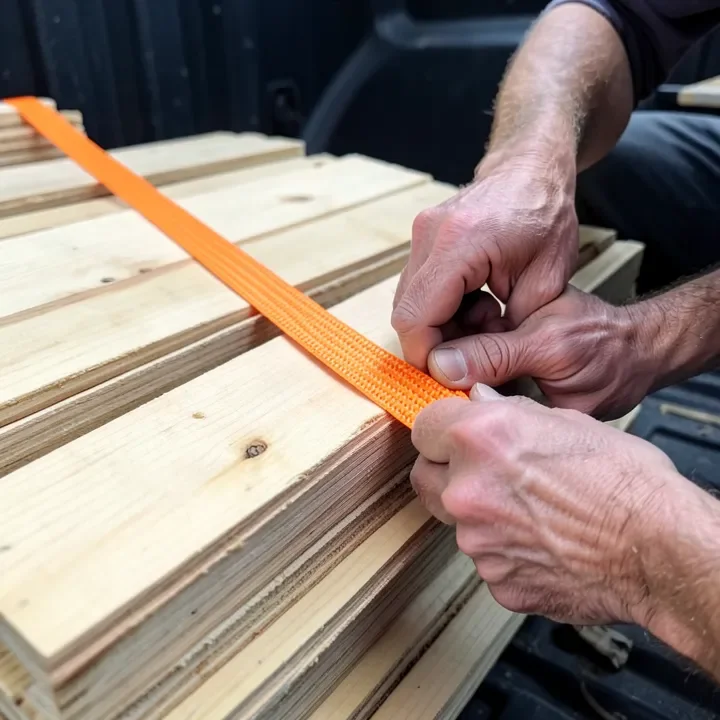
Use ratchet straps, not rope, for full sheets. Rope stretches under load and loosens further as highway vibration works it loose — a strap that felt tight in the driveway can be visibly slack 20 minutes down the highway. A ratchet mechanism holds tension mechanically instead of relying on a knot.
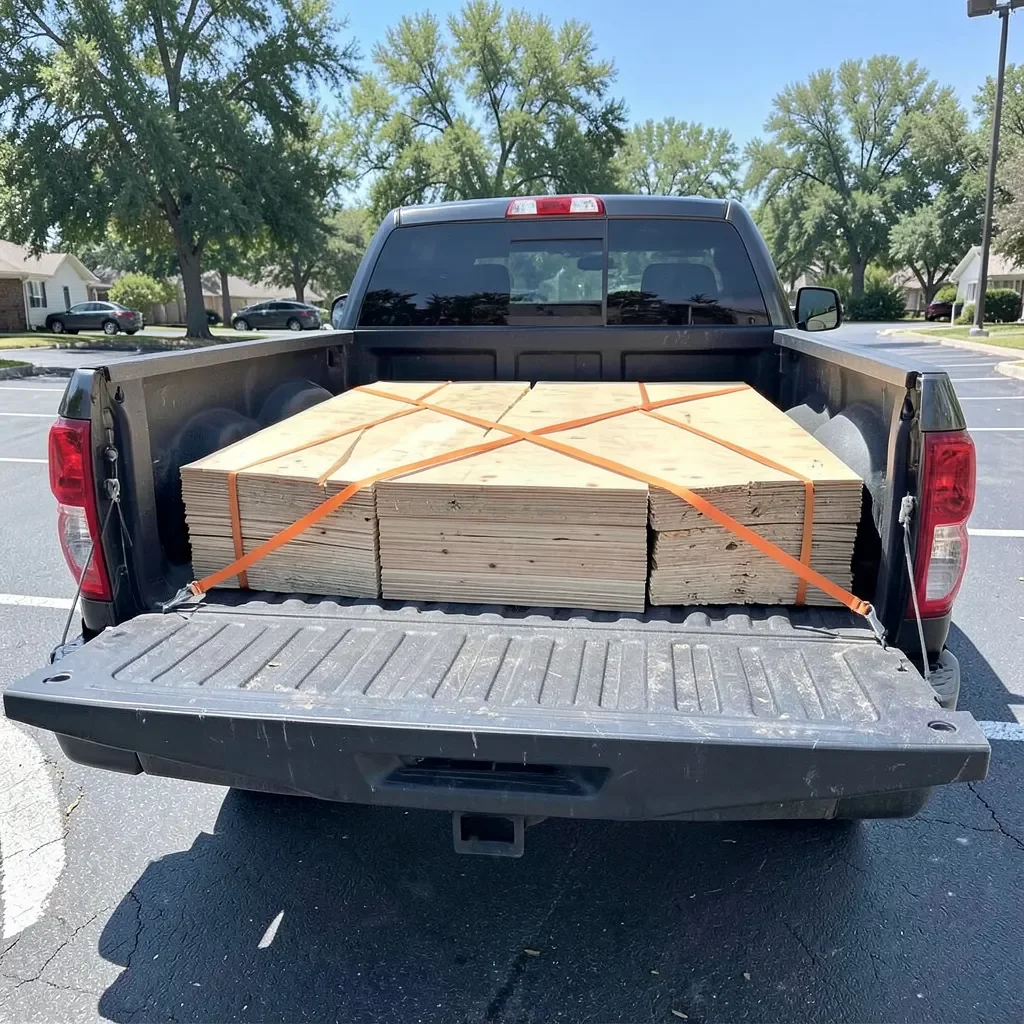
Run at least two straps per stack, crossed in an X pattern over the top of the sheets and hooked to tie-down points on opposite sides of the bed. Crossing the straps resists both forward-and-back sliding and side-to-side shifting, where a single straight-down strap only resists one direction.
📊 A load overhanging more than 4 feet past the tailgate needs an 18-inch-square red or orange flag under federal rule, with two flags required once the load is wider than 2 feet. — Source: eCFR, 49 CFR 393.87
A flat sheet of plywood angled even slightly into oncoming wind acts like a sail at highway speed — the lift can work a strap loose or peel a corner up over several miles, which is why crossed straps and a centered load matter more on a full sheet than on a compact, boxy load.
Driving and Unloading
Keep speeds moderate, especially on the highway where wind lift is strongest on a flat sheet. Check the load in your mirrors every few minutes for the first 10-15 minutes of the drive — that’s when straps that weren’t tight enough usually reveal themselves.
To unload, back the truck close to where the sheets are going, release the straps fully before lifting anything, and lift one sheet at a time with a second person if the stack is more than two or three sheets. Keep your back straight and let your legs do the lifting.
Common Mistakes When Hauling Plywood
- Using rope instead of ratchet straps. Rope stretches and loosens with highway vibration — a load that looked secure in the driveway can work loose by the time you’re on the highway.
- Skipping the overhang flag when it’s actually required. If your load overhangs more than 4 feet past the tailgate, an unflagged load is a real ticket risk, not just a technicality.
- Not accounting for wind lift on flat sheets. A boxy load and a flat sheet behave differently at highway speed — a sheet acts like a sail and needs more tie-down points than its weight alone would suggest.
- Loading all the weight behind the rear axle. Pushing every sheet to the tailgate lightens the front wheels and can make steering feel vague at speed — keep the load centered over the axle.
Frequently Asked Questions
Does a 4×8 sheet of plywood fit in a short bed truck?
Not flat with the tailgate closed. A short bed runs about 5.5 feet (66 inches), so a 96-inch sheet needs the tailgate down and will overhang the rear by roughly 30 inches. Only a long bed, around 8 feet, fits a full sheet flat with the tailgate up.
How do you secure plywood in a pickup truck?
Use at least two ratchet straps, crossed in an X pattern over the top of the stack and hooked to tie-down points on opposite sides of the bed. Ratchet straps hold tension mechanically, unlike rope, which stretches and loosens as you drive.
Do you need a flag for plywood sticking out of your truck bed?
Only if the load overhangs more than 4 feet past the tailgate, per 49 CFR 393.87. A typical short-bed overhang of a full sheet is around 30 inches, which is under that threshold, but check your state’s specific rule since some set a lower limit than the federal one.
Can I transport plywood without a cover?
Yes, but exposure to rain can cause the plies to swell and separate, and wind can lift an unsecured sheet at highway speed. If you skip a tarp, at minimum keep the straps tight and avoid driving in wet weather with an exposed load.
What’s the best way to load plywood into a truck?
Lift with a second person, keeping the sheet flat rather than dragging a corner across the bed. Stack heavier sheets on the bottom and center the load over the rear axle instead of pushing everything back against the tailgate.
Most plywood-hauling problems come from treating a flat sheet like any other cargo — it isn’t. Know your bed length before you buy the sheet, cross your straps instead of running them straight, and flag the overhang if it clears 4 feet. That covers the three things that actually cause tickets or lost loads.
Sponsored / affiliate links. As an Amazon Associate I earn from qualifying purchases. I may earn additional commission from eligible campaigns.