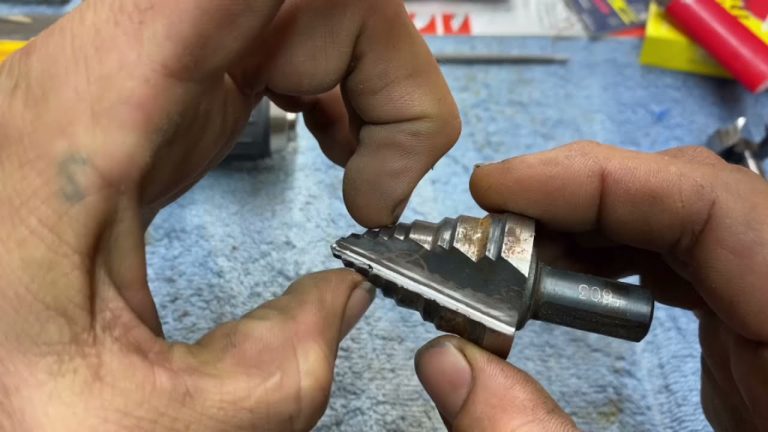
Best Hole Saw Kits for Wood (2026): we compared
The best hole saw kit for wood is often a carbide-tipped or fine-tooth bi-metal set built around the sizes you reach for most, such as 1-1/4, 1-1/2, 2, and a bit over 2 inches, plus a solid arbor and plug-ejection slots. Cheap oversized kits can tear edges, bind plugs, and leave hardware holes that need extra sanding or patching. This guide narrows the best kits by cut quality, plug removal, and the sizes most useful for cabinets, door hardware, and wiring.
Quick comparison
| Product | Badge | Best for | Price | ||
|---|---|---|---|---|---|
 |
Spyder 17-Piece Bi-Metal Master Electrician Hole Saw Kit,Spyder | Our pick | 17-Piece Bi-Metal Master Electrician Hole Saw Kit | $136.95
Price as of 11 Oct 2026
|
View |
 |
KJE 20 in 1 (1/2"to 2-1/8") Carbide Hole Saw Kit for MetalKJE | Upgrade pick | 20 in 1 Carbide Hole Saw Kit | $49.99
Price as of 11 Oct 2026
|
View |
 |
KATA 8PCS Hole Saw Kit 1"-2-1/8" Deep Cut 48mm for Wood,KATA | Budget pick | 8PCS Hole Saw Kit Deep Cut | $13.99
Price as of 11 Oct 2026
|
View |
Use this comparison to separate clean woodworking kits from oversized mixed-material sets. The right choice depends less on blade count than on the diameters you need, how deep the saw cuts, and whether the arbor makes plug removal easy.
📊 DeWalt’s kit includes 11 blade sizes. Source: The Best Hole Saw Kits.
How we chose
For wood, clean edge quality comes first. Next are plug removal, depth, and size coverage for common shop tasks like hinge cups, lock bores, and cord pass-throughs.
We also weighed arbor and pilot-bit usability, because a good saw is only as useful as its mandrel system and replacement parts. Case layout and extra storage slots matter when you need the right diameter fast.

Spyder 17-piece bi-metal master electrician kit: best for mixed wood and light metal work
This kit fits woodworkers who also drill through plastic or thin metal from time to time. Spyder’s set includes 13 hole saws, Hex8 and Hex10 HSS pilot bits, and a Rapid Core Eject arbor system, so it has the hardware side covered for cordless or corded drills.
The size spread runs from 7/8 to 4-7/8 inches, which covers many common openings and then some. The tradeoff is focus: an electrician-style kit is not tuned as tightly for the cleanest cabinetry edges as a finer-tooth woodworking set, and the larger spread can tempt you to buy sizes you may rarely use.
Kje 20 in 1 carbide kit: best for frequent cutting in harder materials
This is the pick for a user who wants a tougher cutter that can move between wood and harder sheet goods with less fuss. Based on the spec sheet, it includes a set of hole saws, tungsten carbide tipped teeth, titanium pilot drills, and an aluminum box, with sizes spanning roughly 1/2 to a little over 2 inches.
That carbide tooth style is the main advantage when you want cleaner, faster drilling in abrasive materials. The tradeoff is that a metal-oriented carbide kit is usually less purpose-built for the crispest plywood or finished-cabinet edge than a fine-tooth woodworking kit, so your finish expectations should stay realistic.
Kata 8-piece deep cut kit: best budget pick for basic wood holes
This is the simplest low-cost option for occasional wood, plastic, and drywall drilling. It covers common small-to-mid sizes from 1 inch to 2-1/8 inches and lists a deeper cut up to 1.89 inches, which helps when the stock is thicker than the usual shallow kit can handle.
The tradeoff is that it uses heat-treated carbon steel blades, not a higher-end bi-metal or carbide layout, so it is the least attractive choice for repeated hardwood work or for users who care about edge quality above all else.
What size hole saw do you need for wood?
For most woodworking, choose the finished opening first, then back into the saw size. Common needs cluster around 1-1/4 inches for smaller pass-throughs, 1-1/2 inches for cable bundles, 2 inches for larger grommets, and 2-1/8 inches for many hardware and utility openings.
That approach matters because the hole saw diameter must match the part, not the package label. If you are drilling for a lockset, hinge cup, or cable plate, the part’s outside diameter or recess spec is the number to follow.
Common diameters by task
- Cabinet hardware and small pass-throughs: 1-1/4 to 1-1/2 inches
- Cord pass-throughs and larger cable bundles: 2 inches
- Grommets, larger bushings, and utility openings: 2-1/8 inches
- Oversize shop or wiring holes: choose only if the saw and arbor are rated for the depth and torque you need
How to match the saw to the finished opening
Measure the opening your fitting needs, not the hole saw box. If the part seats inside a hole, compare the body diameter of the fitting, then allow for the fit specified by the hardware maker.
A common first-timer mistake is picking the saw that looks “close enough” and then trying to sand the hole bigger. That often leaves an oval opening, especially in plywood and finished cabinetry.
Best overall: bi-metal kit with a quick-change arbor
A bi-metal kit is the safest all-around choice for wood because it balances durability, tooth geometry, and occasional soft-metal use. Bi-metal hole saws use durable steel construction and are common in kit format, which makes them a practical baseline for most DIY woodworkers.
Look for a quick-change arbor if you switch sizes often. The best arbor/mandrel systems also tell you plainly whether the pilot bit is included, what threaded adaptor sizes it uses, and whether removal is tool-less or standard wrench-off.
Why it fits most DIY woodworkers
For drilling shelves, face frames, cabinet backs, and trim, a good bi-metal kit usually gives you enough edge quality without pushing you into specialty gear. The tooth geometry is the key detail: finer, sharper teeth tend to cut hardwood more cleanly than bargain carbon-steel sets.
Where it beats a huge mixed-material set
A giant kit often wins on piece count and loses on practicality. If you mainly drill 1-1/4, 1-1/2, 2, and 2-1/8 inch holes, a compact bi-metal set with a solid arbor is easier to store, faster to grab, and less likely to leave you sorting through unused sizes.
Best for clean cabinetry holes: fine-tooth kit
Cabinetry asks more from a hole saw than rough framing does. Plywood, veneer, and finished stock can chip at the entry and blow out at the exit, so a finer tooth pattern and controlled depth matter more than raw speed.
The best sign of a cabinetry-friendly kit is a tooth style that favors smoother cutting and a body shape that clears chips without packing them tight. A specialty saw is the better choice when you need a cleaner edge than a general-purpose mixed-material kit can usually provide.
Why tooth geometry matters in plywood and finished stock
Fine teeth bite more gradually, which helps reduce tear-out on veneer faces and laminates. In cleaner woodworking, slower feed plus a better tooth pattern is usually more effective than trying to force a fast, coarse cutter through the work.
When a specialty saw is better
If the opening will remain visible after installation, a specialty woodworking hole saw is often worth it. That is especially true for cabinet fronts, painted trim, and furniture panels where ragged fibers are easy to spot.
Can you use a hole saw on hardwood?
Yes, but hardwood demands better teeth, more patience, and more attention to heat and plug clearing. A bi-metal saw with sharper tooth geometry is usually the minimum sensible choice, and thicker hardwood can expose weak arbors, poor chip clearing, or shallow cutting depth very quickly.
To reduce burning, use steady pressure, back the saw out often, and clear chips before they pack the gullets. For finished work, score the face first or drill from both sides when tear-out on the exit face would be a problem.
What to look for in tooth design and depth
Deep gullets help the saw move chips away from the cut, which reduces heat buildup and helps keep the cut moving. The DeWalt kit is a good example of that approach, using deep gullets for chip removal and listing a maximum cutting depth of 1-7/8 inches, while Bosch’s general-purpose kit lists 1-5/8 inches and cut 3/4-inch hardwood in 4 seconds.
Depth matters because a saw that cannot reach through the stock in one pass often leaves a worse exit edge. If your work regularly exceeds 1-1/2 inches thick, check the maximum cutting depth before you buy.
How to reduce burning, wandering, and ragged exit holes
- Mark the center point clearly and start with a sharp pilot bit.
- Clamp the work so the saw cannot skate at startup.
- Use moderate drill speed and let the teeth cut, not rub.
- Back out often to clear chips from the gullets.
- Slow down before breakthrough or drill from the opposite face.
Woodworking selector: choose by project type
This is the practical buying tool most generic kits skip. Match the saw to the task, then check whether a standard bi-metal kit is enough or whether a specialty saw makes more sense for the finish you need.
| Project type | Exact hole diameter | Ideal saw design | Is a standard bi-metal kit enough? |
|---|---|---|---|
| Euro-style hinge cup | 35 mm, about 1-3/8 in. | Fine-tooth bi-metal or cabinetry-specific saw | Usually yes, if the edge must stay clean |
| Cabinet lock or latch body | 1-1/4 to 2-1/8 in., depending on hardware | Bi-metal with good chip clearing | Yes |
| Cord pass-through in a desk or shelf | 1-1/2 to 2 in. | Bi-metal with deep gullets | Yes |
| Built-in wiring chase or utility opening | 2 to 4 in., depending on routing space | Bi-metal with solid arbor and higher depth rating | Yes, if depth matches the stock |
| Finished cabinetry face hole | Exact hardware size only | Fine-tooth or specialty cabinetry saw | Sometimes, but specialty is safer |
| Occasional metal or plastic alongside wood | Project-specific | Bi-metal or carbide-tipped mixed-material kit | Yes for light duty |
Cabinet hardware and hinge cups
For hinge cups and similar cabinet hardware, the right diameter matters more than the number of saws in the box. Choose the closest match to the hardware spec and favor a finer tooth pattern so the face veneer stays clean.
Cord pass-throughs and shop wiring
For desks, benches, and built-ins, you usually want a clean 1-1/2 to 2 inch hole. A bi-metal kit with decent depth and chip clearing is usually enough unless you are cutting through unusually thick material.
Plumbing holes in furniture and built-ins
Larger openings for drain lines or fixture connections may push you toward deeper-cut saws. Check the kit’s maximum cutting depth first, because a shallow saw can stall halfway through the workpiece or leave a rough exit hole.
Occasional mixed-material jobs
If you also cut thin metal, plastic, or drywall, a bi-metal set still makes sense. The best hole saw works with a standard cordless or corded drill, but torque, arbor quality, and saw diameter still determine whether the drill feels controlled or strained.
Which one should you buy?
If you want the smallest budget buy, the Kata 8-piece kit is the easiest entry point, but it is also the least suited to repeated hardwood work. For more frequent woodworking, a bi-metal kit with a dependable quick-change arbor is the better long-term choice.
If you need deeper cuts or larger diameters, the DeWalt-style layout is the stronger model to look for because it pairs deep gullets with 1-7/8 inches of maximum cutting depth and includes 2 drill bits. For a wide mixed-material spread, Milwaukee’s professional kit stands out on size count, while Lenox’s 26-piece kit is notable for the 20 hole saw sizes noted by Garage Tooled.
Say your project is a desk grommet and a hinge cup on the same weekend. A compact bi-metal kit covering 1-1/4, 1-1/2, 2, and 2-1/8 inches is usually more useful than a giant box full of rarely used sizes.
Best pick for the smallest budget
Choose the Kata 8-piece kit if you need a low-cost set for occasional wood, plastic, or drywall holes. Its deep cut rating helps with thicker stock, but the carbon-steel construction is the tradeoff.
Best pick for frequent woodworking use
Choose a bi-metal kit with a solid arbor, quick-change compatibility, and the sizes you actually reach for most. That combination usually gives better edge quality and less frustration with plug removal than a bulky, mixed-purpose set.
Best pick if you need deeper cuts or larger diameters
Choose a kit with a higher depth rating and clear plug-ejection features. DeWalt’s 1-7/8 inch maximum cutting depth and deep gullets make that direction easy to justify for thicker wood.
When to buy a specialty saw instead of a standard kit
If the hole will remain visible, or if the material is expensive veneer, finished cabinetry, or laminated stock, a specialty woodworking saw is worth the extra caution. For rough utility holes, a standard bi-metal kit is usually enough.
How to use a hole saw kit
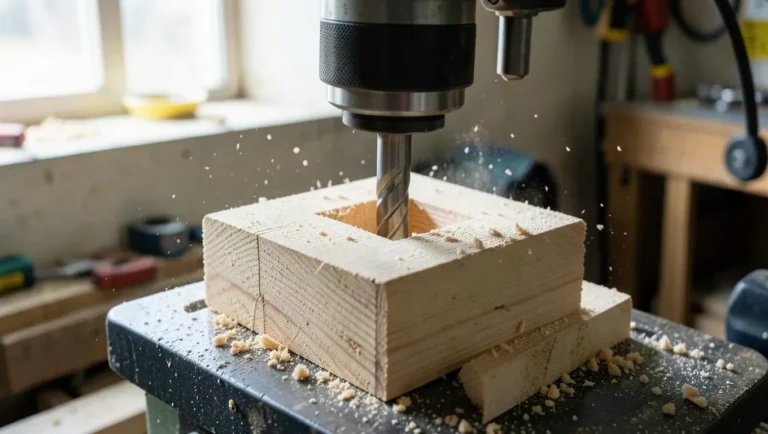
Use a hole saw by marking the center, drilling a pilot point, and letting the arbor keep the saw aligned while the teeth cut the perimeter. A standard cordless or corded drill is enough for the job, but the saw size, wood species, and arbor quality all affect how hard the drill must work.
The most common mistake is pushing too hard. That causes heat, wandering, and a rougher hole than the saw should make.
Basic steps
- Mark the center of the hole and clamp the work.
- Install the correct saw on the arbor and tighten it fully.
- Use the pilot bit to start the hole straight.
- Run the drill at a steady speed with light to moderate pressure.
- Back out periodically to clear chips.
- Stop before breakthrough if the exit face must stay clean.
What to watch for while drilling
If the saw starts to chatter, the feed is too aggressive or the work is not clamped well enough. If the cut smells hot or the chips turn to powder, slow down and clear the gullets.
How do you remove the wood plug from a hole saw?
Wood plugs come out easiest when the saw has speed slots, deep gullets, or a core-ejection system. If the plug jams, stop the drill and push it out from the rear before it binds harder or cracks the cut edge.
That matters because plug removal is one of the main day-to-day frustrations for wood users. A saw that cuts well but traps every core is a nuisance on repeat jobs.
Plug removal features to look for
- Speed slots: help release the plug and improve chip clearing
- Deep gullets: leave more room for sawdust and reduce clogging
- Staircase or stepped bodies: can make core release easier on certain designs
- Core-ejection arbors: push the plug off faster after the cut
How easy should plug ejection be?
For occasional use, manual plug removal is tolerable. For repeated cabinet or electrical work, the best kit is the one that keeps you from prying out every core with a screwdriver.
What is the largest hole saw for wood?
For woodworkers, the largest useful hole saw is usually the largest diameter your drill, arbor, and stock thickness can control without stalling or binding. Many kits stop around 4 inches, while some mixed-material sets go larger; Spyder’s listed range reaches 4-7/8 inches, which is broader than most DIY wood users need.
The real limit is not only diameter. Larger saws demand better torque, cleaner chip evacuation, and more care on the exit face, especially in hardwood or thick stock.
What is the best hole saw kit
The best hole saw kit is the one that matches the wood you actually cut, the diameters you use most, and the depth your stock requires. For most DIY woodworkers, that points to a bi-metal set with 1-1/4, 1-1/2, 2, and 2-1/8 inch coverage, a stable arbor, and some kind of plug-ejection help.
For mixed jobs, a larger kit can make sense, but only if the extra sizes are ones you will use. More pieces do not automatically mean better woodworking results.
Frequently asked questions
What is the best hole saw kit for woodworking?
The best hole saw kit for woodworking is usually a bi-metal set with the exact diameters you use most, a sturdy arbor, and enough depth for your stock. For clean cabinetry and finished stock, fine-tooth geometry matters more than a huge piece count or a long list of materials on the box.
What hole saw kit is best for a cordless drill?
The best kit for a cordless drill uses efficient tooth geometry, a stable arbor, and sizes that do not overload the tool. Smaller and mid-size bi-metal saws are easier on the battery, while very large holes need more torque and a careful feed rate to avoid stalling.
Sponsored / affiliate links. As an Amazon Associate I earn from qualifying purchases. I may earn additional commission from eligible campaigns.