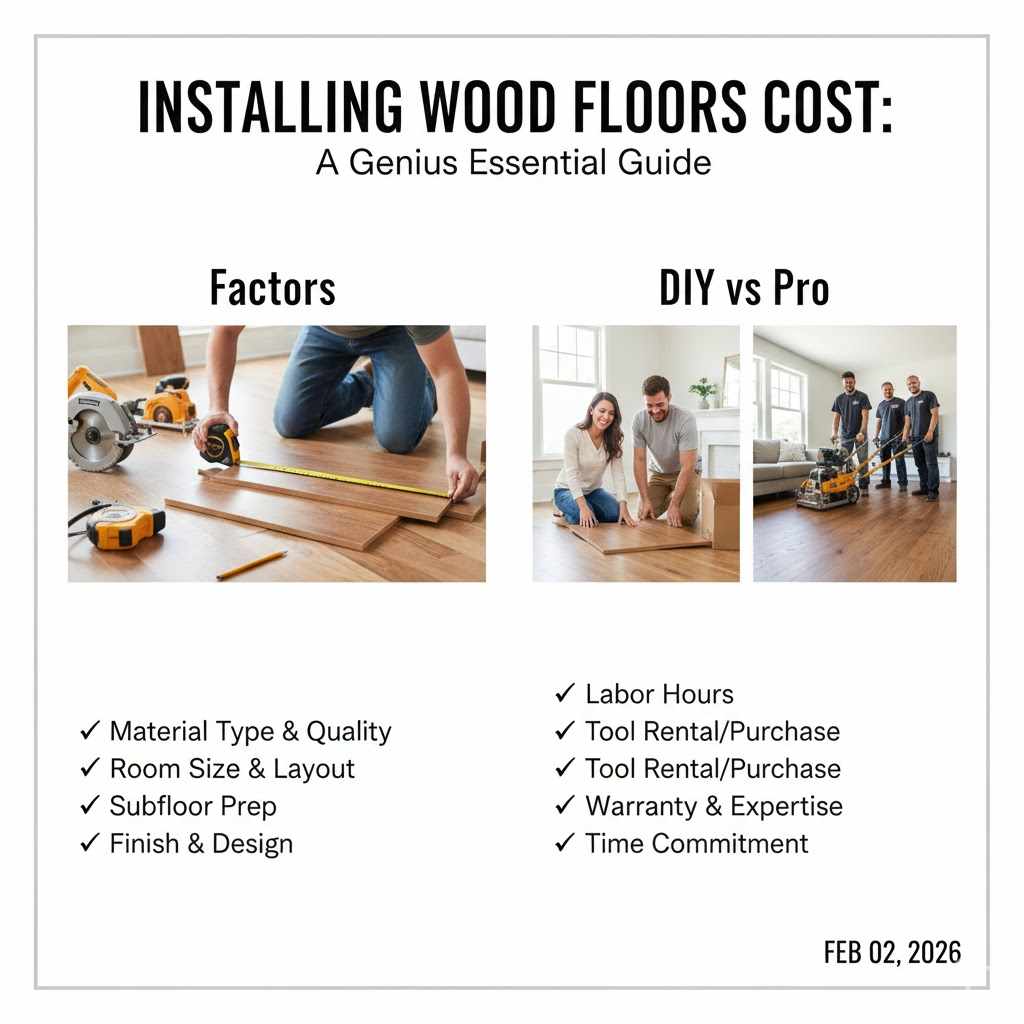
Installing Wood Floors Cost: A Genius Essential Guide
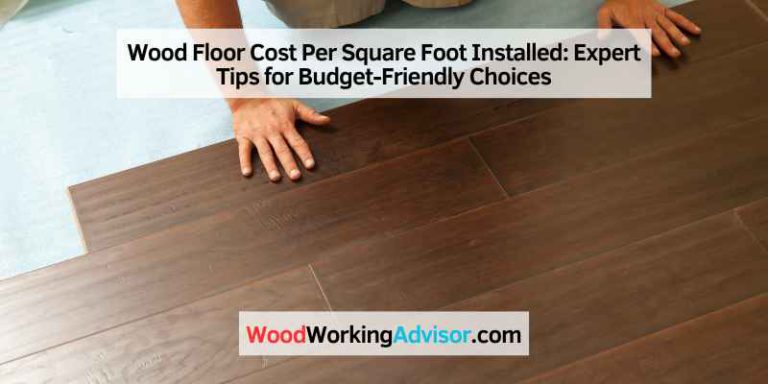
The average cost to install wood floors is $8 to $25 per square foot. This includes both materials and professional labor. Material costs alone range from $3 to $12 per square foot, while labor costs run $5 to $13 per square foot. Your total price will depend on the wood type and project complexity.
Hello, friends! Md Meraj here, your guide in the workshop. Dreaming of beautiful, timeless wood floors? It’s a wonderful upgrade for any home. But thinking about the cost can feel overwhelming. It’s a big project, and the numbers can get confusing fast. Don’t you worry. I’m here to clear things up and put you in control. Together, we will break down every part of the cost, step by step. You’ll learn exactly what to expect, how to plan your budget, and even find some clever ways to save. Let’s get you ready to create a floor you’ll love for years to come.
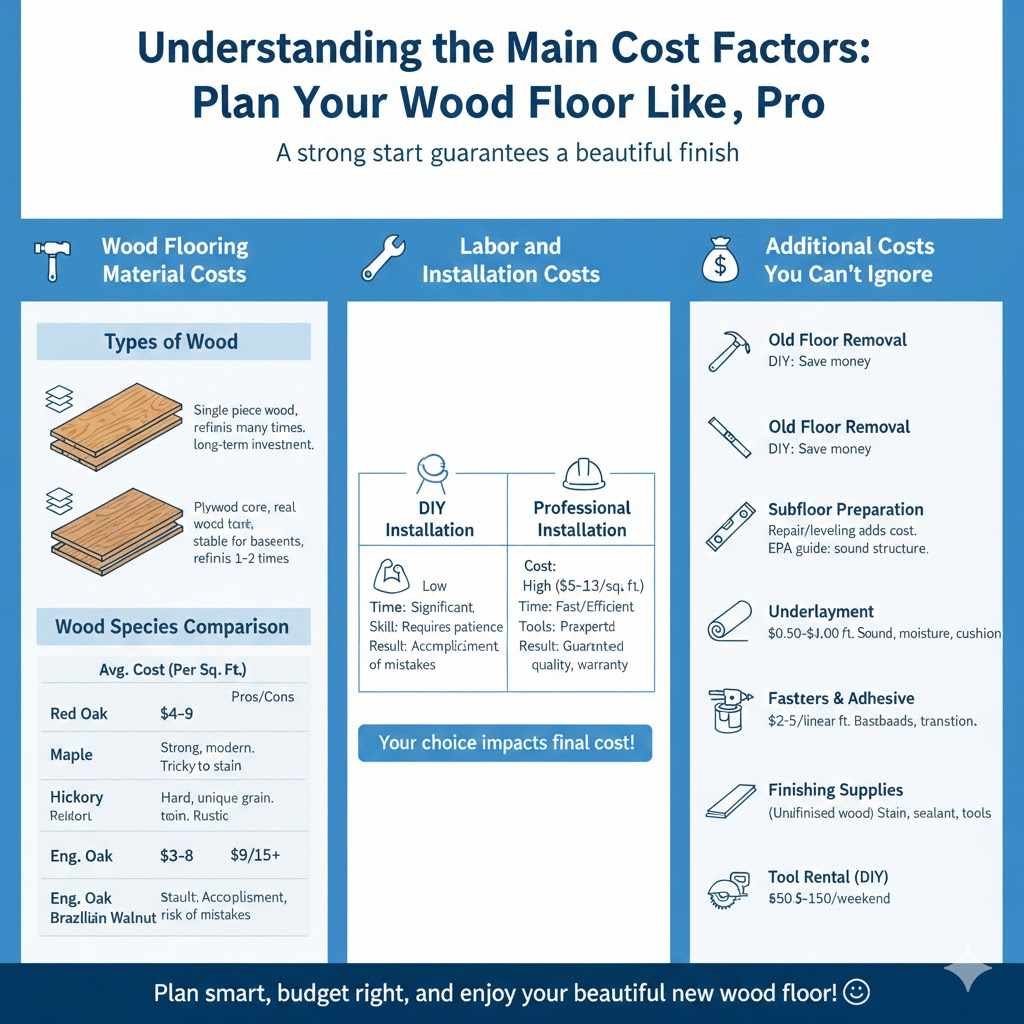
Understanding the Main Cost Factors
When you start pricing out your new wood floor, you’ll quickly see that the final number is a mix of a few key things. It’s not just about the wood itself! Think of it like baking a cake—you need flour, sugar, and eggs, but you also need to account for the pan, the oven’s electricity, and your time. Let’s break down the main ingredients of your flooring project cost so you can plan like a pro.
Wood Flooring Material Costs
The biggest piece of your budget will almost always be the wood itself. The price can swing wildly based on the type, species, and finish you choose. Knowing your options is the first step to finding the perfect floor for your home and your wallet.
There are two main categories of wood flooring:
- Solid Hardwood: This is what most people picture. Each plank is a single, solid piece of wood. It’s incredibly durable and can be sanded and refinished many times over its long life (often 100 years or more!). It’s a fantastic long-term investment.
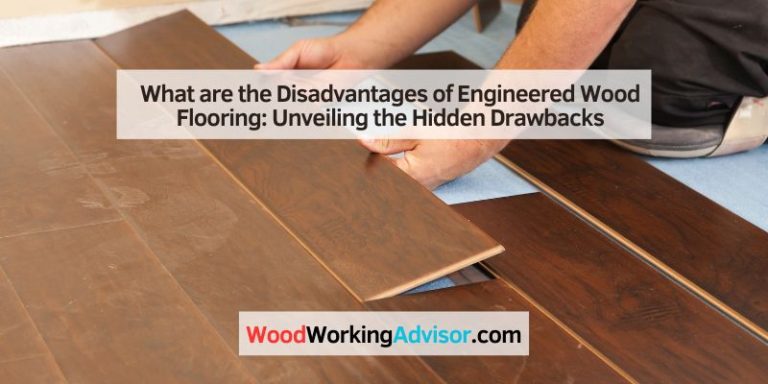
- Engineered Hardwood: This type is made of a core of high-quality plywood with a thin layer of real hardwood on top. It’s more stable than solid wood, making it a great choice for basements or areas with more moisture. It often costs a little less than solid hardwood but can’t be refinished as many times.
Beyond the type, the wood species plays a huge role in the price. Common domestic woods like Oak and Maple are usually very affordable. Exotic woods like Brazilian Walnut or Tigerwood look stunning but come with a much higher price tag.
Here’s a simple table to help you compare some popular options:
| Wood Type / Species | Average Cost (Material Only, Per Sq. Ft.) | Pros | Cons |
|---|---|---|---|
| Red Oak (Solid) | $4 – $9 | Very durable, classic look, takes stain well | Not ideal for high-moisture areas |
| Maple (Solid) | $5 – $11 | Strong, modern light color, smooth grain | Can be tricky to stain evenly |
| Hickory (Solid) | $5 – $10 | Extremely hard and durable, unique grain patterns | Rustic look may not fit all styles |
| Engineered Oak | $3 – $8 | Good for basements, stable, often DIY-friendly | Can only be refinished once or twice (or not at all) |
| Brazilian Walnut (Ipe) | $9 – $15+ | Incredibly hard and dense, beautiful rich color | Very expensive, difficult to install |
Labor and Installation Costs
After you buy the wood, someone has to install it! This is where you have a big choice to make: do it yourself or hire a professional. Your decision here will have a huge impact on the final cost.
Professional Installation: Hiring a pro typically costs between $5 and $13 per square foot. The price depends on where you live, the complexity of the job, and the installer’s experience. A simple square room will cost less than a room with lots of corners, stairs, or a tricky pattern like herringbone.
DIY Installation: Going the DIY route eliminates labor costs, which can save you thousands of dollars! However, it’s not “free.” You’ll need to buy or rent tools, and it will cost you your time and effort. It’s a rewarding project, but be honest about your skill level and patience.
Let’s compare these two paths:
| Factor | DIY Installation | Professional Installation |
|---|---|---|
| Cost | Low (tool rental/purchase only) | High ($5 – $13 per sq. ft.) |
| Time | Significant time commitment | Fast and efficient |
| Skill Level | Requires patience, research, and some handy skills | Handled by experienced experts |
| Tools | You must buy, borrow, or rent them | Professionals bring their own |
| Result | Great sense of accomplishment, but risk of mistakes | Guaranteed high-quality finish, often with a warranty |
Additional Costs You Can’t Ignore
It’s easy to focus on just the wood and the installation, but there are always little “extra” costs that can add up. Being aware of them from the start helps you create a realistic budget with no surprises.
- Old Floor Removal: If you have carpet, tile, or old wood, it needs to be torn out. A pro might charge $1 to $2 per square foot for this. You can save money by doing it yourself.
- Subfloor Preparation: Your new wood floor needs a clean, flat, and solid surface to rest on. If your subfloor is damaged or uneven, it may need repairs or leveling, which adds to the cost. The U.S. Environmental Protection Agency has great guides on ensuring your home structure is sound, which includes the subfloor.
- Underlayment: This is a thin layer of material (like foam or cork) that goes between the subfloor and the wood flooring. It helps with sound dampening, moisture protection, and cushioning. It usually costs $0.50 to $1.00 per square foot.
- Fasteners & Adhesive: Depending on the installation method, you’ll need nails, staples, or a special wood flooring glue. These costs can add up to $100-$200 for an average room.
- Trim & Molding: You’ll need baseboards, quarter-round molding, and transition strips to finish the edges of your room beautifully. Budget around $2 to $5 per linear foot.
- Finishing Supplies: If you buy unfinished wood, you’ll need to add the cost of stain, polyurethane sealant, and application tools. Pre-finished wood has this cost built-in.
- Tool Rental (for DIY): If you don’t own them, you may need to rent a floor nailer, miter saw, and jamb saw. This could cost $50 to $150 for a weekend.
Calculating Your Total Project Cost: A Simple Step-by-Step Guide
Okay, now that you know all the pieces, let’s put them together. Calculating your total cost doesn’t have to be complicated. Just follow these simple steps, and you’ll have a solid budget in no time.
Step 1: Measure Your Space Accurately
First things first, you need to know the size of your room. Grab a tape measure and find the length and width. Then, multiply those two numbers together to get your square footage.
Length (in feet) x Width (in feet) = Total Square Footage
For example, if your room is 12 feet long and 15 feet wide, your square footage is 180 sq. ft.
Crucial Tip: Always add 10% to 15% for a “waste factor.” This covers cutting mistakes, angled cuts, and boards you can’t use. For our 180 sq. ft. room, let’s add 10% (18 sq. ft.). So, we need to buy 198 square feet of flooring.
Step 2: Choose Your Wood Flooring
With your square footage in hand, it’s time to shop! Look at the different wood types we discussed earlier. Get samples and bring them home to see how they look in your light. Once you’ve picked your favorite, multiply its price per square foot by the total square footage you need (including the waste factor).
Total Sq. Ft. x Price Per Sq. Ft. = Material Cost
Let’s say you chose a beautiful engineered oak for $6 per square foot. For our example project: 198 sq. ft. x $6/sq. ft. = $1,188 for the wood.
Step 3: Get Labor Quotes (Or Plan Your DIY)
If you’re hiring a pro, this is the time to call at least three different certified flooring installers. Give them your room’s measurements and tell them the type of wood you’ve chosen. They’ll give you a quote for the installation.
If you’re doing it yourself, make a list of every tool you’ll need. Check your workshop to see what you already have, and then price out the cost to rent or buy the rest.
Step 4: Add Up the Extras
Don’t forget the hidden costs! Use this checklist to estimate what you’ll need:
- Underlayment cost (Your total sq. ft. x price per sq. ft.)
- Trim and molding cost (Measure the perimeter of the room for linear feet.)
- Adhesive or nails
- Old flooring removal and disposal fees
- Subfloor repair materials
Example Cost Breakdown (For a 200 Sq. Ft. Room)
Let’s put it all together. Imagine we’re installing a mid-range solid oak floor ($7/sq. ft.) in a 200 sq. ft. living room. We’ll need about 220 sq. ft. of wood (with a 10% waste factor).
| Cost Item | Professional Install Estimate | DIY Install Estimate | Notes |
|---|---|---|---|
| Solid Oak Flooring (220 sq. ft.) | $1,540 | $1,540 | @ $7.00 per sq. ft. |
| Underlayment | $165 | $165 | @ $0.75 per sq. ft. |
| Installation Labor | $1,760 | $0 | Estimate @ $8 per sq. ft. |
| Old Carpet Removal | $200 | $0 | Pro charge vs. your own labor. |
| Baseboards & Trim | $250 | $250 | Material cost is the same. |
| Supplies (Nails, blades, etc.) | $100 | $100 | Could be included in pro quote. |
| Tool Rental | $0 | $125 | Floor nailer, saws, etc. for a weekend. |
| Estimated Total Cost | $4,015 | $2,180 | DIY saves approximately $1,835! |
Smart Ways to Save Money on Your Wood Floor Installation
A new wood floor is a big investment, but there are definitely ways to make it more affordable without cutting corners on quality. Here are some of my favorite tips for saving some cash.
Choose Cost-Effective Wood Species
You can get the beauty of real wood without choosing the most expensive options. Look at domestic hardwoods like Red Oak, White Oak, or Maple. They are timeless, durable, and often much more affordable than exotic woods. Also, consider engineered hardwood. You can often find options with the same beautiful top layer as pricey solid woods but at a fraction of the cost.
Consider a DIY Installation (If You’re Ready)
As our example showed, labor is a massive part of the total cost. If you have the time, patience, and a willingness to learn, installing the floor yourself is the single biggest way to save money. There are amazing resources online to guide you. Websites like This Old House have fantastic video tutorials and step-by-step guides that are perfect for beginners.
Do Some of the Prep Work Yourself
Maybe a full DIY installation feels like too much. That’s okay! You can still save money by doing the “unskilled” labor yourself. Ask your installer if you can get a discount for handling these tasks:
- Moving all the furniture out of the room.
- Tearing out the old carpet, staples, and tack strips.
- Removing the old baseboards carefully so they can be reused.
- Cleaning the subfloor so it’s ready for installation.
Every hour of labor you save is money back in your pocket.
Shop Smart for Materials
Don’t buy the first wood you see. Get quotes from multiple places, including big box stores, local flooring retailers, and online suppliers. Ask about sales, clearance items, or “builder grade” options which are often high-quality but less expensive. Sometimes, a retailer may have leftover stock from a large project that they will sell at a deep discount.
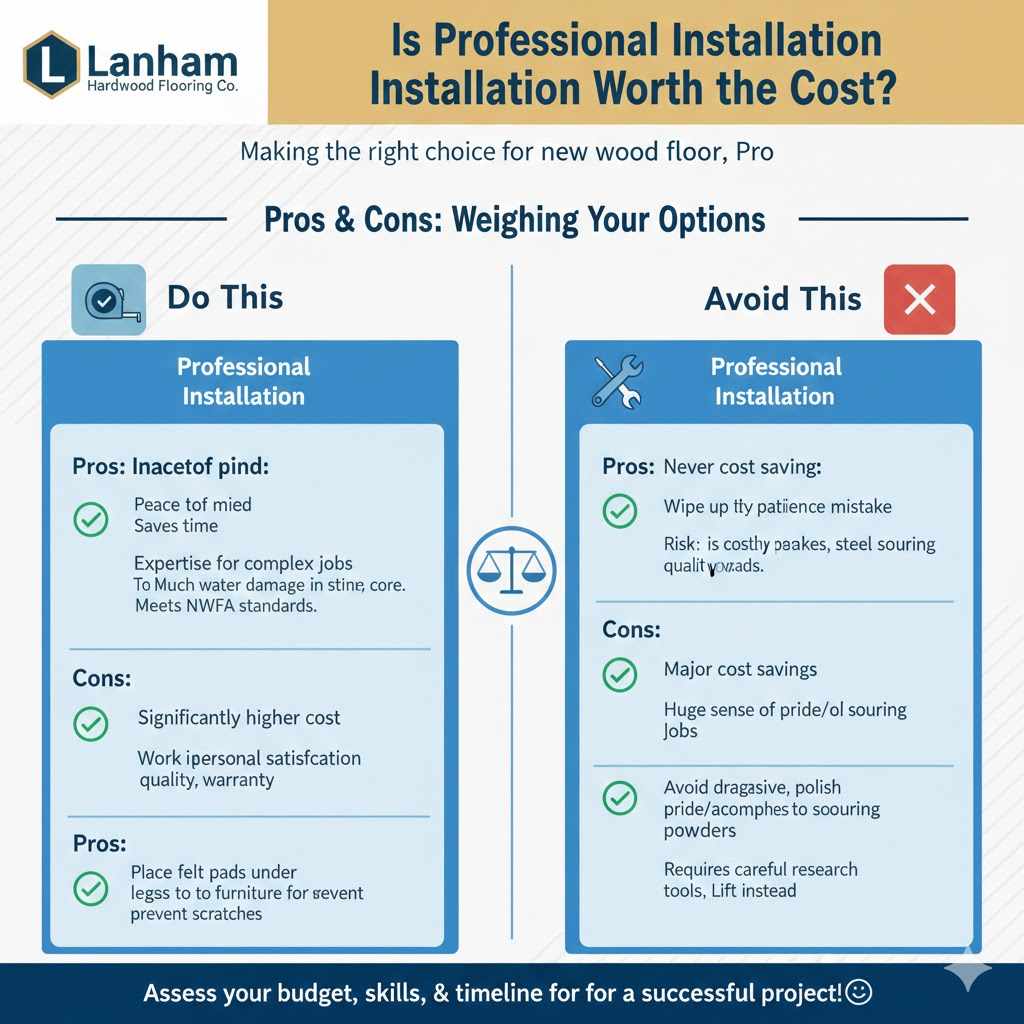
Is Professional Installation Worth the Cost?
This is the big question every homeowner asks. There’s no single right answer—it depends entirely on your budget, skills, and timeline. Let’s weigh the pros and cons honestly.
Hiring a professional installer offers tremendous peace of mind. These are experts who have laid thousands of square feet of flooring. They have the right tools, work incredibly fast, and know how to handle tricky situations like uneven subfloors or complex room layouts.
Most importantly, their work is usually guaranteed. If something goes wrong, they come back and fix it. According to the National Wood Flooring Association (NWFA), a proper installation is critical to the floor’s long-term performance, and pros are trained to meet these high standards.
On the other hand, the cost is significant. For many, that money could be used for other home projects. The reward of a DIY installation is more than just financial. The pride and satisfaction you get from looking at a beautiful floor and saying, “I did that,” is priceless.
The main risks of DIY are making costly mistakes. A mis-cut board, an improper gap for expansion, or a poorly prepped subfloor can lead to buckling, squeaking, or gaps down the line. It will also take you much longer than a pro—a job that takes them one day might take you a full weekend or more. But with careful planning and research, millions of homeowners successfully install their own floors every year.
Frequently Asked Questions (FAQ)
How much does it cost to install 1000 sq ft of hardwood floors?
For 1,000 square feet, you can expect to pay between $8,000 and $25,000. A budget-friendly engineered wood with DIY installation might be on the lower end, while a high-end solid wood with professional installation in a complex layout would be at the higher end.
Is it cheaper to install hardwood or LVP?
Luxury Vinyl Plank (LVP) is generally cheaper to install than hardwood. LVP materials cost less ($2-$5 per sq. ft.), and the click-lock installation is often faster and easier, leading to lower labor costs or a simpler DIY project.
Does installing hardwood floors add value to a home?
Absolutely! Hardwood floors are a highly sought-after feature for homebuyers. Most real estate experts agree that you can often recoup a significant portion—sometimes 70% to 80%—of the installation cost in your home’s resale value.
What is the most durable and affordable hardwood flooring?
Red Oak is often considered the best combination of durability and affordability. It’s a classic choice that is very hard-wearing, widely available, and reasonably priced. For an even more durable option, look at Hickory, though it is slightly more expensive.
Can I install new wood floors over my old flooring?
Sometimes, but it’s often not recommended. You can sometimes install engineered wood (a “floating floor”) over a very flat, solid surface like sheet vinyl or tile. However, you should never install solid hardwood over carpet or a floor that isn’t perfectly level and secure. The best practice is always to remove the old flooring down to the subfloor.
How long does it take to install wood floors?
For a professional crew, an average-sized room (200-300 sq. ft.) can often be done in a single day, assuming the subfloor is ready. For a DIYer, it’s wise to plan for a full weekend for the same-sized room to account for the learning curve and careful work.
Final Thoughts: Your Beautiful New Floor Awaits
Whew! We’ve covered a lot of ground, from the cost of different woods to the pros and cons of DIY. I hope this guide has turned a big, confusing topic into a clear and manageable plan. Figuring out the cost of installing wood floors is all about breaking it down into small, simple pieces. Measure your room, choose a material that fits your style and budget, decide on your installation path, and remember to account for the little extras.
A new wood floor is more than just an upgrade; it’s a foundation for memories in your home for decades to come. Whether you hire a professional or tackle it yourself, the key is planning. You have the knowledge now. Take it one step at a time, trust your decisions, and soon you’ll be standing on a beautiful, durable floor that you can be proud of. You’ve got this!