How Long Should Engineered Hardwood Acclimate? (NWFA Guide)
Engineered hardwood needs a minimum of 48 hours resting in the installation room at 60-80°F and 30-50% relative humidity — but that clock is a floor, not a target. NWFA’s 2025 installation guidelines say engineered flooring can go down sooner if its moisture content already matches the subfloor, or may need several days longer if it arrives wet. This guide covers the exact NWFA numbers, how to test readiness with a moisture meter, and the mistakes that cause gaps and buckling.
Quick Answer
Acclimate engineered hardwood for at least 48 hours in the room where it will be installed, at 60-80°F and 30-50% relative humidity, then check with a moisture meter. Per the National Wood Flooring Association (NWFA), if the flooring’s moisture content already matches the subfloor and the room is at normal living conditions, it can be installed without waiting longer. If it doesn’t match, keep acclimating — most manufacturers cap this around 72 hours, though very wet stock can take a week or more.
What NWFA’s Guidelines Actually Say About Engineered Hardwood Acclimation
Best Moisture Meter Pick
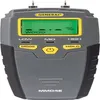
General Tools MMD4E Pin-Type Moisture Meter
Confirms your engineered hardwood has actually reached equilibrium moisture content before you install — the only way to know acclimation is done instead of guessing by the calendar.
- Best for: Checking flooring and subfloor moisture content side by side before installation day
- Why we picked it: Stainless steel pins and a 5-50% wood range cover both flooring and subfloor readings in one tool
- Main drawback: Pins leave tiny marks, so test on scrap or the underside of a board
Compare more moisture meter options
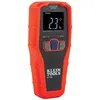 Option 1 Klein Tools ET140 Pinless Moisture Meter
|
 Option 2 TopTes TS-630 Digital Moisture Meter
|
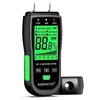 Option 3 RDINSCOS Wood Moisture Meter
|
As an Amazon Associate we earn from qualifying purchases.
Most flooring articles quote a flat “48 to 72 hours” and stop there. The National Wood Flooring Association‘s official 2025 Wood Flooring Installation Guidelines are more specific — and more useful. For engineered wood flooring specifically, the guidelines state that once the flooring’s moisture content coincides with the expected in-use (normal living) conditions of the room, and that matches the subfloor’s moisture reading, the flooring may be installed immediately. There is no universal fixed clock for engineered products the way there sometimes is for solid wood. If you are working with solid lumber for a cutting or framing project rather than installing engineered flooring, see our guide on how long to let wood acclimate before cutting for species-by-species timing.
In practice, this rarely means zero wait. Flooring shipped from a humid warehouse into a dry winter home, or vice versa, still needs time for its moisture content to move toward the room’s equilibrium moisture content (EMC). That’s why manufacturers build in a 48-hour minimum as a practical buffer — it’s a safe default, not a substitute for actually testing the wood.
One number every acclimation article should mention but most skip: NWFA requires the HVAC system in the home to be running and holding normal conditions for a minimum of 5 days before the flooring is even delivered to the jobsite. Acclimation time doesn’t really start on day one of a freshly powered-on system — it starts once the room’s temperature and humidity have already stabilized.
Ideal Temperature and Humidity for Acclimation
Engineered hardwood acclimation is the process of letting flooring adjust to a room’s temperature and moisture level before installation. NWFA’s general rule for normal household environments is a relative humidity range of 30% to 50% and a temperature range of 60°F to 80°F. Outside that range — dry Southwestern climates or damp coastal regions, for example — the ideal humidity band can shift as low as 20-40% or as high as 45-65%, so check your region before assuming the standard numbers apply.
The hardwood acclimating in the box is a common mistake: sealed packaging blocks the airflow the wood needs to actually reach equilibrium with the room. Open the boxes, or at minimum crack them, and let air circulate on all sides of the boards.
Step-by-Step: How to Acclimate Engineered Hardwood
- Run the HVAC first: Set the room’s heating or cooling system to normal living conditions and let it run for at least 5 days before the flooring is delivered.
- Deliver to the install room: Bring the flooring into the actual room where it will be installed — not a garage, basement, or hallway.
- Open the packaging: Cut or open the boxes so air can reach all sides of the boards; sealed boxes block acclimation.
- Test the subfloor moisture: Use a moisture meter to record the subfloor’s moisture content in at least 3 spots per room.
- Test the flooring moisture: Check several boards from different bundles and average the readings.
- Wait at least 48 hours: Recheck moisture content after 48 hours; continue checking every 24 hours if the readings haven’t matched yet.
- Confirm the match: Install once the flooring’s moisture content is within 2-4% of the subfloor and both are stable.

What Happens If You Skip Acclimation
Skipping acclimation is one of the most common causes of flooring warranty claims. Installing engineered hardwood before it reaches equilibrium moisture content leads to gapping (boards shrink after installation as they dry further), cupping or crowning (edges or centers rise as moisture content swings), and in humid climates, buckling severe enough to require replacement. Most flooring manufacturers explicitly void the warranty if acclimation wasn’t documented — keep photos and moisture meter readings as proof.
Wet trades matter too: NWFA guidelines say flooring should never be delivered until all drywall, paint, texturing, and concrete work in the building is complete and fully dry. Delivering flooring into a jobsite still curing wet materials introduces moisture the flooring will absorb before you even start the acclimation clock.
Frequently Asked Questions
How long should engineered hardwood acclimate before installing?
At least 48 hours in the room where it will be installed, at 60-80°F and 30-50% humidity. Per NWFA guidelines, engineered flooring may be installed sooner if its moisture content already matches the subfloor, or may need longer — sometimes up to a week — if it arrived very wet or the climate is extreme. Always check your specific manufacturer’s instructions, since requirements vary by product.
Does engineered hardwood really need to acclimate, or just solid wood?
Yes, engineered hardwood needs to acclimate too. Its plywood-style core resists moisture swings better than solid wood, but the real wood veneer top layer still expands and contracts with humidity. NWFA’s Engineered Wood Flooring guidelines apply the same moisture-testing and jobsite-condition rules as solid wood, just without a universal fixed time requirement.
Can you install engineered hardwood immediately without acclimating?
Only if you’ve tested it. NWFA guidelines allow immediate installation when the flooring’s moisture content already matches the room’s normal living conditions and the subfloor’s moisture reading. Without a moisture meter test confirming that match, installing immediately is a guess, not a verified result — and most manufacturers still specify a 48-hour minimum to protect the warranty.
What happens if you skip acclimating engineered hardwood?
Skipping acclimation commonly causes gapping, cupping, or buckling as the flooring’s moisture content shifts after installation. It can also void the manufacturer’s warranty, since most brands require documented acclimation before they’ll honor a claim.
How do you know when engineered hardwood is fully acclimated?
Test it with a moisture meter rather than guessing by the calendar. Engineered hardwood is ready when its moisture content is within 2% (wide plank) to 4% (narrow strip) of the subfloor’s moisture reading, and both have held steady for at least 24 hours.
What humidity and temperature are ideal for acclimating engineered hardwood?
NWFA’s general rule is 60-80°F and 30-50% relative humidity for most U.S. regions. Dry Southwestern climates may run as low as 20-40% RH, while damp coastal regions can run 45-65% RH — know your regional norms rather than assuming the standard range fits everywhere.
Conclusion
Acclimating engineered hardwood is about moisture content matching, not just watching a clock. Give it a minimum of 48 hours at 60-80°F and 30-50% humidity, open the boxes so air can reach every board, and confirm readiness with a moisture meter instead of guessing. Follow your engineered hardwood installation guide once the numbers match, and check our full wood flooring guide for care and refinishing steps after the floor is down.
Sponsored / affiliate links. As an Amazon Associate I earn from qualifying purchases. I may earn additional commission from eligible campaigns.