Is Boiled Linseed Oil Food Safe? No — Here’s the Safe Alternative
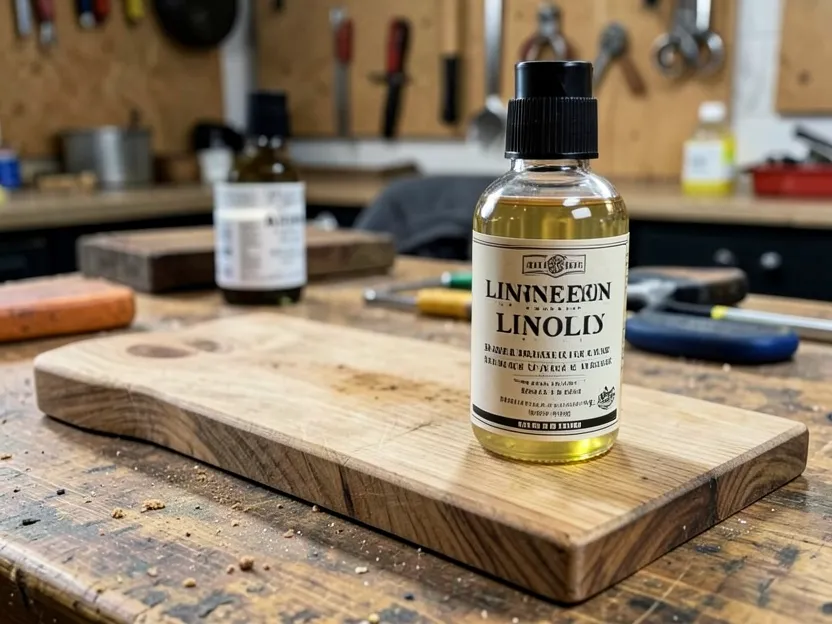
No, boiled linseed oil is not food safe. Despite the name, “boiled” linseed oil isn’t just heated — manufacturers add metallic drying catalysts (historically cobalt or manganese compounds) to make it cure faster, and those metal driers are exactly what make it unsuitable for a cutting board or butcher block.
Raw (unboiled) linseed oil, or a linseed oil labeled specifically “food grade” or “polymerized,” is the food-safe version — but it also cures far more slowly. For a cutting board you’ll actually use next week, most people are better served by a mineral-oil-and-beeswax conditioner instead, which is food-safe immediately and needs no cure time.
For the full breakdown of every linseed oil variant – raw, food-grade/polymerized, and boiled – and how to tell them apart on the label, see our complete guide to whether linseed oil is food safe.
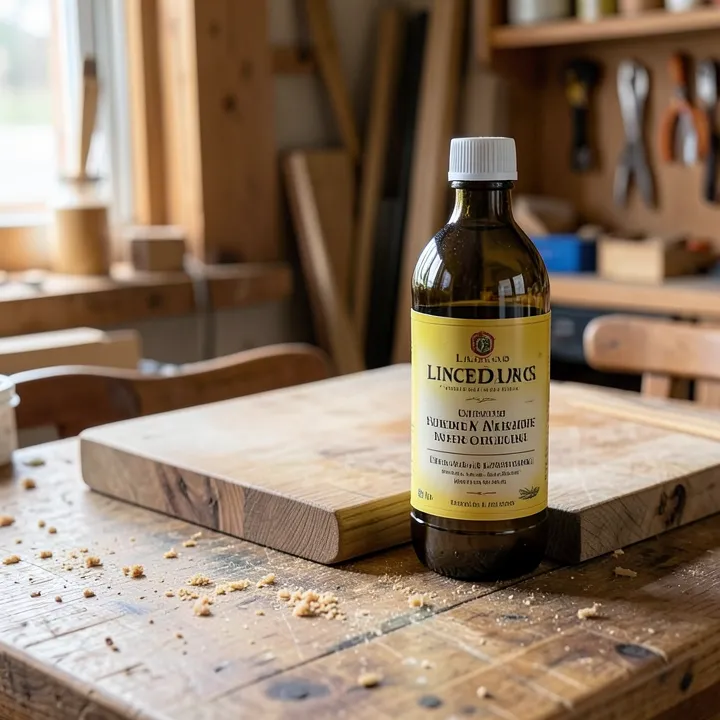
Introduction To Boiled Linseed Oil
The name “boiled linseed oil” is a holdover from a 19th-century process where raw flaxseed oil actually was heated to thicken it and speed up curing. Almost no commercial BLO is made that way today. Instead, manufacturers take raw linseed oil and add metallic drying agents — cobalt, manganese, or zirconium naphthenate are common — that dramatically speed up the oil’s natural oxidative curing without any heat at all. That’s the entire reason BLO cures in a day or two on a workbench instead of the weeks raw linseed oil needs, and it’s also the entire reason it isn’t food safe: those metal salts remain in the cured film in trace amounts, and none of them are approved for surfaces that will touch food.
Because it cures fast and hard, BLO shows up constantly in general woodworking — as a standalone finish on tool handles and gun stocks, as a drying additive mixed into oil-based paints and varnishes, and even as a traditional sealer for concrete floors. None of those uses put it anywhere near a plate, which is exactly the gap that causes confusion: a can of BLO at the hardware store looks and smells almost identical to the food-safe oils sold a few feet away, but the two are chemically different products.
Composition Of Boiled Linseed Oil
Linseed oil itself is pressed from flax seeds and is naturally rich in alpha-linolenic acid, a triglyceride that reacts with oxygen in the air and slowly cross-links into a solid film — this is the same oxidative curing chemistry behind tung oil and many varnishes. Raw linseed oil does this slowly, often taking several weeks to fully harden, which is fine for a workbench finish but impractical for most commercial products. Boiled linseed oil solves that timeline problem by adding heavy-metal driers that catalyze the oxidation reaction, cutting cure time down to a day or two.
Those driers are the whole issue from a food-safety standpoint. Cobalt and manganese compounds are effective catalysts precisely because they’re chemically reactive, and trace amounts can leach out of a cured BLO film with repeated exposure to acidic foods, hot liquids, or knife scoring that exposes fresh material. The amounts involved are small, but there’s no regulatory body that classifies them as safe for food contact, which is why every major finish manufacturer’s own safety data sheet for BLO explicitly warns against food-contact use.
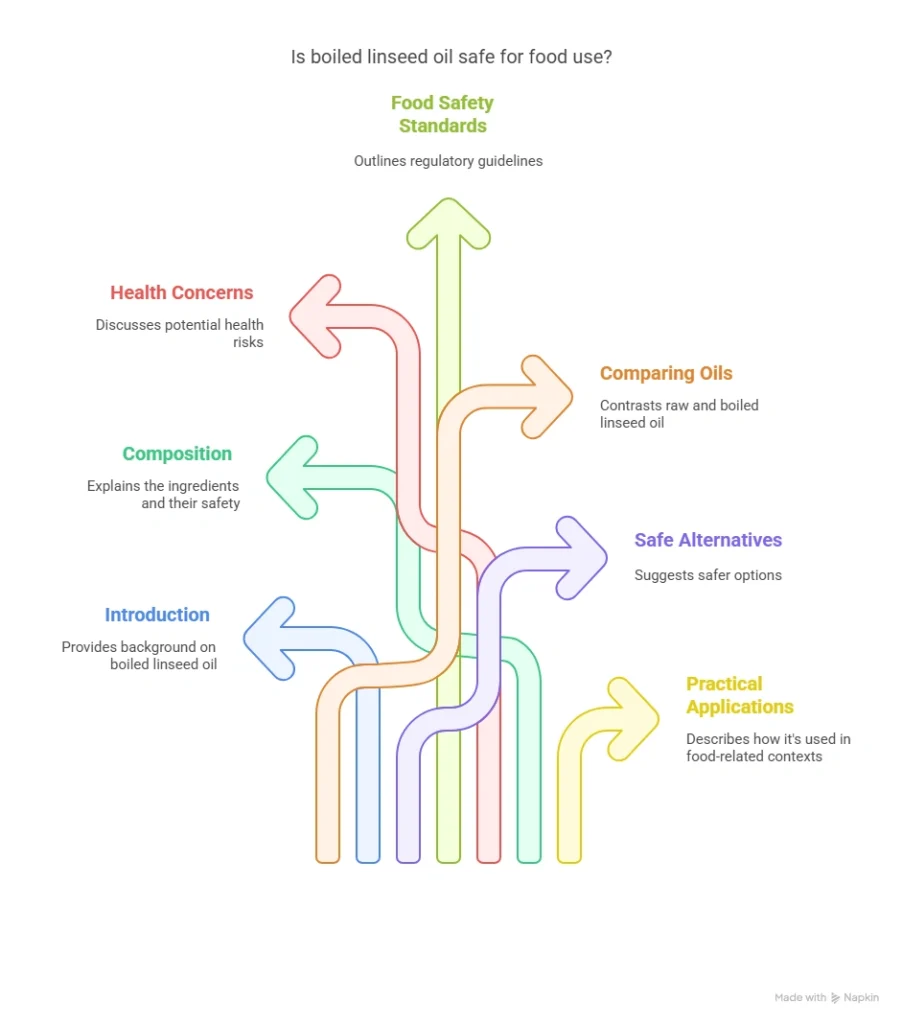
Health Concerns
Boiled linseed oil is not food safe. It contains chemical additives that can be harmful if ingested. Always use food-grade oils for cooking and food preparation.
Toxicity Levels
The metal driers in BLO aren’t acutely toxic in the tiny amounts a cutting board might transfer to food, but there’s no established safe threshold for regularly ingesting cobalt or manganese compounds from a finish, which is why regulators simply don’t approve BLO for the purpose at all rather than setting a tolerance limit. Raw, un-driered linseed oil avoids that specific concern since it has no added metals, but it’s still not marketed or tested as a food-contact product, so it doesn’t carry the same formal food-safe certification that dedicated products like USP mineral oil do.
Potential Allergic Reactions
Linseed oil is derived from flax, and while true flax allergies are uncommon, some people do develop contact dermatitis — redness, itching, or a mild rash — from repeated skin exposure to raw or boiled linseed oil during application. If you notice irritation after handling it, wash the area with soap and water and switch to nitrile gloves for future coats; persistent or worsening symptoms warrant seeing a doctor rather than continuing to work through it.
Food Safety Standards
Boiled linseed oil is not considered safe for food contact. It contains additives that can be harmful if ingested. Always use food-grade oils for kitchen surfaces and utensils.
FDA Guidelines
The FDA doesn’t maintain a specific rule naming “boiled linseed oil” as prohibited; instead, food-contact finishes are judged against 21 CFR 178.3620, the regulation covering substances used as components of articles that touch food. Mineral oil (as “white mineral oil”) is explicitly listed there as an approved indirect food additive, which is exactly why it’s the default recommendation for cutting boards. BLO and its metal driers simply aren’t on that list, so any product claiming BLO is FDA-approved for food surfaces is misrepresenting the regulation rather than citing it accurately.
International Standards
Outside the US, food-contact material rules vary by region — the EU’s food contact regulations (EC 1935/2004 and related measures) take a similarly substance-specific approach, and the same metallic driers that disqualify BLO under FDA guidance are not on the EU’s approved list either. Rather than trying to track differing national standards, the simpler rule that holds everywhere is to use a finish explicitly labeled and marketed for food contact — mineral oil, food-grade beeswax blends, or pure tung oil — and skip anything sold primarily as a wood or metal finish, regardless of country.
Comparing Raw Vs. Boiled Linseed Oil
Raw linseed oil is the unmodified, cold-pressed product straight from flax seeds, with no metal driers added. It’s genuinely food safe once fully cured, which is why it shows up as a traditional finish for wooden salad bowls and spoons in some older woodworking traditions — but “fully cured” is doing a lot of work in that sentence, since raw linseed oil can take three to six weeks of open-air curing (with periodic recoats and wipe-downs) before it’s no longer tacky and off-gassing solvent smell.
Boiled linseed oil trades that long wait for speed: with its metal driers, a coat can be dry to the touch within 24 hours and fully cured within a few days. That convenience is why BLO dominates general woodworking use — tool handles, non-food furniture, exterior trim — but it’s also precisely the tradeoff that rules it out for anything that touches a plate or a knife blade.
Safe Alternatives
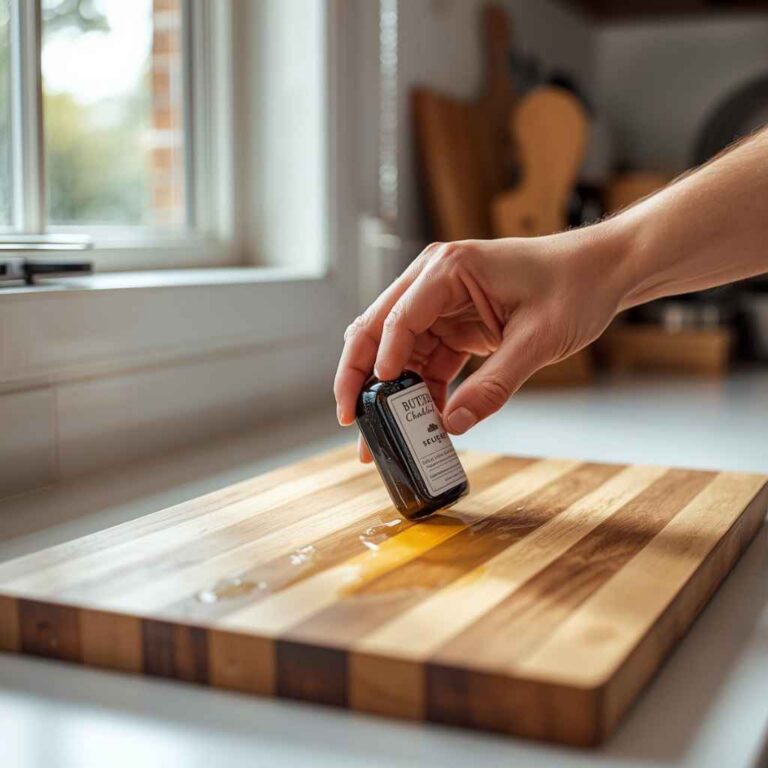
Food-grade (USP) mineral oil is the standard recommendation for a reason: it’s inert, colorless, odorless, doesn’t cure or go rancid, and is explicitly listed as an approved food-contact substance. Its only downside is that it never fully hardens, so it needs reapplication every few weeks with regular use — a small tradeoff for zero food-safety ambiguity. A beeswax-and-mineral-oil “board butter” or “board cream” builds on that same base but adds a bit more water resistance and a nicer feel, since the wax fills the wood’s pores slightly.
Pure, 100% tung oil is a solid choice for anyone who wants an actual cured, hardened finish rather than a wipe-on oil that stays soft: like linseed oil it cures by oxidation, but the resulting film is harder and more water-resistant, and pure tung oil (make sure it’s not a “tung oil finish” blend cut with solvents and metal driers) is food safe once fully cured. Walnut oil is sometimes recommended too, but it’s worth skipping in any household with a tree-nut allergy, since trace protein residue is a real, if rare, risk. One popular recommendation worth pushing back on: plain coconut oil is often suggested for cutting boards, but as a triglyceride it doesn’t fully polymerize the way tung or linseed oil does, and it can turn rancid over months of use — mineral oil is the more reliable choice for that reason.
Practical Applications
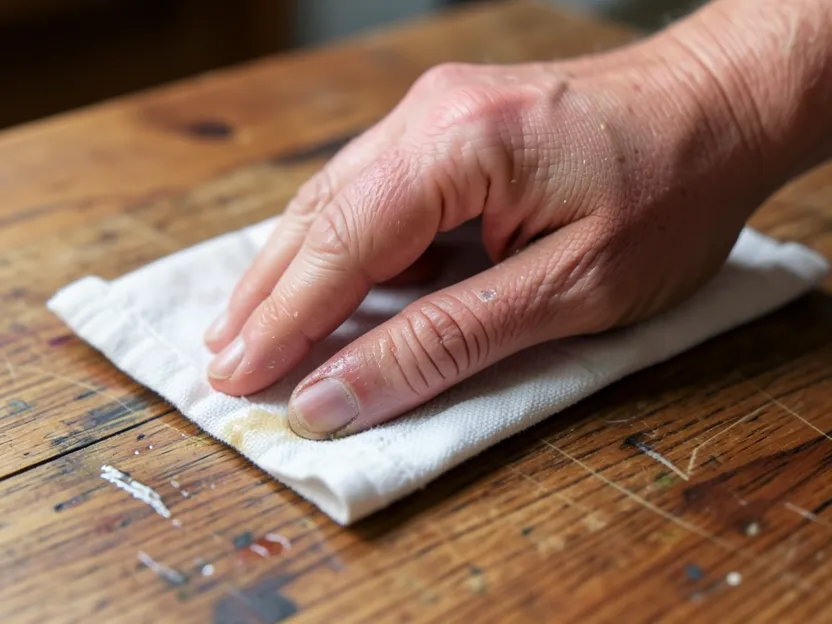
Boiled linseed oil earns its keep on non-food woodworking: it’s a common first coat under paint or varnish because it seeps into open grain and gives the topcoat something to bite into, it’s a traditional finish for axe and hammer handles where its fast cure and hard film resist sweat and grip wear, and it’s still used as a penetrating sealer on outdoor furniture and fence posts. It also has one genuinely important safety note that gets left out of most articles: rags soaked in BLO can spontaneously combust as the oil oxidizes and generates heat while balled up — always lay used rags flat outside to dry completely, or submerge them in a sealed metal container of water, before throwing them away.
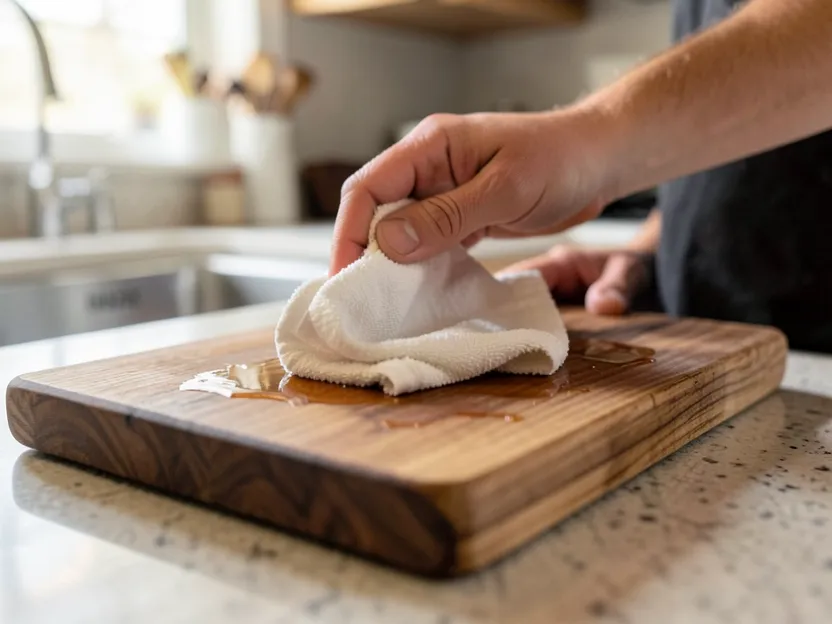
For anything that will touch food — boiled linseed oil should stay off the list entirely. Wooden spoons, cutting boards, and butcher blocks should be conditioned with mineral oil, a beeswax-mineral-oil blend, or pure cured tung oil instead. Checking a product’s label for a specific food-safe or food-grade claim, rather than assuming “natural” or “wood oil” implies safety, is the one habit that avoids this mistake entirely.
Frequently Asked Questions
Can Boiled Linseed Oil Be Food Safe?
No. Boiled linseed oil contains metallic drying agents like cobalt or manganese compounds that aren’t approved for food contact, no matter how long the finish cures. Use a dedicated food-grade oil for anything that touches food.
Can I Use Boiled Linseed Oil On A Cutting Board?
No. Use food-grade mineral oil or a beeswax-and-mineral-oil board cream instead — both are food safe immediately and need no cure time, unlike linseed oil.
What Can I Seal Wood With That Is Food Safe?
Food-grade mineral oil, a beeswax-mineral-oil blend, pure (fully cured) tung oil, and food-grade shellac are all recognized food-safe options. Each has a different feel and durability, but all are non-toxic once applied and, where relevant, cured.
Can I Use Boiled Linseed Oil On A Butcher Block?
No — a butcher block sees even more direct food and knife contact than a cutting board, which makes the metal driers in BLO more of a concern, not less. Stick with food-grade mineral oil, reapplied every few weeks with regular use.
Conclusion
Boiled linseed oil is a genuinely useful wood finish, but food safety was never part of its design — the same metal driers that make it cure fast are the reason it doesn’t belong anywhere near a plate, a cutting board, or a butcher block. Save it for tool handles, furniture that won’t touch food, and outdoor projects where its quick cure and hard film are an advantage rather than a liability.
For anything in the kitchen, food-grade mineral oil or a beeswax-mineral-oil board cream will do the job safely with no cure-time tradeoff, and pure cured tung oil is a solid option for a harder, longer-lasting finish. Check the label for an explicit food-safe claim before using any oil on a surface that will touch what you eat.
Sponsored / affiliate links. As an Amazon Associate I earn from qualifying purchases. I may earn additional commission from eligible campaigns.