Is Cottonwood a Good Firewood?: Pros and Cons Explained
Yes, cottonwood can be used as firewood. But is it the best choice?
This is a common question for those looking to heat their homes or enjoy a campfire. Cottonwood is a type of hardwood, but it has unique characteristics. It’s widely available and easy to split, making it a convenient option. However, its burning properties and heat output are different from other firewoods.
Understanding these factors can help you decide if cottonwood is suitable for your needs. In this blog, we’ll explore the pros and cons of using cottonwood as firewood. By the end, you’ll have a clear idea of whether it fits your requirements for warmth and efficiency.
Characteristics Of Cottonwood
Cottonwood trees are common in many regions. They are often found near rivers and streams. But is cottonwood good firewood? Let’s explore its characteristics to find out.
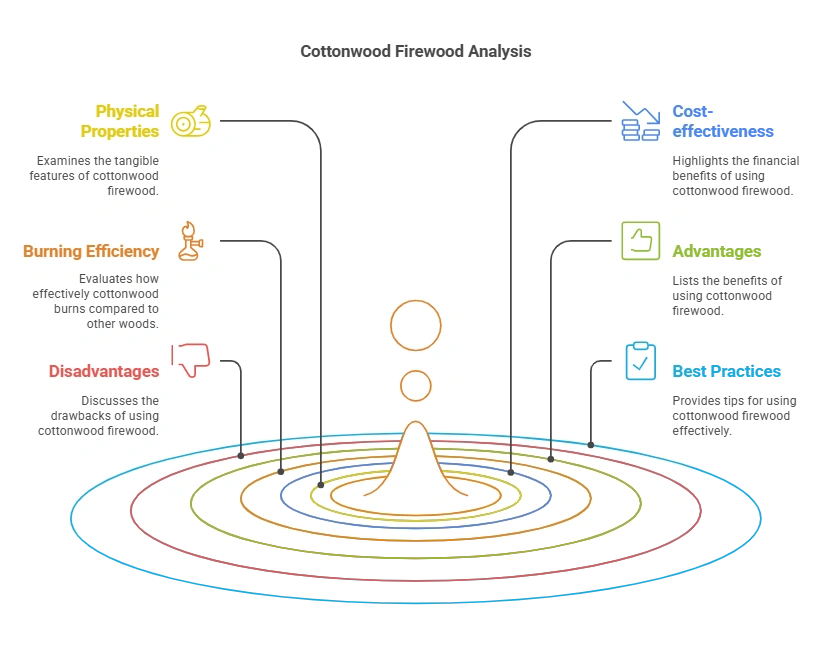
Physical Properties
Cottonwood is a softwood. It has a low density compared to hardwoods. This makes it lightweight and easy to split. The wood has a coarse texture and light color. It often contains a lot of moisture when freshly cut. This means it needs proper seasoning before use as firewood.
When burned, cottonwood produces moderate heat. It burns quickly and does not leave much ash. However, it tends to produce a lot of smoke. This can be an issue in enclosed spaces without proper ventilation.
Availability
Cottonwood trees grow rapidly. They are abundant in many areas, especially near water sources. Due to their fast growth, they are often used for firewood. This makes them a readily available option for many people.
Finding cottonwood firewood is usually easy. Many suppliers offer it at a lower price compared to hardwoods. This makes it a cost-effective choice for those on a budget.
Advantages Of Cottonwood Firewood
Cottonwood firewood has several advantages that make it a popular choice for many people. It is often overlooked, but it has some unique benefits. Let’s explore the key advantages of using cottonwood firewood.
Cost-effectiveness
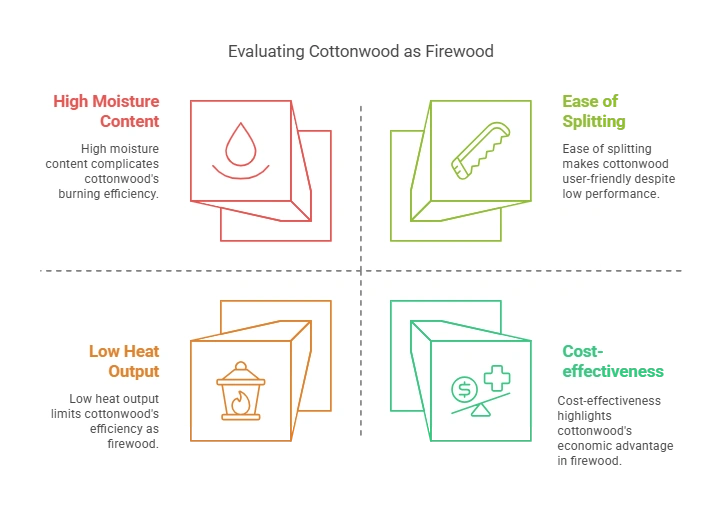
Cottonwood is usually cheaper than other hardwoods. This makes it a budget-friendly option. Its lower price does not mean it lacks quality. It provides warmth like other types of firewood. Many people appreciate the savings they get from choosing cottonwood.
Ease Of Splitting
Splitting cottonwood is easier than splitting many other types of wood. Its fibers are less dense, which means less effort is needed. This is a great advantage for people who split their own firewood. Less time and energy are required. Even beginners can handle it without much trouble.
Disadvantages Of Cottonwood Firewood
When it comes to choosing firewood, not all wood is created equal. Cottonwood, while abundant and easy to find, has its share of drawbacks. If you’re thinking about using it to warm your home, there are a few things you should know. Let’s dive into the main disadvantages of cottonwood firewood.
Low Heat Output
One of the biggest drawbacks of cottonwood is its low heat output. If you’re looking to keep your home toasty during those cold winter nights, cottonwood might not be your best bet. Compared to other hardwoods like oak or maple, cottonwood burns much cooler.
| Wood Type | BTUs per Cord |
|---|---|
| Cottonwood | 15.8 million |
| Oak | 24 million |
| Maple | 23 million |
As you can see from the table, cottonwood has significantly fewer BTUs (British Thermal Units) per cord compared to oak and maple. This means you’ll burn through more wood to achieve the same level of warmth.
High Moisture Content
Another downside to cottonwood is its high moisture content. Freshly cut cottonwood can contain up to 60% water, which means it needs to be seasoned (dried) properly before it can be used as firewood. If not, you’ll end up with wood that hisses and smokes more than it burns.
- Longer drying time: Cottonwood takes longer to season compared to other woods. You might have to wait a year or more before it’s ready to use.
- Harder to split: Due to its high moisture content, freshly cut cottonwood can be quite difficult to split. This can be a real workout!
- Increased smoke: Burning unseasoned cottonwood produces a lot of smoke, which can lead to creosote buildup in your chimney. This increases the risk of chimney fires.
So, while cottonwood is readily available and might seem like a good option, its high moisture content can make it less than ideal for your firewood needs.
To sum up, cottonwood firewood has its disadvantages. With low heat output and high moisture content, it may not be the best choice for keeping your home warm. If you have other options, you might want to consider them first. However, if cottonwood is all you have, make sure to season it well and use it wisely!
Burning Efficiency
When it comes to choosing firewood, burning efficiency is a key factor. This is especially true if you rely on a wood stove or fireplace to keep warm during cold months. So, how does cottonwood measure up in terms of burning efficiency? Let’s dive into the details and find out.
Burn Time
Cottonwood is known for its relatively short burn time. Unlike hardwoods such as oak or hickory, cottonwood burns quickly. This means you’ll need to add logs more frequently to keep the fire going. However, this can be an advantage if you need a quick, hot fire to take the chill off or to cook something fast.
On a chilly evening, you might not mind the frequent trips to the woodpile. But if you’re looking for a longer-lasting fire, you might want to mix cottonwood with a denser wood. This way, you get the best of both worlds: a quick start with cottonwood and a sustained burn with hardwood.
Ash Production
One thing to consider with cottonwood is ash production. Cottonwood tends to produce a fair amount of ash when burned. This means you’ll need to clean out your fireplace or wood stove more often. But look on the bright side—ash can be used in your garden as a fertilizer, rich in nutrients.
If you’re okay with a bit more maintenance, the ash production isn’t necessarily a dealbreaker. Just remember to plan for regular cleanouts to keep your fire burning efficiently and your hearth looking tidy.
In conclusion, cottonwood has its pros and cons when it comes to burning efficiency. It burns quickly and produces a good amount of heat but also requires frequent tending and produces more ash. With a bit of planning, you can make the most of cottonwood as a part of your firewood arsenal.
Comparing Cottonwood To Other Firewoods
Comparing cottonwood to other firewoods helps in understanding its value and performance. Firewood choice impacts heat output, burn time, and ease of use. Cottonwood, a common type of wood, has unique characteristics. Let’s explore how cottonwood stacks up against other firewoods.
Hardwoods Vs. Softwoods
Hardwoods like oak and maple are dense. They burn longer and produce more heat. Softwoods, such as pine and fir, ignite easily. They burn quickly but produce less heat. Cottonwood falls somewhere in between. It is a hardwood but lighter in density. This means it burns faster than traditional hardwoods.
Popular Alternatives
Oak is a top choice for firewood. It provides consistent heat and long burn times. Maple is another popular option. It burns hot and clean with minimal smoke. Birch is also a good alternative. It lights easily and burns well, though not as long as oak or maple.
Comparing these alternatives to cottonwood shows the differences. Cottonwood burns faster than oak or maple. It produces less heat over time. Yet, it is easier to split and handle. Each type of firewood has its pros and cons. Understanding these helps in making a better choice for firewood needs.
Best Practices For Using Cottonwood
Using cottonwood as firewood requires some best practices to get the most out of it. Cottonwood can be a good choice for firewood if you season it properly and store it correctly. These steps ensure that your fire burns well and efficiently. Below are the best practices for using cottonwood as firewood.
Proper Seasoning
Proper seasoning is crucial for cottonwood. Fresh cottonwood holds a lot of water. Wet wood does not burn well and produces more smoke. Cut the wood into smaller pieces. This helps it dry faster. Stack the wood in a single row. Allow air to circulate around each log. Season the wood for at least six months. Well-seasoned cottonwood burns cleaner and hotter.
Storage Tips
Storing your cottonwood properly is also important. Keep the wood off the ground. Use pallets or a wood rack. This prevents the wood from absorbing moisture from the soil. Cover the top of the stack with a tarp. Leave the sides open for airflow. This keeps the wood dry while allowing it to breathe. Store wood in a sunny location if possible. Sunlight helps to dry out the wood faster.
Frequently Asked Questions
Is It Better To Burn Cottonwood Or Pine?
Burning pine is better for quick heat, but it produces more creosote. Cottonwood burns slower and cleaner.
How Long To Season Cottonwood For Firewood?
Season cottonwood for 6-12 months before using it as firewood. Ensure proper airflow to speed up drying.
Are Cottonwood Logs Worth Anything?
Cottonwood logs have limited commercial value. They are often used for firewood, pallets, or low-grade lumber.
Is Cottonwood A Hardwood Or Softwood?
Cottonwood is a hardwood. Despite its name, it is not as hard as other hardwoods. It is lightweight and soft.
Conclusion
Cottonwood can work as firewood in certain situations. It burns quickly and produces low heat. It creates more ash compared to other firewoods. Cottonwood is best for kindling or mixing with hardwoods. Use it for short fires or starter wood.
Ensure it is well-seasoned to reduce smoke. Not ideal for long-lasting or high-heat fires. Choose wisely based on your needs.