How to Join 3 Pieces of Wood in a Corner: Pro Tips
To join three pieces of wood at a single corner — like two rails meeting a table or chair leg — use pocket-hole screws driven from each rail into the leg, or glue and screw a triangular corner block into the inside of the joint. A standard miter or butt joint only connects two boards; joining a third piece at that same corner point (the most common real case is furniture: two aprons/rails meeting a single leg) needs a different approach than the simple 2-board corner joints most guides describe.
Why A Three-Piece Corner Is Different From A Two-Piece One
Best Pocket-Hole Jig
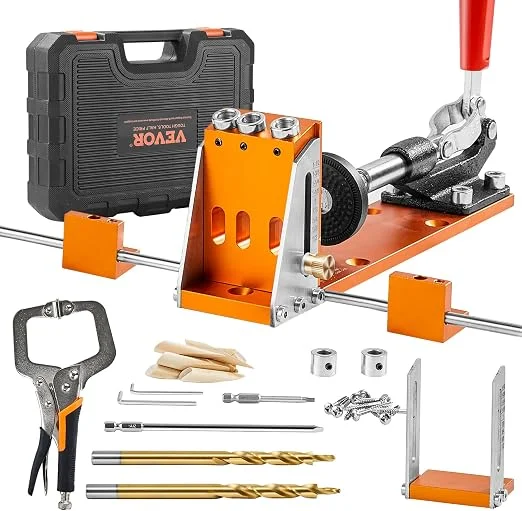 |
VEVOR 34-Piece Pocket Hole Jig Kit – $48.90 The tool this article’s main method depends on – drills the angled holes needed to join rails into a leg cleanly.
|
- A miter, butt, or dovetail joint connects two boards along one seam.
- A three-piece corner has two separate seams meeting at one point — most commonly two horizontal rails both attaching to one vertical leg or post, like a table, chair, or workbench corner.
- Each seam needs its own solid connection, and the two seams also need to stay square to each other, which is why a simple butt joint at each seam isn’t enough on its own for anything load-bearing.
Method 1: Pocket-Hole Screws Into The Leg
Note: this guide covers the specific case of three pieces meeting at one corner. If your pieces meet a different way instead – end-to-end in a line, in a T-shape, or edge-to-edge as a wider panel – see our guide to connecting three pieces of wood in every configuration.
This is the standard furniture-making approach and the easiest to get right without specialized joinery skills.
- Drill two angled pocket holes near the end of each rail using a pocket-hole jig, positioned so the screw exits into the face of the leg.
- Clamp each rail against the leg, flush with the top (or at your marked height), and drive a self-tapping pocket-hole screw through each hole into the leg.
- Repeat for the second rail on the adjoining face of the same leg — the two rails end up screwed into perpendicular faces of the same leg, meeting at the corner.
- Add wood glue on the mating faces before screwing for a joint that won’t loosen under racking stress over time.
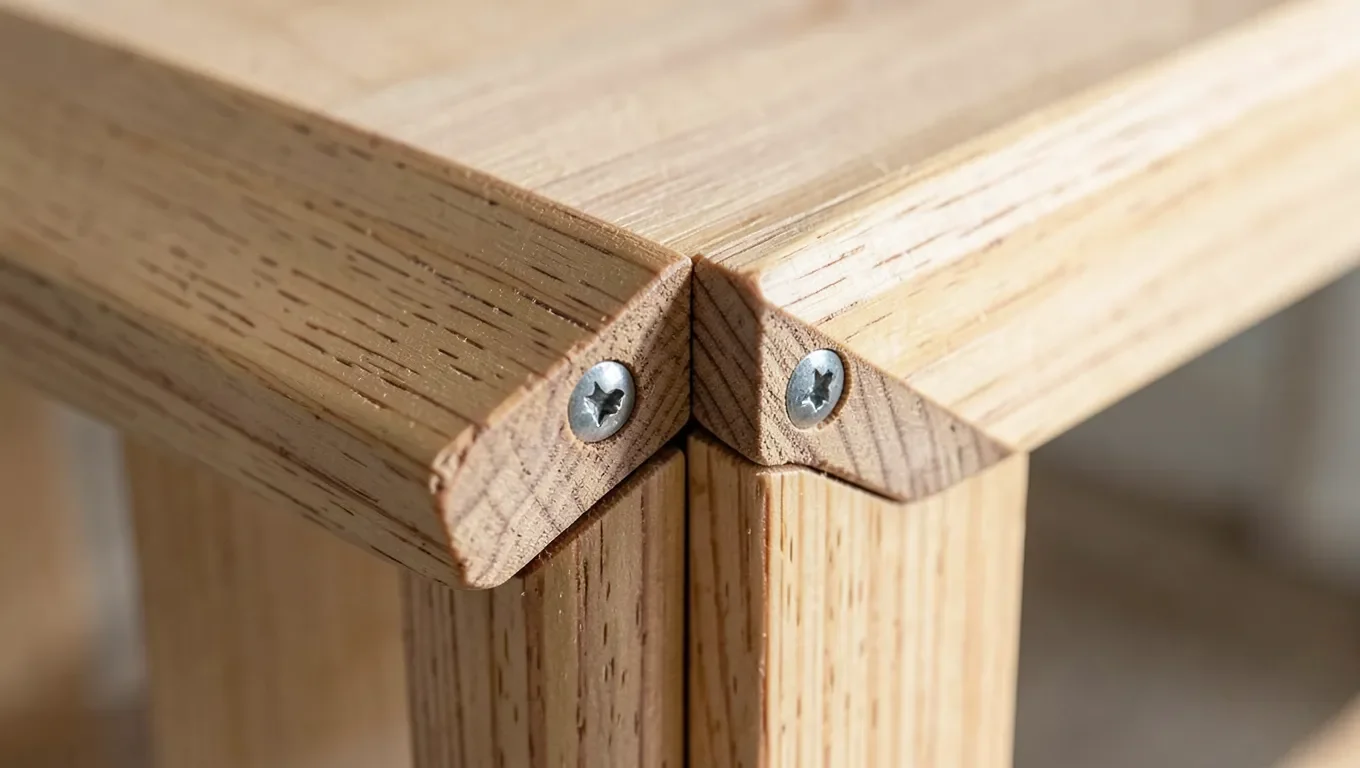
Method 2: Glued And Screwed Corner Block
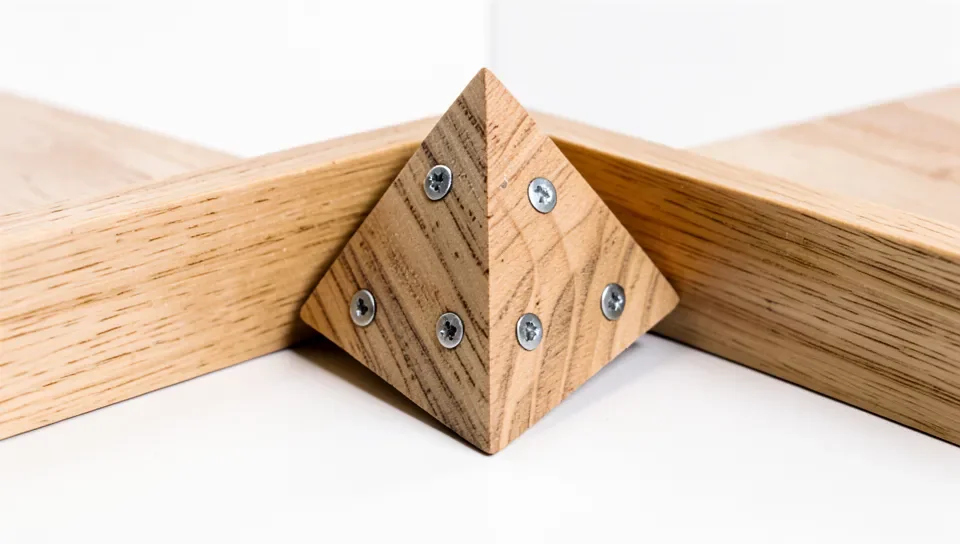
A corner block is a small triangular (or square, cut diagonally) block of wood glued and screwed into the inside of the joint, spanning both rails and the leg. This is the traditional chair and table reinforcement method and adds real strength to a joint that will see repeated stress (people leaning on a chair, for example).
- Cut a triangular block sized to fit snugly into the inside corner where the two rails and leg meet.
- Apply wood glue to all three contact faces of the block.
- Clamp the block in place and drive screws through the block into each rail and into the leg.
- Let the glue cure fully (follow the glue’s stated clamp time) before putting any load on the joint.
Method 3: Metal Corner Braces
For utility projects (shelving, workbenches, garden structures) where appearance matters less than speed, an L-shaped metal corner brace screwed to the inside of the joint is the fastest option. It won’t look as refined as a corner block and typically isn’t used on fine furniture, but it’s strong, cheap, and requires no special tools beyond a drill.
Choosing The Right Method
- Furniture that needs to look clean: pocket-hole screws, hidden on the inside faces of the rails.
- Furniture that will see heavy repeated stress (dining chairs, workbenches): pocket-hole screws plus a corner block for extra reinforcement.
- Utility/shop projects where speed matters more than looks: metal corner braces.
Common Mistakes
- Only fastening one rail well and leaving the other loose — both seams need equal attention, since a weak second connection undermines the whole corner.
- Skipping glue on a “screws-only” joint — screws alone can work loose over time with repeated racking; glue plus mechanical fasteners lasts far longer.
- Not checking square before the glue sets — use a speed square against both rails while clamping, since an out-of-square corner is very hard to fix after the glue cures.
- Using pocket screws that are too long for the leg thickness, which can poke through the visible face — match screw length to your actual material thickness.
Frequently Asked Questions
How Do You Join Three Pieces Of Wood At One Corner?
The most common method is pocket-hole screws: drill angled holes near the end of each rail and screw both rails into the adjoining faces of a single leg or post, adding glue for extra hold. For heavier-duty joints, add a glued and screwed triangular corner block spanning all three pieces on the inside of the joint.
What Is A Corner Block Used For In Woodworking?
A corner block is a small block glued and screwed into the inside of a three-way joint (typically two rails meeting a leg) to reinforce the connection against racking stress. It’s a traditional reinforcement used in chair and table construction.
Can I Use Just Screws Without Glue For A Three-Way Corner Joint?
Screws alone will hold initially but tend to loosen over time under repeated stress like a chair being leaned on. Adding wood glue to the mating surfaces before screwing creates a much longer-lasting joint.
Do I Need A Pocket-Hole Jig For This, Or Can I Use Regular Screws?
A pocket-hole jig lets you drive screws at a hidden angle so they don’t show on the visible faces of the rails, which is standard for furniture. For a utility project where appearance doesn’t matter, straight screws through an L-bracket work fine without a jig.
Conclusion
Joining three pieces of wood at one corner is a different problem from a simple two-board miter or butt joint — it’s really two seams meeting at a point, most often two rails into a leg. Pocket-hole screws handle most furniture cases cleanly, a glued corner block adds real reinforcement for anything that takes repeated stress, and metal braces work fine when speed matters more than looks.
Sponsored / affiliate links. As an Amazon Associate I earn from qualifying purchases. I may earn additional commission from eligible campaigns.