What Are Auger Bits Used For?
An auger bit is a long drill bit with a continuous spiral flute and a screw-tipped point, built to bore deep, clean holes in wood faster and with less effort than a standard twist bit. The screw tip pulls the bit into the wood on its own, and the spiral flute carries shavings up and out of the hole as it cuts – which is exactly why auger bits show up everywhere from furniture joinery to fence-post digging to running electrical wire through studs. Here’s what they’re actually used for, the different types available, and how to pick and maintain one.
How an Auger Bit Works
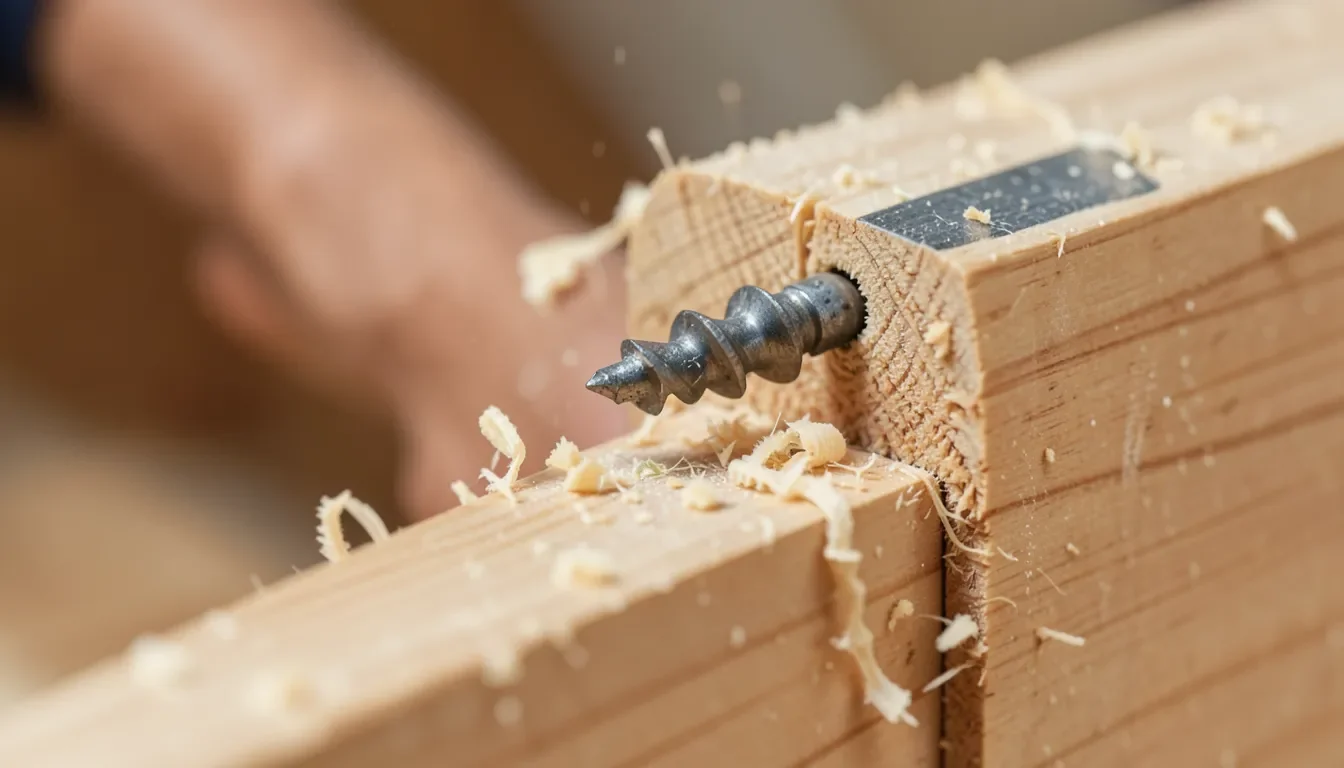
Three features define an auger bit and set it apart from a twist bit: a lead screw (the pointed tip that threads into the wood and pulls the bit forward), spiral flutes (the helical grooves that lift cut material out of the hole as you drill), and spurs (small cutting edges at the tip that score a clean circular outline before the main cutting lip removes material). Together, these mean less downward pressure is needed from the user, and the hole comes out straighter and cleaner than with a standard bit – especially in long or deep holes where a twist bit tends to wander.
Auger bits generally come in two families: hand auger bits, designed for use in a brace (a manual hand drill) and traditionally used for fine joinery work where control matters more than speed; and power auger bits, designed for electric drills and impact drivers, sized for everything from cabinet hardware holes up to large-diameter holes for deck posts and utility runs.
Best Auger Bit Set For Most Projects
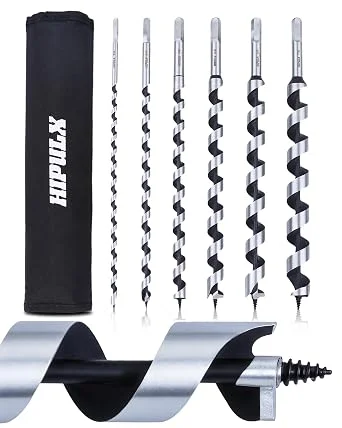 |
HIPULX 12″ Auger Drill Bit Set, 6-Piece – $25.29 Self-feed screw-tip power auger bits from 1/4″ to 7/8″, long enough to bore through thick lumber or reach deep into a stud bay for wiring.
|
Auger Bits in Woodworking
In the shop, auger bits are the go-to choice whenever a hole needs to be deep, clean, and accurately placed. Furniture makers use them for mortises, dowel holes, and bolt clearance holes in table and chair joinery, where a wandering hole means a joint that never sits flush. The spiral flute’s chip-clearing action matters most here: in a deep hole, a twist bit’s shallow flutes pack with shavings and can bind or burn the wood, while an auger bit keeps clearing material the entire way down.
They’re also the standard choice for boring large-diameter holes for hardware – cabinet hinges, large bolts, dowel joinery in workbenches, and clearance holes for lag screws in deck framing.
Auger Bits in Construction
On a job site, auger bits do the heavy structural drilling: boring holes through studs and joists to route plumbing pipe and electrical cable, drilling pilot holes for lag bolts in framing, and creating clearance holes in beams for utility runs. Building codes typically limit how large a hole can be relative to a joist’s depth (often no more than 1/3 the joist depth for a bored hole, and it must sit within the middle third of the span) – an auger bit’s clean, precise diameter makes it much easier to stay within code than trying to enlarge a rough hole with a spade bit.
Larger ground augers (powered by a two-person auger machine or a tractor attachment, not a handheld drill) use the same spiral-flute principle at a much bigger scale to bore post holes for fences, decks, and foundation piers – the auger flute lifts soil out of the hole the same way a drill-sized bit lifts wood shavings.
Auger Bits for Wiring and Plumbing
Electricians rely on long auger bits to bore holes through the centers of studs for running Romex or conduit, since the extra length lets them drill through multiple studs from one access point without repositioning the drill. Plumbers use the same bits, usually in slightly larger diameters, to run supply lines and drain pipe through framing. In both trades, the self-feeding screw tip is the real time-saver – it pulls the bit through stud after stud with minimal push force, which matters when you’re drilling at an awkward angle inside a wall cavity.
Choosing the Right Auger Bit
Match the bit to the material and the job:
- Softwood and plywood: a standard single-flute auger bit handles these easily and clears chips fast.
- Dense hardwood: a slower drilling speed and a sharp, well-maintained cutting edge matter more than bit style – a dull auger bit will burn hardwood rather than cut it.
- Deep holes through multiple studs: a longer bit (12″ or more) avoids having to reposition or extend mid-hole.
- Metal or masonry: auger bits aren’t rated for these – use a metal twist bit or a masonry bit instead. Forcing an auger bit into metal will dull or snap it.
Bit diameter should match the fastener or pipe going through the hole, not be picked at random – oversized holes weaken framing members and undersized holes make wiring or plumbing installation unnecessarily difficult.
Maintenance and Sharpening
A dull auger bit is more dangerous and less effective than a sharp one – it requires more force, generates more heat, and is more likely to bind or wander. After each use, clear packed wood shavings from the flutes with a stiff brush and wipe the bit down before storing it, since resin buildup left on the flutes hardens and slows chip clearance on the next job. Store bits in a dry roll or case rather than loose in a drawer, both to protect the cutting edges from knocking against other tools and to prevent surface rust.
Sharpen the spurs and cutting lips with a small auger bit file, following the original bevel angle exactly – a mismatched angle changes how the bit tracks and can make it cut an oversized or off-center hole. A light coat of oil on the metal after sharpening prevents flash rust between uses.
Safety Tips
- Keep both hands on the drill when using a long auger bit – the screw tip’s self-feeding action can grab suddenly and twist the tool if you’re only holding it with one hand.
- Let the bit’s lead screw do the pulling; forcing extra downward pressure doesn’t speed up the cut and increases the risk of the bit binding.
- Wear eye protection and keep loose clothing and long hair secured – the spiral flute can catch loose material.
- Check for hidden wiring or pipes before boring into a wall or framing member you can’t see through.
Conclusion
Auger bits earn their place in a woodworker’s, electrician’s, or plumber’s kit because of one mechanical advantage: the screw tip pulls the bit through the material while the spiral flute clears debris continuously, producing deeper, straighter, cleaner holes with less effort than a standard twist bit. Match the bit length and diameter to the job, keep the cutting edges sharp, and an auger bit will outperform almost any other option for boring through wood.
Frequently Asked Questions
What are auger bits used for?
Auger bits drill clean, deep, precisely-sized holes in wood. They’re used in furniture joinery, framing for wiring and plumbing runs, deck and fence post construction, and general carpentry wherever a hole needs to go deeper or straighter than a standard twist bit can manage.
Can auger bits drill through metal?
No. Auger bits are designed for wood, plastic, and drywall. Use a metal-specific twist bit for metal – forcing an auger bit into metal will dull or damage the cutting edges and can snap the bit.
How do you maintain an auger bit?
Clear wood shavings from the flutes after every use, wipe the bit dry, and store it in a dry case or roll rather than loose in a drawer. Sharpen the spurs and cutting lips periodically with an auger bit file, matching the original bevel angle, and apply a light coat of oil afterward to prevent rust.
Are auger bits compatible with a standard power drill?
Most power auger bits work with any standard drill that has a chuck large enough to hold the bit’s shank. For very long or large-diameter bits, a drill with more torque (a corded drill or a high-torque cordless model) drives more smoothly than a lightweight drill/driver.
Sponsored / affiliate links. As an Amazon Associate I earn from qualifying purchases. I may earn additional commission from eligible campaigns.