MDF vs Solid Wood Baseboards: Cost and Durability Compared
MDF is usually the lower-cost paint-grade choice by about 20% to 40% installed. Solid wood is the safer pick at wet floors and leak-prone rooms. Skip that split and you can save a little on material, then pay for swollen bottoms, cracked caulk, and repeat patching after the first mop spill or leak. This comparison breaks down installed cost per linear foot, moisture failure points, and repair risk so you can choose the right baseboard for a paint-grade job.
| Decision factor | MDF | Solid Wood Baseboards | Winner |
|---|---|---|---|
| Installed cost per linear foot | Lower material cost and usually faster paint prep | Higher material cost, more waste, and more labor variation | MDF |
| Dent and ding resistance | Good on flat runs, but corners can crush or chip | Better at screw holding and usually easier to sand or patch after impact | Solid Wood Baseboards |
| Moisture and humidity risk | Raw edges swell fast when soaked and need sealing | Moves with seasonal humidity, but handles incidental moisture better | Solid Wood Baseboards |
| Paint finish quality | Uniform, grain-free surface that takes paint well | Needs more prep to hide grain, knots, and milling marks | MDF |
| Best fit by room | Dry bedrooms and other conditioned spaces | Bathrooms, basements, laundry rooms, and leak-prone walls | Depends on room |
How material choice affects paint grade trim performance
MDF is better when the room is dry, the finish is paint-only, and the main goal is to keep installed cost down. Solid wood is better when the baseboard sits near moisture, takes repeated bumps, or may need future sanding, patching, or refinishing.
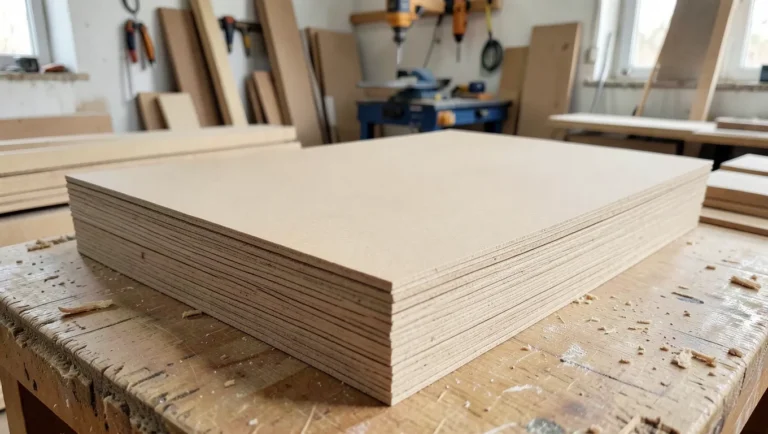
MDF is a dense fiberboard made from wood fibers and resin. That mix gives it a uniform surface with no grain, which is why it paints cleanly. Solid wood, by contrast, is natural lumber such as pine, poplar, oak, maple, birch, walnut, or mahogany, and it moves with humidity and seasons.
How the material makeup affects the job
Paint-grade trim often favors MDF because the flat, grain-free face is easy to prime and topcoat. Solid wood can look better in premium interiors, but the milling, sanding, and knot control add labor before the first coat goes on.
If the baseboard will stay in a conditioned room with steady humidity, MDF usually makes more sense on price and finish speed. If the wall line is exposed to damp mopping, splashback, or repeat repairs, solid wood has the safer failure profile.
How much cheaper is MDF trim than solid wood baseboards?

MDF is often about 20% to 40% cheaper installed than solid wood baseboards in paint-grade work. The spread comes from both material cost and labor. Solid wood usually adds cost through sorting, scribing, waste, and a slower finish schedule.
Material price versus installed price per linear foot
Installed cost is not the same as stick price. MDF boards are usually cheaper to buy, and they arrive with a consistent profile that helps speed painting. Solid wood can start as finger-jointed pine or poplar for a paint-grade job, or move up to hardwoods like oak or maple, which raises both material and labor cost.
A simple way to think about it: MDF saves most in long, dry runs where you need many linear feet and few custom cuts. Solid wood adds cost when you need more fitting around uneven floors, inside corners, and returns.
Where MDF saves money
MDF saves money in straight runs, standard profiles, and rooms that will get one primer coat and one finish coat. It also cuts touch-up time because the surface is already smooth and uniform.
That advantage shrinks if the crew has to seal many cut ends, patch damage from moving furniture, or replace sections after moisture exposure. In those cases, the cheap board can become the expensive board.
Where solid wood adds cost through labor and waste
Solid wood needs more attention to moisture content before installation. Interior wood in many climates is often targeted at 6-8 percent moisture content, and acclimation before fastening helps reduce seasonal movement after install. That extra care takes time.
Waste also climbs when you need to avoid defects, match grain, or cope with boards that cup slightly. The result is a higher installed number even before finish work starts.
Which holds up better to dents and dings?
Solid wood usually wins on repair life after impacts, while MDF wins on consistency until it gets hit hard. At floor level, baseboards take vacuum bumps, mop strikes, toy impacts, and chair legs. MDF can crush or chip at corners, while solid wood dents more often but usually repairs better.
Vacuum bumps, mop hits, and furniture contact
Repeated contact is where the material choice matters most. MDF can look perfect for months, then show a crushed corner or a chipped profile from one sharp hit. Solid wood may dent, but the damage often stays localized and can be sanded, filled, or repainted more cleanly.
Suppose a 12-foot hall run gets hit at the same corner every week by a vacuum. MDF will usually show the corner first. A solid wood board may still mark up, but the repair path is simpler if the damage stays above the floor line.
Corner damage and nail-hole blowout
Screw-holding strength also matters for returns, corner blocks, and late fixes. Solid wood generally grips fasteners better than MDF, especially when you need to secure small pieces or reattach a loose end. MDF can strip more easily if you overdrive fasteners or place them too close to an edge.
Trim nails from a finish nailer are common for baseboards, but hard species and edge repairs still benefit from care. Solid wood is usually more forgiving when you need to re-pin a corner or reset a loose return.
Repairability after impact
Solid wood has a longer refinishing lifecycle. It can be sanded and refinished more times, and the surface can usually take repeated patch, prime, and paint cycles. MDF is usually paint-only and less tolerant of heavy repair.
A common first-timer mistake is assuming a small dent in MDF is easier to fix than a dent in pine. It is not always true. Once MDF crushes at a corner or swells at an edge, the repair often turns into a cut-out-and-replace job rather than a simple fill-and-sand patch.
Do MDF baseboards hold up better or worse than wood in humid rooms?
MDF holds up worse in humid rooms when water can reach raw edges, seams, or the bottom edge near the floor. Solid wood also reacts to humidity, but its failure mode is usually movement, not fast edge swelling. That difference matters in bathrooms, basements, and laundry rooms.
Water swelling at raw MDF edges
MDF is risky near wet fixtures because raw edges swell fast when soaked. That is why sealing matters. Keep MDF sealed near sinks and dishwashers, and use the same rule at wet floors, toilet overflows, and laundry splashes.
If a mop splash leaves standing water at the baseboard for a while, MDF can swell at the bottom edge and lose its crisp profile. Once that happens, paint may crack and the repair can be visible even after patching.
Seasonal movement in solid wood
Solid wood moves with humidity and seasons. Humidity changes cause wood to expand across the grain and contract when it drops. That movement is normal, and it is one reason joints can open slightly in dry winters or tight spaces can shrink back in humid summers.
The right response is preparation, not denial. Acclimate the trim, keep moisture content in the expected range before fastening, and avoid details that trap movement. Never glue solid wood cross-grain to another solid wood component.
Why bathrooms and basements change the answer
Bathrooms and basements raise the risk of edge swelling, seam opening, and water intrusion. In those rooms, the moisture penalty can outweigh MDF’s lower price. For a paint-grade trim job, solid wood or a more moisture-tolerant trim option is the safer call where leaks or condensation are possible.
Paint-grade trim works best when primed, sealed, and protected at joints and cut edges. That advice applies to both materials, but it matters more when the room stays damp or gets wet during cleaning.
Which is easier to paint: MDF or solid wood baseboards?
MDF is usually easier to paint because it has a uniform, grain-free panel and a smooth surface. Solid wood can still finish well, but grain telegraphing, knots, and seasonal movement can make the prep and touch-up work more involved.
Paint-grade finish quality
For a crisp white baseboard, MDF often gives the most even result. The face is uniform, so primer and paint lay down with fewer visible patterns. That is a strong advantage in new builds and whole-house repaints where consistency matters more than stained character.
Solid wood can still look excellent, especially with poplar or finger-jointed pine in paint-grade work. But the surface usually needs more attention at joints, profile edges, and end cuts.
Priming, sealing, and end-grain protection
Both materials need sealing at cut ends and joints. MDF especially needs edge sealing because its raw cut faces absorb moisture fast. Solid wood needs primer and attention at end grain to reduce movement-related finish cracks.
If the paint schedule is tight, MDF often goes faster. If the room is wet or the trim may need later sanding and repainting, solid wood gives you more room to correct damage without rebuilding the whole run.
- Measure the room type first: dry bedroom, busy hall, bathroom, or basement.
- Decide whether the main risk is denting, moisture, or future repair work.
- Check whether the finish is paint-only or may need later refinishing.
- Match the material to the worst condition at floor level, not the best one.
Baseboard scenarios
| Scenario | Estimated installed cost range per linear foot | Dent resistance | Moisture risk | Repairability | Best material choice |
|---|---|---|---|---|---|
| Dry bedroom | $3 to $6 for MDF; $5 to $9 for solid wood | Low-to-moderate traffic | Low | Good for both, with MDF easy to repaint | MDF |
| Busy hallway | $4 to $7 for MDF; $6 to $10 for solid wood | Frequent vacuum and shoe contact | Low | Solid wood repairs better after chips and dents | Solid Wood Baseboards |
| Bathroom | $4 to $8 for MDF if fully sealed; $6 to $11 for solid wood | Moderate | High near tubs, showers, and sinks | Solid wood tolerates incidental wetting better | Solid Wood Baseboards |
| Basement | $4 to $8 for MDF if dry and conditioned; $6 to $11 for solid wood | Moderate | Moderate to high, depending on leaks and humidity | Solid wood is easier to salvage after minor moisture events | Solid Wood Baseboards |
Choose MDF if… / Choose Solid Wood Baseboards if…
Choose MDF if the room is dry, the baseboard will be painted, and you want the lower installed price per linear foot. It also makes sense when you need a smooth, uniform finish in a bedroom, office, or other conditioned space with limited impact risk.
Choose Solid Wood Baseboards if the room sees moisture, repeated bumps, or a higher chance of future repair. It is the safer pick for bathrooms, basements, laundry areas, and hallways where dent resistance, screw-holding strength, and repair life matter more than shaving a few dollars from the install.

Frequently asked questions
Is MDF or solid wood better for baseboards?
MDF is better for dry, paint-grade rooms where you want a smooth finish and a lower installed price. Solid wood is better where the baseboard may see moisture, repeated impacts, or later repair work. The right choice comes down to room conditions, budget, finish, and project requirements, not appearance alone.
Will MDF baseboards swell if they get wet?
Yes. MDF will swell if raw edges get wet, and the damage can happen quickly after soaking. Sealing helps, but it does not make MDF a good choice for repeated wetting. Keep it out of splash zones unless the exposure is truly minor and well controlled.
Can MDF baseboards be used in bathrooms or basements?
They can be used only when the space stays dry, sealed, and well controlled, but they are not the safest option. Bathrooms and basements often have splash, condensation, or leak risk at the floor line. Solid wood is usually the better choice there.
Sponsored / affiliate links. As an Amazon Associate I earn from qualifying purchases. I may earn additional commission from eligible campaigns.