Is Padauk Good for Cutting Boards? Food-Safe, but Not Ideal
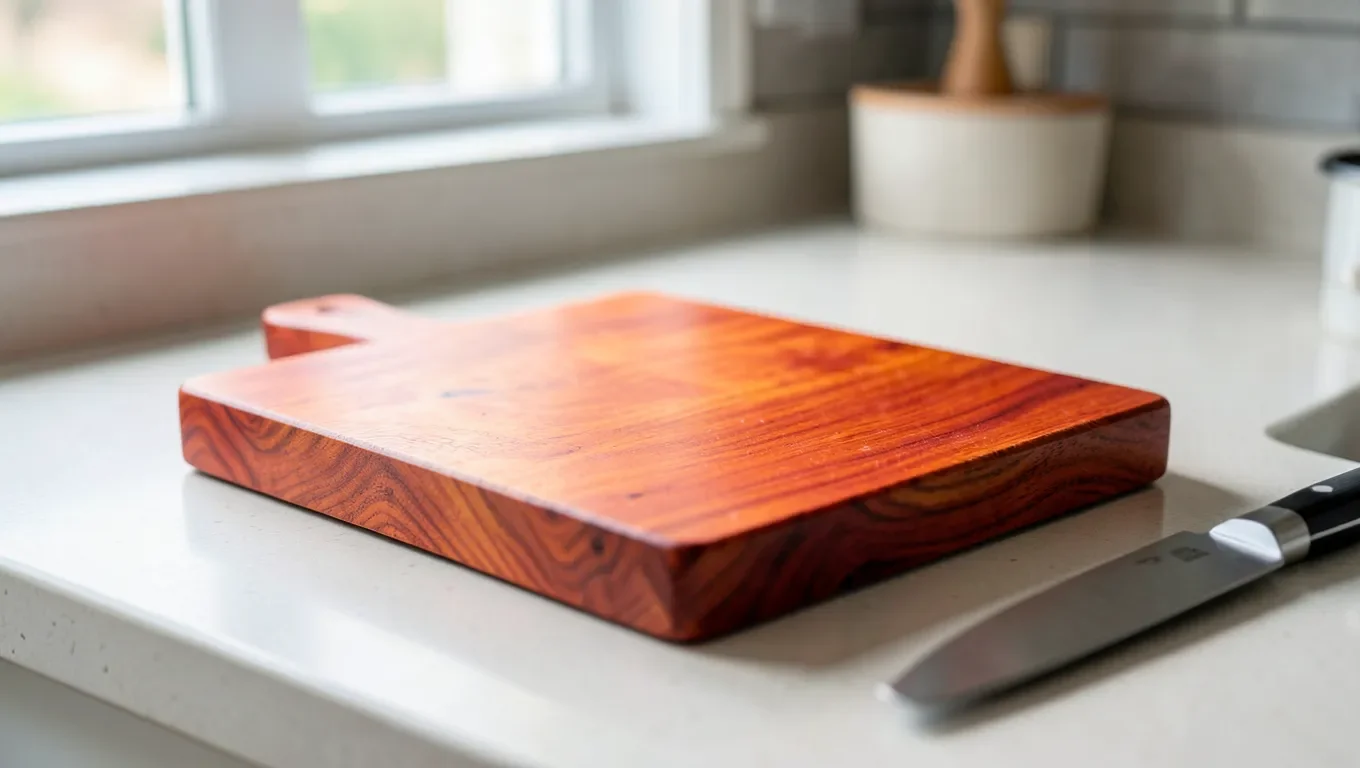
Short answer: yes, padauk is food-safe. It is not on any standard toxic-wood warning list, and its density holds up fine under a knife. But “food-safe” and “the right choice for your kitchen” are not the same question, and most articles on this topic stop at the first one. Padauk’s famous orange-red color does not stay orange-red, and the same dust that never touches your food is a genuine irritant while you are the one cutting the board out. Here is what actually matters before you commit a $40 blank to a cutting board project.
Is Padauk Food-Safe for Cutting Boards? The Quick Answer
Padauk (Pterocarpus soyauxii, commonly called African padauk) is not listed among the recognized toxic or sensitizing woods for ingestion risk, and it is dense and closed enough in structure to resist knife scoring the way oak or maple does. If your only question is “will this poison anyone,” the answer is no. Once a board is properly finished, a padauk cutting board is as food-safe as any hardwood board on the market. For the actual maintenance, a food-grade mineral oil is what keeps any wood board sealed and safe between uses, padauk included.
Best Board Conditioner for Padauk
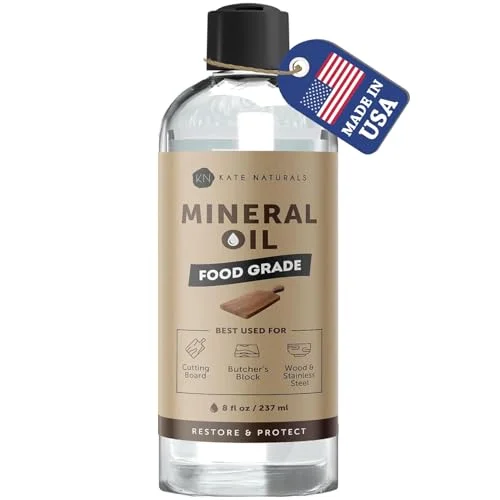 |
Kate Naturals Mineral Oil for Wood Cutting Board, 8oz – $7.99 A food-grade mineral oil seal is the single best defense against both cracking and the UV-driven color fade padauk is known for.
|
Why Padauk Passes the Food-Safety Test
Food-safety concerns with wood almost always come down to one of two things: a species with a known toxic or allergenic compound (like some rosewoods), or a wood so open-pored that bacteria gets trapped and can’t be cleaned out. Padauk clears both bars reasonably well. It doesn’t appear on the standard toxic-wood reference lists that flag species like yew or certain exotic rosewoods, and its grain, while not as tight as hard maple’s, is dense enough that a properly sealed board cleans up fine with normal dish soap and water.
That said, “food-safe” isn’t the same as “the ideal choice.” A number of closed-grain woods, hard maple especially, are simply easier to keep sanitary long-term because their pores are smaller and tighter. Padauk will work as a cutting surface. It just asks a little more from you in upkeep than the boring, bulletproof standard-issue maple board does.
The Real Catch: Padauk’s Color Will Fade
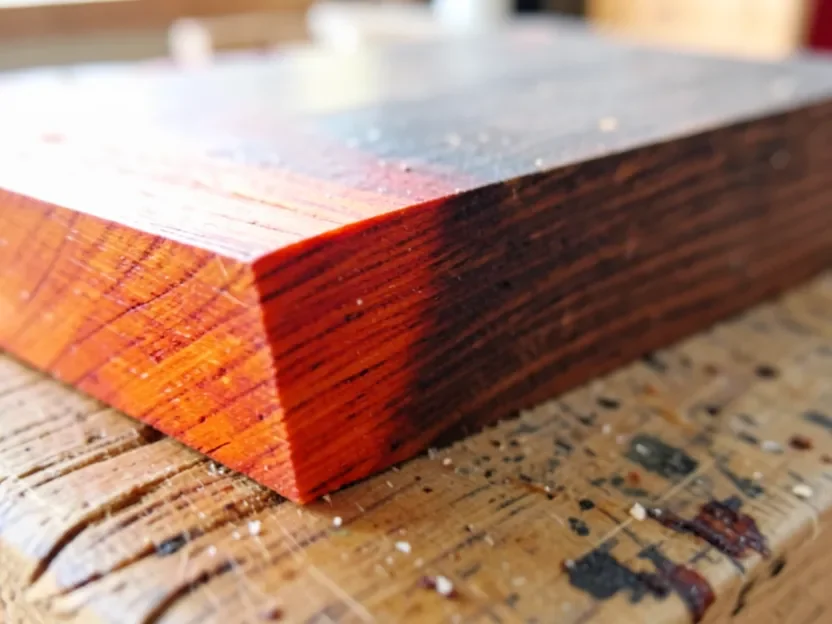
This is the caveat most padauk write-ups either skip entirely or bury in a single line, and it deserves its own section because it’s the single biggest reason people end up disappointed with a padauk board six months in. Freshly cut padauk is a genuinely striking neon orange-red. That color is not stable. Exposure to UV light and ordinary air oxidizes the wood’s natural pigments, a slow chemical process that shifts the color first toward a deeper red, then over months and years toward a coppery amber and eventually a dark brownish-purple. A padauk cutting board sitting in a sunny kitchen window will visibly shift within weeks; one kept out of direct light takes longer, but the drift happens regardless.
Two things are worth being clear about here. First, this is purely cosmetic. The wood doesn’t lose strength, hardness, or durability as it darkens, so a faded padauk board still functions exactly as well as a new one. Second, you can slow it down but not stop it. A UV-inhibiting, food-safe finish applied right after sanding, plus keeping the board out of direct sunlight, meaningfully extends how long that vivid orange-red lasts, but eventually every padauk board settles into its darker, more muted tone. Cherry wood follows a similar arc, darkening with light exposure over time, though padauk’s starting color is far more dramatic and its shift more noticeable.
A Separate Risk: Padauk Dust and Machining Safety
Here’s the distinction most food-safety articles never draw, and it matters: whether padauk is safe to eat off of and whether padauk is safe to cut and sand are two completely different questions. The first one is about the finished board. The second is about you, standing at the table saw or the random-orbital sander, breathing whatever comes off the wood.
Padauk dust is a documented sensitizer. Reported reactions from repeated exposure during sawing, routing, and sanding include skin and eye irritation, dermatitis, nasal irritation, and in some woodworkers, asthma-like respiratory symptoms. Sensitization is cumulative: you can machine padauk for months without a reaction and then develop one, after which reactivity to the dust tends to persist. This is a real, well-documented occupational hazard for whoever builds the board, not a hazard for whoever eats off it later. Wear a properly rated dust mask or respirator, run dust collection or at minimum work outdoors or with strong ventilation, and don’t treat padauk’s food-safety clearance as a reason to skip shop-safety basics while you’re making the cut.
How Hard and Durable Is Padauk, Really?
On the Janka hardness scale, African padauk lands right around 1,970 lbf, depending on which reference and which growing region the sample came from. For context, that’s noticeably harder than hard maple (about 1,450 lbf) and well above red oak. A board that hard resists knife scoring and general wear better than most of the woods people default to for cutting boards, and it will hold up structurally for years of normal kitchen use.
The tradeoff of that hardness is that it’s a little tougher on knife edges than a softer board like walnut, and its grain, while generally straight, runs interlocked often enough in commercially available stock that it needs sharp tools and careful sanding to avoid tear-out during the build.
Padauk vs. Maple, Walnut, and Cherry for Cutting Boards
Here’s how padauk actually stacks up against the woods people usually cross-shop it against:
| Wood | Janka Hardness | Color Stability | Food-Safety Notes |
|---|---|---|---|
| Padauk | ~1,970 lbf | Fades from orange-red to brown over months/years | Food-safe; open enough pores that sealing matters |
| Hard Maple | ~1,450 lbf | Very stable, pale color barely shifts | Food-safe; tight closed grain, the industry default |
| Black Walnut | ~1,010 lbf | Stable, may lighten slightly | Food-safe; softer, gentler on knife edges |
| Cherry | ~995 lbf | Darkens/reddens with light exposure | Food-safe; softer than padauk, similar aging behavior |
If you’re weighing padauk against another reddish exotic, it’s also worth a look at how padauk compares to bloodwood, a similarly vivid wood that shares some of the same color-fade behavior. Maple wins on pure low-maintenance practicality. Padauk wins if you want the board to be a genuine visual centerpiece and don’t mind babying the finish.
Caring for a Padauk Cutting Board
Wash by hand with mild soap and warm water, never in a dishwasher, and dry it standing up so both faces get airflow. Apply a food-grade mineral oil every few weeks with daily use, or monthly for occasional use, letting it soak in for 15-20 minutes before wiping off the excess. Keep the board out of direct sunlight and away from the dish rack window ledge if you want to slow the color fade as much as possible. If the surface gets rough or develops deep grooves, a light sanding followed by a fresh coat of oil restores it. None of this is padauk-specific; it’s the same routine that keeps any wood cutting board sanitary and crack-free, padauk just rewards the routine with a longer-lasting version of that original color.
Frequently Asked Questions
Is padauk safe for food contact?
Yes. Padauk is not on standard toxic-wood lists and is generally considered food-safe once properly sealed with a food-grade oil, the same as any hardwood cutting board.
Why does padauk wood change color over time?
UV light and oxygen cause photo-oxidation of padauk’s natural pigments, shifting the wood from vivid orange-red to a deeper amber and eventually a dark brown over months to years. It’s purely cosmetic and doesn’t affect strength or durability.
Is padauk dust dangerous to breathe when cutting it?
Padauk dust is a documented sensitizer that can cause skin, eye, and respiratory irritation with repeated exposure during sawing and sanding. This is a workshop-safety concern for the person machining the wood, separate from the food-safety of the finished board, so use a proper dust mask and good ventilation.
How does padauk compare to maple for a cutting board?
Padauk is harder than maple (about 1,970 lbf vs. 1,450 lbf) and far more visually striking, but maple’s tighter closed grain and color stability make it the lower-maintenance, more conventional choice. Both are food-safe.
How often should I oil a padauk cutting board?
Every 2-3 weeks with daily use, or about once a month for occasional use. Regular oiling with a food-grade mineral oil also helps slow the board’s color fade.
Bottom line: padauk is genuinely food-safe and hard enough to make a durable cutting board, but go in expecting the color to mellow over time and treat the dust as a real shop-safety issue while you build it. Neither point is a reason to avoid padauk. They’re just the two things most other guides on this topic leave out.
Sponsored / affiliate links. As an Amazon Associate I earn from qualifying purchases. I may earn additional commission from eligible campaigns.