Ambrosia Maple: What Causes the Coloring and Best Uses
Ambrosia maple gets its color from ambrosia beetles and the fungi they carry, which stain the sapwood; choose it when visible figure is part of the design, and pass on it when you need uniform grain or clean, defect-free surfaces. Ignoring that can waste boards on the wrong project and create finishing or repair problems. This guide explains how to identify ambrosia maple, what causes the streaking and pinholes, and which projects suit it best.
What ambrosia maple

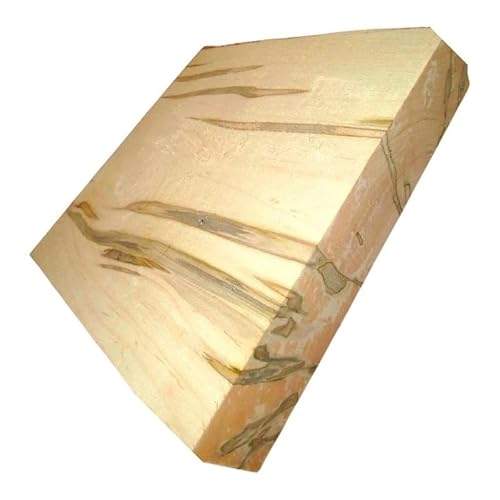
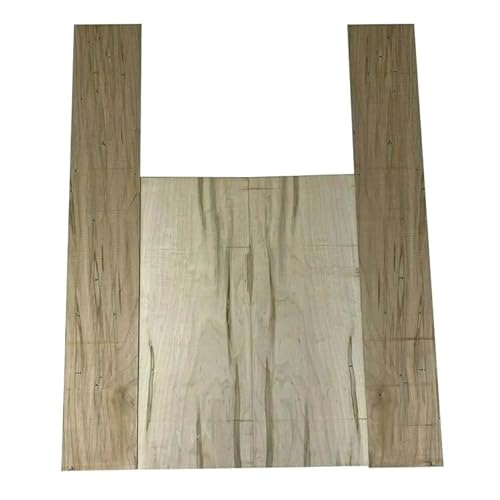
Ambrosia maple is a figure, not a separate species. The name describes maple lumber with beetle-made pinholes and fungal staining, most often in soft maple stock. When you are sorting boards, treat it as a visual condition on top of the maple species underneath, not a different tree.
How soft maple fits
Soft maple is the usual base material for ambrosia figure. In identification discussions, red maple often appears as a reference species, while sugar maple, or hard maple, is the harder comparison species. That matters because the figure can be present in more than one maple species, but the base wood still sets the working and wear characteristics.
Why red maple and sugar maple matter for identification
Red maple, Acer rubrum, is commonly used in anatomy pages as a comparison point for softer maples. Sugar maple, Acer saccharum, is commonly used as a harder benchmark in lookalike discussions. If a board has ambrosia figure, the species beneath it still affects hardness, weight, and how the wood behaves when machined or used in service.
What causes the coloring and holes
The coloring comes from ambrosia beetles boring into the wood and carrying ambrosia fungi with them. The fungi stain the surrounding wood, while the beetle tunnels create the small holes. The streaks usually run along the boring paths, so the figure often looks directional rather than evenly mottled.
Beetle tunnels and entrance holes
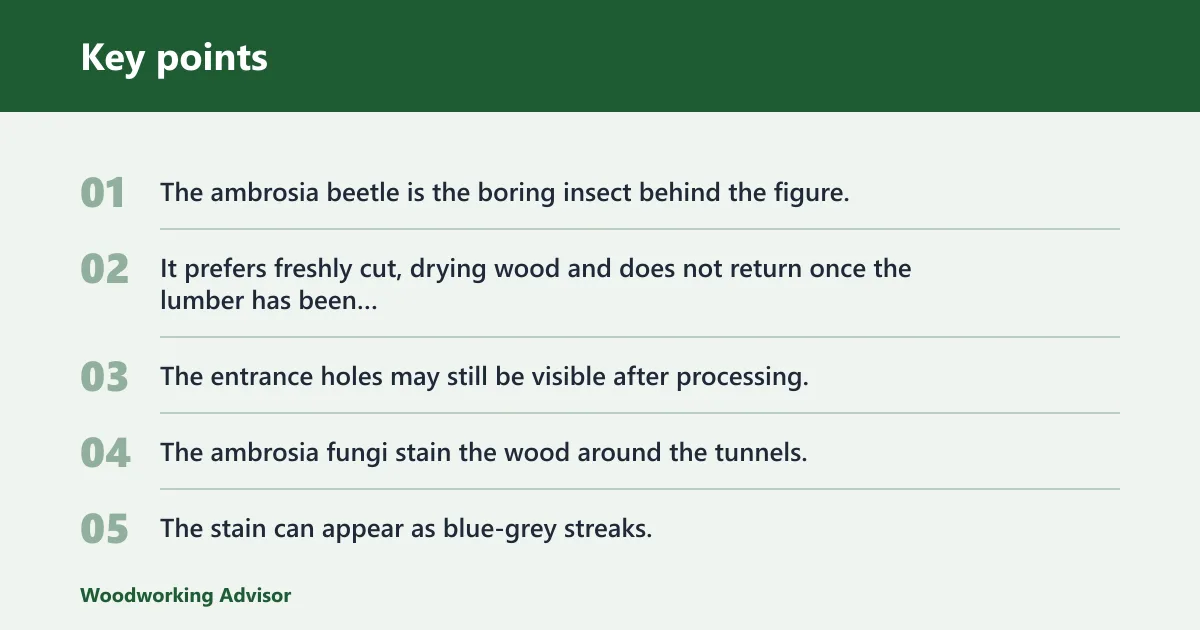
The ambrosia beetle is the boring insect behind the figure. It prefers freshly cut, drying wood and does not return once the lumber has been kiln-dried. The entrance holes may still be visible after processing, so the defect is often part of the finished look unless you fill it.
Why the streaks follow the boring paths
The ambrosia fungi stain the wood around the tunnels, which is why the figure is centered on the beetle paths rather than spread randomly across the board. The stain can appear as blue-grey streaks, and sometimes as greenish or brown bands around the tunnels. That pattern helps separate ambrosia figure from unrelated discoloration.
Do not confuse ambrosia figure with spalting. Spalting comes from other fungal activity and usually brings different boundary lines, color zones, or decay patterns. Ambrosia maple keeps its identity tied to beetle boring and fungal staining around those paths, with visible pinholes as part of the clue set.
How it compares with other maple
Ambrosia maple often gives you a bigger visual payoff per board foot than plain soft maple, especially on cabinet doors, tabletops, and small display parts. Compared with hard maple, it usually looks less uniform and can feel more open in the face grain, but the species beneath the figure still governs how tough the board is.
Hardness and weight in context
Janka hardness for ambrosia maple varies by species, from 700 to 950 lbf. One supplier listing gives 1200 lbf, so check the species and the source before you assume all ambrosia boards behave the same. Average dried weight varies by species from 30.2 to 38.0 lbs/ft3, which is a useful clue when you compare handling and density. (Wood-database)
That range puts ambrosia maple in the soft-to-mid maple group, not in a “heavy hardwood” category that you can treat as interchangeable with hard maple. For workability, that usually means decent machining and moderate wear resistance, but not a reason to expect the same edge toughness as sugar maple in high-abuse parts.
Picture two 4/4 boards side by side. One is plain soft maple with even grain and little figure. The other is ambrosia maple with blue-grey streaks crossing the face and a few pinholes near the center. If the part will stay visible, the ambrosia board often earns its space. If the part will be hidden, plain soft maple may be the better buy.
Finishing and hole filling
Ambrosia maple may need hole filling before a final finish is applied. That is less about appearance alone and more about surface continuity. Open holes can trap dust, collect finish unevenly, and leave rough edges that catch on hands or cloth. If the holes are part of the look, keep them open only when the project can tolerate the texture.
When holes should stay open
Leave holes open when the piece is decorative, low-touch, and easy to dust. Turned bowls, display panels, and some furniture accents can wear the holes as part of the design. That works best when the pinholes are small, dry, and not in a zone that sees constant abrasion or food contact.
When epoxy makes more sense
Use epoxy when you need to lock down open holes, stabilize edges, or create a flatter surface across many voids. It is a practical choice for tabletop defects and small repair areas where you want the figure to stay visible but the surface to clean more easily. Match the fill approach to the part, not the board grade.
How shellac and polyurethane fit
Shellac and polyurethane are both used on ambrosia maple projects, but they do different jobs. Shellac can seal porous spots and give the surface a quick build, while polyurethane is often chosen for added surface protection on furniture parts. Neither finish turns open holes into a true wear layer, so hole filling still matters where the surface must be smooth.
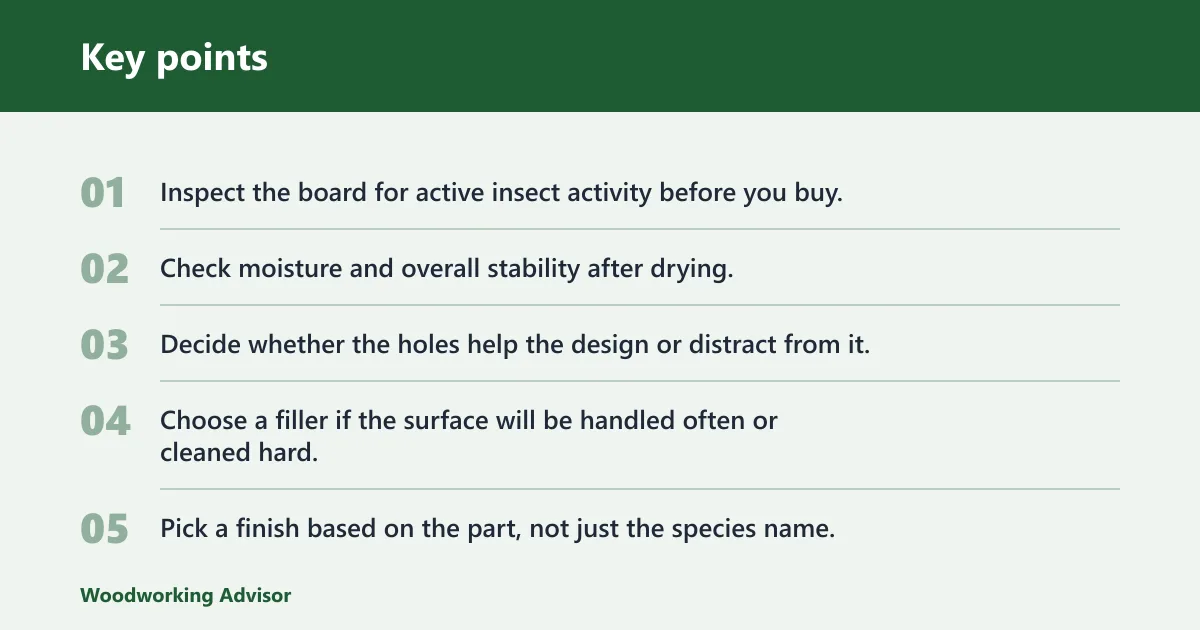
- Inspect the board for active insect activity before you buy.
- Check moisture and overall stability after drying.
- Decide whether the holes help the design or distract from it.
- Choose a filler if the surface will be handled often or cleaned hard.
- Pick a finish based on the part, not just the species name.
Suppose you are building a 30-inch side table with a broad top and a drawer front. The top can take a filled surface if you want easier wiping, while the drawer front can keep some open pinholes if the piece is meant to read as figured maple. The same lumber can suit both roles, but only with different surface plans.
Maple suitability table
This table treats ambrosia maple as a figure-selection choice. The scores run from 1 to 5, where 1 is low and 5 is high. “Hole-filling need” scores higher when filling is more likely, so a 5 means you should expect more filling work before finishing.
| Project use | Visual impact | Hole-filling need | Finish difficulty | Practical durability | Verdict |
|---|---|---|---|---|---|
| Cabinet parts | 4 | 3 | 3 | 4 | Buy |
| Tabletops | 5 | 4 | 4 | 3 | Conditionally use |
| Shelves | 3 | 2 | 2 | 4 | Buy |
| Turnings | 5 | 2 | 3 | 3 | Buy |
| Guitar parts | 4 | 3 | 4 | 3 | Conditionally use |
| Knife handles | 3 | 4 | 4 | 3 | Conditionally use |
| Cutting boards | 4 | 5 | 5 | 2 | Skip |
| Veneer | 5 | 1 | 3 | 4 | Buy |
Cabinet parts and veneer are the strongest fits because the figure reads well on visible surfaces and the holes can be managed before assembly or pressing. Tabletops can work too, but only when you are willing to fill defects and accept a more maintenance-sensitive surface than plain maple. Cutting boards are the weakest fit because frequent washing, knife contact, and open holes do not belong together.
Which projects fit best?
Ambrosia maple fits best where visual payoff matters and the part is not expected to take severe abuse. Furniture, tabletops, turnings, crafts, and veneer are the most natural matches. Cabinets and shelves can also work well, provided the figure is wanted and the holes are dealt with before finish.
Furniture parts and tabletops
For furniture, ambrosia figure can turn ordinary maple into a feature surface without changing the layout of the piece. Tabletops are a good use when the defects are treated as part of the design and the finish schedule includes hole filling. If you need a dead-uniform dining surface, plain maple is the safer buy.
Shelves, turnings, and crafts
Shelves are a practical choice when the faces remain visible but do not see constant wear. Turnings suit ambrosia well because the streaks wrap around curves and the holes can become part of the pattern. Small crafts also benefit from the figure, especially when the part size makes the streaks appear more concentrated.
Guitar parts, veneer, and cutting boards
Guitar parts and veneer are conditionally useful, mainly because the figure is attractive and the stock can be selected for appearance. The right answer depends on where the holes land and how much post-processing is acceptable. Cutting boards are a poor match, because a food-contact surface should not depend on filled holes to stay sanitary or serviceable.
A common first-timer mistake is buying ambrosia maple for a cutting board because the streaks look unique, then trying to solve the holes with a finish alone. That approach leaves the board with voids that are hard to clean and hard to keep uniform after repeated washing. Skip the material for that job.
Buying checks before you commit
Inspect the lumber for signs of active insect activity, especially any fresh dust, loose boring debris, or questionable pockets around the holes. Also check moisture and stability after drying. If the board still moves heavily, the figure may be fine while the panel fails the project.
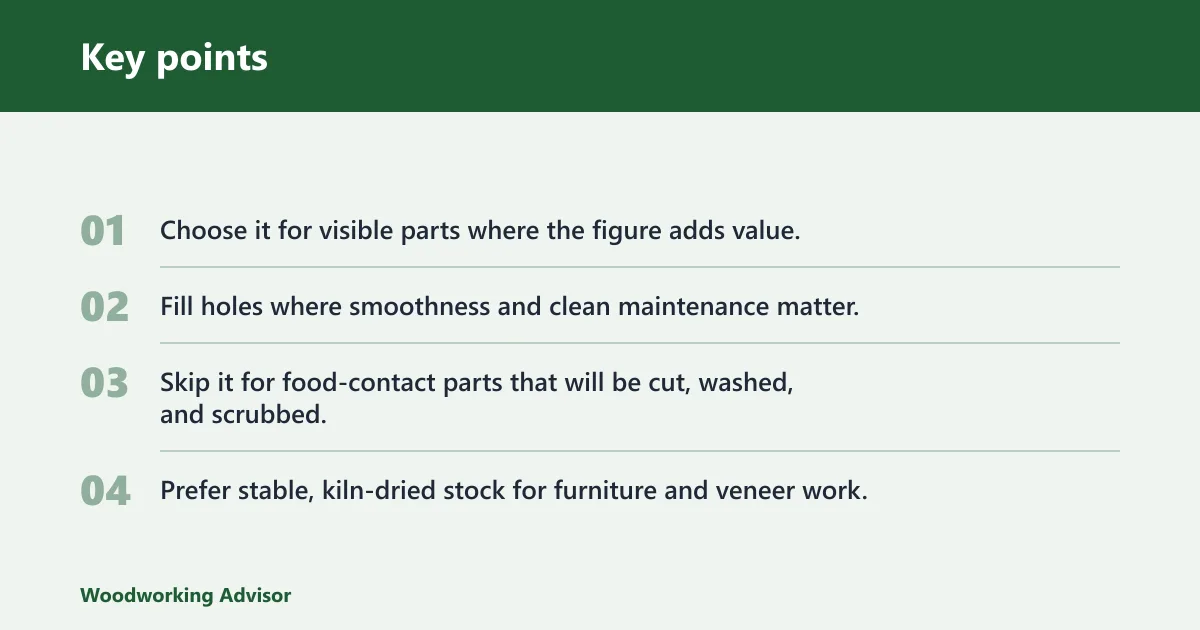
- Choose it for visible parts where the figure adds value.
- Fill holes where smoothness and clean maintenance matter.
- Skip it for food-contact parts that will be cut, washed, and scrubbed.
- Prefer stable, kiln-dried stock for furniture and veneer work.
Frequently asked questions
What causes the coloring in ambrosia maple?
The coloring comes from ambrosia beetles and the fungi they carry. The fungi stain the surrounding wood, which creates blue-grey, greenish, or brown streaks centered around the beetle’s boring paths. The visible holes are part of the same pattern, not a separate defect.
Is ambrosia maple a real species or just a figure?
It is a figure, not a separate species. The base wood is usually soft maple, and the name describes the beetle-caused staining and holes. Species still matter underneath the figure because hardness, weight, and machining behavior vary with the maple species involved.
Are the beetle holes in ambrosia maple safe or a defect?
The holes are usually part of the figure, but they are still defects when the project needs a smooth, closed surface. They are not a problem in decorative parts if you like the look. For tabletops, handled parts, and other high-contact work, they often need filling before finishing.
How does ambrosia maple compare with hard maple and soft maple?
Compared with plain soft maple, ambrosia maple has more visual payoff per board foot when the figure is on display. Compared with hard maple, it usually offers less uniformity and a lower or similar hardness range depending on species. Hard maple is the safer pick for wear-heavy parts.
Can ambrosia maple be used for furniture, tabletops, or cutting boards?
Furniture and tabletops are common uses, especially when the figure is the point of the design. Cutting boards are a poor match because open holes and repeated washing create maintenance and sanitation problems. If you want the look for food prep, choose a different wood and avoid relying on finish to solve the issue.
Do you need to fill the holes in ambrosia maple before finishing?
Often, yes. Filling makes sense when you want a smoother surface, easier cleaning, or a more controlled finish build. You can leave small holes open on decorative work, but a surface that will be handled often usually benefits from epoxy or another suitable filler before the final coat.
Is ambrosia maple stable after kiln drying or stabilization?
Rare Woods says the beetles prefer freshly cut, drying wood and do not return once it is kiln-dried. That points to a good practical rule: kiln-dried stock is the safer purchase for finished work. Stability still depends on the board itself, so check moisture and movement rather than trusting the figure alone.
Sponsored / affiliate links. As an Amazon Associate I earn from qualifying purchases. I may earn additional commission from eligible campaigns.