How to Identify Hard Maple vs Soft Maple by Grain
Hard maple and soft maple cannot be separated by grain alone with certainty, but hard maple usually shows tighter, more even texture and finer pores, while soft maple is often slightly more variable in figure and weight. Misreading them can put the wrong board in a wear surface, stain schedule, or milling plan. This guide ranks the grain clues by reliability and shows a quick workflow for sorting maple boards without overtrusting subtle grain.
| Decision factor | Hard Maple | Soft Maple | Winner |
|---|---|---|---|
| Surface grain consistency | Usually tighter, finer, and more even on plain-sawn faces | Can look similar, but often reads a little looser or more variable | Hard Maple |
| Weight and density | Typically heavier for its size | Usually lighter, though some boards overlap | Hard Maple |
| Workability | Harder on cutters and edges | Slightly easier to machine and less likely to burn | Soft Maple |
| Shop sorting confidence from grain alone | Low to moderate | Low to moderate | tie |
| Best use when boards are mixed and unlabeled | Safer choice when you need higher wear resistance | Safer choice when you need easier machining and lower cost | tie |
What grain can tell you
Grain is a weak separator on maple. Maple is diffuse-porous, so the small pores do not give you a bold visual split the way ring-porous woods can, and surfaced or sanded stock can look even closer than rough lumber.
Use grain as a first filter, not a final answer. Straight grain, fine texture, and low visual contrast can point toward hard maple, but soft maple can present the same look once boards are planed, jointed, stained, or milled from different parts of the tree.
What straight grain tells you on maple lumber
Straight grain usually tells you the board was cut cleanly and may machine predictably. It does not tell you species by itself. A straight-grained board can be either hard maple or soft maple, and a figured board can be either one as well.
Why surfaced or finished boards are harder to sort
Planing removes surface cues, sanding softens contrast, and finish can mute or shift color. That leaves you with less useful grain information and more overlap between the two groups, especially on cabinet-grade stock and already-stained parts.
Hard maple vs soft maple by grain
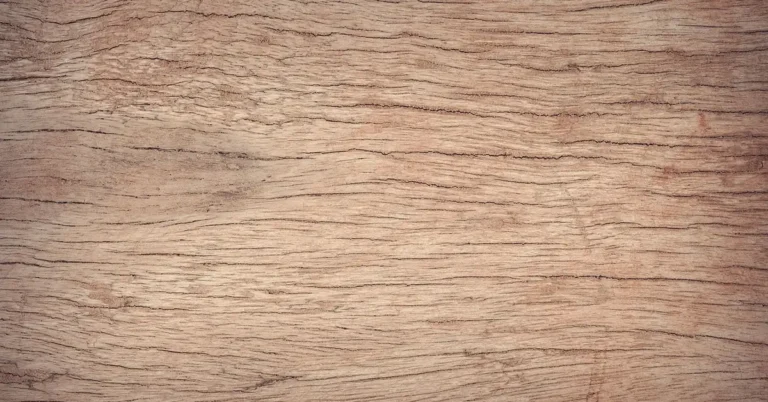
On face grain, hard maple usually looks a bit tighter and more uniform, while soft maple can appear slightly coarser or more variable. That difference is real enough to notice sometimes, but it is not reliable enough to sort a mixed stack by itself.
The safest read is “possible,” not “confirmed.” If the board is plain, pale, and evenly textured, you still need weight, end grain, and an edge check before you label it hard maple.
What hard maple usually looks like in board face grain
Hard maple, typically Acer saccharum, often shows a fine, even face grain with a restrained look. It may appear cleaner and denser than nearby soft maple boards, especially in rough-sawn stock that has not been over-sanded.
What soft maple can look like on the same surfaces
Soft maple is a lumber grouping, not one species. Common contributors include red maple, silver maple, bigleaf maple, and box elder; striped maple is a botanical species reference, not a common commercial lumber category. On the face, soft maple may look nearly identical to hard maple after milling.
Why color, figure, and milling quality can mislead you
Color is a trap. White-looking hard maple, pale soft maple, and slightly amber stock can all sit in the same rack. Figure can confuse things too; curly, bird’s-eye, and ambrosia patterns can hide the base texture and make a soft maple board look more dramatic, or make a hard maple board look less uniform than it is.
Maple grain ID checklist
Use this checklist in order. Start with the least trustworthy clue and move toward the most useful confirmation, because a single grain cue is rarely enough on maple.
| Grain clue | What Hard Maple usually shows | What Soft Maple can show | Reliability score | Recommended confirmation step |
|---|---|---|---|---|
| Plain face grain | Tighter, finer, more even texture | Can look similar, sometimes a touch looser | 2/5 | Check weight and compare boards side by side |
| Color | Often pale and fairly uniform, but not unique | Also pale; can be nearly the same after planing | 1/5 | Ignore color unless it matches supplier labeling |
| Growth-ring spacing on end grain | Can look fine and even | Can look fine and even too | 2/5 | Use only with weight and a label or stamp |
| Board weight | Usually heavier for its size | Usually lighter, but overlap is common | 4/5 | Compare equal-size boards in the same bundle |
| End grain texture | Fine, dense-looking, with small diffuse pores | Also fine, but may read a little less dense | 3/5 | Confirm against species marking or vendor sort |
| Fingernail test on a crisp edge | Usually resists denting more | Dents a little more easily | 3/5 | Use only as a quick screen, never a final ID |
Which clues deserve the least trust?
Color gets the least trust. After that comes face grain alone, especially on surfaced stock. End grain is better, but maple’s fine pore structure still makes it a supporting clue rather than a clean separator.
The fingernail test is also limited. It is a crude quick check on a crisp edge, useful for screening a stack, but it cannot prove species. A board that dents a little more easily may still be a dense soft maple, not a true hard maple miscut.
Common lookalikes and traps
The most common mistakes happen with red maple, silver maple, and bigleaf maple. They often move through yards as soft maple, but they do not all look the same, and they do not all sit at the same place in density or workability.
| Lookalike | How it usually shows up in the shop | Sorting risk | Best check |
|---|---|---|---|
| Red maple | Common eastern U.S. soft maple; often sold alongside mixed maple | Can be mistaken for hard maple in pale, straight-grain boards | Compare weight and supplier mark |
| Silver maple | Common eastern U.S. soft maple; usually lower density than hard maple | May feel noticeably lighter, but not always | Use weight and edge dent resistance |
| Bigleaf maple | Common western U.S. soft maple, often sold locally in Oregon and nearby regions | Can read as clean, pale, and visually close to hard maple | Check local species labeling first |
| Brown maple | Usually a trade term for darker or lower-figure soft maple stock | May be mistaken for a different species group by color alone | Do not sort by color; verify by label or density |
Red maple, silver maple, and bigleaf maple
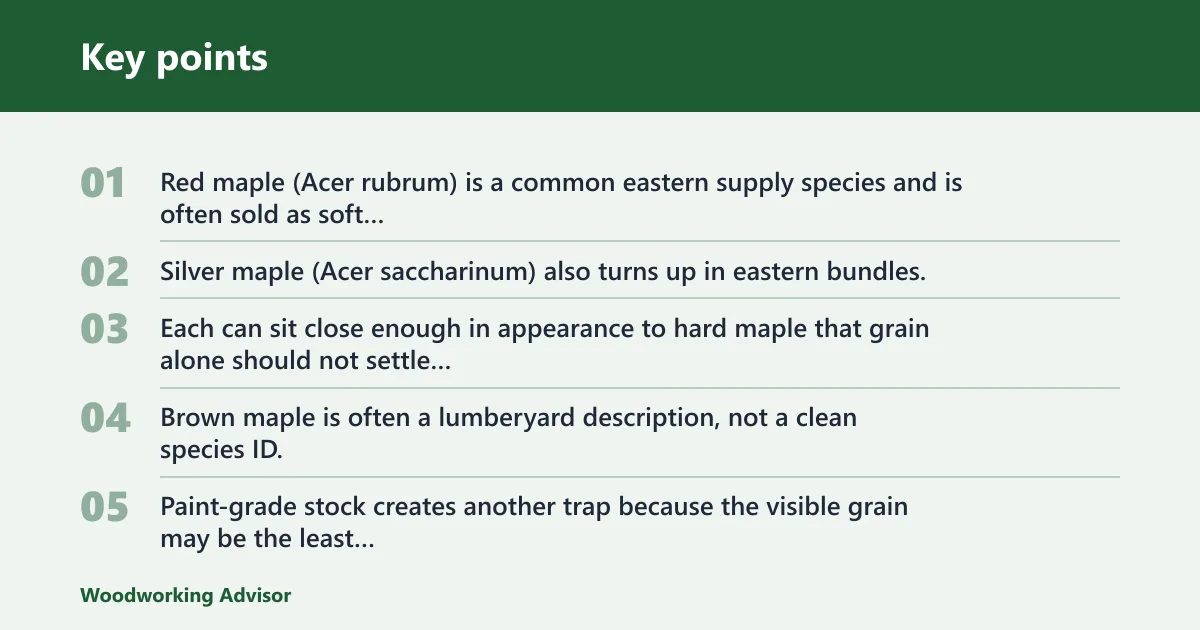
Red maple (Acer rubrum) is a common eastern supply species and is often sold as soft maple. Silver maple (Acer saccharinum) also turns up in eastern bundles, and bigleaf maple (Acer macrophyllum) is a common western source. Each can sit close enough in appearance to hard maple that grain alone should not settle the call.
Brown maple and paint-grade stock
Brown maple is often a lumberyard description, not a clean species ID. Paint-grade stock creates another trap because the visible grain may be the least informative part of the board. If the board is already selected for paint, the species call should come from labeling, not appearance.
Figured maple, ambrosia maple, and bird’s-eye maple
Curly, bird’s-eye, and ambrosia figure can overwhelm the normal grain read. Those patterns may be present in either hard maple or soft maple, so the figure itself is not a separator. A striking board can still be the wrong species for a wear surface.
A quick sorting workflow
Use this workflow for mixed maple bundles. It is built to keep the uncertain boards in an “unconfirmed” pile until a better clue appears.
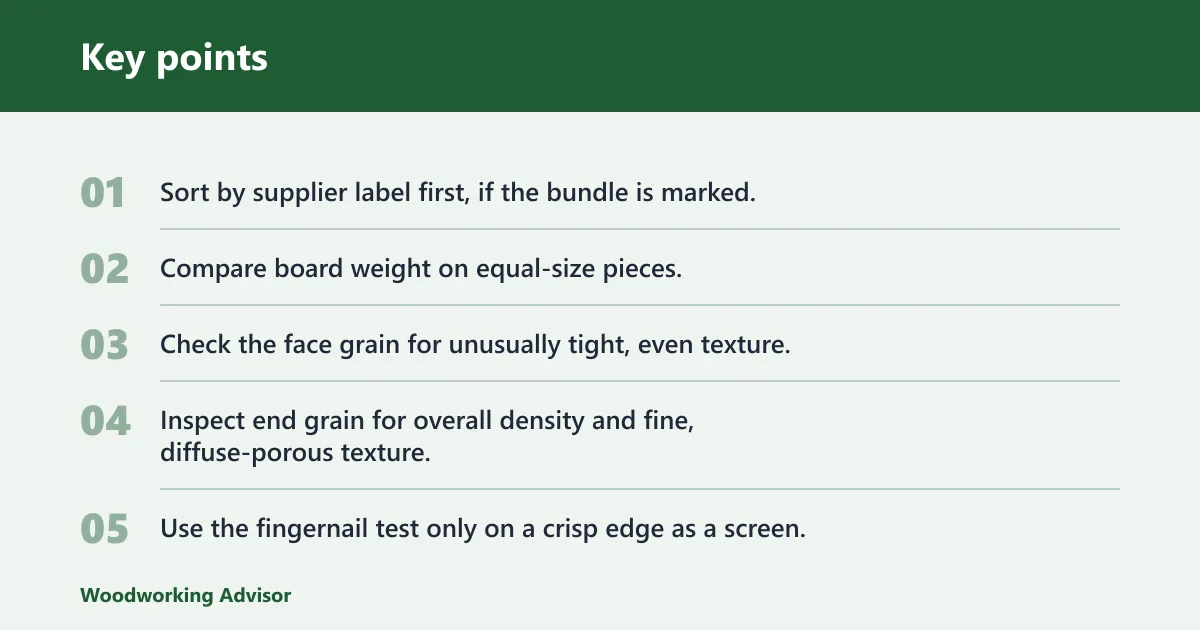
- Sort by supplier label first, if the bundle is marked.
- Compare board weight on equal-size pieces.
- Check the face grain for unusually tight, even texture.
- Inspect end grain for overall density and fine, diffuse-porous texture.
- Use the fingernail test only on a crisp edge as a screen.
- Mark any board that still feels ambiguous as unconfirmed.
Say your stack has two 8/4 boards of the same width and length, one noticeably heavier than the other. The heavier board is the better hard maple candidate, but it still needs a label or end-grain confirmation before you cut a workbench top from it.
Suppose a 4/4 board looks clean and pale after planing but feels light, dents slightly at an edge, and came from a mixed soft maple bundle. That board should stay in the soft maple pile unless the supplier stamp says otherwise.
Where weight, end grain, and edge dents fit
Weight is the best practical clue because density tracks better with the hard maple versus soft maple split than face grain does. End grain helps when the surface has been scrubbed clean by sanding, but it should be read as a supporting clue. The fingernail test sits last because it is crude and affected by grain direction, edge condition, and how sharp the edge is.
When to mark a board as unconfirmed
If the board is surfaced, stained, figured, or cut from a mixed pile, do not force a species call from grain alone. Mark it unconfirmed and leave it out of critical parts until you can verify it by label, supplier note, or a stronger density-based comparison.
When grain is not enough
Species labels matter more than visual guesses once the board is headed for a wear surface, a matching stain schedule, or a set of parts that must machine the same way. Hard maple and soft maple overlap too much in face grain for a dependable species call on appearance alone.
The Janka hardness test is useful for comparison, not for a shop-floor identification by itself. It measures the force needed to embed a .444-inch steel ball halfway into wood, and cited comparisons place hard maple at about 1,450 lbf Janka while soft maple runs about 700-950 lbf. Black cherry is cited at 950 lbf Janka, black walnut at 1,010 lbf, and black maple at 1,180 lbf, which shows why a few species can sit near the middle and confuse hand sorting. (Wood-database)
How Janka hardness and density fit into confirmation
Density is the most practical field clue because it correlates with hardness and usually matches what your hands notice when you compare equal-size boards. Even so, density supports identification rather than proving it. A denser soft maple board can feel close to a lighter hard maple board.
Soft maple is also slightly easier to work with than hard maple, and it will not dull cutting edges as quickly or burn as readily. That matters in the shop, but it does not replace a species check. Hard maple is roughly twice as hard as soft maple according to the cited comparison, yet the board still has to be sorted by the evidence in front of you.
When to stop sorting and verify by supplier marking
If the board is already surfaced, the end grain is faint, and the weight difference is small, stop guessing. Verify by bundle marking, invoice note, or yard label. That is faster than re-sorting a pile after the parts have already been cut.
Choose Hard maple if…
Choose Hard Maple if you need a wear surface, a workbench top, or flooring stock and you want the denser, harder option. It is also the safer pick when boards are unlabeled but clearly heavier and more uniform than nearby soft maple candidates.
Choose Soft maple if…
Choose Soft Maple if you want easier machining, a slightly easier stain path, or lower-cost stock for painted or less-abusive parts. It is the better fit when the board is lighter, the bundle is mixed, and the project does not need hard maple’s extra wear resistance.
Frequently asked questions
How do I tell hard maple from soft maple by grain?
You usually cannot tell with certainty from grain alone. Hard maple often looks tighter and more even, while soft maple can read slightly more variable, but the overlap is wide. Use grain as a first clue, then confirm with weight, end grain, and a quick edge dent check.
Hard maple vs soft maple: what grain differences matter most?
The most useful grain cue is overall texture on a freshly surfaced face. Hard maple tends to look finer and more uniform, while soft maple may look a little looser. That said, the difference is subtle enough that it should never be your only sorting method.
Is white maple hard or soft?
“White maple” is a shop term, not a guarantee of species. It can refer to pale hard maple or pale soft maple stock, depending on the yard and region. Treat the name as a color cue only, then verify with weight and the supplier’s species marking.
Is silver maple hard or soft?
Silver maple is a soft maple species. It is commonly sold as soft maple in eastern U.S. supply, and it usually has lower density than hard maple. If the board feels lighter and dents a bit more easily, that supports the soft maple call.
Brown maple vs hard maple: how can I tell them apart?
Brown maple is best treated as a trade description, not a clean visual species ID. Do not use color alone. Compare the board’s weight, check the end grain, and rely on the yard label if the bundle was sold as brown maple rather than as a specific species.
Is soft maple a hardwood?
Yes. Soft maple is generally considered a hardwood in the botanical sense because it comes from broadleaf maple trees, even though it is softer than hard maple in Janka terms. The “soft” part describes relative hardness within the maple group, not whether it is a hardwood or softwood class.
What does straight grain tell me on maple lumber?
Straight grain mostly tells you the board was cut cleanly and may machine well. It does not separate hard maple from soft maple. Straight-grain maple can be either one, so use that clue only as part of a larger sorting check.
Can I identify maple species from grain alone?
No, not reliably. Grain alone is too weak on maple because the groups overlap after planing, sanding, staining, or figure changes the surface read. The better workflow is grain first, then weight, then end grain, then supplier verification if the call still feels uncertain.
Soft vs hard maple
Soft maple is the easier-working, generally lighter group; hard maple is the denser, harder option. For rough sorting, look for weight first and grain second, not the other way around. If the board will see wear, hard maple is usually the safer choice.
White maple vs hard maple
White maple can mean pale hard maple or pale soft maple, so the name alone is not enough. Compare board weight and the supplier label before you decide. If the board is notably denser and more wear-resistant, hard maple is the better match.
Is white maple hard or soft: white maple can be either?
White maple can be either, depending on the lumber source and how the yard uses the term. Do not treat it as a species name. Use it as a prompt to check the board’s weight, end grain, and bundle marking before you sort it.
Sponsored / affiliate links. As an Amazon Associate I earn from qualifying purchases. I may earn additional commission from eligible campaigns.