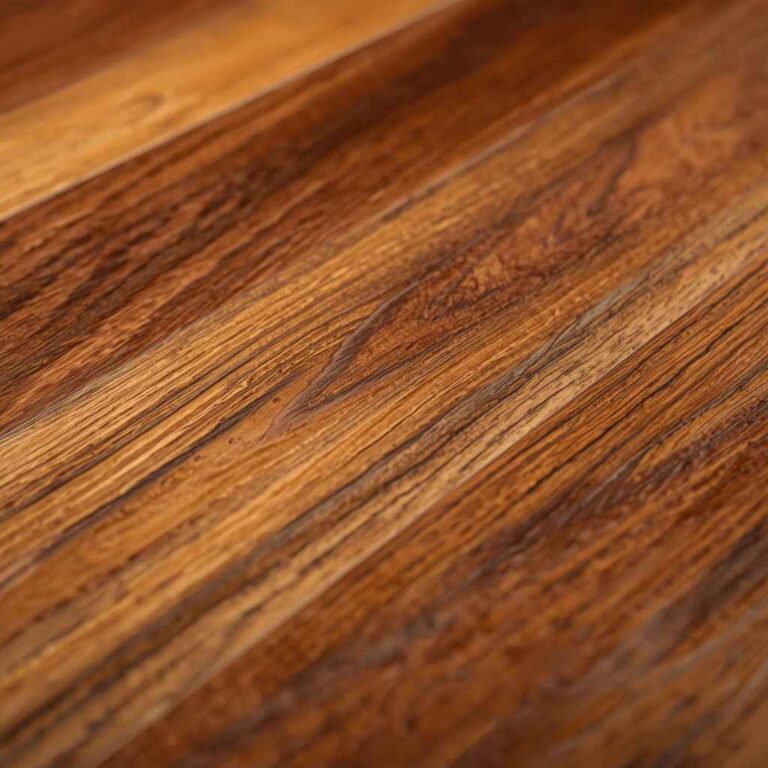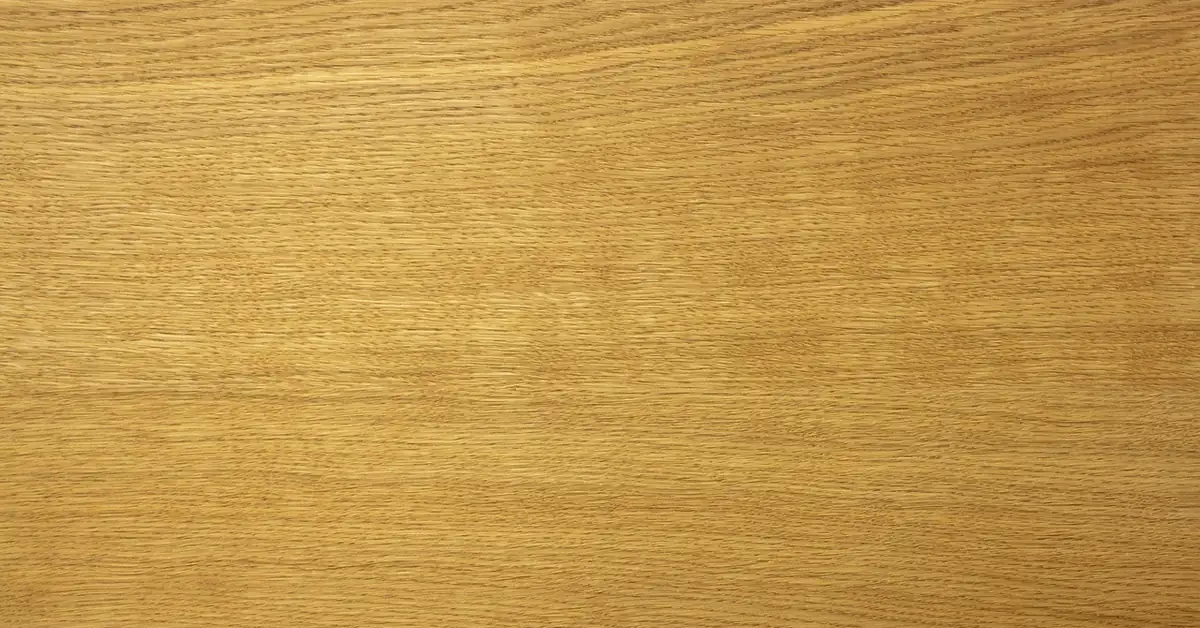
Oak Grain Pattern: Flat, Quartersawn and Rift Sawn Compared
Oak’s grain pattern comes from the saw cut, not the species: flat-sawn boards show cathedral arches, quartersawn boards show straight lines with ray fleck, and rift-sawn boards show tight straight grain with little fleck. You can read the cut from the end of any board, and the pores tell you red from white. This guide covers what each cut looks like, how to spot it, and how oak’s open pores affect what you see.
The Three Oak Grain Patterns at a Glance
Best End-Grain Loupe Pick
 |
Rongon 10X 28MM Folding Pocket Loupe – $8.39 A folding 10X magnifier with a printed inch and millimeter scale. Stand it on a freshly cut board end to check whether oak pores are open or plugged, or lay it along a ray fleck to see whether it runs past 3/4 inch.
|
As an Amazon Associate we earn from qualifying purchases.
Every oak log can yield all three patterns. What changes is the angle between the growth rings and the face of the board. The table below puts the angles, the look and the end-grain clue side by side, so you can match a board in your hands to a row. Angles are the standard sawmill definitions, as summarized by lumber.com and flooring suppliers.
| Cut | Growth rings vs. the face | What the face looks like | Ray fleck | Clue on the board end |
|---|---|---|---|---|
| Flat-sawn (plain-sawn) | Parallel to about 30 degrees | Cathedral arches and flame shapes, wide and wandering | Little to none | Rings run in shallow arcs across the width |
| Quartersawn | 60 to 90 degrees | Long, close, parallel lines | Prominent ribbons and flecks, especially in white oak | Rings stand nearly upright, like stacked lines |
| Rift-sawn | 30 to 60 degrees | The straightest, most uniform lines | Minimal | Rings run diagonally, roughly 45 degrees at best |
Flat-Sawn Oak: Cathedrals, Flames and Wide Boards
Flat-sawn (also called plain-sawn) is the default cut at most sawmills because it gives the widest boards with the least waste, which is why it is also the cheapest of the three. The growth rings meet the face at a shallow angle, so the saw slices through the cone-shaped layers of each year’s growth and draws arches on the board. The pointed arches are the cathedral pattern, and the dense stripes between them are the latewood bands.
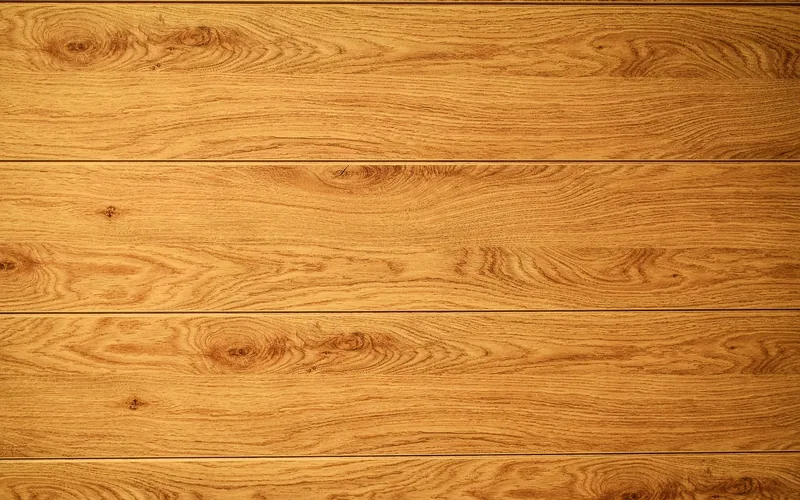
The trade-off is movement. Wide flat faces are tangential faces, and oak shrinks most in that direction. The Wood Database lists white oak at 10.5% tangential shrinkage against 5.6% radial, and red oak at 8.6% against 4.0%. That is why flat-sawn oak boards tend to cup with humidity swings. If you need numbers for a specific joint, the wood movement calculator works from those same ratios.
A cathedral is not a defect and it is not a different oak. It is the same wood cut at a different angle, and it is often the pattern people mean when they say a table has a lot of grain. If you like it, keep it. If you want a quieter face, look at the other two cuts.
Quartersawn Oak: Straight Lines and Ray Fleck
Quartersawn oak has growth rings at 60 to 90 degrees to the face, so the saw runs across the rays instead of along the rings. Medullary rays are bands of tissue that run from the center of the log toward the bark. Cut across, they show as the shimmering flecks and ribbons that Arts and Crafts furniture is known for. According to the Wood Database, white oak has rays of two sizes, narrow and very wide, and the wide ones are visible even without magnification.
Two details are easy to mix up. The long straight lines on a quartersawn face are growth rings seen almost edge-on. The shimmer crossing them is the ray fleck. A board can have straight lines and no fleck, which brings us to rift-sawn. For cost, movement figures and species comparisons on this cut, see our full guide to quartersawn oak.
Rift-Sawn Oak: The Quiet, Uniform Grain
Rift-sawn oak has rings at 30 to 60 degrees to the face. The result is straight, even lines on every face and very little fleck, because the saw cuts at an angle that mostly avoids the wide rays. Per lumber.com, it is the most dimensionally stable cut and the most expensive, since it produces the most waste.
Rift is the cut to pick when you want oak without the busy look: modern cabinet doors, long stiles and rails, and anywhere a cathedral arch would end awkwardly at a joint. The tight lines also read as one calm surface across several boards, which is why rift-and-quartered oak is a staple of flooring and cabinetry. If you plan to stain it, the how-to guide on making wood grain stand out covers which finishes keep the pattern crisp.
How to Read an Oak Board From Its End
The end of a board tells you the cut faster than the face does, because you see the growth rings in profile. Most guides show you pictures of faces. Use this routine on a board of unknown history instead.
- Make a fresh surface: crosscut the end or plane it, then wipe off the dust. Pores and rings are far easier to read on a clean cut.
- Find the rings: look for the arcs of pale earlywood and dark latewood. In oak the earlywood holds a row of large pores, so the rings are easy to follow.
- Judge the angle: rings running close to flat across the width point to flat-sawn, rings nearly upright point to quartersawn, and diagonal rings point to rift-sawn.
- Expect mixed boards: a wide board often has a flat-sawn center and steeper rings near the edges, so call it by the part that covers most of the face.
- Check the pores: under 10X, plugged pores mean white oak and open pores mean red oak.
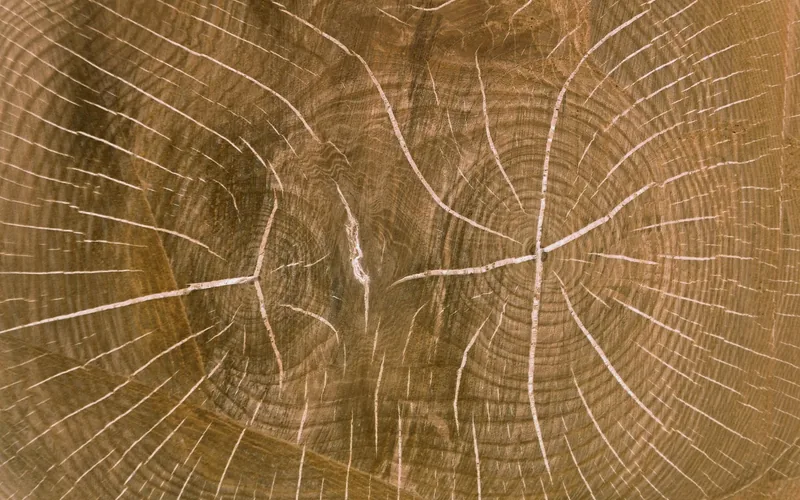
On a quartersawn board you can confirm the call from the face as well: look for the ribbons crossing the lines. On a flat-sawn board the face alone is usually enough, and a rift-sawn board is the one most often mistaken for quartersawn until you check the ray fleck.
Why Oak Grain Looks Open: Pores, Tyloses and Rays
Oak is ring-porous, which means the earlywood in each growth ring has very large pores and the latewood has much smaller ones. Those large pores are the dark flecks and grooves you feel on a bare oak surface, and they are why oak takes stain unevenly if you skip conditioner. Our guide on whether pre-stain conditioner is necessary explains when it helps.
Red and white oak share the same ring-porous layout, but the pores differ in one way that matters. In its guide to telling the two apart, the Wood Database calls the plugged pores of white oak the best and most reliable way to separate them. Those plugs are tyloses, and they make white oak watertight enough for barrels.
| Feature | Red oak | White oak |
|---|---|---|
| Pores on the end | Open, no tyloses | Plugged with tyloses |
| Typical ray length | About 1/8 to 1/2 inch, rarely over 3/4 to 1 inch | Frequently over 3/4 inch |
| Blow-through test | Air passes along the grain of a short sample | Air does not pass |
This is the corrected version of a common shortcut. Many people say white oak has fleck and red oak does not. Red oak has rays too, they are just shorter, so a quartersawn red oak board shows smaller, less glittering fleck rather than none. For the rest of the comparison, including hardness and buying advice, see red oak vs white oak.
White oak: 5.6% radial vs. 10.5% tangential shrinkage, Janka hardness 1,350 lbf, ring-porous with abundant tyloses. Source: Wood Database.
How Finish Changes the Pattern You See
The same board can look very different after finishing. Oil and clear finishes deepen the contrast between earlywood and latewood and make quartersawn fleck shimmer. A dark pigment stain fills the open pores first and can hide fleck, while a grain filler levels the pores for a smooth surface but gives up the open-pore texture. If you are matching old oak, test on an offcut of the same cut, since flat-sawn and quartersawn faces absorb stain differently. For a full finishing sequence, read how to finish white oak.
If you are comparing oak with other woods, oak grain vs. pine grain and oak vs. walnut grain show how the pore structure changes the look, and the wood grain comparison chart puts more species on one page.
Frequently Asked Questions
What is the grain pattern of oak?
Oak has a straight, coarse, uneven grain with large open pores. The pattern you actually see depends on the cut: flat-sawn boards show cathedral arches, quartersawn boards show straight lines with ray fleck, and rift-sawn boards show tight straight lines with little fleck.
Is rift-sawn oak the same as quartersawn oak?
No. Both have straight grain, but quartersawn boards have growth rings at 60 to 90 degrees to the face and show prominent ray fleck, while rift-sawn boards have rings at 30 to 60 degrees and show much less fleck.
How can you tell red oak from white oak by the grain?
Look at the pores and rays. White oak pores are plugged with tyloses and its rays often exceed 3/4 inch, while red oak pores are open and its rays usually run 1/8 to 1/2 inch. A short sample of red oak will pass air along the grain when you blow through it.
What causes the flecks in quartersawn white oak?
The flecks are medullary rays, ribbon-like tissue running from the center of the tree outward. Quartersawing cuts across those rays, so they show on the face as shiny flecks and ribbons. White oak has very wide rays, which is why its fleck is so visible.
Bottom Line
To identify oak grain, check the angle of the rings on the board end: shallow means flat-sawn cathedrals, steep means quartersawn fleck, and about 45 degrees means rift-sawn calm. Then check the pores to separate white oak from red. Choose the cut for the look you want and the movement you can live with, and match your finish to the pattern you want to keep.
Sponsored / affiliate links. As an Amazon Associate I earn from qualifying purchases. I may earn additional commission from eligible campaigns.