Red Oak vs. Poplar: Janka Hardness, Cost & Which to Use
Red oak and poplar sit at opposite ends of the hardwood spectrum: red oak tests at 1,290 lbf on the Janka hardness scale, while poplar comes in at just 540 lbf — less than half as hard. That gap explains almost everything else in this comparison, from why oak costs more per board foot to why poplar is the go-to choice for painted cabinet parts.
There’s one trade-off most comparisons skip, though: oak’s extra hardness also makes it more brittle, so it’s actually more likely than poplar to crack or shatter under a sudden impact or a tight bend. If your project takes repeated impact rather than just needing to resist dents, that matters as much as the hardness numbers below.
Characteristics Of Red Oak
Prevents Blotchy Poplar Stains
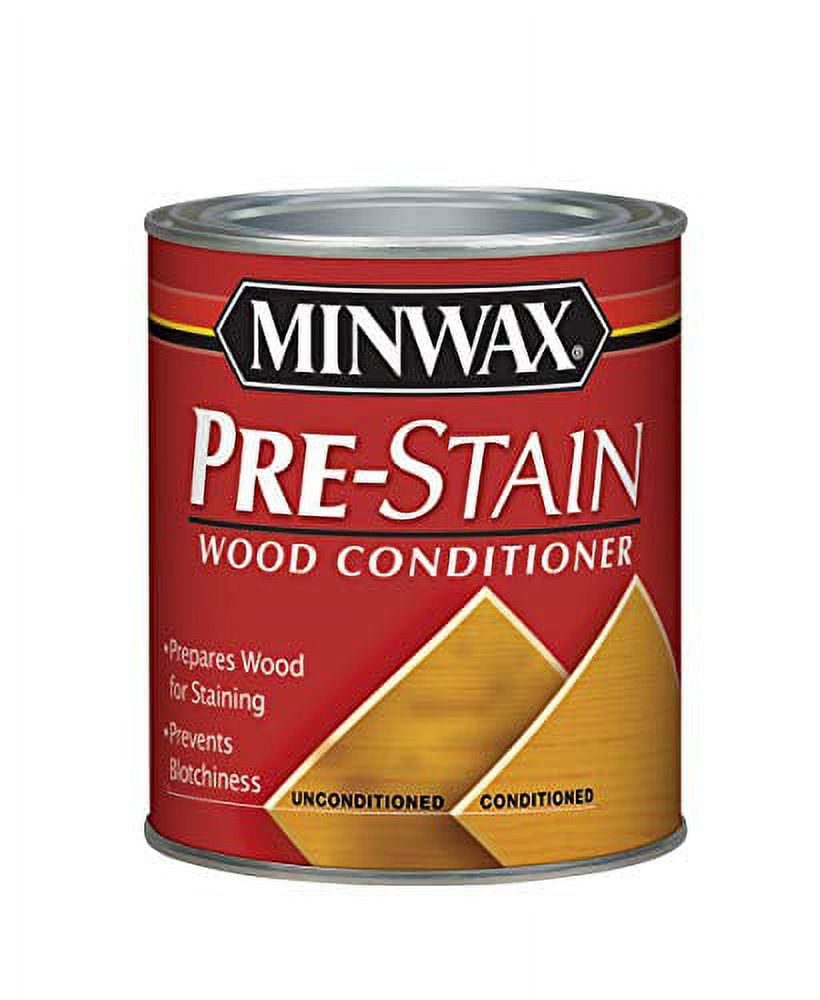 |
Minwax Pre-Stain Wood Conditioner – $14 Poplar’s uneven grain absorbs stain in blotchy patches unless it’s conditioned first — this is the product that fixes that.
|
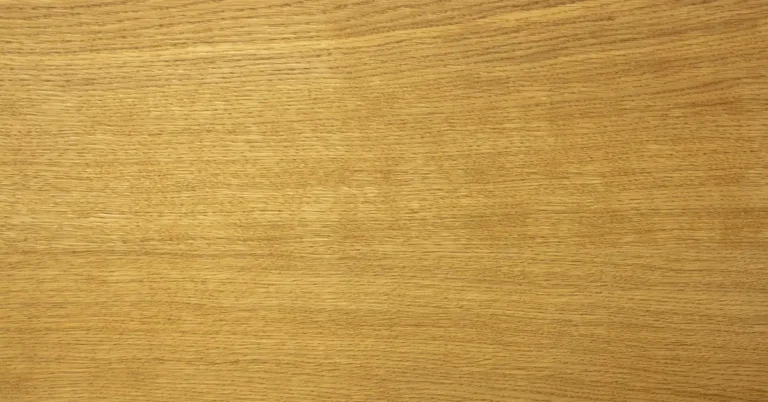
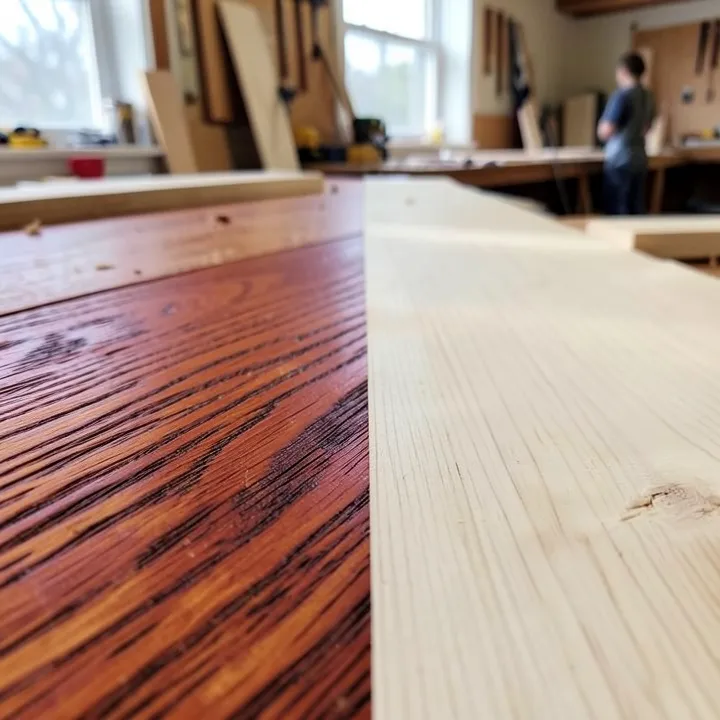
Red oak’s reddish-brown color with a pinkish undertone comes from tannins concentrated in the heartwood, the same compound family responsible for its strong, slightly sour smell when freshly cut — a useful identifying trait at the lumberyard, since poplar has almost no smell by comparison. As a ring-porous wood, red oak lays down noticeably larger pores in its spring growth than in its summer growth each year, which is exactly what creates the bold, visible grain pattern people associate with oak furniture and flooring.
Those large, open pores are also a double-edged trait worth knowing before choosing a finish: they take stain and open-pore fillers beautifully, which is why oak has such a long history in stained furniture, but they’re also the reason unsealed red oak resists moisture far worse than a diffuse-porous wood like poplar or maple — red oak’s pores run essentially open and unobstructed along the grain, unlike white oak, whose pores are naturally plugged with structures called tyloses. That’s specifically why white oak, not red oak, is the species used for whiskey barrels and boat building.
At 1,290 lbf on the Janka scale, red oak resists dents and surface wear well enough to be one of the most common domestic species for hardwood flooring, standing up to decades of foot traffic when properly finished.
Features Of Poplar
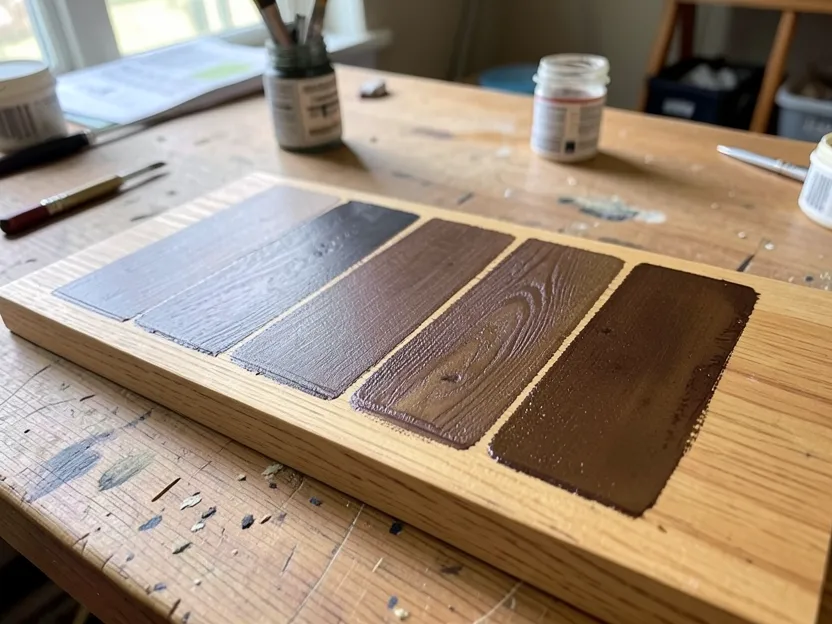
Poplar (technically yellow-poplar or tulip poplar, Liriodendron tulipifera — not a true poplar in the Populus genus at all) runs a pale cream to light yellow-green, often with streaks of gray, olive, or even purple running through the heartwood where the tree’s own minerals concentrated as it grew. Those streaks are cosmetic, not a defect, and they’re exactly why poplar is almost never left as a natural, clear-coated finish — the color variation that’s fine or even attractive on an accent piece reads as blotchy on a large stained surface, which is the main reason poplar is overwhelmingly used under paint rather than under a clear finish.
As a diffuse-porous wood, poplar’s pores are small and evenly distributed rather than concentrated in bold rings the way oak’s are, which gives it a fine, almost featureless texture up close. That same evenness is what makes it carve and machine so cleanly — there’s no hard/soft alternation within the growth rings to cause tearout the way there can be in ring-porous woods.
Despite being classified as a hardwood botanically (it comes from a broadleaf, deciduous tree), poplar’s 540 lbf Janka rating puts it well below several actual softwoods like Douglas fir, which is the source of endless “is poplar really a hardwood” confusion — the hardwood/softwood distinction is about the tree’s reproductive structure, not the density of its wood.
Janka Hardness & Brittleness: The Real Numbers
The Janka hardness test measures the force needed to embed a steel ball halfway into a wood sample. On that scale, red oak scores 1,290 lbf and poplar scores 540 lbf — oak is roughly 2.4 times harder. That hardness comes with a catch: harder woods are often more brittle, so red oak is more prone to cracking or splintering under a sharp impact or a tight bend, while poplar’s lower density lets it flex further before it fails. If you’re building something that takes repeated impact (a workbench top, a mallet handle) rather than something that just needs to resist dents (a floor, a tabletop), factor in brittleness, not just hardness.
Comparing Workability
Hardness alone doesn’t fully predict how a wood behaves under a saw blade or chisel — grain structure and density both play a role, and oak and poplar differ meaningfully on both fronts, not just on the Janka number.
Ease Of Cutting And Shaping
Red oak’s density and open, ring-porous grain both work against fast, clean cuts — it dulls blades faster than poplar does, and its coarse pore structure means a dull blade tears rather than slices, leaving a rougher edge that needs more sanding to clean up. Poplar’s fine, even texture and lower density let it cut, rout, and carve with noticeably less resistance and cleaner results even with modest tools, which is a big part of why it’s a common recommendation for anyone building their first few projects.
Finishing And Staining
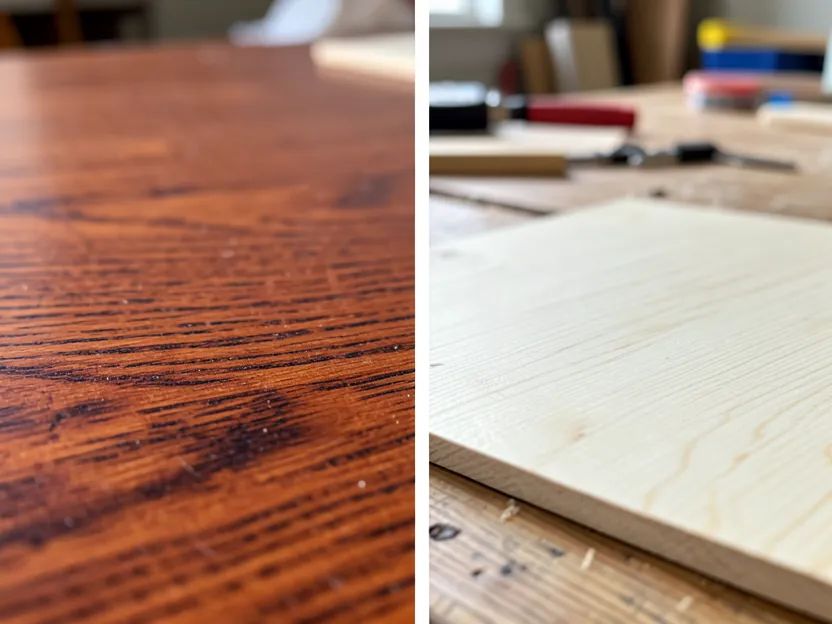
Oak’s open pores accept stain deeply and evenly along the grain, which is exactly what produces the rich, high-contrast look associated with stained oak furniture — the stain settles into the open pores at a different rate than it does into the denser surrounding wood, and that contrast is the desired effect, not a flaw. Poplar’s mineral streaking creates the opposite situation: different sections of the same board absorb stain at different rates, which is what produces the blotchy, uneven color that gives poplar its reputation as hard to stain. A pre-stain conditioner, or simply painting instead of staining, sidesteps the issue entirely, which is exactly why poplar is so often the wood behind a painted finish rather than a stained one.
Tools Required
Oak’s density calls for genuinely sharp blades and bits — a dull blade that would still cut acceptably through poplar can bog down, burn, or tear out badly in oak, and it wears down faster doing it. Poplar is forgiving enough that a hobbyist’s basic tool kit, including hand tools, handles it well, which is a meaningful practical advantage for anyone without a shop full of premium blades.
Cost Considerations
Red oak typically runs noticeably more per board foot than poplar at most hardwood suppliers, and the gap traces directly back to both growth time and demand — oak takes decades longer to reach harvestable size, and it’s in steady demand for flooring and furniture, which keeps upward pressure on price. That cost buys real longevity in the right application: a solid oak floor or table can realistically outlast the room it’s built for.
Poplar’s lower cost isn’t just about being a “lesser” wood — it grows fast enough to be a genuinely renewable, low-cost hardwood option, and its ease of working with basic tools further lowers the real cost of a project by cutting down on blade wear, sanding time, and mistakes. For anything headed under paint, where the visible grain and stain-depth advantages of oak never come into play anyway, poplar’s savings come with essentially no downside.
On both species, buying rough-sawn lumber and milling it yourself, rather than pre-surfaced boards, typically saves a meaningful percentage per board foot, and shorter, narrower cuts almost always cost less per foot than long, wide, clear boards free of any knots or streaking — a real saving worth taking advantage of on a project where those characteristics won’t show or won’t matter.
Environmental Impact
Red oak trees typically need 60-80 years or more to reach a size worth harvesting for lumber, while tulip poplar is one of the faster-growing hardwoods in North America, capable of adding several feet of height a year in good conditions and reaching harvestable maturity in a fraction of oak’s timeline. That growth-rate difference is the real driver behind poplar’s lower cost and its reputation as a comparatively renewable hardwood choice, more than any marketing distinction between the two.
Mature oak stands do tend to support a wider range of wildlife than fast-growing poplar stands, largely because oak’s acorns are a significant food source for many species and its slower growth allows for a more complex, layered forest structure to develop over the decades it takes to mature.
Both species sequester carbon as they grow, but the practical comparison isn’t as simple as “oak stores more” — a fast-growing poplar plantation can pull carbon out of the atmosphere at a quicker rate per year, while a mature oak represents a much larger single carbon reservoir built up slowly over a much longer lifespan. Which matters more depends on the timeframe being weighed against, which is more a forestry and climate policy question than a woodworking one.
Best Uses For Red Oak
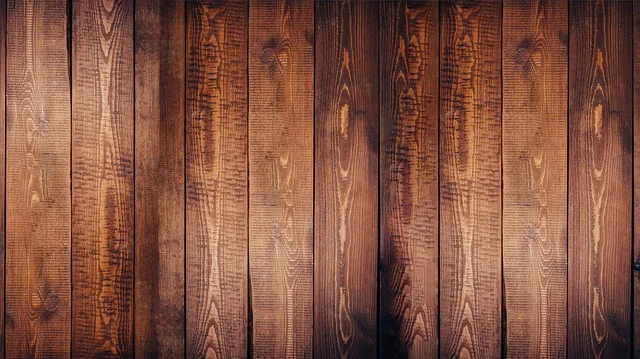
Chairs, tables, and other load-bearing furniture pieces benefit directly from red oak’s hardness and stiffness — joints and legs that see repeated stress hold up to the strain better in oak than they would in a softer species, and its open grain takes a rich stained finish that’s become almost synonymous with traditional furniture styling.
Flooring is arguably red oak’s signature use in North American homes, and for good reason: its 1,290 lbf hardness rating stands up to foot traffic, furniture legs, and the occasional dropped object far better than most softer domestic species, while still being soft enough (relative to something like hickory or maple) to sand and refinish multiple times over a floor’s lifespan without excessive effort.
For trim, cabinets, and door frames, oak’s bold grain pattern does a lot of the visual work on its own, which is why it’s frequently left with just a clear or lightly tinted finish rather than a heavy stain — the wood’s natural figure is often the whole point of the design.
Ideal Uses For Poplar
Poplar’s low density and forgiving grain make it genuinely well-suited to smaller, detail-oriented projects — carving, scroll saw work, and beginner builds all benefit from a wood that doesn’t fight back under hand tools or dull blades the way oak can, which is part of why it’s a common recommendation for new woodworkers and classroom projects alike.
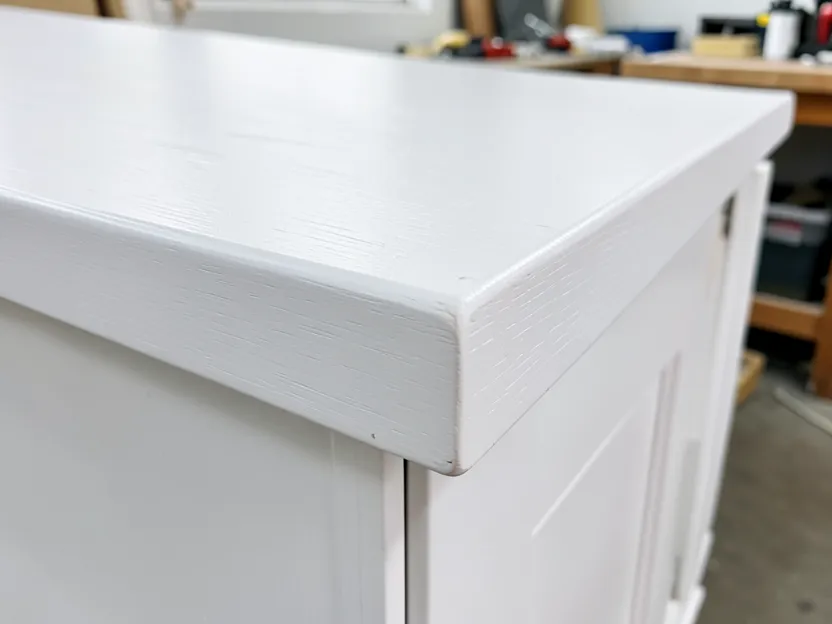
In cabinetry, poplar most often shows up as the hidden structural parts — face frames, cabinet boxes, and interior components — that get painted along with the visible doors rather than left to show their own grain. Its light weight also matters more than people expect in cabinet construction, since it keeps the finished assembly manageable to install without adding the extra heft solid oak would.
For trim, moldings, and painted panels, poplar’s smooth, even surface takes primer and paint with fewer visible brush marks than a coarser-grained wood would, and it’s inexpensive enough to use liberally throughout a room without the cost of oak trim adding up room by room.
Choosing The Right Wood
The clearest deciding question is what the finish will be: if the piece is getting stained or left natural, red oak’s grain and hardness usually make it the better investment, since that’s the exact use case its properties are built for. If the piece is getting painted, poplar’s lower cost, easier workability, and lighter weight make it the more practical choice, since paint hides the grain differences that would otherwise favor oak.
The brittleness trade-off from earlier is worth revisiting here too — for something that takes repeated sharp impact rather than steady wear, poplar’s ability to flex slightly before failing can actually outperform oak’s greater but more brittle hardness, which isn’t the intuitive choice most people make on hardness numbers alone.
Red oak’s higher upfront cost pays off on pieces meant to last generations or see heavy daily wear, like flooring or a dining table. Poplar’s lower cost makes more sense for painted furniture, trim, or any project where the wood’s own character isn’t the point of the finished piece.
Frequently Asked Questions
Is Poplar Or Oak Better?
Oak is denser and more durable, ideal for furniture. Poplar is softer, easier to work with, and cheaper. Choose oak for strength and poplar for affordability and ease of use.
What Are The Disadvantages Of Red Oak Wood?
Red oak wood can be porous, making it less resistant to moisture and pests. It may warp easily if not properly treated. Its grain is less uniform, affecting aesthetic appeal. Red oak tends to be heavier, which can complicate handling and installation.
It may require regular maintenance for durability.
Is Poplar A High Quality Wood?
Poplar wood is considered medium quality. It’s often used for furniture and cabinetry due to affordability. While not as hard or durable as oak or maple, poplar is easy to work with and paint. It’s ideal for indoor projects where high durability isn’t crucial.
What Are The Disadvantages Of Poplar Wood?
Poplar wood is less durable and prone to scratches. It dents easily and has a bland appearance. It lacks natural resistance to moisture and pests, requiring treatment. Poplar is unsuitable for outdoor use due to low weather resistance. It can be challenging to stain evenly, affecting finish quality.
Conclusion
The choice ultimately comes down to whether a project needs oak’s hardness and grain on display, or poplar’s ease of work and paint-readiness — the 2.4x Janka gap between them is real, but it’s only one factor among grain structure, brittleness, cost, and finish plans that together determine which wood actually fits a given build.
Matching the wood to the finish — stained or natural calls for oak, painted calls for poplar — settles most of the decision on its own; budget and how much impact-resistance versus dent-resistance the piece needs are the tiebreakers worth weighing after that.
Sponsored / affiliate links. As an Amazon Associate I earn from qualifying purchases. I may earn additional commission from eligible campaigns.