Lumber and Plywood Cart: Buy vs Build for Sheet Goods
A lumber or plywood cart is a low wheeled cart that moves full sheets and long boards without carrying them. The real choice is between a ready-made panel cart that holds sheets on edge and a flat cart you build yourself, and the deciding numbers are sheet weight and caster rating.
Panel Cart or Flat Lumber Cart: Which Do You Need?
Best Sheet Cart Pick
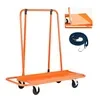 |
VEVOR Drywall Cart Dolly, Steel Panel Dolly with 4 Swivel Casters and Tie-Down Strap ($99.90) A ready-made panel cart that stands sheets on edge, so one person can roll plywood, MDF or drywall across a shop or job site instead of carrying it.
|
The phrase covers two different tools. A panel cart, also sold as a drywall cart, has a narrow platform and an upright frame, and it carries sheets standing on their edge. A flat lumber cart is a deck on wheels for stacked boards and offcuts. Most people searching this topic want the first one for 4×8 sheets, and the second for board storage and shop moves.
| Type | Carries | Good for | Watch out for |
|---|---|---|---|
| Panel cart (on edge) | Full sheets of plywood, MDF, drywall | Moving sheets from truck to shop to saw | Narrow deck; tall loads tip if pushed fast |
| Flat lumber cart (deck) | Boards, offcuts, stacked short sheets | Shop storage and board moves | A full sheet overhangs a small deck |
| Shop-built cart | Whatever you size it for | Custom sizes; doubling as a work cart | You supply the design and the casters |
The panel cart in the box lists a 45.3 x 21.9 in platform, and a full sheet is 48 x 96 in, so check how your sheets will sit against the frame before you order. For shop-built options, our guide to building your own cart covers frames, bed and wheels.
What a Load of Sheet Goods Really Weighs
The rating on a cart only helps if you know what you are putting on it. Published weight charts for a 4×8 sheet at 3/4 in thickness give ranges, not exact numbers: roughly 60 to 70 lb for softwood plywood, roughly 80 to 90 lb for Baltic birch, and roughly 80 to 96 lb for MDF. The table below multiplies a planning weight per sheet by the number of sheets. It is our own arithmetic from those ranges, so treat it as an estimate.
| Material (3/4 in, 4×8) | Planning weight per sheet | 5 sheets | 10 sheets | 15 sheets |
|---|---|---|---|---|
| Softwood plywood | 65 lb | 325 lb | 650 lb | 975 lb |
| Hardwood plywood | 75 lb | 375 lb | 750 lb | 1,125 lb |
| Baltic birch plywood | 85 lb | 425 lb | 850 lb | 1,275 lb |
| MDF | 96 lb | 480 lb | 960 lb | 1,440 lb |
Two things stand out. Ten sheets of MDF is about 960 lb, already more than half of a cart listed at 1,800 lb. And that same rating would allow nearly 19 MDF sheets (1,800 divided by 96 is 18.75), which no one should try to push by hand. The rating is a structural ceiling, while your back, the floor and the casters set the practical limit far lower.
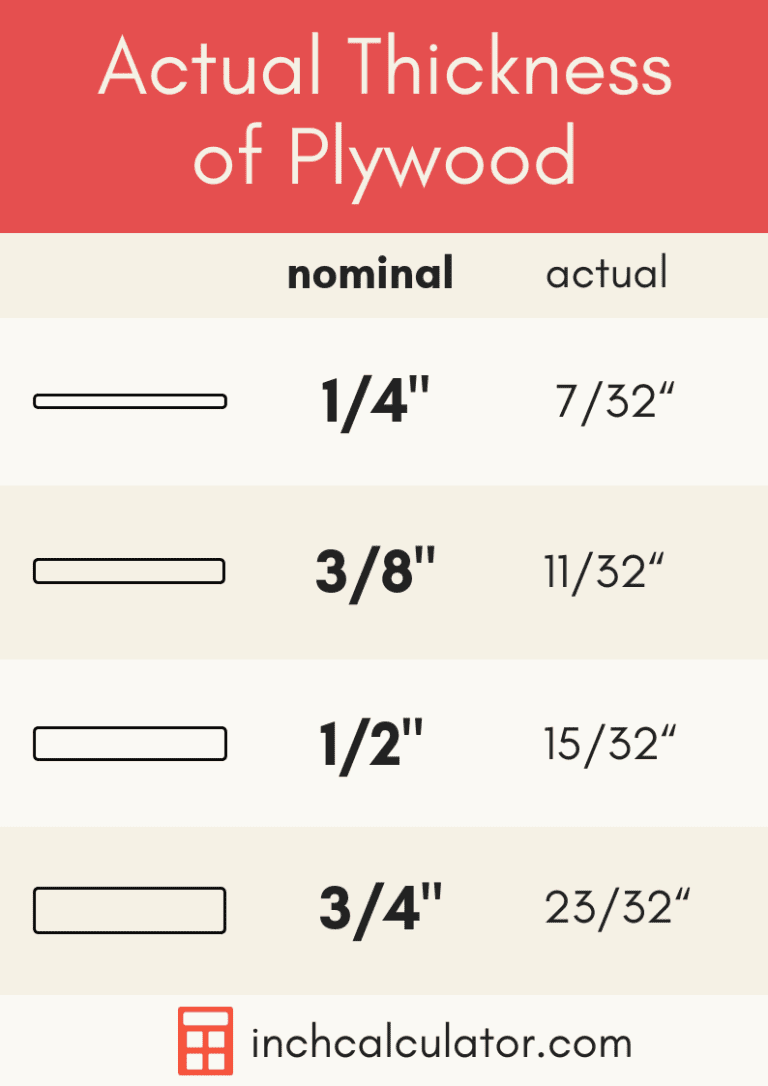
Thickness changes the math too. Our page on 3/4 inch plywood thickness explains why a 3/4 in sheet is usually a little thinner than its label, and thinner sheets weigh less per panel.
Casters and Floors Decide the Real Limit
On any cart, the wheels are where ratings fail. The featured panel cart lists four 5 in swivel casters made of polypropylene, with two that lock. Small hard plastic wheels roll well on smooth concrete and shop floors, and they struggle on gravel, cracks and thresholds.
- Check the per-caster rating. A 1,800 lb cart total does not tell you what each wheel is rated for. Look for a stated rating per caster.
- Allow for three wheels. A common rule of thumb is that on an uneven floor the load may ride on three of four casters, so leave margin. This is a general shop guideline, not a figure from the seller.
- Use the locks. Lock the brakes before loading or unloading, so the cart cannot roll away while a sheet is leaning on it.
- Match the floor. Larger, softer wheels handle rough ground better. Hard small wheels are for flat floors.
Loading Sheets Safely
Sheet goods are awkward more than dangerous, but a sheet that slides can pinch fingers or fall against a leg. A steady routine helps.
- Lock the casters and set the cart on a flat, clear patch of floor.
- Stand each sheet on its long edge and lean it against the upright frame, working from the frame outward.
- Load the heavier sheets first so the weight sits low and close to the frame.
- Strap the stack to the frame with the tie-down or a ratchet strap before you move it.
- Push with the load ahead of you, slowly, and stop well before doorways and corners.
- Wear gloves. Sheet edges splinter and cut.
Do not load more sheets than you can control if the cart starts to tip. If a stack leans past the tilt built into the base, unload some. When the sheets must go by vehicle rather than by cart, see our guides to transporting 4×8 plywood and securing plywood to a roof rack.
Buy vs Build: A Fair Comparison
A ready-made panel cart cost $99.90 on Amazon on 2026-09-30, and prices change. A shop-built cart can cost less if you already own casters and scrap, but it costs your time and your design risk. We have not built or load-tested either one, so this comparison is based on the published specifications and general shop practice, not our own trials.
| Factor | Buy a panel cart | Build a flat cart |
|---|---|---|
| Setup time | Short: unbox and assemble (the listing describes two-step assembly) | Longer: design, cut, assemble, fit wheels |
| Sheet handling | Holds sheets on edge with a strap | Flat deck; sheets lie stacked |
| Custom size | No: fixed deck | Yes: any size that fits your shop |
| Load rating | Seller-stated | Depends on your frame and casters |
| Best for | Frequent full-sheet moves | One-off shop cart or odd sizes |
If you build, keep the deck low, put the heaviest load close to the wheels, and buy casters with stated ratings instead of guessing.
Common Mistakes When Moving Sheet Goods on a Cart
- Overloading for the rating. Filling a cart to its listed limit leaves no margin for a bumpy floor, a slope or a sudden stop.
- Stacking sheets flat on a panel cart. A panel cart is designed to hold sheets on edge against the frame. Laying them flat on a narrow deck can make the load unstable.
- Skipping the strap. An unstrapped stack can shift the first time a caster catches a crack in the floor.
- Forgetting the route. Measure the doorways, ramps and turns on your route before you load. A cart that fits the shop may not fit the hall.
- Mixing materials by weight. Put dense MDF at the bottom and lighter plywood on top, so the center of gravity stays low.
None of these needs special tools, only a minute of thought before each move. The weight table above is the quickest way to catch the first mistake, because it shows how fast sheet counts add up.
Storage: Where the Cart and the Sheets Live
A cart is only useful if the sheets are easy to load onto it. Storing sheets on edge, close to the cart’s parking spot, saves lifting. Keep panels well supported so they do not bow, and keep them off a damp floor. Park the cart against a wall and lock a caster or two so it stays put.
Frequently Asked Questions
What is a lumber or plywood cart?
It is a low, wheeled cart for moving sheet goods and boards. Sheet-goods versions, often sold as panel carts or drywall carts, hold panels on edge against an upright frame. Flat lumber carts are closer to a platform truck or a shop-built cart with a flat deck.
How much weight can a plywood cart carry?
It depends on the frame, the casters and the floor. The panel cart we feature is listed by the seller at up to 1,800 lb. Real limits are set by the weakest part, usually the casters, so check each caster rating and treat the total as a ceiling, not a target.
How much does a 4×8 sheet of plywood weigh?
Published charts put a 3/4 in softwood plywood sheet at roughly 60 to 70 lb, Baltic birch at roughly 80 to 90 lb, and 3/4 in MDF at roughly 80 to 96 lb. Brands and moisture content vary, so weigh a sheet if the number matters.
Should I build or buy a cart for plywood?
Buy if you move full sheets often and want a ready-made frame. Build if you need a specific size, want it to double as a shop cart, or already have the casters and scrap. Our guide to building a DIY wood cart covers the frame and wheels.
Conclusion
A plywood cart is worth having if you move full sheets more than a few times a year. Pick a panel cart for sheets on edge, or a flat cart for boards. Work out your load from real sheet weights, then check the casters before the total rating.
Sponsored / affiliate links. As an Amazon Associate I earn from qualifying purchases. I may earn additional commission from eligible campaigns.